Workers' Compensation Guide Charlotte NC | Updated for 2026
Understand workers' compensation in Charlotte, NC with Vasquez Law Firm. Contact us for a free consultation and get help with your claim in 2026.
Published on February 4, 2026· Updated February 4, 2026
Hurt on the job?
Free review of your workers' comp claim.
Free & confidential · Se habla espanol · 24/7

Have questions? Talk to an attorney - free evaluation.
Call 1-844-967-3536Hurt on the Job? Claim What You Are Owed
A review of your workers' comp claim - we handle the fight.
Workers' Compensation Guide Charlotte NC | Updated for 2026
Workers' compensation is vital for employees injured on the job in Charlotte, NC. This guide explains your rights, how to file a claim, and what benefits you may receive under North Carolina law in 2026. Learn what to expect, avoid common mistakes, and know when to contact an attorney at Vasquez Law Firm for bilingual, compassionate support.
Need help with your case? Our experienced attorneys are ready to fight for you. Se Habla Español.
Schedule Your Free Case Evaluation
Or call us now: 1-844-967-3536
Quick Answer
Workers' compensation is a no-fault insurance program that provides benefits for employees injured at work.
- Covers medical costs related to the injury
- Provides partial wage replacement if you miss work
- Includes benefits for permanent disabilities or death
- You must report injuries promptly to qualify
- Claims are managed by the NC Industrial Commission in North Carolina
Understanding Workers' Compensation Benefits
Workers' compensation exists to protect employees who get injured or sick because of their jobs. This system helps cover medical expenses and replaces lost wages. In North Carolina, workers' compensation is governed by state law enforced through the Industrial Commission. It functions as a no-fault insurance program, meaning employees do not have to prove employer fault to receive benefits, which helps resolve claims quickly.
Typical benefits include payment for medical care related to the work injury, temporary wage replacement if you cannot work, permanent disability payments if your injury causes lasting effects, vocational rehabilitation to help you return to work, and death benefits to support dependents if the injury proves fatal.
Understanding these components can help protect your rights and ensure you receive full benefits under North Carolina law. The system is designed to benefit injured workers while limiting liability for employers, balancing interests responsibly.
Step-by-Step: Filing Your Workers' Compensation Claim
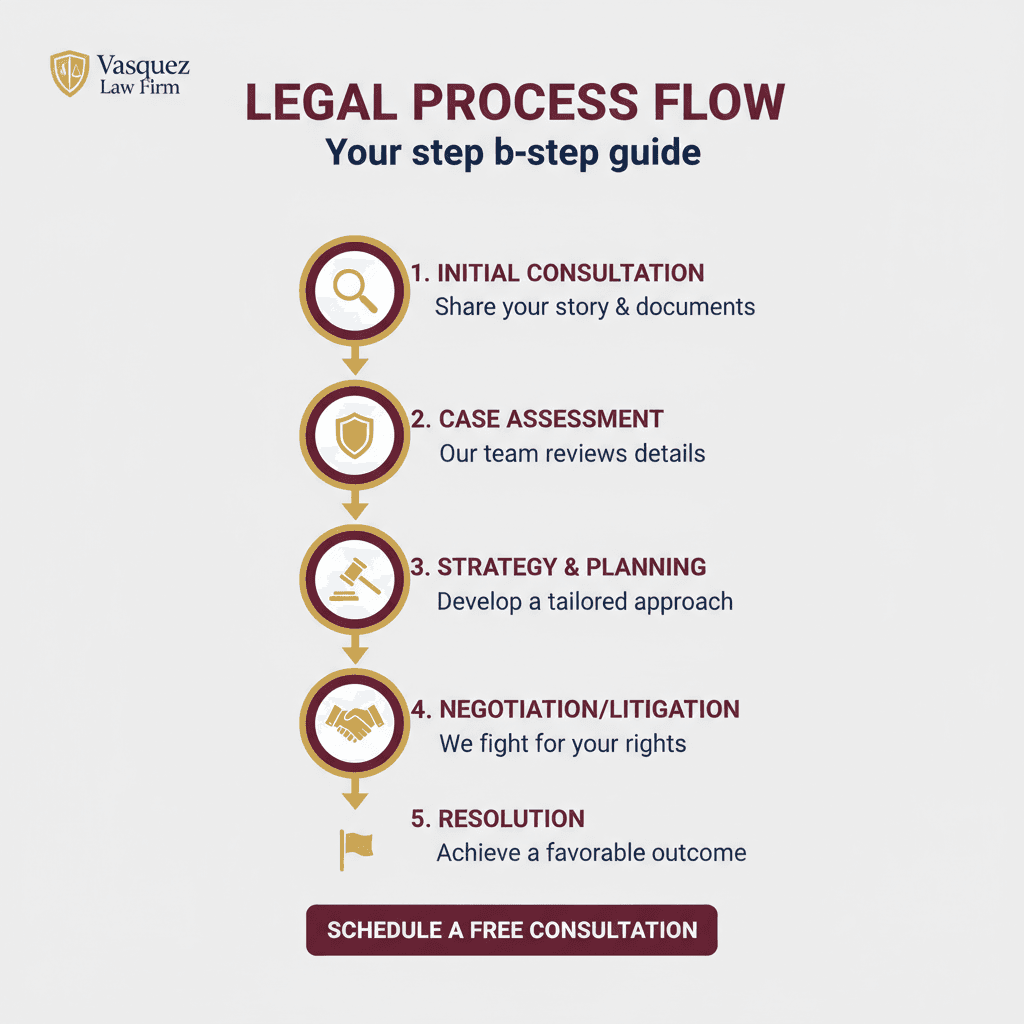
- Report Your Injury Promptly - Notify your employer as soon as possible, ideally within 30 days of the injury. Delays can hurt your claim.
- Seek Medical Treatment - Get necessary medical care right away and inform doctors that your injury is work-related.
- Complete Claim Forms - Your employer should provide a workers' compensation claim form which you must complete and submit to the North Carolina Industrial Commission.
- Keep Documentation - Maintain detailed records including injury reports, medical bills, and communications.
- Follow Up - Monitor the progress of your claim, attend required medical evaluations, and comply with Industrial Commission requests.
- Consider Legal Help - If your claim is delayed, denied, or disputed, consulting a workers' compensation attorney can protect your rights.
Documents and Evidence Checklist for Your Claim
- Accident or injury report given to your employer
- Medical records and doctor’s notes
- Invoices or bills for medical treatment
- Pay stubs to document your average weekly wage
- Communication records with your employer and insurance company
- Witness statements or photographs related to the injury
- Any prior disability or workers' compensation paperwork
Timeline: What to Expect During the Claims Process
- Week 1: Injury reported and initial medical treatment received.
- Weeks 2-4: Claim form filed with Industrial Commission; employer’s insurance notified.
- Weeks 4-8: Medical evaluations completed and compensation payments begin if eligible.
- Months 2-6: Ongoing treatment and potential hearings if claim is disputed.
- Months 6+: Settlement talks or final hearing decisions, permanent disability assessments if applicable.
This timeline can vary based on injury severity and claim complexity.
Costs and Fees: What Impacts Workers' Compensation
- Workers' compensation insurance premiums are primarily paid by employers, not employees.
- If you hire a lawyer, fees typically come from the compensation award and are regulated by state law.
- Medical treatment costs related to the injury are generally covered in full by the workers' compensation system.
- The amount of wage replacement depends on your average earnings and the severity of your disability.
- Lengthy or disputed claims can sometimes increase legal costs and delay benefits.
Common Mistakes to Avoid
- Failing to Report Injury Promptly: Delay can jeopardize your claim. Report as soon as possible.
- Not Following Doctor’s Orders: Missing appointments can cause denial of benefits.
- Ignoring Paperwork Deadlines: Submit all forms timely to avoid administrative denial.
- Returning to Work Too Soon: This may risk further injury and complicate claims.
- Accepting Early Settlements Without Advice: Get legal counsel before agreeing to terms.
- Talking to Insurance Adjusters Without a Lawyer: Statements can be misused; have representation if possible.
- Not Keeping Copies of Everything: Maintain thorough records for your protection.
If you only remember one thing: report the injury immediately and keep detailed records.
Workers' Compensation in NC: Jurisdiction Notes
NC Notes
In North Carolina, the Industrial Commission manages claims and enforces the Workers' Compensation Act (N.C. Gen. Stat. §§ 97-1 to 97-160). Reporting injuries within 30 days is required. Claims must be filed with the Commission. Medical providers are usually selected by the employer or insurer. Appeals can be heard before the Commission or NC courts.
Nationwide Concepts (General Only, Rules Vary)
Workers' compensation systems exist in all states but are state-regulated with different laws and benefit levels. Generally, they offer medical coverage, wage replacement, and death benefits. The process often requires timely injury reporting, claim filing, and proof of work-related injury. Federal workers may have other protections under laws like the Longshore and Harbor Workers' Compensation Act.
When to Call a Lawyer Now
- Your claim is denied or delayed without explanation.
- The insurance company pressures you to settle quickly for less than deserved.
- You suffer a complicated or permanent disability.
- Your employer retaliates or fires you after injury.
- You are unsure how to navigate the claims process.
- The injury worsens without proper medical treatment.
- You need help understanding your benefits or legal options.
- You face disputes over your average weekly wage or compensability.
- You want a second opinion on medical or legal matters.
- You require representation at Industrial Commission hearings.
About Vasquez Law Firm
At Vasquez Law Firm, we combine compassion with aggressive representation. Our motto "Yo Peleo" (I Fight) reflects our commitment to standing up for your rights.
- Bilingual Support: Se Habla Español - our team is fully bilingual
- Service Areas: Workers compensation in North Carolina; immigration nationwide, including Florida
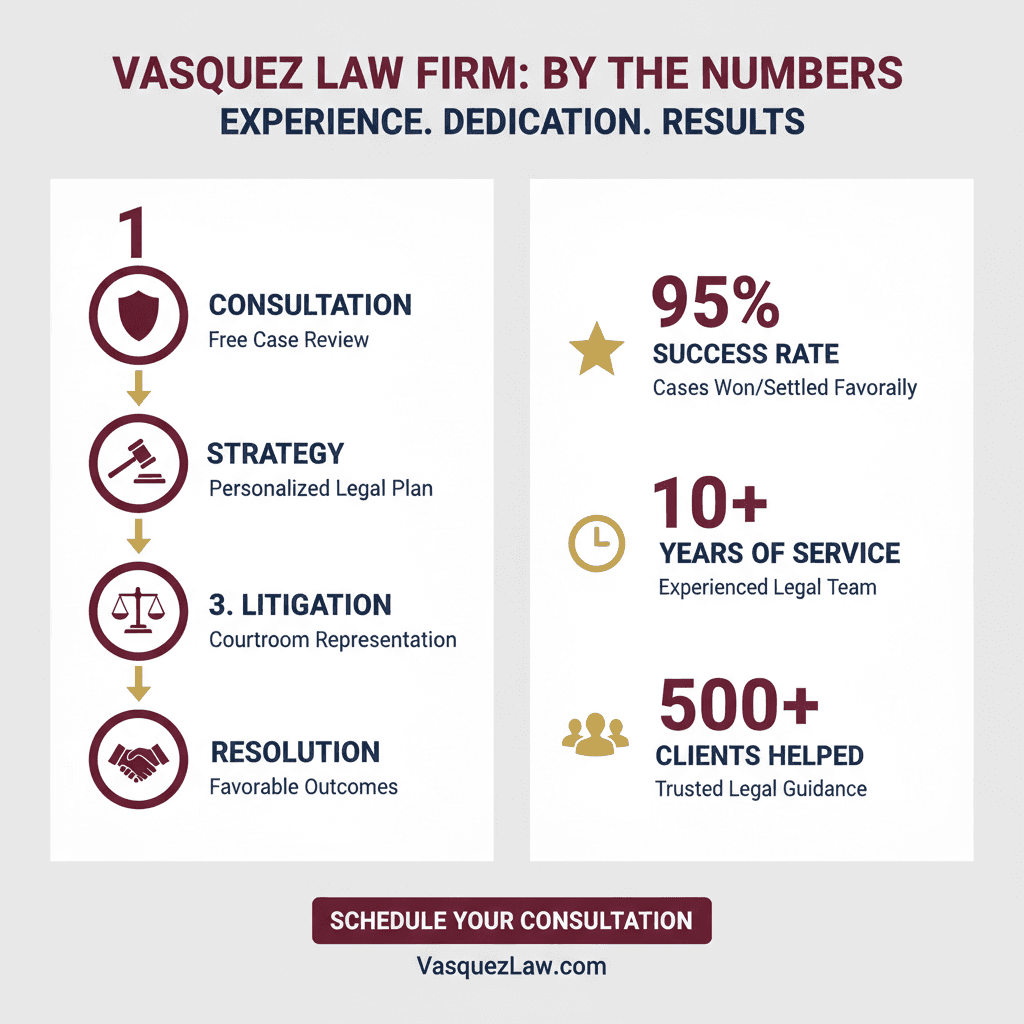
- Experience: Over 15 years helping clients navigate complex legal matters
- Results: Thousands of successful cases across multiple practice areas
Attorney Trust and Experience
Attorney Vasquez holds a Juris Doctor degree and is admitted to practice in the North Carolina State Bar. With over 15 years of dedicated legal experience, he has built a reputation for providing personalized attention and achieving favorable outcomes for his clients.
Don't wait to get the help you deserve. Call us now for immediate assistance.
Se Habla Español
Frequently Asked Questions
What is workers' compensation?
Workers' compensation is a state-mandated insurance program that provides benefits to employees who suffer job-related injuries or illnesses. It covers medical expenses, wage replacement, and sometimes rehabilitation costs. The program protects both workers and employers by offering a no-fault system, meaning employees do not need to prove employer negligence to receive benefits.
How do I file a workers' compensation claim in North Carolina?
In North Carolina, report your injury to your employer as soon as possible, ideally within 30 days. Your employer should provide you with a claim form. Complete and submit this form to the North Carolina Industrial Commission. It is important to keep detailed records of your injury and treatment to support your claim.
What benefits can I receive under workers' compensation?
Workers' compensation benefits may include payment for medical treatment, temporary wage replacement if you cannot work, permanent disability benefits for lasting impairments, vocational rehabilitation services, and death benefits to dependents if the injury results in fatality. Each case is unique and benefits depend on the injury and state laws.
How much does workers' compensation pay in North Carolina?
In North Carolina, wage replacement under workers' compensation generally pays about two-thirds of the employee’s average weekly wage, subject to minimum and maximum limits set by law. The exact amount depends on your earnings before injury and the severity of your condition. Medical expenses related to the injury are typically covered in full.
Do I need a lawyer for my workers' compensation claim?
While you can file a workers' compensation claim without a lawyer, consulting one is advisable if your claim is denied, your injury is complex, or your employer or their insurer disputes your benefits. An experienced attorney can help you understand your rights, gather evidence, negotiate settlements, and represent you at hearings.
What types of injuries are covered by workers' compensation?
Workers' compensation covers injuries and illnesses that arise out of and in the course of employment. This includes accidents on the job, repetitive stress injuries, occupational diseases, and conditions caused or worsened by work. Coverage typically does not extend to injuries that happen outside of work or due to employee misconduct.
How long do I have to file a workers' compensation claim in North Carolina?
In North Carolina, you generally have up to two years from the date of injury or the last payment of workers' compensation to file a claim. Reporting the injury to your employer promptly is essential. Delaying your claim can result in loss of benefits, so timely action is critical to protect your rights.
Can I choose my own doctor for a work injury?
In North Carolina workers' compensation cases, your employer or the insurance carrier usually designates the doctor. If you disagree or need a second opinion, you may request a change through the Industrial Commission. Knowing your rights about medical care is important to ensure you receive appropriate treatment.
Sources and References
Hurt at work in Charlotte? Our Charlotte workers' compensation lawyers handle these claims.
Take the first step toward justice today. Our team is standing by to help.
Start Your Free Case Evaluation Now
Call us: 1-844-967-3536
Se Habla Español - Estamos aquí para ayudarle.

William Vasquez
Founder & CEO, Vasquez Law Firm, PLLC
William Vasquez is the founder and CEO of Vasquez Law Firm, PLLC, a results-driven firm specializing in immigration, criminal defense, personal injury, and workers' compensation. A U.S. Air Force veteran and recipient of the Joint Service Achievement Medal, William is dedicated to fiercely fighting for his clients' rights.
Related Legal Services
Need legal help? Learn more about get workers comp legal help today, or contact us for a free evaluation.
You can also visit our North Carolina workers comp practice for more information.