Can American Citizens Be Held in Immigration Detention in 2026
Are American citizens subject to immigration detention? Understand your rights and what to do in 2026. Contact Vasquez Law Firm for a free immigration consultation.
Published on February 19, 2026
Talk to an immigration attorney
Free call. A clear plan for your case.
Free & confidential · Se habla espanol · 24/7

Have questions? Talk to an attorney - free evaluation.
Call 1-844-967-3536Worried how the latest immigration news affects you?
Schedule a confidential case review with an immigration attorney - know exactly where you stand.
Can American Citizens Be Held in Immigration Detention in 2026
The concept of immigration detention American citizens might seem contradictory, yet it is a real and complex issue that can arise in various scenarios. While U.S. citizens generally cannot be detained by immigration authorities like U.S. Immigration and Customs Enforcement (ICE) for immigration violations, mistaken identity, disputes over citizenship, or even involvement in criminal proceedings can lead to such detentions. Understanding your rights and the legal protections available is crucial, especially as immigration enforcement policies continue to evolve in 2026. This comprehensive guide from Vasquez Law Firm provides essential information on what to do if you or a loved one, a U.S. citizen, faces immigration detention.
Need help with your case? Our experienced attorneys are ready to fight for you. Se Habla Español.
Schedule Your Free Case Evaluation
Or call us now: 1-844-967-3536
Quick Answer: Can American Citizens Be Held in Immigration Detention?
While U.S. citizens cannot legally be held in immigration detention solely for immigration violations, they can be mistakenly detained by immigration authorities or held if their citizenship is in question. This often happens due to identity issues, errors in government databases, or entanglement in criminal matters where citizenship is not immediately clear. Immediate action is critical to resolve such situations.
- Demand to speak with a lawyer.
- Do not sign any documents without legal review.
- Provide proof of citizenship if available.
- Insist on contacting family or legal counsel.
Understanding the Legal Framework: Immigration Detention and U.S. Citizens
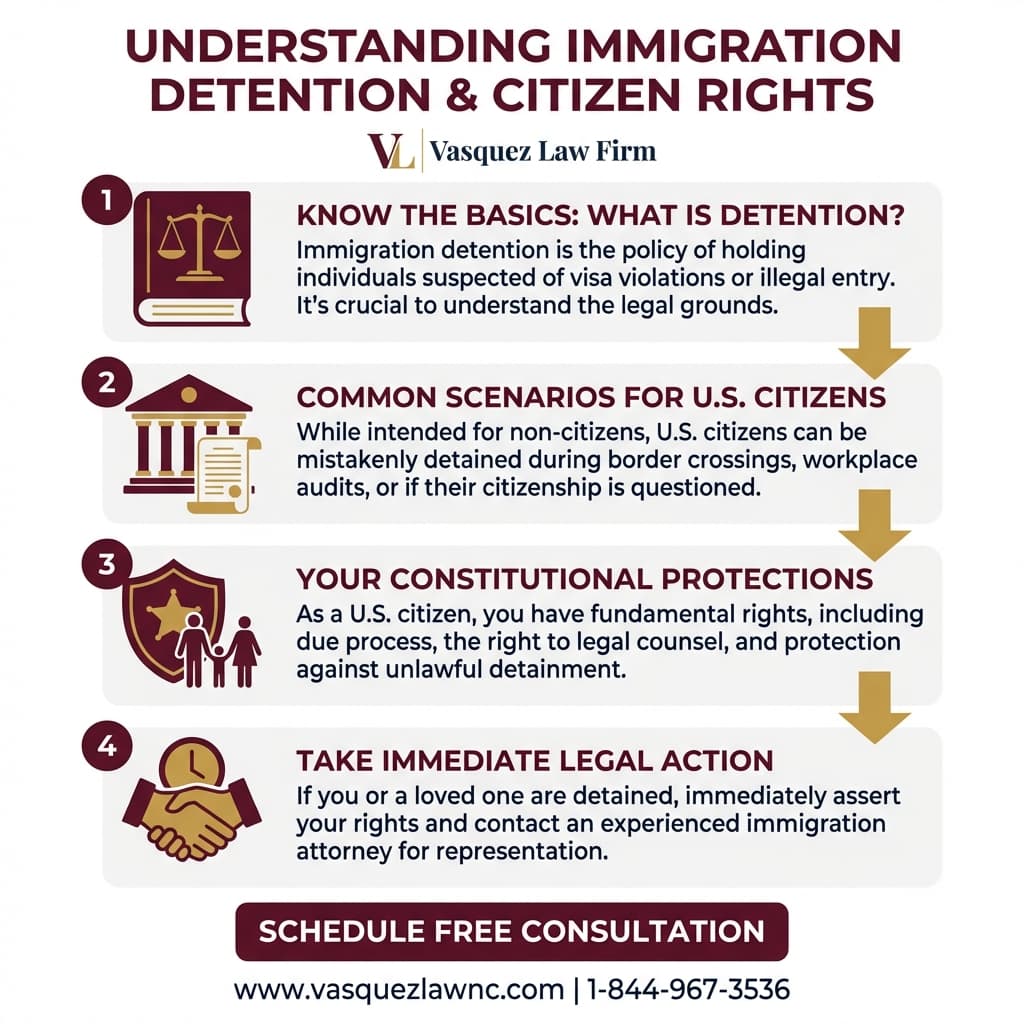
The fundamental principle is clear: U.S. citizens are not subject to civil immigration detention or deportation. This right is enshrined in the Fifth and Fourteenth Amendments of the U.S. Constitution, which guarantee due process and equal protection under the law. However, despite these protections, cases of immigration detention American citizens do occur, often due to complex circumstances or errors by enforcement agencies.
One primary reason for such detentions is mistaken identity. Immigration databases may contain incomplete or erroneous information, leading agents to believe a U.S. citizen is a non-citizen. Another common scenario involves individuals who have dual nationality or who may have previously held non-citizen status, where records are unclear. Moreover, individuals with certain criminal histories, even if U.S. citizens, might face complications during arrests that can lead to temporary holds or questions regarding their status.
It's important to differentiate between criminal detention and immigration detention. A U.S. citizen can certainly be arrested and held for criminal offenses. However, if they are then transferred to ICE custody or held under an immigration detainer, their citizenship must be immediately asserted and verified. The legal landscape surrounding these issues is constantly shifting, requiring vigilance and expert legal guidance in 2026.
Common Scenarios Leading to Mistaken Detention of Citizens
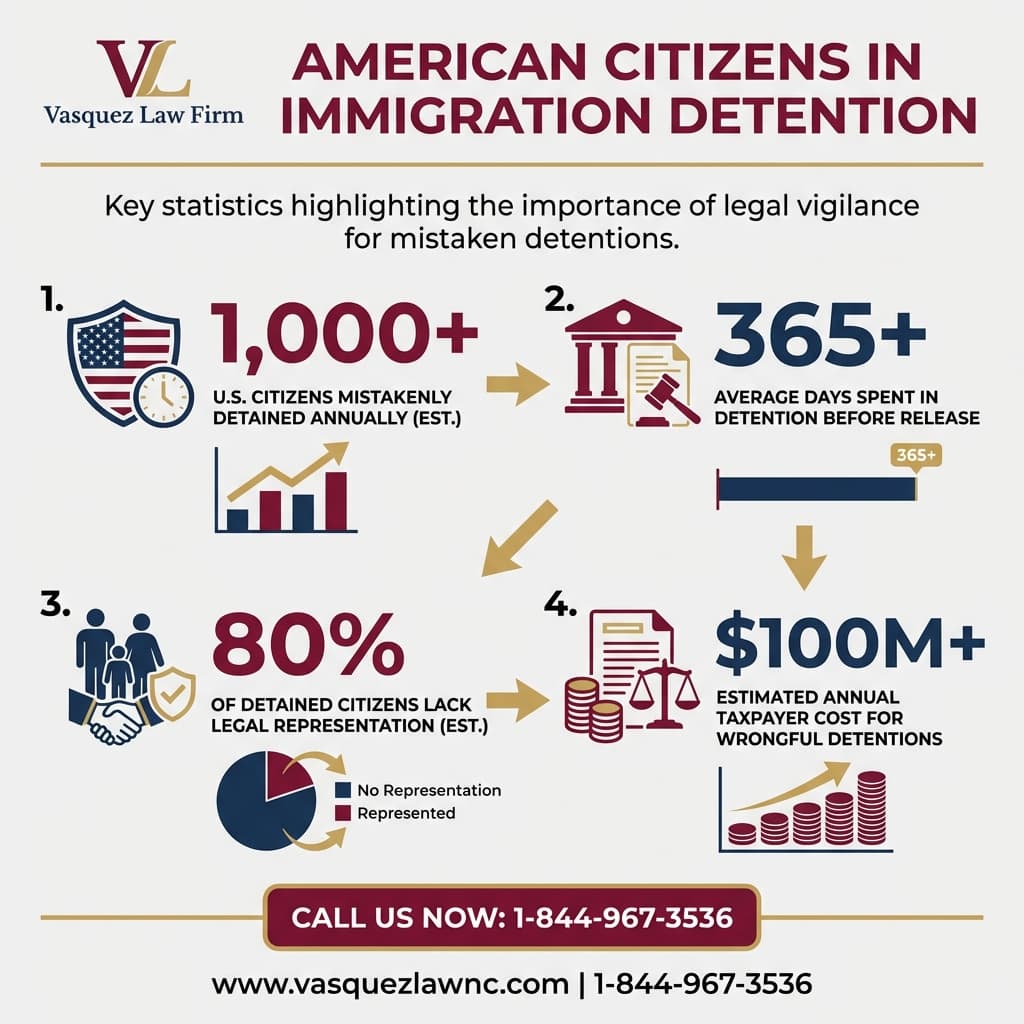
Mistakenly placing immigration detention American citizens is a grave error with serious consequences. These situations are often triggered by a confluence of factors, ranging from administrative oversights to more aggressive enforcement tactics. Understanding these common scenarios can help prepare individuals and their families for potential challenges.
One frequent cause is inaccurate or outdated government records. A person born in the U.S. might have a birth certificate that was not properly recorded in all relevant databases, or a naturalized citizen's records might be slow to update across various agencies. During an encounter with law enforcement or immigration officials, these discrepancies can quickly escalate into a detention scenario. Furthermore, individuals with names similar to non-citizens who have deportation orders can be erroneously targeted.
Another scenario involves individuals who may have a complex immigration history, such as those who were previously non-citizens and later naturalized. If there are outstanding warrants or old immigration detainers associated with their previous status, these can sometimes resurface and lead to an arrest, even after they have become citizens. Additionally, being present during a raid or enforcement action where many non-citizens are apprehended can also lead to U.S. citizens being swept up in the process, especially if they do not immediately have proof of citizenship on hand. These situations highlight the critical need for immediate legal intervention.
Your Rights If Mistakenly Detained by Immigration Authorities
If you are a U.S. citizen and find yourself in immigration detention, knowing your rights is paramount. These rights are your strongest defense against unlawful detention and are protected by the U.S. Constitution. Asserting them clearly and calmly can significantly impact the outcome of your situation.
First and foremost, you have the right to remain silent. You are not obligated to answer questions about your immigration status, birthplace, or how you entered the U.S. beyond identifying yourself. Any information you provide can potentially be used against you. Second, you have the right to an attorney. Demand to speak with a lawyer immediately and do not sign anything without their review. Signing documents without understanding their implications can waive critical rights or even admit to false claims.
You also have the right to present proof of your U.S. citizenship. This could include a U.S. passport, birth certificate, Certificate of Naturalization, or Certificate of Citizenship. While you are not required to carry these documents at all times, having them readily accessible to family or friends who can bring them to you is vital. Lastly, you have the right to notify your family or a consular officer (if you are a dual national). Agencies like ICE must allow you to make a phone call. Understanding these rights can empower you during a stressful and confusing experience.
What to do Immediately if Detained
- Stay Calm and Assert Your Rights: Clearly state, "I am a U.S. citizen."
- Demand a Lawyer: Immediately ask to speak with an attorney. Do not proceed without legal counsel.
- Do Not Sign Documents: Refuse to sign anything, especially documents related to voluntary departure or deportation, until your lawyer reviews them.
- Provide Proof of Citizenship: If you have it, present your U.S. passport, birth certificate, or Certificate of Naturalization. If not, instruct family members to bring it.
- Contact Family: Request to make a phone call to inform family members of your situation and location.
- Document Everything: Try to remember names, badge numbers, dates, and times.
Step-by-Step: Challenging an Unlawful Immigration Detention
Challenging an unlawful immigration detention American citizens involves a series of critical steps that require prompt and decisive action. The process can be intimidating, but with the right legal support, it is possible to secure release and rectify the error. Vasquez Law Firm has extensive experience in these complex cases.
The first step is to immediately contact an immigration attorney. An attorney can quickly intervene, communicate with the detaining agency (such as ICE), and initiate the process of proving your citizenship. They can also file a Writ of Habeas Corpus in federal court, which is a legal petition challenging the legality of your detention. This writ demands that the government produce you in court and provide a valid reason for your detainment. This is a powerful tool to secure your release when facing unlawful detention.
Next, gather all available evidence of your U.S. citizenship. This includes primary documents like a U.S. passport, a U.S. birth certificate, or a Certificate of Naturalization or Citizenship. Secondary evidence, such as old school records, medical records, or sworn affidavits from individuals who can attest to your birth or naturalization, may also be helpful if primary documents are unavailable or contested. Your attorney will help compile and present this evidence effectively to the authorities or the court. This proactive approach is crucial for a swift resolution.
Essential Documents to Prove U.S. Citizenship
- U.S. Passport (valid or expired)
- Original U.S. Birth Certificate (with a raised seal)
- Certificate of Naturalization (Form N-550 or N-570)
- Certificate of Citizenship (Form N-560 or N-561)
- Consular Report of Birth Abroad (FS-240, DS-1350, or FS-545)
- Valid State-Issued Driver's License or ID (supported by other evidence)
- Social Security Card (supported by other evidence)
- Voter Registration Card (supported by other evidence)
NC, FL, and Nationwide Notes on Immigration Detention
Immigration law is primarily federal, meaning the core statutes and regulations apply nationwide. However, the practical application and enforcement of these laws can vary based on local policies, the specific ICE field office, and court jurisdiction. This is particularly relevant when discussing immigration detention American citizens in North Carolina, Florida, and across the nation in 2026.
Nationwide Concepts: Federal Authority and Due Process
Across the United States, federal agencies like ICE and Customs and Border Protection (CBP) operate under the Immigration and Nationality Act (INA). This act governs who can be detained and under what circumstances. For U.S. citizens, the INA does not provide authority for civil immigration detention. Any such detention is a violation of constitutional rights and can be challenged through federal courts, typically via a writ of habeas corpus, as outlined in 28 U.S.C. § 2241. The Executive Office for Immigration Review (EOIR), which oversees immigration courts, also plays a role, but its jurisdiction generally does not extend to U.S. citizens.
North Carolina Notes: Local Enforcement and Advocacy
In North Carolina, including cities like Charlotte, local law enforcement agencies may have agreements with ICE, such as 287(g) programs, which allow deputized officers to perform immigration enforcement functions. These programs can increase the risk of mistaken identity detentions. If a U.S. citizen is detained under such a program, it is crucial to immediately assert citizenship and seek legal counsel. Organizations and attorneys in North Carolina are vigilant in monitoring these detentions and advocating for the rights of those unlawfully held. Vasquez Law Firm is deeply familiar with the nuances of immigration enforcement in North Carolina and can provide robust representation.
Florida Notes: High Immigration Activity and Enforcement
Florida, with its significant immigrant population and extensive border and coastal areas, sees high levels of immigration enforcement activity. This can lead to a greater likelihood of encounters with immigration officials. While the legal protections for U.S. citizens are the same as in North Carolina, the sheer volume of cases and the diverse operational approaches of various ICE field offices in Florida can make navigating the system particularly challenging. Proving citizenship quickly and effectively is paramount in these high-volume environments. Our firm also serves clients in Florida, offering dedicated support for complex immigration matters.
Don't face your legal challenges alone. Our team is here to help you every step of the way.
Call today: 1-844-967-3536 | Se Habla Español
Common Mistakes to Avoid During Immigration Detention
Navigating an immigration detention, especially as a U.S. citizen, is fraught with potential pitfalls. Avoiding common mistakes can significantly improve your chances of a swift release and prevent further complications. Being prepared and informed is your best defense.
- Mistake 1: Not Asserting Citizenship Immediately. Failing to state you are a U.S. citizen clearly and repeatedly can prolong detention.
- Mistake 2: Signing Documents Without Legal Review. Never sign anything, especially forms related to voluntary departure or waiver of rights, without an attorney's approval.
- Mistake 3: Providing False Information. Lying or providing incorrect details can lead to criminal charges and undermine your credibility.
- Mistake 4: Resisting Arrest Physically. While you can assert your rights verbally, physical resistance can lead to criminal charges and make your situation worse.
- Mistake 5: Not Contacting an Attorney Promptly. Delaying legal counsel can result in missed deadlines or prolonged detention.
- Mistake 6: Failing to Inform Family. Family members can be crucial in locating documents and contacting legal help.
- Mistake 7: Assuming Officials Will Automatically Correct Errors. While some errors are corrected, you must actively advocate for your rights and provide proof.
- Mistake 8: Carrying No Proof of Identity. While not legally required to carry citizenship proof, having a state ID can help verify identity and prevent some initial confusion.
- Mistake 9: Discussing Your Case with Other Detainees. Information shared in detention can sometimes be misinterpreted or used against you.
- Mistake 10: Not Documenting the Incident. Details like names, badge numbers, and times are vital for legal action.
If you only remember one thing: Always assert your right to an attorney and your U.S. citizenship, and never sign anything without legal review from an experienced immigration lawyer. This single action can protect you from many common pitfalls.
When to Call a Lawyer Now: Urgent Triggers
The moment a U.S. citizen faces any form of immigration detention or questioning, time is of the essence. Delaying legal consultation can have severe consequences, including prolonged detention or even erroneous deportation proceedings. Here are critical triggers indicating you should call an attorney immediately:
- You or a family member who is a U.S. citizen has been detained by ICE or CBP.
- Immigration officials are questioning your citizenship status.
- You are being asked to sign any immigration-related documents.
- You are held beyond a reasonable period without clear charges.
- Officials are denying your request to speak with an attorney or family.
- You believe you are being targeted due to mistaken identity.
- You have a complex immigration history despite being a U.S. citizen.
- You are facing an immigration detainer despite possessing proof of citizenship.
- You are experiencing any form of harassment or intimidation by immigration officials.
- You have been served with a Notice to Appear in immigration court despite being a U.S. citizen.
In any of these situations, contacting Vasquez Law Firm at 1-844-967-3536 is the most crucial step. Our team is ready to provide immediate assistance and fight for your rights.
About Vasquez Law Firm
At Vasquez Law Firm, we combine compassion with aggressive representation. Our motto "Yo Peleo" (I Fight) reflects our commitment to standing up for your rights, whether you're navigating complex immigration challenges or seeking justice in other legal matters. We understand the fear and uncertainty that come with legal issues, especially those involving immigration status or detention. Our dedicated team is here to provide clarity, support, and a formidable defense.
- Bilingual Support: Se Habla Español - our team is fully bilingual, ensuring clear communication and understanding for all our clients.
- Service Areas: We proudly serve clients with immigration needs across North Carolina, Florida, and nationwide. For personal injury, workers' compensation, criminal defense, family law, and traffic cases, we focus on North Carolina clients, including Charlotte and surrounding areas.
- Experience: With over 15 years of dedicated legal experience, Attorney Vasquez and our team have a proven track record of helping clients navigate complex legal matters and achieving favorable outcomes.
- Results: We have handled thousands of successful cases across multiple practice areas, earning a reputation for meticulous preparation and passionate advocacy.
Attorney Trust and Experience
Attorney Vasquez holds a Juris Doctor degree and is admitted to practice in both the North Carolina State Bar and Florida Bar. With over 15 years of dedicated legal experience, he has built a reputation for providing personalized attention and achieving favorable outcomes for his clients. His commitment to justice and his clients' well-being is unwavering, making Vasquez Law Firm a trusted partner in your legal journey. You can learn more about our team and approach on our attorneys page.
Frequently Asked Questions About Immigration Detention and Citizens
Can a U.S. citizen be deported?
No, a U.S. citizen cannot be deported from the United States. Deportation is a process exclusively for non-citizens who have violated immigration laws. If a U.S. citizen is mistakenly placed in deportation proceedings, it is a serious error that must be challenged immediately with legal assistance to prove their citizenship and halt the process.
What if ICE agents doubt my U.S. citizenship?
If ICE agents doubt your U.S. citizenship, you must clearly and repeatedly state that you are a U.S. citizen and demand to speak with an attorney. Do not answer questions about your immigration status or sign any documents. Your attorney will help provide official documentation to prove your citizenship and challenge any unlawful detention.
Do I have to carry my U.S. passport or birth certificate at all times?
While U.S. law does not explicitly require citizens to carry proof of citizenship at all times, having a form of identification like a state ID or driver's license can help avoid initial confusion. However, if questioned by immigration officials, always assert your citizenship and right to counsel, even if you don't have primary documents on hand.
What is an immigration detainer, and can it apply to citizens?
An immigration detainer is a request from ICE to a law enforcement agency to hold a non-citizen for up to 48 hours after they would otherwise be released, to allow ICE to take them into custody. It should not apply to U.S. citizens. If a detainer is issued for a U.S. citizen, it's an error requiring immediate legal intervention.
How quickly can a lawyer help if I'm mistakenly detained?
An experienced immigration lawyer can act quickly, often within hours. They can contact the detaining agency, present proof of citizenship, and initiate legal challenges like a Writ of Habeas Corpus. Prompt legal intervention is crucial to minimize the duration of an unlawful detention and protect your rights.
What kind of proof is accepted for U.S. citizenship?
Primary proof includes a U.S. passport, original birth certificate, Certificate of Naturalization, or Certificate of Citizenship. Secondary evidence, if primary documents are unavailable, may include old school records, medical records, or sworn affidavits. An attorney can advise on the best evidence for your specific situation.
Can I sue the government for unlawful detention as a citizen?
Yes, if you are a U.S. citizen unlawfully detained by immigration authorities, you may have grounds to sue the government for civil rights violations, false imprisonment, and other damages. Such cases are complex and require the expertise of an attorney specializing in civil litigation and immigration law to navigate federal court procedures.
What is a Writ of Habeas Corpus, and how does it help?
A Writ of Habeas Corpus is a legal action filed in federal court that challenges the legality of a person's detention. It demands that the government present the detained individual and justify their custody. For U.S. citizens facing unlawful immigration detention, it is a powerful tool to secure immediate judicial review and release.
Are children who are U.S. citizens also at risk of mistaken detention?
Yes, U.S. citizen children, especially those with non-citizen parents or in mixed-status families, can unfortunately be at risk of mistaken detention or separation during immigration enforcement actions. Their rights are the same as adult citizens, but their vulnerability makes immediate legal intervention even more critical for their protection.
How do 287(g) agreements impact U.S. citizens in detention?
287(g) agreements allow state and local law enforcement officers to perform certain immigration enforcement functions. While intended for non-citizens, these programs can increase the risk of U.S. citizens being mistakenly detained if their citizenship is not immediately verified. It is essential to assert your rights and citizenship to any officer involved in your detention.
Sources and References
- U.S. Citizenship and Immigration Services (USCIS)
- Executive Office for Immigration Review (EOIR)
- 28 U.S. Code § 2241 - Power to grant writ of habeas corpus
Need immigration help? Our immigration attorneys can review your case.
Ready to take the next step? Contact Vasquez Law Firm today for a free, confidential consultation. We're committed to fighting for your rights and achieving the best possible outcome for your case.
Start Your Free Case Evaluation Now
Call us: 1-844-967-3536
Se Habla Español - Estamos aquí para ayudarle.


William Vasquez
Founder & CEO, Vasquez Law Firm, PLLC
William Vasquez is the founder and CEO of Vasquez Law Firm, PLLC, a results-driven firm specializing in immigration, criminal defense, personal injury, and workers' compensation. A U.S. Air Force veteran and recipient of the Joint Service Achievement Medal, William is dedicated to fiercely fighting for his clients' rights.
Related Legal Services
Need legal help? Learn more about our immigration law practice, or contact us for a free evaluation.
You can also visit North Carolina immigration lawyers for more information.


