What You Need to Know About Federal DUI Acquittal in 2026
Facing federal DUI charges? Learn how a federal DUI acquittal is possible in 2026. Contact Vasquez Law Firm for a free consultation today. Se Habla Español.
Published on February 15, 2026

Have questions? Talk to an attorney - free evaluation.
Call 1-844-967-3536Protect Your Record and Your Freedom
A confidential case review - available 24/7 for emergencies.
What You Need to Know About Federal DUI Acquittal in 2026
A federal DUI acquittal can be a life-changing outcome for individuals facing serious charges on federal property. Unlike state-level DUI cases, federal DUIs involve distinct legal frameworks, jurisdiction, and potential penalties. Understanding the nuances of federal DUI defense is critical for anyone accused, whether in North Carolina, Florida, or elsewhere nationwide. This guide, updated for 2026, explores the complexities of these cases, the defense strategies available, and how experienced legal representation can significantly impact your pursuit of a federal DUI acquittal. Do not underestimate the severe consequences of a federal conviction; proactive and informed legal action is your best defense.
Need help with your case? Our experienced attorneys are ready to fight for you. Se Habla Español.
Schedule Your Free Consultation
Or call us now: 1-844-967-3536
Quick Answer
A federal DUI acquittal means being found not guilty of driving under the influence on federal land. This outcome requires a strong defense challenging evidence, procedures, or legal interpretations. Achieving an acquittal can prevent severe penalties such as federal prison time, hefty fines, and a permanent criminal record, which are much harsher than state-level consequences.
- Challenging the legality of the traffic stop.
- Disputing the accuracy of field sobriety tests or breathalyzer results.
- Demonstrating violations of constitutional rights during arrest.
- Presenting evidence of medical conditions affecting performance.
- Negotiating for charge reduction or dismissal based on legal weaknesses.
Understanding Federal DUI Charges and Jurisdiction
Federal DUI charges arise when an individual is arrested for driving under the influence on federal property. This can include national parks, military bases, federal courthouses, or other lands managed by federal agencies. The jurisdiction shifts from state to federal courts, bringing with it a different set of laws, procedures, and potential penalties. Federal prosecutors often pursue cases with greater resources and stricter guidelines than state prosecutors, making the defense process particularly challenging.
The specific statute often cited in federal DUI cases is 18 U.S. Code § 13, which applies state criminal law to federal enclaves. However, some federal properties have their own specific regulations. For example, military installations may have unique rules and enforcement mechanisms. Understanding which laws apply and the specific federal agency involved is the first critical step in building a defense aimed at a federal DUI acquittal. The consequences of a federal conviction are severe, often including mandatory minimum sentences and substantial fines.
Distinction: Federal vs. State DUI
The primary difference between federal and state DUI cases lies in jurisdiction and the prosecuting authority. State DUIs are handled in state courts under state laws, while federal DUIs are prosecuted in federal courts by U.S. Attorneys. Federal cases typically involve more stringent sentencing guidelines, often without the same opportunities for diversion programs or plea bargains that might be available at the state level. The investigative agencies also differ; federal cases might involve park rangers, military police, or federal agents, rather than local or state police.
Furthermore, federal courts operate under the Federal Rules of Criminal Procedure and Federal Rules of Evidence, which can differ significantly from state rules. This distinction means that defense strategies that might be effective in state court may not apply or may need substantial adaptation in a federal setting. An attorney experienced in federal criminal defense, particularly in federal DUI acquittal cases, is crucial for navigating these intricate differences and protecting your rights.
Building a Strong Defense for Federal DUI Acquittal
Achieving a federal DUI acquittal requires a meticulous and aggressive defense strategy. This begins with a thorough investigation of the arrest, evidence collection, and legal procedures followed by federal agents. Any misstep by law enforcement, from the initial stop to the administration of chemical tests, can be grounds for challenging the prosecution's case. It is not enough to simply deny guilt; your defense must actively dismantle the government's arguments and evidence.
Key areas of defense often include challenging the probable cause for the traffic stop, questioning the accuracy and calibration of breathalyzer equipment, and scrutinizing the administration and interpretation of field sobriety tests. Additionally, constitutional violations, such as unlawful search and seizure or failure to provide Miranda warnings, can lead to the suppression of critical evidence, potentially resulting in a federal DUI acquittal or a significant reduction in charges. Every detail matters when confronting federal prosecutors and their substantial resources.
Challenging Evidence and Procedures
A successful defense often hinges on meticulously challenging the evidence presented by the prosecution. This includes analyzing police reports, witness statements, dashcam or bodycam footage, and the results of blood or breath tests. For instance, if a breathalyzer was not properly calibrated or operated, its results could be deemed inadmissible. Similarly, field sobriety tests are subjective and can be influenced by factors like fatigue, medical conditions, or environmental elements, making their reliability questionable.
Furthermore, defense attorneys will examine whether federal agents adhered to proper protocols during the arrest and evidence collection. Any deviation from established procedures, such as an improper chain of custody for a blood sample, can weaken the prosecution's case. An experienced attorney will also investigate whether your constitutional rights were violated at any point, from the initial stop to interrogation. Such violations are powerful tools in seeking a federal DUI acquittal.
The Federal Court Process and What to Expect
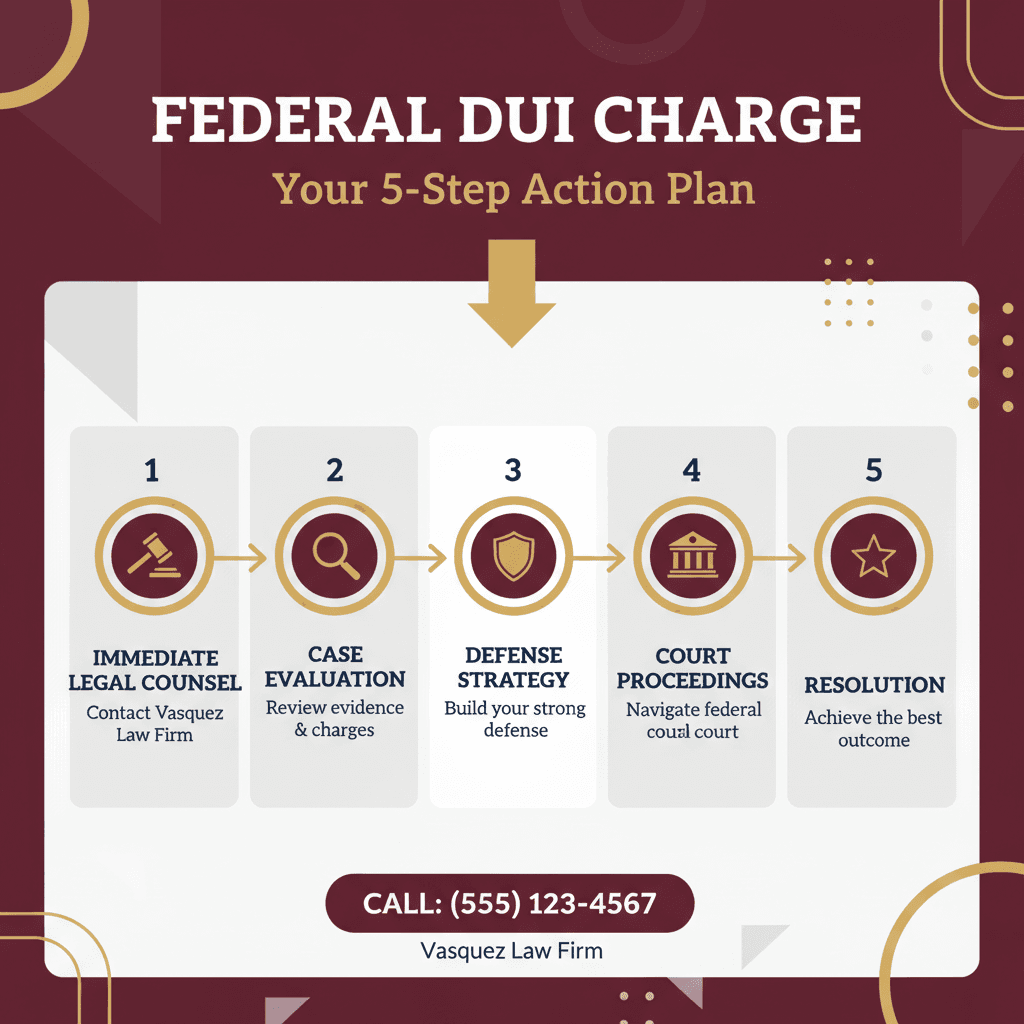
Navigating the federal court system for a DUI charge is a complex journey that differs significantly from state court proceedings. After an arrest, you will typically go through an initial appearance before a federal magistrate judge. This is where charges are formally presented, and bail conditions are set. Following this, the discovery phase begins, where both sides exchange information and evidence. This phase is crucial for your defense team to gather all necessary documentation and prepare their arguments for a federal DUI acquittal.
Pretrial motions are a critical component of federal DUI cases. These motions can challenge the admissibility of evidence, the legality of the arrest, or the constitutionality of certain procedures. If motions to suppress evidence are successful, it can severely weaken the prosecution's case, sometimes leading to a dismissal or a more favorable plea offer. Should the case proceed to trial, it will be heard by a federal judge and potentially a jury, adhering strictly to federal rules of evidence and procedure. The stakes are incredibly high, emphasizing the need for adept legal counsel.
Timeline: What to Expect in a Federal DUI Case
- Arrest & Initial Appearance: Within 24-48 hours of arrest, you'll appear before a federal magistrate judge to be formally charged and have bail set.
- Preliminary Hearing: If not indicted by a grand jury, a preliminary hearing may determine if there's probable cause for the charges.
- Grand Jury Indictment: For felony federal DUI charges, a grand jury will review evidence to decide if formal charges (an indictment) should be issued.
- Arraignment: You will enter a plea (guilty, not guilty, or nolo contendere) before a federal district judge.
- Discovery Phase: Both prosecution and defense exchange evidence and information, which can last several months.
- Pretrial Motions: Defense attorneys file motions to suppress evidence, challenge procedures, or seek dismissal, often taking weeks or months to resolve.
- Plea Bargaining: Negotiations with the U.S. Attorney's office for a plea agreement can occur at various stages.
- Trial: If no plea is reached and motions are unsuccessful, the case proceeds to a federal jury trial, which can last days or weeks.
- Sentencing: If convicted, sentencing typically occurs several weeks or months after a guilty plea or verdict, following the preparation of a presentence report.
Penalties and Consequences of a Federal DUI Conviction
The penalties for a federal DUI conviction are significantly more severe than those for state-level offenses. These can include lengthy federal prison sentences, substantial fines, loss of driving privileges, mandatory alcohol education programs, and probation. A federal conviction also carries long-term consequences that can impact your employment, professional licenses, and even your ability to travel internationally. Unlike state convictions, federal convictions are often viewed with greater gravity by employers and licensing boards, making a federal DUI acquittal all the more vital.
The specific penalties can vary based on factors such as prior DUI convictions, the level of intoxication, whether an accident occurred, and if there were injuries or fatalities. Federal sentencing guidelines are complex and can result in harsher punishments, especially for repeat offenders. Furthermore, a federal conviction becomes part of your permanent record, visible in federal background checks, which can affect housing, loans, and other opportunities for years to come. Protecting your future by fighting for a federal DUI acquittal is paramount.
Long-Term Impacts of a Federal DUI
Beyond immediate legal penalties, a federal DUI conviction can cast a long shadow over your life. Employment opportunities may be severely limited, especially for jobs requiring security clearances, professional licenses (like those for medical professionals or commercial drivers), or government positions. Many employers conduct thorough federal background checks, and a DUI conviction can be a disqualifying factor. Your reputation within your community and professional circles can also suffer lasting damage.
Additionally, a federal DUI conviction can impact your immigration status if you are not a U.S. citizen, potentially leading to deportation proceedings. It can also affect your ability to obtain certain types of insurance, secure housing, or even pursue higher education. The ripple effects are profound and far-reaching, underscoring the importance of seeking a federal DUI acquittal. An attorney committed to your defense can help mitigate these potential long-term impacts.
NC, FL, and Nationwide Notes: Federal DUI
While federal DUI charges are prosecuted under federal law, the specifics of enforcement and the local federal court procedures can vary slightly depending on where the offense occurred. In North Carolina and Florida, federal properties include military bases like Fort Bragg and Camp Lejeune in NC, or MacDill Air Force Base and Naval Air Station Jacksonville in FL, as well as national parks and federal courthouses in cities like Orlando and Raleigh. Understanding these localized federal jurisdictions is key.
Nationwide, the overarching federal statutes apply, but the U.S. Attorney's office in each district has some discretion in how they prosecute cases. This means that while the core legal framework for a federal DUI acquittal remains consistent, the local federal court culture and the specific federal judges can influence case outcomes. An attorney with experience in federal courts in both North Carolina and Florida, and a national understanding of federal DUI defense, is invaluable.
North Carolina Federal DUI Considerations
In North Carolina, federal DUI cases might originate from arrests on federal lands such as the Great Smoky Mountains National Park, national forests, or military installations. The U.S. District Courts for the Eastern, Middle, and Western Districts of North Carolina would handle these cases. Prosecutors in these districts are known for their rigorous approach to federal offenses. Securing a federal DUI acquittal in North Carolina demands an attorney familiar with the specific judicial tendencies and prosecutorial strategies within these federal courts.
Florida Federal DUI Considerations
Similarly, in Florida, federal DUI charges can stem from incidents on federal properties like the Everglades National Park, military bases, or federal facilities in Orlando, Miami, or Tampa. The U.S. District Courts for the Northern, Middle, and Southern Districts of Florida oversee these cases. Florida's federal courts, particularly in the Middle District which covers Orlando, handle a high volume of federal cases, making local federal legal experience crucial. An attorney well-versed in Florida's federal court system can better navigate the unique challenges of a federal DUI acquittal here.
When to Call a Lawyer Now for Federal DUI Charges
The moment you are arrested or even questioned about a federal DUI, it is imperative to seek legal counsel immediately. The federal system moves quickly, and any delay can compromise your defense. Early intervention by an experienced attorney can prevent critical mistakes, protect your rights, and lay the groundwork for a federal DUI acquittal. Do not speak to federal agents or prosecutors without legal representation.
- You have been arrested for DUI on federal property.
- Federal agents are questioning you about a DUI incident.
- You failed a field sobriety test or chemical test on federal land.
- You have prior DUI convictions, increasing the stakes of federal charges.
- You are concerned about the long-term impact of a federal conviction on your career or immigration status.
- Your constitutional rights may have been violated during the stop or arrest.
- You believe evidence against you was improperly collected or handled.
- You are facing charges that could lead to mandatory minimum sentences.
Don't face your legal challenges alone. Our team is here to help you every step of the way.
Call today: 1-844-967-3536 | Se Habla Español
About Vasquez Law Firm
At Vasquez Law Firm, we combine compassion with aggressive representation. Our motto "Yo Peleo" (I Fight) reflects our commitment to standing up for your rights. We understand the stress and uncertainty that come with federal charges, and we are dedicated to providing clear guidance and tenacious advocacy.
- Bilingual Support: Se Habla Español - our team is fully bilingual and ready to assist you in your preferred language.
- Service Areas: Criminal defense in Johnston and Harnett counties, NC; immigration nationwide, including Florida
- Experience: With over 15 years of dedicated legal experience, we navigate complex legal matters with precision and expertise.
- Results: Thousands of successful cases across multiple practice areas demonstrate our commitment to achieving favorable outcomes for our clients.
Attorney Trust and Experience
Attorney Vasquez holds a Juris Doctor degree and is admitted to practice in both the North Carolina State Bar and Florida Bar. With over 15 years of dedicated legal experience, he has built a reputation for providing personalized attention and achieving favorable outcomes for his clients. His deep understanding of federal criminal defense strategies is invaluable in cases seeking a federal DUI acquittal.
Frequently Asked Questions
What happens if you get a DUI on federal probation?
Getting a DUI while on federal probation can lead to severe consequences, including probation revocation and serving the remainder of your original sentence, plus new penalties for the DUI. Federal probation terms are strict, and any violation is taken seriously by federal courts and probation officers. It is crucial to seek immediate legal counsel to navigate these complex issues and protect your freedom.
How often do federal DUI cases get dismissed?
Federal DUI cases are challenging to get dismissed due to the rigorous prosecution by U.S. Attorneys. Dismissals are not common but can occur if there are significant procedural errors by law enforcement, constitutional violations, or insufficient evidence. A skilled federal criminal defense attorney can identify weaknesses in the prosecution's case and leverage them to pursue a dismissal or a federal DUI acquittal.
What is the best plea deal for a federal DUI?
The "best" plea deal for a federal DUI varies greatly depending on the specific facts of your case, your criminal history, and the strength of the evidence against you. It typically involves negotiating for reduced charges, lighter sentencing, or alternative programs. An experienced federal defense attorney will evaluate your options and advise whether accepting a plea is more beneficial than pursuing a federal DUI acquittal at trial.
Will a federal DUI be a felony in 2026?
Whether a federal DUI is charged as a felony in 2026 depends on several factors, including prior convictions, the level of impairment, and whether serious injury or death resulted from the incident. While many first-time DUIs are misdemeanors, repeat offenses or those involving aggravating circumstances can be elevated to felony status, carrying much harsher federal penalties. Consult with an attorney to understand your specific charges.
What evidence is used in a federal DUI case?
Evidence in a federal DUI case typically includes police reports, witness statements, dashcam/bodycam footage, results from field sobriety tests, and chemical tests (breath, blood, or urine). Federal prosecutors may also use expert testimony regarding intoxication levels and their effects. Your defense attorney will meticulously review all evidence to identify inconsistencies or procedural errors that could support a federal DUI acquittal.
How do federal DUI laws differ from state laws?
Federal DUI laws primarily differ from state laws in jurisdiction, prosecution, and potential penalties. Federal DUIs occur on federal property and are prosecuted by U.S. Attorneys in federal courts, adhering to federal sentencing guidelines. State DUIs are handled in state courts. Federal penalties are often more severe, with fewer opportunities for diversion programs, making a federal DUI acquittal a critical goal.
Can I refuse a breathalyzer test in a federal DUI stop?
While you have the right to refuse a breathalyzer test, doing so in a federal DUI stop can lead to immediate consequences, such as automatic suspension of your driving privileges and potentially being charged with refusal. Federal law implies consent for chemical testing if you drive on federal property. An attorney can explain the specific implications of refusal in your case and advise on the best course of action.
What are common defenses for federal DUI charges?
Common defenses for federal DUI charges include challenging the legality of the traffic stop, disputing the accuracy of chemical tests due to improper calibration or administration, questioning the validity of field sobriety tests, and asserting violations of constitutional rights. Defense attorneys may also argue that medical conditions or other factors influenced test results. A robust defense aims to achieve a federal DUI acquittal.
How does a federal DUI conviction affect my immigration status?
A federal DUI conviction can significantly impact your immigration status, potentially leading to deportation proceedings, denial of visa applications, or inadmissibility to the U.S. Depending on the severity and specific charges, it might be classified as a crime involving moral turpitude or an aggravated felony, with severe immigration consequences. Consulting an attorney experienced in both federal criminal defense and immigration law is essential to protect your status.
What if the federal DUI happened on a military base?
If a federal DUI happened on a military base, the case falls under federal jurisdiction, often prosecuted by the U.S. Attorney's office. Military personnel may also face separate Uniform Code of Military Justice (UCMJ) charges. Civilian contractors or visitors are subject to federal civilian courts. The specific rules of the base and federal law apply, requiring an attorney familiar with both federal civilian and military legal systems to pursue a federal DUI acquittal.
Sources and References
- U.S. Department of Justice: Federal Courts and Cases
- 18 U.S. Code § 13 - Laws of states adopted for areas within federal jurisdiction
- North Carolina Courts
Ready to take the next step? Contact Vasquez Law Firm today for a free, confidential consultation. We're committed to fighting for your rights and achieving the best possible outcome for your case.
Start Your Free Consultation Now
Call us: 1-844-967-3536
Se Habla Español - Estamos aquí para ayudarle.

William Vasquez
Founder & CEO, Vasquez Law Firm, PLLC
William Vasquez is the founder and CEO of Vasquez Law Firm, PLLC, a results-driven firm specializing in immigration, criminal defense, personal injury, and workers' compensation. A U.S. Air Force veteran and recipient of the Joint Service Achievement Medal, William is dedicated to fiercely fighting for his clients' rights.
Related Legal Services
Need legal help? Learn more about how our defense attorneys can help, or contact us for a free evaluation.
You can also visit North Carolina criminal defense firm for more information.