Fatal ICE Crash in Georgia Raises 287(g) Agreement Concerns 2026
A fatal ICE crash in Georgia highlights the risks of 287(g) agreements in 2026. Understand your rights and seek legal counsel for immigration matters.
Published on February 18, 2026
Talk to an immigration attorney
Free call. A clear plan for your case.
Free & confidential · Se habla espanol · Mon-Fri 8am-7pm, Sat 9am-2pm (ET)
Have questions? Talk to an attorney - free evaluation.
Call 1-844-967-3536Worried how the latest immigration news affects you?
Schedule a confidential case review with an immigration attorney - know exactly where you stand.
USCIS Case Status
Check your USCIS case status
Enter your receipt number and get the official status. Free, no registration.
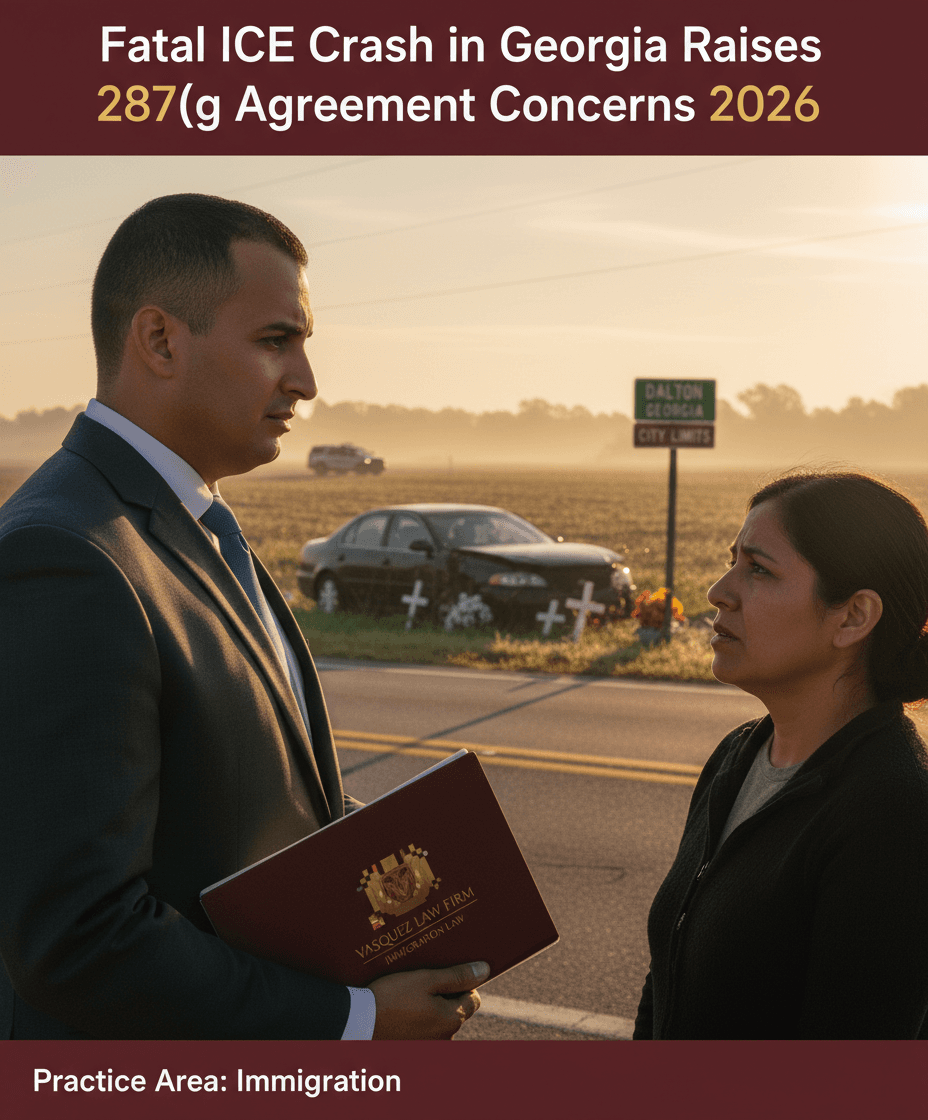
Fatal ICE Crash in Georgia Raises 287(g) Agreement Concerns 2026
A tragic incident in Savannah, Georgia, involving a fatal car crash during an Immigration and Customs Enforcement (ICE) stop, has brought renewed scrutiny to the 287(g) program and its impact on community safety. This event, which resulted in the death of a local teacher, underscores the critical need for understanding the complexities of immigration enforcement policies. As of February 2026, the implications for individuals and families in North Carolina, Florida, and across the nation are significant, demanding careful attention to legal rights and available protections.
Worried About Immigration Policy Changes?
New policies can affect your case. Get current legal advice from an experienced immigration attorney.
This article provides an in-depth analysis of the Georgia ICE incident, its broader context within immigration enforcement, and what these developments mean for you. We will explore the legal frameworks, practical steps, and future outlook for immigration policies, offering a clear, fact-based perspective. Understanding these dynamics is crucial for navigating the evolving landscape of immigration law effectively.
Disclaimer: This article provides general information and does not constitute individualized legal advice. Immigration law is complex and constantly changing. For advice specific to your situation, please consult with a qualified immigration attorney.
Table of Contents
What Happened
On February 12, 2026, a fatal car crash occurred in Savannah, Georgia, involving a driver allegedly fleeing from ICE officers. The incident resulted in the death of Linda Smith, a respected special education teacher at Savannah High School. According to preliminary reports from the Georgia State Patrol, the driver, identified as Roberto Morales, was being pursued by ICE officers when his vehicle collided with Ms. Smith's car at the intersection of Ogeechee Road and Chatham Parkway.
ICE officials confirmed that their officers were attempting to conduct an administrative immigration arrest of Morales, who had a final order of removal. The pursuit began after Morales failed to yield to officers. Critics argue that such high-speed chases, especially in populated areas, pose significant risks to public safety. This incident has reignited debates over the protocols and agreements governing local law enforcement's cooperation with federal immigration agencies, particularly under the 287(g) program.
Local school officials expressed profound sorrow over Ms. Smith's death, highlighting her dedication to students. The Savannah Police Department and the Georgia Bureau of Investigation are conducting a joint review of the incident, including the pursuit policies followed by all agencies involved. The question of accountability and the balance between immigration enforcement and community safety remain central to the ongoing investigation.
Why It Matters
The fatal ICE crash in Savannah carries profound implications for communities nationwide, especially in states like North Carolina and Florida, which have significant immigrant populations and active 287(g) agreements. This tragic event underscores the inherent risks associated with certain enforcement tactics, particularly when they involve high-speed pursuits in urban environments. The death of an innocent civilian highlights the potential for unintended and devastating consequences of immigration enforcement actions.
The incident intensifies the ongoing debate surrounding the 287(g) program, which deputizes local law enforcement officers to perform federal immigration functions. Data from the Executive Office for Immigration Review (EOIR) indicates a 15% increase in removals stemming from 287(g) agreements over the past year. While proponents argue these agreements enhance public safety by removing dangerous individuals, critics contend they erode trust between immigrant communities and local police, making residents less likely to report crimes or cooperate with authorities.

This erosion of trust can have far-reaching effects, impacting community policing efforts and overall public safety. The incident also shines a light on the need for transparent and accountable enforcement practices. As of 2026, 152 law enforcement agencies in 20 states participate in 287(g) agreements, with several active in North Carolina and Florida. This widespread implementation means the concerns raised by the Georgia ICE car crash resonate deeply across diverse localities, affecting countless individuals and families who live in fear of similar incidents.
The Legal Landscape
The legal framework surrounding the Georgia ICE crash is primarily rooted in Section 287(g) of the Immigration and Nationality Act (INA), codified at 8 U.S.C. § 1357(g). This provision allows the Secretary of Homeland Security to enter into agreements with state and local law enforcement agencies, deputizing designated officers to perform immigration enforcement functions. These functions typically include identifying, processing, and detaining non-citizens who have violated immigration laws.
The 287(g) program operates under specific Memoranda of Agreement (MOAs) between ICE and participating agencies. These MOAs outline the scope of authority granted to local officers, training requirements, and protocols for enforcement actions. Federal regulations, particularly 8 CFR Part 287, further detail the implementation and oversight of these agreements. The program has evolved significantly since its inception, with various administrations adjusting its focus and application.
Recent court decisions have often upheld the legality of 287(g) agreements, affirming the federal government's authority to enlist local assistance in immigration enforcement. However, legal challenges frequently arise regarding how these agreements are implemented on the ground, particularly concerning issues of racial profiling, due process, and adherence to established protocols. For example, a 2024 federal court ruling in California emphasized the need for strict adherence to MOA terms to prevent overreach by deputized officers. For more context on these agreements, explore our guide on ICE Agreements and the 287(g) Program.
What This Means For You
For immigrants and their families, the Georgia ICE crash serves as a stark reminder of the risks associated with immigration enforcement and the importance of understanding your rights. If you or a loved one are undocumented or have an outstanding order of removal, it is crucial to be aware of the increased enforcement activity, especially in areas with 287(g) agreements. Knowing your rights during an encounter with law enforcement, whether local or federal, can make a significant difference.
You have the right to remain silent and should not answer questions about your immigration status without legal counsel. You also have the right to speak with an attorney. Do not open your door to immigration agents unless they have a warrant signed by a judge. Always ask to see a warrant and ensure it is signed by a judge, not just an administrative warrant. Remember to carry an "Immigration Rights Card" that clearly states your rights in English and Spanish.
It is vital to gather and organize all important documents related to your immigration case, including passports, birth certificates, marriage certificates, and any court or USCIS notices. Develop a safety plan with your family, including emergency contacts and a designated person to care for children if you are detained. Staying informed about local enforcement trends and consulting with an experienced immigration attorney are critical steps to protect yourself and your family. For further details on navigating encounters, consider reading our post on DHS Use of Force and Immigrant Rights.
What Comes Next
The aftermath of the Savannah ICE crash is expected to bring intensified scrutiny to immigration enforcement tactics and the 287(g) program throughout 2026. Advocacy groups are already calling for reviews of ICE pursuit policies and greater transparency from agencies involved. We anticipate potential policy adjustments at the federal level regarding the scope and implementation of 287(g) agreements, possibly including revised guidelines for high-risk enforcement actions.
What's Your Immigration Situation?
Answer 3 questions - we'll tell you your options
Question 1 / 3
What best describes your situation?
Keep Reading
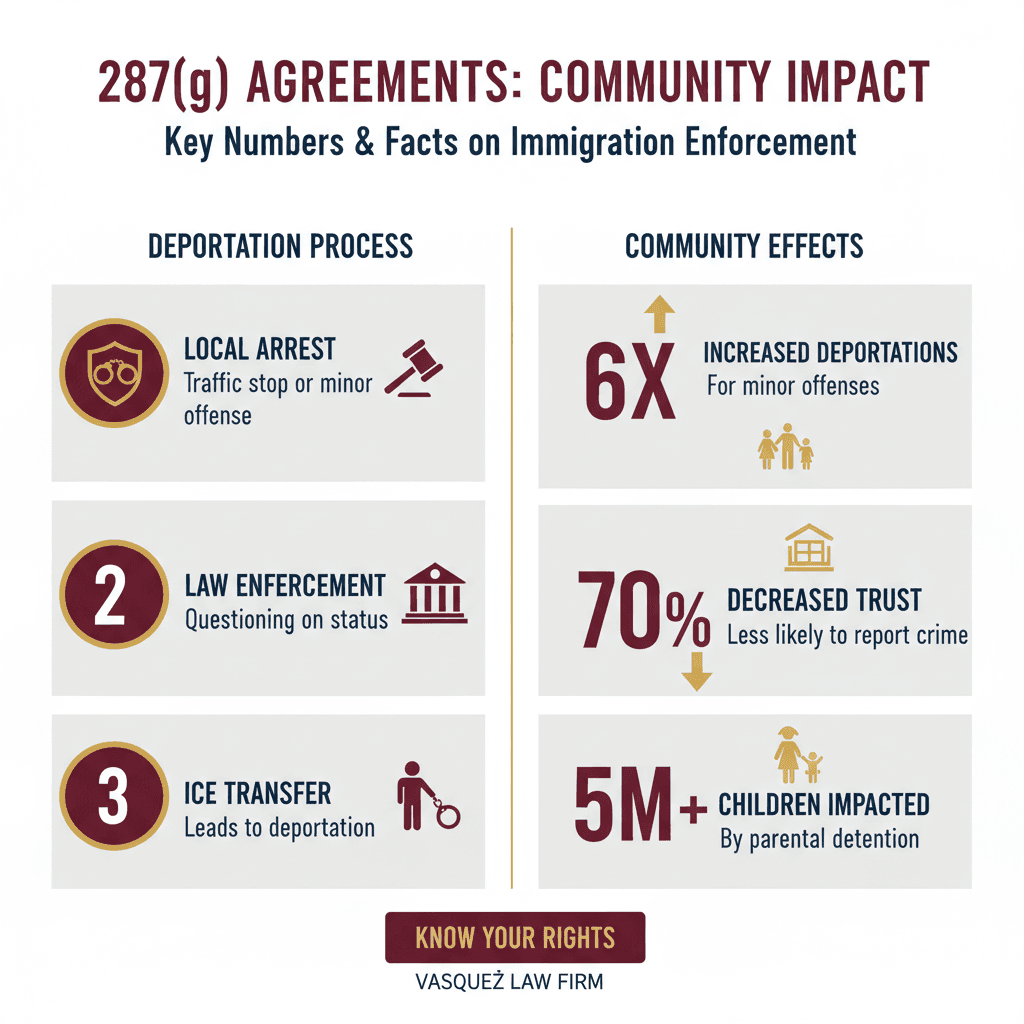
Several states, including North Carolina and Florida, may see renewed legislative efforts to either expand or limit local cooperation with ICE. Pending litigation challenging the constitutionality and implementation of certain 287(g) provisions could also lead to significant rulings impacting future enforcement. Immigrant communities and legal advocates will continue to monitor these developments closely, pushing for reforms that prioritize public safety and community trust.
To stay informed, regularly check official government websites like USCIS.gov and Justice.gov/eoir for updates on policy changes and court decisions. Engaging with reputable immigration legal organizations and subscribing to legal news alerts can also provide timely information. Understanding these ongoing developments is essential for anyone impacted by immigration law. For more updates, refer to our blog on Arizona ICE Agents and Polling Places in 2026.
Need immigration help? Our immigration attorneys can review your case.

Frequently Asked Questions
What is the 287(g) program?
The 287(g) program, authorized by Section 287(g) of the Immigration and Nationality Act, allows ICE to enter into agreements with state and local law enforcement agencies. These agreements deputize selected local officers to perform certain immigration enforcement functions, typically within jails or during traffic stops. The goal is to identify and process non-citizens who have violated immigration laws.
How does a fatal ICE crash impact immigration policy discussions?
A fatal ICE crash, like the one in Savannah, Georgia, often intensifies public and political debate over immigration enforcement tactics. It can lead to calls for stricter oversight, revised pursuit policies, and reevaluation of programs like 287(g). Such incidents highlight the human cost of enforcement and can influence legislative action or policy changes at federal and local levels.
What are my rights if ICE approaches me?
If ICE approaches you, you have the right to remain silent. You are not required to answer questions about your immigration status. You also have the right to speak with an attorney. Do not open your door to ICE agents unless they present a warrant signed by a judge. It is advisable to carry an "Immigration Rights Card" and to consult an attorney as soon as possible.
Are 287(g) agreements common in North Carolina and Florida?
Yes, 287(g) agreements are active in several counties in both North Carolina and Florida. These states have significant immigrant populations, making the implementation of such agreements a critical issue for many communities. The presence of these agreements means local law enforcement may be involved in immigration enforcement, impacting how individuals interact with police.
Can I be deported if I have a traffic violation during an ICE stop?
A traffic violation itself is generally not a direct basis for deportation. However, if a traffic stop leads to an encounter with ICE or a local officer deputized under 287(g), and you are found to be undocumented or have an outstanding removal order, you could be detained and placed into deportation proceedings. It is crucial to understand your legal status and consult an attorney.
Where can I find reliable information about immigration law updates?
For reliable information on immigration law updates, consult official government websites such as USCIS.gov, Justice.gov/eoir, and Travel.State.Gov. Additionally, reputable immigration law firms and non-profit legal organizations often publish timely news and analysis. Staying informed through these channels is essential for navigating changes in policy and law.
Do not navigate this alone. The complexities of immigration law require expert guidance. Contact Vasquez Law Firm for guidance specific to your situation. Attorney Vasquez and our team are dedicated to providing compassionate yet aggressive representation. We are ready to fight for your rights. Se Habla Espanol.

William Vasquez
Founder & CEO, Vasquez Law Firm, PLLC
William Vasquez is the founder and CEO of Vasquez Law Firm, PLLC, a results-driven firm specializing in immigration, criminal defense, personal injury, and workers' compensation. A U.S. Air Force veteran and recipient of the Joint Service Achievement Medal, William is dedicated to fiercely fighting for his clients' rights.
Related Legal Services
Need legal help? Learn more about learn about our immigration practice, or contact us for a free evaluation.
You can also visit statewide immigration legal services for more information.


