What You Need to Know About Return-to-Work Rights With a Workers Comp Attorney in Atlanta
Need an atlanta workers comp attorney? Learn return-to-work rights after injury and next steps. Call 1-844-967-3536 (Se Habla Español).
Vasquez Law Firm
Published on January 17, 2026· Updated March 3, 2026
Have questions? Talk to an attorney — free evaluation.
Call 1-844-967-3536What You Need to Know About Return-to-Work Rights With a Workers Comp Attorney in Atlanta
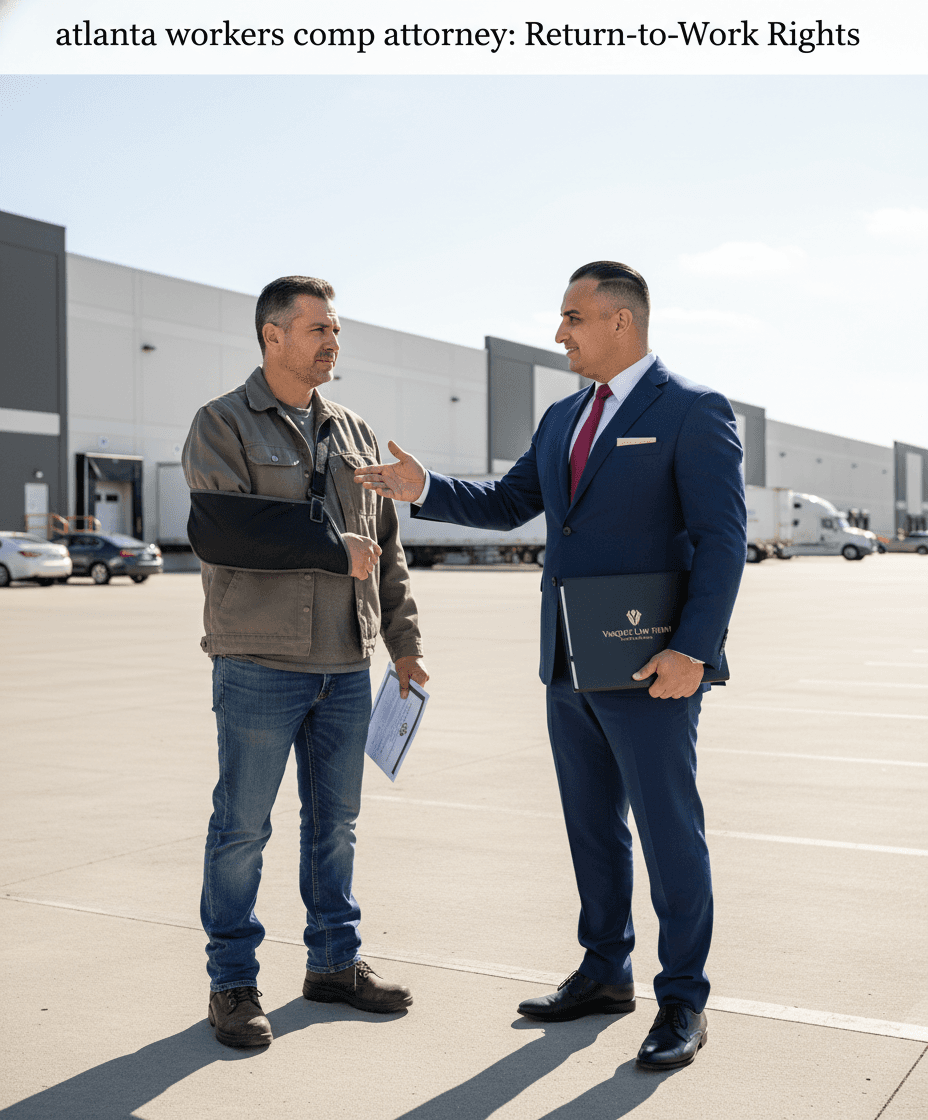
If you were hurt on the job and your doctor says you can work (even with restrictions), it can feel shocking when your employer says, “No, don’t come back.” Many workers searching for an atlanta workers comp attorney are dealing with this exact issue—lost pay, confusion about benefits, and fear of losing their job. Below, we break down what “return to work” really means in workers’ compensation, what employers can and cannot do, and the practical steps you can take to protect your health and your claim.
Important note: Vasquez Law Firm, PLLC is based in charlotte and focuses on workers’ compensation matters. Attorney Vasquez is admitted to the North Carolina State Bar and the Florida Bar. This article is general education, not legal advice, and it is not a substitute for advice from a Georgia-licensed lawyer for an Atlanta claim.
Hurt on the Job?
You have rights. We'll fight to get you the workers' comp benefits you deserve.
Worried your employer is blocking your return to work? Talk with our team about your options and next steps. Call 1-844-967-3536 or request a free consultation. Se Habla Español.
What This News Means for Workers (and Why It Matters in Atlanta and charlotte)
The real-world problem: “We don’t have work for you”
A recent article highlighted a common question: can an employer refuse to let an injured worker return to work after a job-related injury? The issue often comes up when a doctor releases a worker to “light duty” or “modified duty,” but the employer says there’s no position available.
Here’s the news link for context: Can My Employer Refuse To Let Me Return To Work After An Injury?
Why people search “atlanta workers comp attorney” for this issue
When an employer won’t allow a return, workers often lose income immediately. They may also feel pressured to quit, accept a low settlement, or return before they are medically ready. That’s why many people start searching for an atlanta workers comp attorney—they want clear answers and someone to push back when the system feels unfair.
How this plays out for charlotte residents
In charlotte, we see the same pattern: a treating provider sets restrictions, and the employer responds with silence, delay, or a “no light duty” statement. The outcome can affect wage-loss checks, medical treatment, and job security. If you work near Uptown, along I-77, or in industrial areas around Mecklenburg County, a return-to-work dispute can become a benefits dispute fast.
Return-to-Work Basics: What Employers Can Do vs. What They Can’t
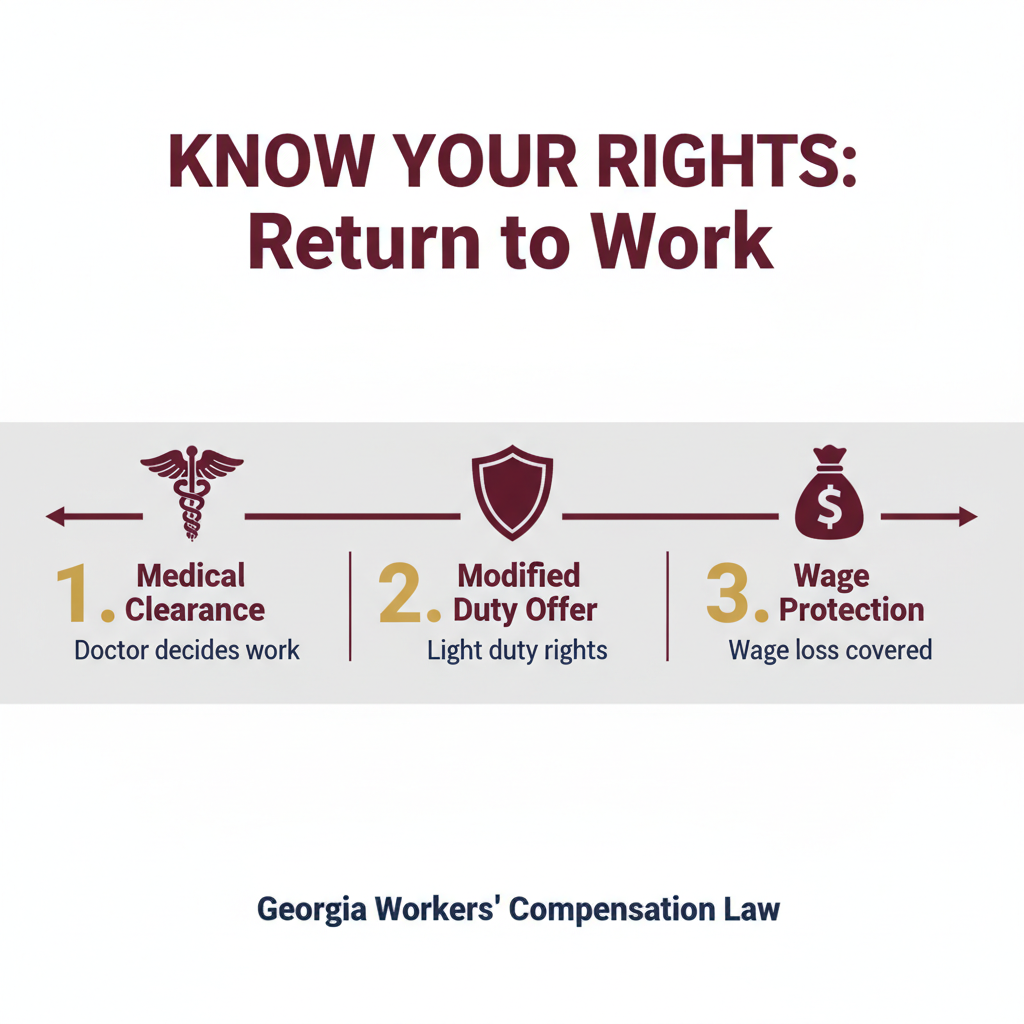
Medical release types: full duty, light duty, and no work
Return-to-work disputes usually start with a work status note. Most notes fall into three categories:
- Full duty: you can perform your regular job.
- Restricted/light duty: you can work with limits (no lifting, reduced hours, no repetitive bending, etc.).
- No work: you are taken completely off work for a period of time.
If you have restrictions, your employer may offer “modified duty” that fits those restrictions. If they don’t offer it, the key question becomes how that affects wage benefits and your ongoing claim.
Can an employer refuse your return?
In many situations, yes—an employer may choose not to bring you back to a specific job, especially if they truly cannot accommodate restrictions. But “can they refuse” is not the same as “do you lose benefits” or “did they do it legally.”
Workers’ comp is focused on medical care and wage replacement when a work injury causes disability. A refusal to return you to work can strengthen a wage claim if you remain medically restricted and cannot earn your pre-injury wages.
Watch for retaliation or pressure tactics
If you believe your employer is punishing you for reporting an injury or filing a claim, take it seriously. Retaliation protections can be separate from workers’ compensation rules, and deadlines can be short.
Common red flags include:
- Sudden write-ups after you report an injury
- Being removed from the schedule without explanation
- Pressure to use personal health insurance for a work injury
- Being told you’ll be fired if you don’t “come back 100%” immediately
Atlanta vs. North Carolina Claims: Key Differences You Should Know
Georgia workers’ comp (Atlanta): the core framework
If your injury happened in Atlanta, Georgia law generally applies. Georgia workers’ compensation is primarily governed by O.C.G.A. Title 34, Chapter 9. These laws cover benefits like authorized medical treatment, temporary total disability (TTD), temporary partial disability (TPD), and permanent partial disability (PPD).
For official Georgia resources, start here: Georgia Department of Labor. You can also review federal wage and workplace guidance through the U.S. Department of Labor.
North Carolina workers’ comp (charlotte): why the NC Industrial Commission matters
If your injury happened in North Carolina (including the charlotte area), the claim is typically handled through the North Carolina Industrial Commission. The Commission oversees forms, hearings, and many dispute processes in NC workers’ comp cases.
Authoritative source: NC Industrial Commission.
What if you live in charlotte but were injured while working in Atlanta?
Multi-state cases can be tricky. Where you were hired, where you mainly work, and where the injury occurred can matter. Some workers have potential options in more than one state, but you must avoid double-recovery and follow strict rules.
If you’re searching for an atlanta workers comp attorney because your injury happened in Georgia, you should speak with a Georgia-licensed lawyer promptly. If you’re a charlotte resident and believe North Carolina may also have a connection to your employment, you can also consult a North Carolina lawyer to understand whether NC jurisdiction may apply.
When Your Employer Says “Don’t Come Back”: How It Affects Your Benefits
Wage-loss benefits may continue if restrictions prevent earning
Many workers hear “we don’t have light duty” and assume their checks stop. Not always. If you are medically restricted and the employer cannot provide suitable work, you may still qualify for wage-loss benefits under the applicable state system.
Key factors often include:
- Your medical restrictions (in writing)
- Whether the offered job (if any) is truly within restrictions
- Whether you are able to earn close to your pre-injury wages
- Whether you are actively following treatment and work-status rules
Light duty must be “suitable,” not just available
Employers and insurers sometimes offer a job title that sounds safe but requires tasks your doctor banned. A “suitable” job generally means work that fits your restrictions and is realistic for your condition.
If you try the job and pain spikes, report it quickly to your authorized treating provider. Document what tasks caused the problem and ask whether restrictions need to be updated.
Why documentation is everything
Return-to-work disputes are often decided on paper: doctor notes, job offers, emails, and recorded calls. If you are dealing with a refusal to return, build a simple file that includes:
- All work status notes and restrictions
- Written job offers (duties, hours, pay rate, location)
- Your written response (polite, factual, and timely)
- A log of calls, texts, and who you spoke with
Return-to-work disputes move fast. If you’re being told you can’t return—or you’re being pressured to return too soon—call 1-844-967-3536. You can also reach us through /contact. Se Habla Español.
What to Do Next (Without Hurting Your Claim)
Step-by-step checklist
If your employer refuses to let you return after an injury, these steps can protect your health and your case:
- Get clear restrictions in writing from your treating provider (not just verbal advice).
- Ask for the refusal in writing (email is fine): “Can you confirm you have no work within my restrictions?”
- Do not exaggerate symptoms, but don’t minimize them either—be consistent and factual.
- Follow medical care and attend appointments. Missed visits can be used against you.
- Keep a wage log showing dates you were off work and any partial earnings.
Do you have to look for other work?
In some cases, you may be expected to make reasonable efforts to find suitable work within restrictions. The rules vary by state and by the status of your claim. A qualified lawyer can explain when a job search is required, what counts as “reasonable,” and how to document it.
Common mistakes that can reduce benefits
- Ignoring a written job offer without getting legal guidance
- Posting on social media in a way that contradicts medical restrictions
- Seeing a non-authorized provider without approval (in systems that require it)
- Failing to report a work restriction change to the employer/adjuster
How an atlanta workers comp attorney (and Our charlotte Team) Can Help
What a workers’ comp lawyer actually does in a return-to-work fight
A strong workers’ compensation lawyer helps you protect benefits while keeping the focus on medical proof. In a return-to-work dispute, counsel may:
- Review restrictions and compare them to the offered job duties
- Challenge improper benefit termination or suspension
- Gather medical support for work limits and disability status
- Prepare you for recorded statements, mediation, or hearings
- Negotiate a fair settlement when appropriate
If your injury occurred in Atlanta, hiring an atlanta workers comp attorney who is licensed in Georgia is often the best path for direct representation in that state’s system.
How Vasquez Law Firm, PLLC supports injured workers
Vasquez Law Firm, PLLC has spent 15 years helping injured people navigate benefit systems and high-stakes paperwork. Attorney Vasquez, JD, is admitted to the North Carolina State Bar and the Florida Bar, and our team is proud to serve charlotte residents. Se Habla Español.
We regularly help clients understand:
- Whether a job offer is truly “within restrictions”
- How to document refusal-to-return situations
- How to avoid missteps that insurers use to cut off checks
Learn more about our Workers Compensation services and meet our team on the Attorney Vasquez page.
Hurt on the Job?
You have rights. We'll fight to get you the workers' comp benefits you deserve.
Keep Reading

Local knowledge matters (Mecklenburg County and beyond)
For many clients, the stress is not just legal—it’s practical. Getting to medical visits, dealing with HR, and keeping your family afloat are real problems. When you’re near the Mecklenburg County Courthouse area or commuting across the metro, clear guidance and a documented plan can make a major difference.
If you are looking for an atlanta workers comp attorney but you live in North Carolina, we can also discuss whether your work situation has North Carolina connections and what questions to ask when you speak with Georgia counsel.
Frequently Asked Questions
1) Can my employer refuse to let me return to work after an injury?
Sometimes, yes—especially if they can’t accommodate restrictions or your job is safety-sensitive. But a refusal does not automatically end your workers’ comp benefits. Your eligibility often depends on your medical restrictions, available suitable work, and your wage loss under the rules of the state system handling the claim.
2) If my doctor releases me to light duty, do I have to accept it?
You should take any offer seriously. If it is within your restrictions, refusing may risk wage benefits. If it is outside your restrictions, you should raise the issue quickly in writing and contact counsel. A lawyer can help you compare the job description against the medical limits and respond in a way that protects your claim.
3) What if the employer says “no light duty available”?
Get that statement in writing and keep your medical notes updated. In many cases, if you remain restricted and the employer has no suitable work, wage-loss benefits may continue. The exact process and standards vary by state, which is why speaking with an atlanta workers comp attorney (for Georgia injuries) or an NC lawyer (for NC injuries) can be crucial.
4) Can I be fired for filing a workers’ comp claim?
Workers’ comp laws do not usually “guarantee” a job, but retaliation for reporting injuries or exercising legal rights may be unlawful under other employment protections. Because facts and deadlines matter, talk to counsel quickly if termination or discipline follows soon after an injury report.
5) I live in charlotte but got injured while working in Atlanta—what should I do?
Start by reporting the injury, following medical care, and preserving documents. Then speak with a Georgia-licensed atlanta workers comp attorney about a Georgia claim. If your employment has significant North Carolina ties (hiring, primary work location, or employer presence), consider consulting an NC attorney as well to explore whether NC jurisdiction could apply.
6) How long do I have to act?
Notice and filing deadlines vary by state and by the type of dispute. Waiting can hurt your ability to collect back pay or get treatment authorized. If you’re unsure, talk with an attorney promptly so your timeline is protected.
Get help before benefits get cut off. If you’re in North Carolina and need guidance from a team serving charlotte residents, call 1-844-967-3536 or request your free consultation today. Se Habla Español.
Disclaimer: This article is for informational purposes only and does not create an attorney-client relationship. Laws change, and outcomes depend on specific facts. For Atlanta/Georgia claims, consult a Georgia-licensed attorney.
Vasquez Law Firm
Legal Team
Our experienced attorneys at Vasquez Law Firm have been serving clients in North Carolina and Florida for over 30 years. We specialize in immigration, personal injury, criminal defense, workers compensation, and family law.
Related Legal Services
Need legal help? Learn more about NC workers compensation legal team, or contact us for a free evaluation.