What You Need to Know About Remote Work Injury Claims in NC Workers Comp in 2026
Remote work has changed how workplace injuries occur in NC. This guide explains how workers compensation covers injuries while working from home.
Published on December 8, 2025· Updated February 9, 2026
Hurt on the job?
Free review of your workers' comp claim.
Free & confidential · Se habla espanol · 24/7
Have questions? Talk to an attorney - free evaluation.
Call 1-844-967-3536Hurt on the Job? Claim What You Are Owed
A review of your workers' comp claim - we handle the fight.
What You Need to Know About Remote Work Injury Claims in NC Workers Comp in 2026
Understanding Remote Work Injuries Workers Comp NC
Hurt at work? You have rights.
NC workers' comp covers medical bills and lost wages — even for undocumented workers. 15-min call to see what you qualify for.
With the rise of telecommuting and work-from-home arrangements, North Carolina has seen a significant increase in remote work injuries workers comp NC claims. Employees working from home or other remote locations may suffer injuries that qualify for workers compensation benefits under North Carolina law. However, navigating the complexities of workers comp claim NC for remote employees requires careful understanding of the specific legal standards and evidentiary requirements.
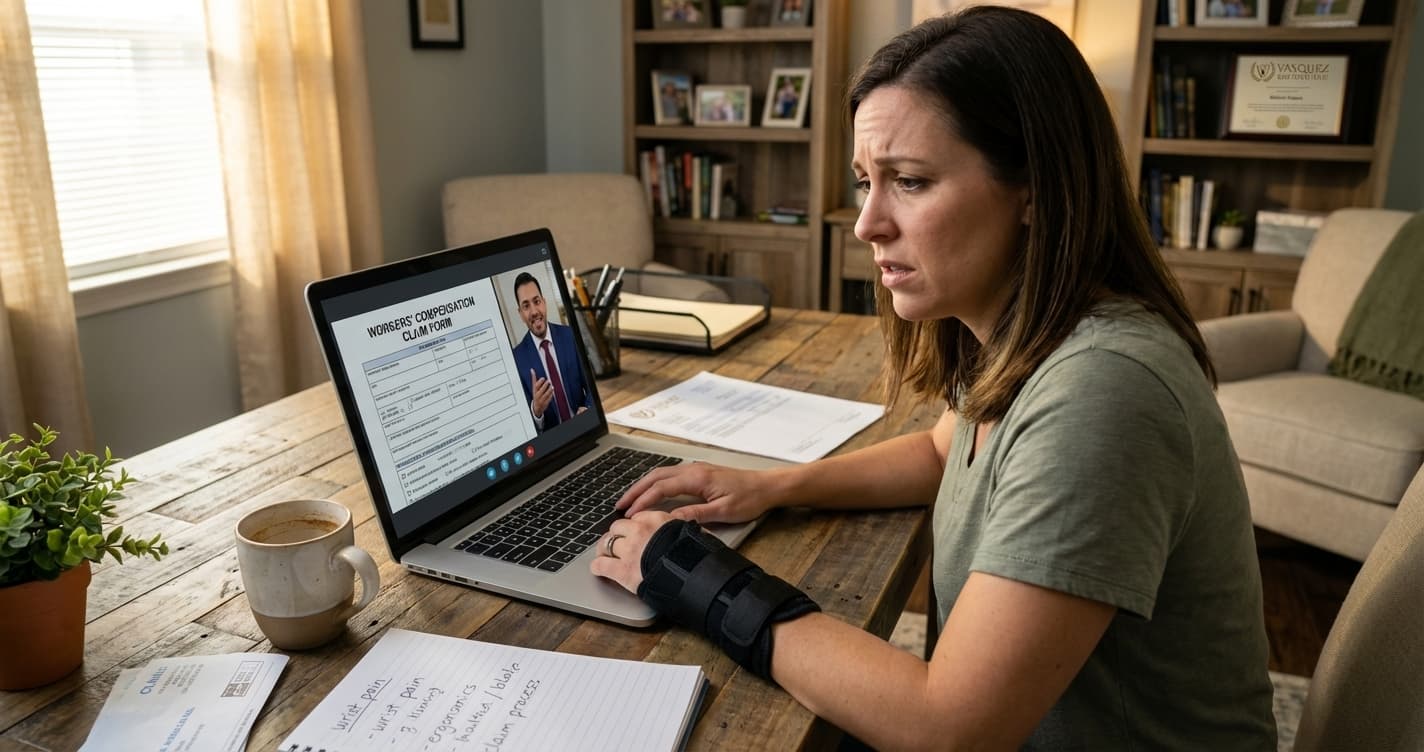
Remote work injuries typically include musculoskeletal disorders from poor ergonomic setups, slips and falls inside the home office, or even stress-related conditions. The North Carolina Industrial Commission recognizes that injuries occurring within the scope and course of employment are compensable, even outside traditional workplaces. Yet, proving that a telecommuting workplace injury is work-related can be challenging.
To qualify for NC workers compensation remote benefits, employees must demonstrate that the injury arose out of and in the course of their employment duties. This includes showing that the injury happened while performing job tasks, during authorized work hours, and in a designated home office space. The rise of remote work highlights the importance of employers and employees understanding their rights and responsibilities regarding remote employee rights NC.
If you have suffered a work from home injury claim in North Carolina, contact Vasquez Law Firm at 1-844-967-3536 for a free case evaluation. Se Habla Español.
Legal Framework for Remote Work Injuries in North Carolina
North Carolina's workers compensation system is governed by the North Carolina Workers’ Compensation Act, codified in Chapter 97 of the North Carolina General Statutes. According to N.C. Gen. Stat. § 97-2(2), an injury must arise out of and in the course of employment to be compensable.
For remote workers, this means that the injury must be connected with their employment duties performed at home or another approved remote location. The North Carolina Industrial Commission (IC) has addressed claims related to home office injuries, emphasizing the need for a clearly defined work area and evidence that the injury occurred during work activities (NC Industrial Commission).
Additionally, OSHA guidelines recommend proper ergonomic setups for home offices to reduce injury risk (OSHA Ergonomics Guidance). While OSHA does not enforce workplace standards in private homes, employers have a duty to provide a safe working environment, which can extend to remote settings. This evolving legal landscape impacts both employees and employers regarding home office injury benefits and responsibilities.
Scope and Course of Employment for Remote Injuries
Establishing that an injury occurred within the “scope and course” of employment is critical. This typically means the injury happened while the employee was performing job-related tasks during authorized work hours. North Carolina courts have recognized that injuries sustained in a home office can be compensable if the employee was engaged in work duties and the injury was not caused by a personal, non-work-related activity.
Employer Liability and Remote Work Policies
Employers in North Carolina should establish clear telecommuting policies that define work hours, authorized workspaces, and safety expectations. This helps clarify the employer’s liability for injuries and streamlines workers compensation claims. Documentation of these policies is important in defending against fraudulent or non-compensable claims.
Common Types of Remote Work Injuries Covered by Workers Comp NC
Remote employees in North Carolina may experience a variety of injuries eligible for workers comp benefits. Understanding these common injury types helps employees recognize when to file a claim and what evidence to gather.
Ergonomic and Repetitive Strain Injuries
One of the most common remote work injuries involves musculoskeletal disorders like carpal tunnel syndrome, tendonitis, and neck or back pain caused by prolonged sitting and improper ergonomic setups. These injuries develop over time and can be compensable if linked to work activities.
Slips, Trips, and Falls
Falls in the home office or during work-related travel inside the home can lead to compensable injuries. For example, tripping over cords or slipping on a wet floor during a work break may qualify as a telecommuting workplace injury if it occurs during work hours in the designated work area.
Psychological Injuries
Stress, anxiety, and depression caused or aggravated by work conditions can sometimes qualify for workers compensation benefits. North Carolina requires medical evidence establishing a causal connection between work and the psychological injury.
Accidents During Work-Related Travel
Remote employees who travel for work-related purposes, such as visiting clients or attending meetings, may suffer injuries covered by workers comp. These incidents must be related to authorized work activities.
Filing a Work From Home Injury Claim in North Carolina
If you sustain a remote work injury in North Carolina, it’s important to follow proper steps to protect your rights and qualify for workers compensation benefits.
Report the Injury Promptly
Notify your employer immediately after the injury occurs. Timely reporting is crucial for documenting the incident and ensuring eligibility for benefits under N.C. Gen. Stat. § 97-22.
Document the Incident and Injury
Keep detailed records of the date, time, and circumstances of the injury. Photographs of the injury and your home workspace can support your claim. Obtain medical evaluations and keep copies of all treatment records.
File a Workers Compensation Claim
Submit a formal claim with your employer’s insurance carrier or through the North Carolina Industrial Commission. Your employer is required to provide the necessary forms and instructions. Legal representation can help ensure your claim is properly filed and supported.
Cooperate with the Claims Process
Attend all medical appointments and follow treatment plans. Respond promptly to requests for information from the insurance carrier or IC. Keep a copy of all correspondence.
For help with your workers comp claim NC related to a remote work injury, contact attorney Jessica Vasquez at 1-844-967-3536. Schedule a free case evaluation today. Se Habla Español.
Remote Employee Rights NC and Employer Responsibilities
Remote employees in North Carolina have specific rights and protections under workers compensation law. Likewise, employers have responsibilities to provide safe work environments and respond appropriately to injury claims.
Remote Employee Rights
- Right to Compensation: Injured remote employees are entitled to medical benefits and wage replacement if the injury arose out of employment.
- Right to Medical Treatment: Employees may choose their treating physician or follow employer-designated providers as per the North Carolina Workers’ Compensation Act.
- Right to Appeal: If a claim is denied, employees can appeal through the NC Industrial Commission.
- Protection Against Retaliation: Employers cannot discharge or discriminate against employees for filing workers comp claims.
Employer Responsibilities
- Provide a safe work environment, extending to approved home offices where reasonable.
- Establish telecommuting policies that clearly define work hours and authorized workspaces.
- Report injuries and file claims promptly.
- Cooperate with medical providers and the Industrial Commission during claims review.
Challenges in Proving Remote Work Injuries for Workers Compensation
Proving a work from home injury claim in North Carolina can be more difficult than traditional workplace injuries because of the unique setting and potential for personal activities to intersect with work.
Establishing Work-Relatedness
Claimants must show that the injury occurred while performing job duties. Injuries sustained during breaks or while performing personal errands typically do not qualify. The NC Industrial Commission requires clear evidence linking the injury to employment activities.
Home Environment Complexity
Because the home is both a personal and work environment, distinguishing between work-related and non-work-related injuries is complicated. For example, if an employee trips over a toy left by their child, this may not be compensable.
Documentation and Witnesses
Unlike traditional workplaces, there may be no coworkers present to witness the injury. Video evidence, medical records, and employer policies become critical in supporting the claim.
Potential Employer Defenses
Am I Eligible for Workers' Comp?
3 quick questions to check your eligibility
Question 1 / 3
Where were you injured?
Keep Reading
Employers may argue that the injury was not work-related, occurred outside authorized work hours, or resulted from a pre-existing condition. Legal counsel can help overcome these defenses.
Home Office Injury Benefits and Compensation Available
North Carolina workers compensation provides several types of benefits for remote employees injured while working.
Medical Benefits
All reasonable and necessary medical treatment related to the injury is covered, including doctor visits, physical therapy, medications, and surgeries.
Temporary Total Disability Benefits
When an injury prevents an employee from working temporarily, they may receive wage replacement benefits equal to two-thirds of their average weekly wage, subject to statutory maximums under N.C. Gen. Stat. § 97-29.
Permanency Benefits
If the injury causes permanent impairment, the employee may be eligible for additional compensation based on the degree of disability.
Vocational Rehabilitation
In cases where an employee cannot return to their previous job, vocational rehabilitation services may be available to assist with retraining or job placement.
How Vasquez Law Firm Can Help with Remote Work Injury Cases
At Vasquez Law Firm, we understand the unique challenges of remote work injuries workers comp NC claims. Our experienced attorneys help injured remote employees protect their rights and secure full benefits.
- Free case evaluations to evaluate your claim and explain your options.
- Assistance with filing and managing workers compensation claims.
- Representation before the North Carolina Industrial Commission.
- Negotiation and litigation to maximize your compensation.
- Help understanding your remote employee rights NC and employer obligations.
Contact us today at 1-844-967-3536 or visit our contact page to schedule your free case evaluation. Se Habla Español.
Don't delay in protecting your rights after a remote work injury. Call Vasquez Law Firm at 1-844-967-3536 for expert legal help with your workers comp claim NC.
What qualifies as a remote work injury for workers compensation in NC?
An injury qualifies if it arises out of and in the course of employment while performing job duties at home or another approved remote location. The injury must occur during authorized work hours and in a designated work area.
Can I file a workers comp claim for a slip and fall in my home office?
Yes, if the slip and fall occurred while you were performing work-related duties in your home office during work hours, the injury may be compensable under NC workers compensation laws.
Are psychological injuries from remote work covered by workers comp?
Stress and psychological injuries can be compensable if you can prove they are work-related and supported by medical evidence. North Carolina requires a causal connection between work and the injury.
Do I have to prove that my home office is a formal workspace?
While not always required, showing that you have a clearly defined and regularly used home office space helps establish that your injury occurred within the scope of employment.
What if my employer denies my remote work injury claim?
You have the right to appeal the denial through the North Carolina Industrial Commission. Consulting with an experienced workers compensation attorney can improve your chances of success.
Are employers responsible for providing ergonomic equipment for home offices?
While OSHA does not regulate private home offices, employers should encourage safe work environments and may be responsible if they supply equipment or mandate specific setups.
How long do I have to file a workers comp claim for a remote injury in NC?
North Carolina law generally requires filing within two years of the injury date. Prompt reporting to your employer is essential to preserve your rights.
Can I receive wage replacement benefits if I cannot work due to a remote work injury?
Yes, if your injury prevents you from working temporarily, you may be eligible for temporary total disability benefits, typically two-thirds of your average weekly wage.
Is it important to hire an attorney for a remote work injury claim?
Yes. An attorney like those at Vasquez Law Firm can help gather evidence, file claims correctly, negotiate with insurers, and represent your interests before the Industrial Commission.
Disclaimer: This blog post provides general information and does not constitute legal advice. For advice related to your specific situation, please contact Vasquez Law Firm.
Related Topics

William Vasquez
Founder & CEO, Vasquez Law Firm, PLLC
William Vasquez is the founder and CEO of Vasquez Law Firm, PLLC, a results-driven firm specializing in immigration, criminal defense, personal injury, and workers' compensation. A U.S. Air Force veteran and recipient of the Joint Service Achievement Medal, William is dedicated to fiercely fighting for his clients' rights.
Related Legal Services
Need legal help? Learn more about get workers comp legal help today, or contact us for a free evaluation.
You can also visit our North Carolina workers comp practice for more information.