How to Protect Yourself From Workers Comp Fraud Claims in 2026
Understand workers' compensation fraud in NC and FL for 2026. Learn to recognize, report, and avoid fraudulent claims. Contact Vasquez Law for help.
Published on February 26, 2026
Hurt on the job?
Free review of your workers' comp claim.
Free & confidential · Se habla espanol · 24/7
Have questions? Talk to an attorney - free evaluation.
Call 1-844-967-3536Hurt on the Job? Claim What You Are Owed
A review of your workers' comp claim - we handle the fight.
How to Protect Yourself From Workers Comp Fraud Claims in 2026
Workers' compensation systems are designed to protect employees injured on the job, providing essential benefits for medical care and lost wages. However, when individuals or entities abuse this system through deceptive practices, it constitutes workers' compensation fraud. This can involve false injury claims, exaggerating symptoms, or misrepresenting employment status. Understanding what constitutes workers' compensation fraud is crucial for both employees seeking legitimate benefits and employers protecting their businesses. As of 2026, North Carolina and Florida laws have specific provisions to address these fraudulent activities, carrying serious legal consequences for those involved. Navigating these complex regulations requires skilled legal guidance to ensure compliance and protect your rights.
Need help with your workers' compensation case or have questions about potential fraud? Our experienced attorneys are ready to fight for you. Se Habla Español.
Schedule Your Free Case Evaluation
Or call us now: 1-844-967-3536
Quick Answer
Workers' compensation fraud involves intentionally making false statements or misrepresentations to obtain or deny benefits. It can be committed by employees, employers, or medical providers, and carries severe penalties including fines, imprisonment, and restitution in 2026. Recognizing the signs and reporting suspected fraud is essential for maintaining the integrity of the system.
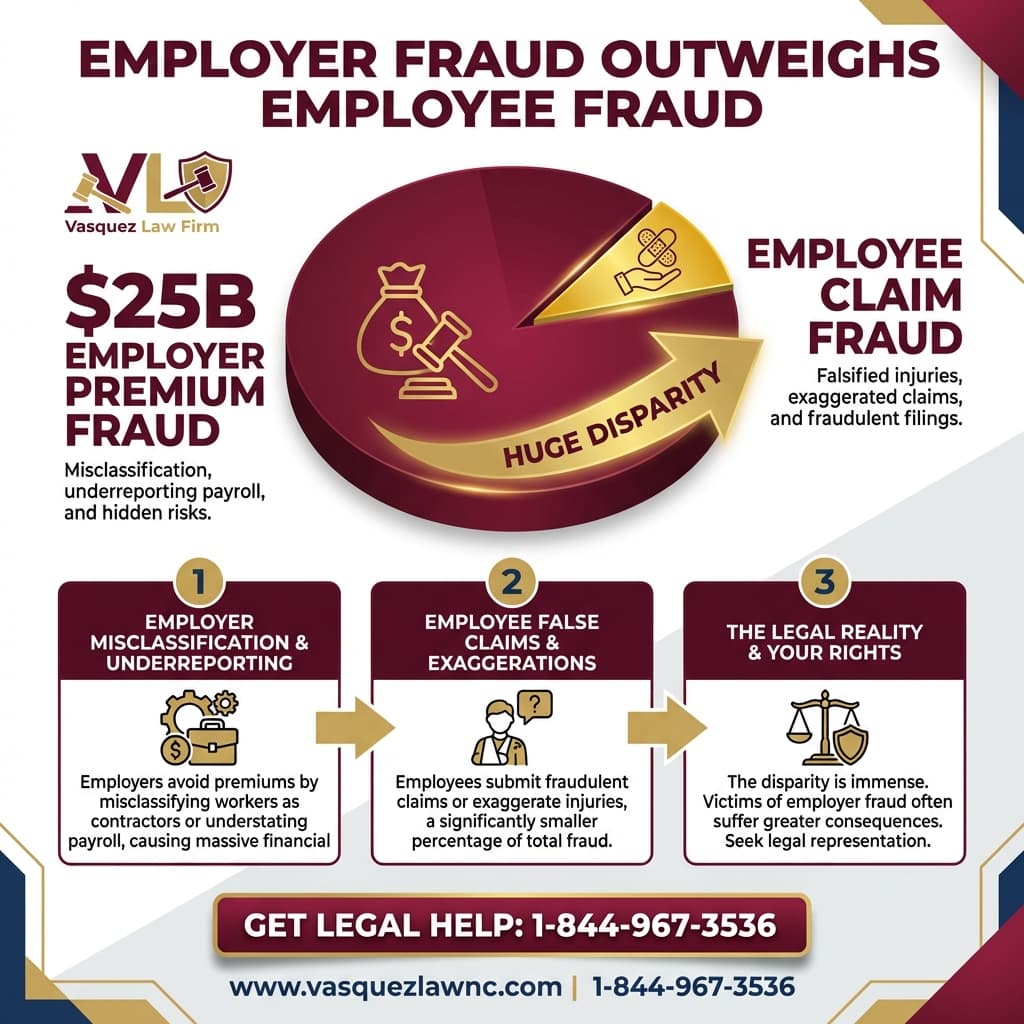
- Employee fraud: Faking injuries or exaggerating symptoms.
- Employer fraud: Misclassifying employees or underreporting payroll.
- Provider fraud: Billing for services not rendered or unnecessary treatments.
- Penalties include fines, jail time, and repayment of benefits.
- Reporting suspected fraud is a civic duty and can prevent further abuse.
Understanding Workers' Compensation Fraud in 2026
Workers' compensation fraud is a serious offense that undermines the system designed to help genuinely injured workers. It encompasses a range of deceptive actions taken by various parties involved in a claim. For an act to be considered fraud, there must be intent to deceive or misrepresent facts for personal gain or to avoid legal obligations. This intent is often the most challenging aspect to prove in a legal case, requiring compelling evidence and thorough investigation.
In 2026, authorities in North Carolina and Florida are increasingly vigilant in investigating and prosecuting workers' compensation fraud cases. The consequences can be devastating, impacting not only the individuals directly involved but also contributing to higher insurance premiums for honest businesses and fewer resources for legitimate claimants. Understanding the different forms of fraud is the first step toward prevention and detection.
For employees, it's crucial to understand that even minor exaggerations can escalate into serious accusations. Employers must also be aware of their responsibilities and the potential for fraud within their own operations or from third-party providers. The legal framework surrounding workers' compensation fraud is complex, and navigating it without proper legal representation can lead to severe repercussions. Vasquez Law Firm is dedicated to helping clients understand these intricacies.
Types of Workers' Compensation Fraud and Examples
Workers' compensation fraud can manifest in several ways, often categorized by who commits the fraudulent act. Each type carries its own set of challenges for detection and prosecution. It's important to differentiate between an honest mistake or misunderstanding and deliberate fraudulent intent.
Employee Fraud
This is perhaps the most commonly recognized form of workers' compensation fraud. It involves an employee making false claims or misrepresenting their injury or ability to work. Examples include:
- Faking an injury: Claiming an injury occurred at work when it happened elsewhere, or fabricating an injury entirely.
- Exaggerating symptoms: Overstating the severity of a legitimate injury to receive more benefits or extend time off work. A recent case involved an LAPD officer accused of skydiving while on disability leave, highlighting extreme examples of perceived exaggeration.
- Working while collecting benefits: Engaging in gainful employment while simultaneously receiving workers' compensation benefits for being unable to work. This often involves working under the table or for a different employer.
- Misrepresenting pre-existing conditions: Failing to disclose a pre-existing injury or condition and claiming it as a new work-related injury.
Employer Fraud
Employers can also commit fraud to avoid their obligations or reduce insurance premiums. This type of fraud can have widespread impacts on workers and the integrity of the system.
- Underreporting payroll: Misrepresenting the total amount of wages paid to employees to lower workers' compensation insurance premiums.
- Misclassifying employees: Treating employees as independent contractors to avoid paying workers' compensation insurance or other benefits.
- Failing to secure coverage: Operating a business without the legally required workers' compensation insurance coverage.
- Retaliation: Firing or penalizing an employee for filing a legitimate workers' compensation claim, which can sometimes involve fabricating reasons to deny a claim.
Medical Provider Fraud
Healthcare providers can also engage in fraudulent activities within the workers' compensation system, leading to inflated costs and unnecessary treatments.
- Billing for services not rendered: Charging for medical procedures, tests, or appointments that never took place.
- Upcoding: Billing for more complex or expensive procedures than what was actually performed.
- Performing unnecessary treatments: Recommending or performing medical procedures that are not medically necessary for the patient's injury, solely to generate more billing.
- Kickbacks: Receiving payments or other inducements for referring patients to specific clinics or for prescribing certain medications.
Reporting Workers' Compensation Fraud: What to Do
If you suspect workers' compensation fraud, whether as an employer, employee, or concerned citizen, knowing how to report it properly is crucial. Improper reporting can lead to complications or even accusations against the reporter. Both North Carolina and Florida have specific agencies and procedures for handling these allegations.
North Carolina Reporting Procedures
In North Carolina, suspected workers' compensation fraud can be reported to the North Carolina Industrial Commission (NCIC). The NCIC has a dedicated Fraud and Compliance Division that investigates these claims. You can typically submit a report online, by mail, or by phone. It's important to provide as much detail as possible, including names, dates, specific incidents, and any supporting documentation you may have. Remember that making a false report can also carry penalties, so ensure your suspicions are based on reasonable observations.
Florida Reporting Procedures
Florida takes workers' compensation fraud very seriously, with the Department of Financial Services (DFS) leading the charge. The Florida Division of Workers' Compensation within the DFS has a Bureau of Workers' Compensation Fraud. You can report suspected fraud through their online portal, a dedicated hotline, or by mail. Florida law, specifically Chapter 440 of the Florida Statutes, outlines the framework for workers' compensation and includes provisions for fraud detection and prosecution. Providing detailed information, including any evidence like DFS fraud reports or Florida fraud investigation outcomes, will strengthen your report.
What Evidence is Needed for a Fraud Case?
Strong evidence is essential for any fraud investigation. This can include:
- Witness statements: Accounts from individuals who observed the alleged fraudulent activity.
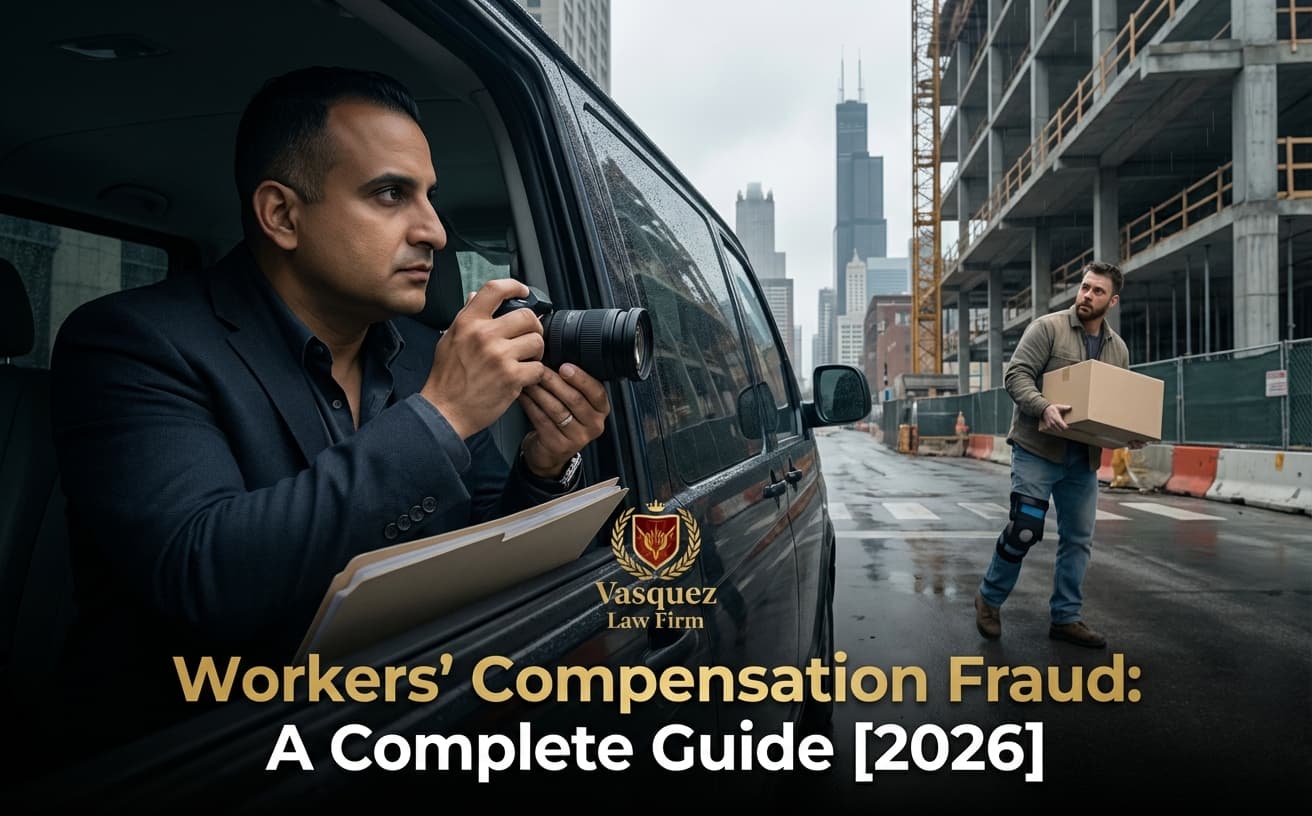
- Surveillance video or photos: Visual proof of an employee engaging in activities inconsistent with their claimed injury.
- Medical records: Documentation that contradicts the claimant's stated condition or treatment.
- Employment records: Proof of an employee working while collecting benefits.
- Financial records: Evidence of undisclosed income or suspicious billing practices.
- Emails, texts, or social media posts: Digital communications that reveal fraudulent intent or activities.
Gathering this evidence can be complex and may require legal assistance. An attorney can help compile and present the necessary documentation while protecting your rights throughout the process. Our firm also handles cases involving Florida workers' comp denied claims, where fraud might be alleged.
Don't face your legal challenges alone. Our team is here to help you every step of the way with workers' compensation fraud allegations or claims.
Call today: 1-844-967-3536 | Se Habla Español
Penalties for Workers' Compensation Fraud in 2026
The legal consequences for workers' compensation fraud are severe and vary depending on the jurisdiction and the extent of the fraud. Both North Carolina and Florida impose strict penalties, which can include both criminal and civil repercussions. These penalties are designed to deter fraudulent behavior and protect the integrity of the workers' compensation system.
Criminal Penalties
In most cases, workers' compensation fraud is prosecuted as a felony, especially when significant amounts of money are involved. Criminal penalties can include:
- Imprisonment: Depending on the state and the value of the fraud, individuals can face years in state prison. For example, in North Carolina, fraud involving more than a certain amount can be a Class H felony, carrying a significant prison sentence.
- Fines: Substantial monetary fines are common, often in the thousands or tens of thousands of dollars, in addition to any restitution.
- Probation: A period of supervised release may be imposed, requiring adherence to strict conditions.
- Criminal record: A felony conviction will result in a permanent criminal record, impacting future employment, housing, and other aspects of life.
Civil Penalties and Restitution
Beyond criminal charges, individuals found guilty of workers' compensation fraud often face civil penalties aimed at recovering the fraudulently obtained funds and imposing additional sanctions.
- Restitution: The fraudulent party will be ordered to repay all benefits or funds obtained through deception, often with interest.
- Civil fines: States may impose additional civil fines or penalties, sometimes several times the amount of the fraudulent claim.
- Loss of future benefits: For employees, a fraud conviction can result in the permanent loss of eligibility for future workers' compensation benefits, even for legitimate injuries.
- License revocation: For medical providers or employers, a fraud conviction can lead to the revocation of professional licenses or business operating permits.
These penalties highlight the critical importance of seeking legal counsel if you are accused of workers' compensation fraud or suspect someone else is committing it. Understanding your rights and obligations under workers' compensation law is essential to avoid severe consequences.
Preventing and Detecting Workers' Compensation Fraud
For employers, implementing robust strategies to prevent and detect workers' compensation fraud is vital for protecting their business and maintaining a fair work environment. For employees, understanding these measures can help ensure legitimate claims are processed smoothly.
For Employers: Best Practices
- Comprehensive safety programs: A strong safety culture reduces actual injuries, thus reducing the opportunity for fraudulent claims.
- Thorough incident reporting: Prompt and detailed investigation of all workplace injuries helps verify facts and identify inconsistencies early.
- Clear communication: Educate employees about workers' compensation policies, benefits, and the severe consequences of fraud.
- Return-to-work programs: Offering modified duty or light-duty positions can help injured employees recover while reducing the incentive for prolonged absence due to exaggerated claims.
- Utilize surveillance: In cases of suspected fraud, legally obtained surveillance can provide crucial evidence.
- Regular audits: Periodically audit payroll, classification, and insurance records to ensure compliance and detect employer fraud.
For Employees: Protecting Your Claim
- Report injuries immediately: Timely reporting is crucial for a legitimate claim. Delay can raise suspicions.
- Be honest and accurate: Always provide truthful information about your injury, symptoms, and medical history.
- Follow medical advice: Adhere to your doctor's treatment plan and attend all appointments.
- Document everything: Keep detailed records of your injury, medical treatments, and communications with your employer or insurance company.
- Avoid suspicious activities: Refrain from activities that contradict your claimed injury status, especially in public or on social media.
When to Call a Lawyer Now for Workers' Compensation Fraud
Navigating workers' compensation issues, especially those involving fraud, can be overwhelming and legally perilous. Knowing when to seek professional legal help is critical to protect your rights and interests.
- You are accused of workers' compensation fraud: This is an urgent situation requiring immediate legal defense to avoid criminal charges and severe penalties.
- You suspect employer or provider fraud: If you believe your employer is committing fraud to deny your benefits or a medical provider is engaging in fraudulent billing, an attorney can help you report it safely and effectively.
- Your legitimate claim is denied due to suspected fraud: If your valid workers' compensation claim is being unfairly denied because the insurer alleges fraud, legal intervention can help clear your name and secure your benefits.
- You are asked to give a recorded statement: Before speaking with insurance adjusters or investigators, consult an attorney to ensure you don't inadvertently jeopardize your case.
- You receive a subpoena or notice from an investigative agency: Any formal notice from authorities like the Department of Financial Services (DFS fraud) or the North Carolina Industrial Commission demands immediate legal attention.
- You are unsure about your rights or obligations: If any aspect of your workers' compensation case feels confusing or intimidating, a lawyer can provide clarity and guidance.
- You are offered a settlement that seems too low: An attorney can evaluate settlement offers and negotiate on your behalf to ensure fair compensation.
- You need help gathering evidence: Proving or disproving fraud often requires extensive evidence collection and legal strategy.
About Vasquez Law Firm
At Vasquez Law Firm, we combine compassion with aggressive representation. Our motto "Yo Peleo" (I Fight) reflects our commitment to standing up for your rights. We understand the physical, emotional, and financial toll that workplace injuries and legal disputes can take. Whether you are dealing with a legitimate workers' compensation claim, facing accusations of fraud, or suspect fraudulent activity, our dedicated team is here to provide unwavering support and expert legal counsel.
- Bilingual Support: Se Habla Español - our team is fully bilingual, ensuring clear communication and understanding for all our clients.
- Service Areas: Workers compensation in North Carolina; immigration nationwide, including Florida
- Experience: With over 15 years of dedicated legal experience, Attorney Vasquez has a proven track record of successfully navigating complex legal challenges.
- Results: We are committed to achieving the best possible outcomes, fighting tirelessly for the justice and compensation our clients deserve.
Attorney Trust and Experience
Attorney Vasquez holds a Juris Doctor degree and is admitted to practice in both the North Carolina State Bar and Florida Bar. With over 15 years of dedicated legal experience, he has built a reputation for providing personalized attention and achieving favorable outcomes for his clients. His deep understanding of workers' compensation laws in both North Carolina and Florida makes him a formidable advocate, ready to tackle even the most challenging cases, including those involving allegations of workers' compensation fraud.
Don't face your legal challenges alone. Our team is here to help you every step of the way.
Call today: 1-844-967-3536 | Se Habla Español
Frequently Asked Questions
What is an example of workers' compensation fraud by an employee?
A common example of employee workers' compensation fraud is claiming a workplace injury when the incident actually occurred at home or during non-work hours. Another instance involves exaggerating the severity of a legitimate injury to extend disability benefits or avoid returning to work, often while secretly engaging in physical activities inconsistent with their stated limitations. Such actions are illegal and can lead to severe penalties if proven.
What evidence is needed for a workers' compensation fraud case?
For a workers' compensation fraud case, strong evidence is crucial. This can include surveillance video showing the claimant engaging in activities inconsistent with their alleged injury, witness statements, medical records that contradict the claim, social media posts, or financial records indicating undisclosed employment while receiving benefits. Expert testimony from medical professionals or private investigators often plays a significant role in proving intent to defraud.
Is there a reward for reporting workers' compensation fraud in NC or FL?
Some states offer rewards for reporting workers' compensation fraud that leads to a conviction or recovery of funds, though this varies. In Florida, for example, the Department of Financial Services (DFS) sometimes offers rewards for information leading to arrests and convictions in insurance fraud cases, which can include workers' comp. North Carolina's Industrial Commission focuses on enforcement but does not typically offer monetary rewards. Check specific state statutes for details.
What are the two main types of claims fraud in workers' compensation?
The two main types of claims fraud in workers' compensation are claimant fraud (employee fraud) and employer fraud. Claimant fraud involves an injured worker making false statements or misrepresenting their injury to receive benefits. Employer fraud involves employers intentionally misrepresenting payroll or employee classifications to lower their insurance premiums or avoid providing coverage. Both types severely undermine the integrity of the workers' compensation system.
What happens if an employer commits workers' compensation fraud?
If an employer commits workers' compensation fraud, they can face severe criminal and civil penalties. This may include significant fines, imprisonment, restitution to affected employees or insurance companies, and loss of business licenses. They could also face increased insurance premiums or difficulty obtaining future coverage. Such actions are taken seriously by state authorities like the NC Industrial Commission and Florida DFS.
Can a workers' compensation claim be denied due to suspected fraud?
Yes, a workers' compensation claim can be denied if the insurance company or employer suspects fraud. If fraud is alleged, the claim will likely undergo a thorough investigation. It's crucial for the employee to provide accurate and consistent information to counter any fraud allegations. If your legitimate claim is denied due to suspected fraud, immediately seek legal counsel to protect your rights and appeal the decision.
What is the statute of limitations for workers' compensation fraud?
The statute of limitations for workers' compensation fraud varies significantly by state and whether it's a criminal or civil matter. In North Carolina, criminal fraud charges generally have a statute of limitations of several years from the discovery of the fraud. In Florida, similar timeframes apply. It's important to consult with an attorney to understand the specific time limits applicable to your situation, as these can be complex.
How does workers' compensation fraud impact insurance premiums?
Workers' compensation fraud significantly impacts insurance premiums by driving them up for all businesses. When fraudulent claims are paid, insurance companies incur higher costs, which they then pass on to employers through increased premiums. This creates a burden for honest businesses and can make it harder for them to operate competitively. Preventing and prosecuting fraud helps stabilize and lower overall insurance costs for everyone.
What role does a lawyer play in a workers' compensation fraud case?
A lawyer plays a critical role in workers' compensation fraud cases, whether representing someone accused of fraud or someone reporting it. For the accused, a lawyer provides a robust defense, challenges evidence, and protects rights. For those reporting fraud, an attorney ensures the report is filed correctly, helps gather necessary evidence, and safeguards the reporter from retaliation. They offer crucial guidance through complex legal processes.
What is the difference between an honest mistake and fraud in workers' comp?
The key difference between an honest mistake and fraud in workers' compensation lies in intent. An honest mistake is an unintentional error or misunderstanding of rules, which can usually be corrected. Fraud, however, involves deliberate deception or misrepresentation with the specific intent to gain benefits or avoid obligations. Proving this intent is central to any fraud prosecution, requiring compelling evidence of a knowing and willful act.
Sources and References
- North Carolina Industrial Commission
- Florida Division of Workers' Compensation, Department of Financial Services
- Cornell Law School - Legal Information Institute: Workers' Compensation
Ready to take the next step? Contact Vasquez Law Firm today for a free, confidential consultation. We're committed to fighting for your rights and achieving the best possible outcome for your case.
Start Your Free Case Evaluation Now
Call us: 1-844-967-3536
Se Habla Español - Estamos aquí para ayudarle.


William Vasquez
Founder & CEO, Vasquez Law Firm, PLLC
William Vasquez is the founder and CEO of Vasquez Law Firm, PLLC, a results-driven firm specializing in immigration, criminal defense, personal injury, and workers' compensation. A U.S. Air Force veteran and recipient of the Joint Service Achievement Medal, William is dedicated to fiercely fighting for his clients' rights.
Related Legal Services
Need legal help? Learn more about NC workers compensation legal team, or contact us for a free evaluation.
You can also visit workers comp lawyers across North Carolina for more information.