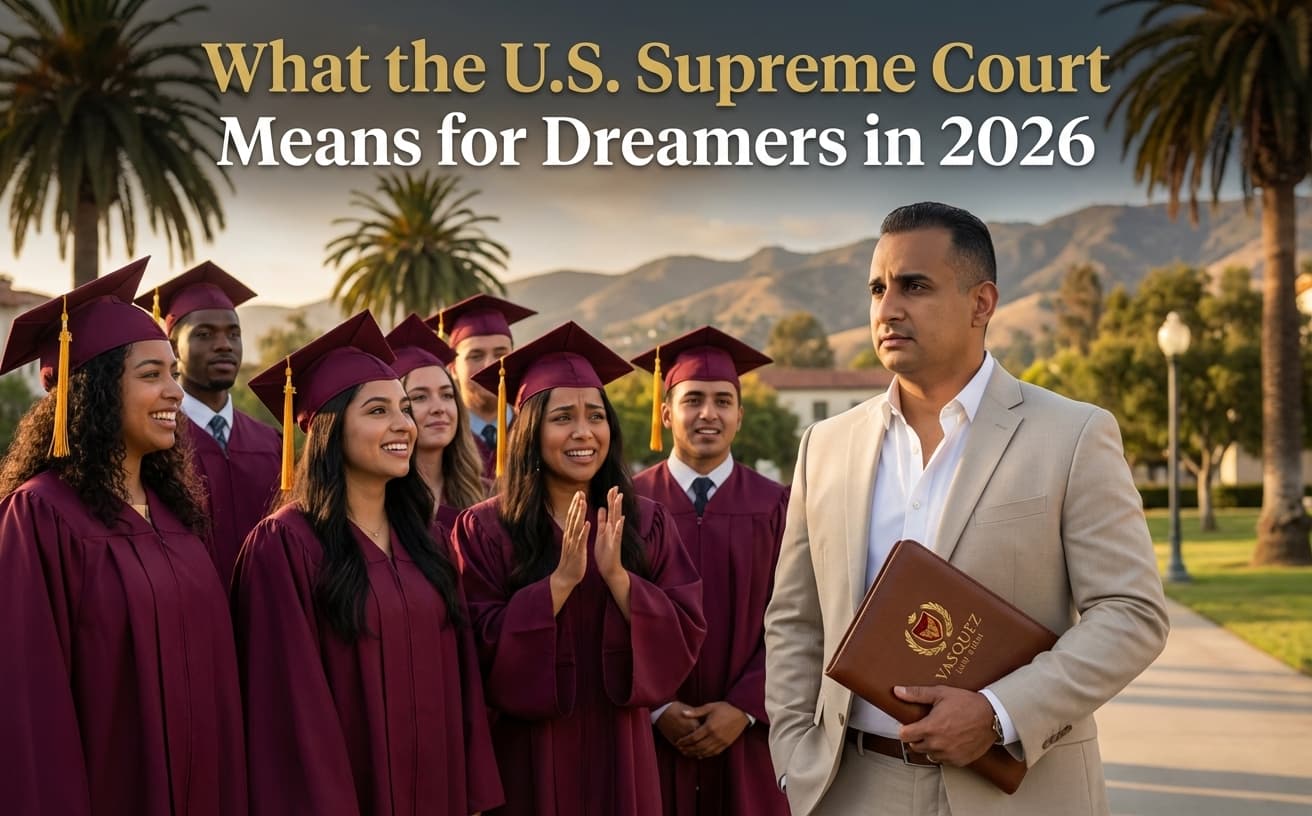
What the U.S. Supreme Court Means for Dreamers in 2026
Discover how the U.S. Supreme Court affects Dreamer immigration cases in 2026. Contact Vasquez Law Firm for a free consultation to protect your rights.
Published on March 22, 2026
Talk to an immigration attorney
Free call. A clear plan for your case.
Free & confidential · Se habla espanol · 24/7
Have questions? Talk to an attorney - free evaluation.
Call 1-844-967-3536Worried how the latest immigration news affects you?
Schedule a confidential case review with an immigration attorney - know exactly where you stand.
USCIS Case Status
Check your USCIS case status
Enter your receipt number and get the official status. Free, no registration.
What the U.S. Supreme Court Means for Dreamers in 2026
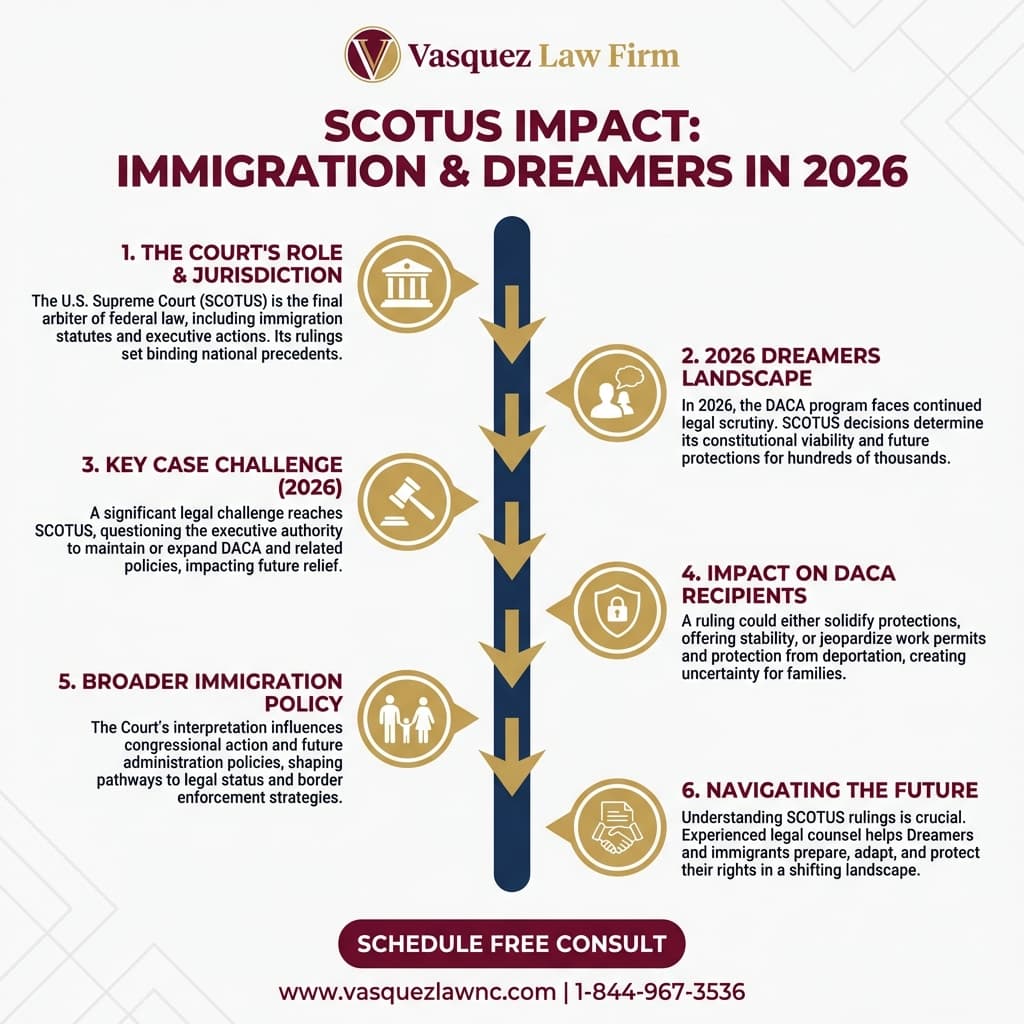
The U.S. Supreme Court plays a critical role in shaping immigration law that affects Dreamers living in Smithfield and beyond in 2026. Recent decisions influence asylum claims, deportation defenses, and opportunities for legal status adjustment. Understanding the Court's impact helps Dreamers navigate their cases with confidence and preparedness.
Need help with your case? Our experienced attorneys are ready to fight for you. Se Habla Español.
Schedule Your Free Case Evaluation
Or call us now: 1-844-967-3536
Quick Answer
The U.S. Supreme Court’s decisions directly influence immigration law, including asylum and adjustment of status cases important to Dreamers in Smithfield. Their rulings set precedents that define eligibility, procedural protections, and legal interpretations used nationwide.
- Controls asylum claim standards
- Impacts deportation defense rules
- Shapes adjustment of status eligibility
- Determines limits on immigration enforcement
- Guides federal immigration courts
How the U.S. Supreme Court Affects Immigration
In 2026, many immigration cases hinge on the Supreme Court’s rulings. For example, a recent decision affected how asylum claims are handled by immigration judges. By interpreting laws such as the Immigration and Nationality Act, the Court defines the scope of protections available to applicants, including Dreamers.
Dreamers in Smithfield and nationwide must understand that the Supreme Court’s interpretations set the binding legal framework for lower courts and immigration authorities. This includes rulings on whether certain policies violate constitutional rights or federal statutes.
Furthermore, the Court’s influence extends to the enforcement priorities of federal agencies. For instance, when the Supreme Court rules on the limits of executive authority, it can restrict or expand the discretion of agencies like ICE and USCIS in prioritizing removal or granting relief.
Another important aspect is how the Supreme Court clarifies procedural safeguards in immigration proceedings. For example, rulings addressing due process rights ensure that Dreamers and other immigrants receive fair hearings, access to counsel, and protection against arbitrary decisions.
Role in Federal Immigration Law
The Supreme Court hears only select immigration appeals. Their cases often involve questions about executive authority, due process rights, and statutory interpretation. These decisions are final and apply across the United States.
Decisions from the Supreme Court serve as binding precedent for the entire federal judiciary, including immigration courts and federal district courts. This means that lower courts must follow the legal principles established by the Supreme Court, ensuring uniformity in immigration law application.
For example, when the Court interprets the meaning of “credible fear” in asylum cases, immigration judges nationwide must apply that interpretation, affecting thousands of pending claims.
Example: Asylum Standards
One case in 2026 changed the definition of "credible fear" for asylum seekers, narrowing eligibility in some circumstances. This ruling means immigration judges must adjust how they evaluate claims, impacting many Dreamers filing for asylum.
To illustrate, prior to this ruling, some applicants might have qualified for asylum based on generalized fears related to gang violence or domestic abuse. After the decision, the Court emphasized stricter evidentiary requirements, making it harder for some to meet the threshold.
This decision has practical implications, as applicants must now provide more detailed and corroborated evidence to meet the credible fear standard, increasing the importance of legal counsel and thorough case preparation.
Impact Beyond Court Rulings
Supreme Court decisions also influence immigration agencies like USCIS and ICE. Agencies adjust policies to comply with legal interpretations, affecting enforcement, application approvals, and detention practices.
For example, following a Supreme Court ruling limiting the scope of expedited removal, USCIS temporarily revised its procedures to grant more applicants the opportunity for full removal hearings, affecting many Dreamers facing removal.
Moreover, the Court’s decisions can impact legislative actions. When the Court identifies gaps or conflicts in immigration statutes, Congress may be prompted to amend laws, which in turn shapes agency rulemaking and enforcement priorities.
Current U.S. Supreme Court Justices and Their Impact
The nine justices serving on the Supreme Court as of 2026 bring differing judicial philosophies. Their views on immigration law can shape the outcomes of major cases involving deportation, asylum, and visa eligibility.
Each justice’s approach to constitutional interpretation—whether originalist, textualist, or pragmatist—affects how immigration statutes and executive actions are analyzed. This judicial philosophy influences rulings on sensitive issues such as governmental power versus individual rights.
Additionally, the justices’ perspectives on civil liberties and immigration policy impact the Court’s willingness to uphold or strike down policies affecting Dreamers and other immigrant communities.
Justices' Backgrounds and Decisions
Some justices favor broader federal immigration enforcement powers, while others prioritize immigrant rights and protections. Understanding the composition of the Court helps anticipate changes in legal interpretations.
For instance, justices with a background in administrative law may place significant emphasis on the limits of agency discretion, affecting how immigration regulations are enforced.
Similarly, justices with experience in civil rights law may be more likely to protect due process and equal protection rights for immigrants facing removal or seeking relief.
Recent Appointments
Recent confirmations have altered the Court’s balance, influencing rulings on immigration. For example, the appointment of a new justice has drawn attention for potential effects on DACA-related cases and asylum policies.
This new justice has participated in key opinions that either reaffirmed or questioned the scope of executive authority in immigration enforcement, signaling possible shifts in future decisions that directly impact Dreamers’ protections.
The dynamic nature of the Court means that ongoing changes in its composition require Dreamers and their attorneys to stay updated on how new justices may influence precedent and policy.
How This Affects Dreamers
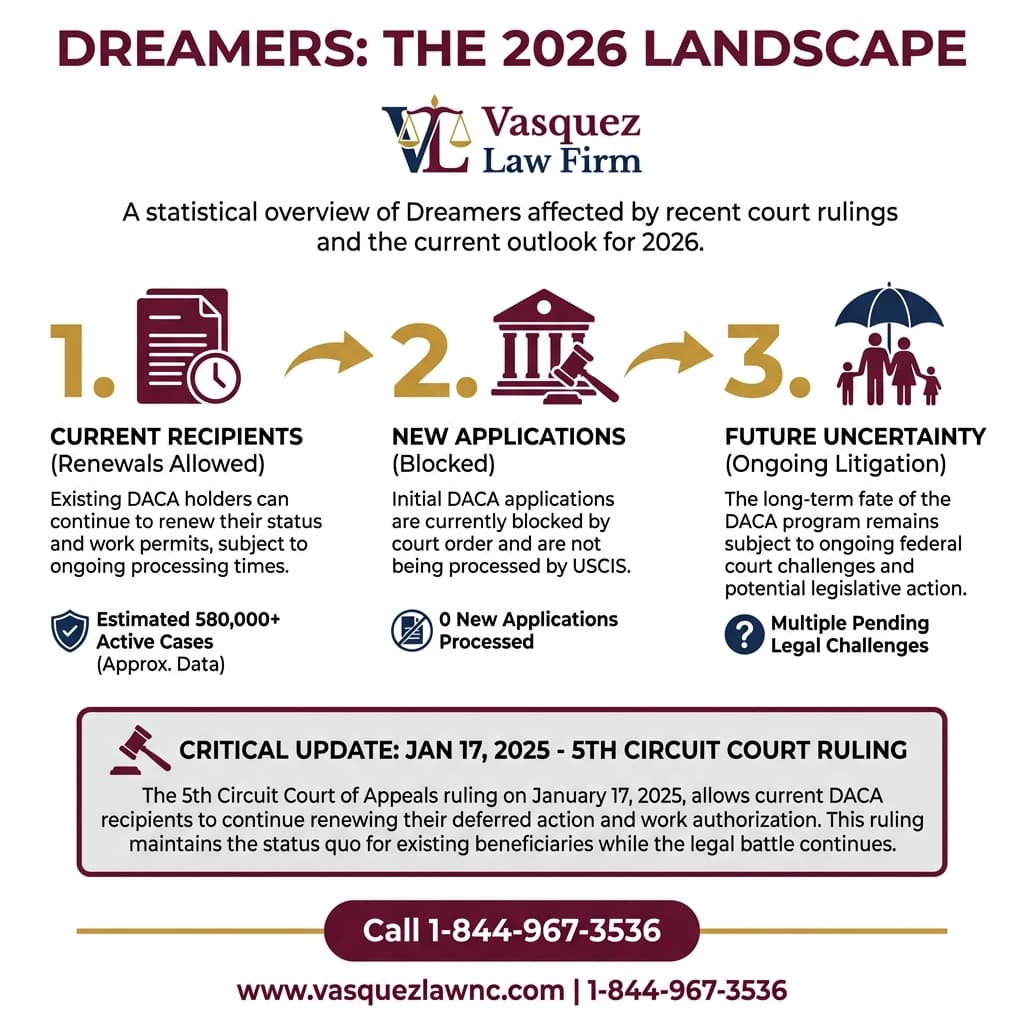
Decisions the Court makes regarding programs like DACA (Deferred Action for Childhood Arrivals) can protect or restrict Dreamers’ ability to work and reside legally in the U.S. Knowing the Court’s stance helps Dreamers plan ahead.
For example, a ruling affirming DACA’s legality ensures Dreamers maintain work authorization and protection from deportation, while a decision invalidating it could lead to increased vulnerability and the need for alternative relief strategies.
In addition, the Court’s opinions may affect related immigration benefits, such as eligibility for travel permits or adjustment of status, underscoring the importance of legal guidance tailored to evolving jurisprudence.
Key Steps Dreamers Should Take
- Stay informed: Monitor ongoing Supreme Court cases that affect immigration law.
- Keep records updated: Maintain current and accurate documentation for legal filings.
- Consult an attorney: Seek legal advice to understand how rulings impact individual status and options.
- File timely applications: Meet deadlines for petitions and appeals.
- Prepare for interviews or hearings: Gather evidence and be ready to explain your case clearly.
Beyond these steps, Dreamers should also engage with community resources and advocacy groups that provide updates and legal education related to immigration law changes. Such networks can offer support and guidance during uncertain times.
Additionally, maintaining open communication with your attorney is crucial. Changes in Supreme Court rulings may necessitate adjustments to your legal strategy, and prompt action can prevent missed opportunities or adverse outcomes.
Finally, Dreamers should be proactive in documenting any changes in personal circumstances, such as changes in employment, family status, or criminal records, as these can influence eligibility for relief and the strength of their cases in light of new legal standards.
Common Mistakes to Avoid in Immigration Cases
- Failing to act promptly after a Supreme Court decision. Fix: Contact a lawyer immediately.
- Submitting incomplete or inaccurate paperwork. Fix: Double-check all forms.
- Missing deadlines for applications or appeals. Fix: Track deadlines carefully.
- Ignoring changes to asylum or deportation policies. Fix: Stay informed on legal updates.
- Not attending scheduled immigration hearings. Fix: Prioritize court dates.
- Relying on outdated legal advice. Fix: Consult experienced immigration counsel.
- Assuming all Supreme Court rulings apply immediately. Fix: Confirm effective dates with an attorney.
If you only remember one thing: Supreme Court rulings reshape immigration law, so staying proactive with legal help protects your rights.
Another common error is misunderstanding the scope of a Supreme Court decision. Some rulings apply narrowly while others have broad implications; misinterpreting this can lead to improper case handling.
Additionally, failing to assemble strong evidence or legal arguments in response to new legal standards can undermine a case. Dreamers should work closely with counsel to strengthen their filings and presentations in court.
Timeline of Supreme Court Immigration Cases in 2026
- Filing petitions: Early part of the year, attorneys submit requests for case hearings.
- Briefing period: Months-long written arguments from both sides.
- Oral arguments: Typically mid-year, public courtroom hearings.
- Decision issuance: Usually within three to six months after oral arguments.
- Implementation: Affected courts and agencies update procedures accordingly.
Dreamers should work with legal counsel throughout this timeline to adjust case strategies and respond to new challenges.
During the briefing period, attorneys often submit amicus briefs from advocacy groups or experts, which can influence the Court’s perspective on immigration issues.
After decisions are issued, there may be a transition period before rulings take full effect, during which legal representatives must advise clients on how to proceed and whether to file motions for reconsideration or stay orders.
Costs Associated with Immigration Appeals
- Filing fees: Government fees for appeals and petitions vary, sometimes ranging from a few hundred to over a thousand dollars.
- Attorney fees: Experience and case complexity influence costs. Vasquez Law Firm offers transparent pricing.
- Additional expenses: Including document translation, expert testimony, and travel for court appearances.
- Free case evaluation: Initial case evaluations at Vasquez Law Firm are free, helping clients understand potential costs before committing.
It is important to budget for unexpected costs that may arise during appeals, such as fees for expedited processing or additional filings requested by the Court or immigration authorities.
Some non-profit organizations and legal aid programs may offer assistance for Dreamers facing financial hardship, so clients should inquire about these resources with their attorney.
When to Contact an Immigration Lawyer
- If you receive a notice of removal or deportation proceedings.
- When a new Supreme Court decision may affect your case status or eligibility.
- If your asylum claim or adjustment application was denied.
- If you need help filing appeals or motions with immigration courts.
- When you require representation during immigration interviews or hearings.
- Upon receiving requests for evidence or notices from USCIS.
Early legal consultation can prevent costly mistakes and help you understand complex Supreme Court rulings and their practical impact on your case.
Keeping your attorney informed about any changes in your immigration status or communications from government agencies ensures timely responses and proper case management.
About Vasquez Law Firm
At Vasquez Law Firm, we combine compassion with aggressive representation. Our motto "Yo Peleo" (I Fight) reflects our commitment to standing up for your rights.
- Bilingual Support: Se Habla Español - our team is fully bilingual
- Service Areas: North Carolina, Florida, and nationwide immigration services
- Experience: Over 15 years helping clients navigate complex legal matters
- Results: Thousands of successful cases across multiple practice areas
Attorney Trust and Experience
Attorney Vasquez holds a Juris Doctor degree and is admitted to practice in the North Carolina State Bar. With over 15 years of dedicated legal experience, he has built a reputation for providing personalized attention and achieving favorable outcomes for his clients.
His expertise includes handling complex immigration appeals, DACA renewals, asylum claims, and adjustment of status petitions, ensuring Dreamers receive tailored legal strategies reflecting the latest Supreme Court decisions.
Clients benefit from his deep understanding of federal immigration law combined with a compassionate approach, making him a trusted advocate in challenging situations.
Don't wait to get the help you deserve. Call us now for immediate assistance. Se Habla Español.
Frequently Asked Questions
Who are the current U.S. Supreme Court justices?
As of 2026, the U.S. Supreme Court has nine justices appointed for life. They decide key legal questions affecting immigration policies and individual cases, including those relevant to Dreamers and asylum seekers. Their diverse judicial philosophies influence how immigration laws are interpreted and enforced nationwide, shaping protections and enforcement priorities for immigrants.
Can the U.S. Supreme Court be overruled?
No other court can overrule the Supreme Court’s decisions. Congress can change laws or the Court can overturn past rulings, but its decisions are binding nationwide. This means once the Supreme Court rules on an issue, lower courts and agencies must comply, making its rulings the ultimate authority on immigration law matters.
How do Supreme Court decisions affect asylum claims?
The Court’s rulings set legal standards for asylum eligibility and protections, shaping how immigration judges evaluate claims and impacting Dreamers seeking asylum. For example, decisions on what constitutes “credible fear” or persecution criteria directly affect who qualifies for asylum, influencing the success or denial of many cases each year.
What should Dreamers in Smithfield do after a Supreme Court ruling?
Dreamers should consult an immigration lawyer to understand the ruling’s effect on their cases and update their legal strategies accordingly. This may include filing new applications, appeals, or motions, and gathering additional evidence to comply with new legal standards established by the Court’s decision.
What is the timeline for cases brought before the Supreme Court?
From petition to ruling, cases can take several months. During this time, immigration cases may delay, so maintaining legal representation is important. The process includes filing petitions, briefing by both parties, oral arguments, and then a decision. Afterward, implementation of the ruling may require further case adjustments.
What costs are involved with immigration appeals?
Appeal costs include filing fees, attorney fees, and other expenses. Vasquez Law Firm offers free case evaluations to discuss potential fees and your options. Additional costs may involve document preparation, translation, and travel for court hearings, so budgeting and early legal advice are essential for managing expenses.
How does the Supreme Court affect adjustment of status processes?
Its rulings affect the interpretation of federal statutes governing how immigrants, including Dreamers, can apply for legal permanent residency. For example, the Court may clarify eligibility criteria, procedural requirements, or agency discretion, directly influencing whether an applicant’s status adjustment is approved or denied.
When is the best time to contact an immigration lawyer?
Contact a lawyer as soon as you receive any immigration notices or after new Supreme Court decisions affect your case to ensure timely and effective help. Early consultation allows for proper preparation, meeting deadlines, and adapting legal strategies to the latest developments in immigration law.
Sources and References
- U.S. Citizenship and Immigration Services (USCIS)
- Executive Office for Immigration Review
- 8 U.S.C. § 1255 - Adjustment of Status
Need immigration help? Our immigration attorneys can review your case.
Take the first step toward justice today. Our team is standing by to help. Se Habla Español.
Start Your Free Case Evaluation Now
Call us: 1-844-967-3536
Se Habla Español - Estamos aquí para ayudarle.

William Vasquez
Founder & CEO, Vasquez Law Firm, PLLC
William Vasquez is the founder and CEO of Vasquez Law Firm, PLLC, a results-driven firm specializing in immigration, criminal defense, personal injury, and workers' compensation. A U.S. Air Force veteran and recipient of the Joint Service Achievement Medal, William is dedicated to fiercely fighting for his clients' rights.
Related Legal Services
Need legal help? Learn more about how our immigration attorneys can help, or contact us for a free evaluation.
You can also visit our North Carolina immigration practice for more information.