What You Need to Know About Temporary Protected Status Termination Updates in 2026
Stay updated on Temporary Protected Status termination in 2026. Learn your options and get help. Contact Vasquez Law Firm for a free consultation today.
Published on February 10, 2026
Have questions? Talk to an attorney - free evaluation.
Call 1-844-967-3536Worried how the latest immigration news affects you?
Get a free, confidential case review with an immigration attorney - know exactly where you stand.
What You Need to Know About Temporary Protected Status Termination Updates in 2026
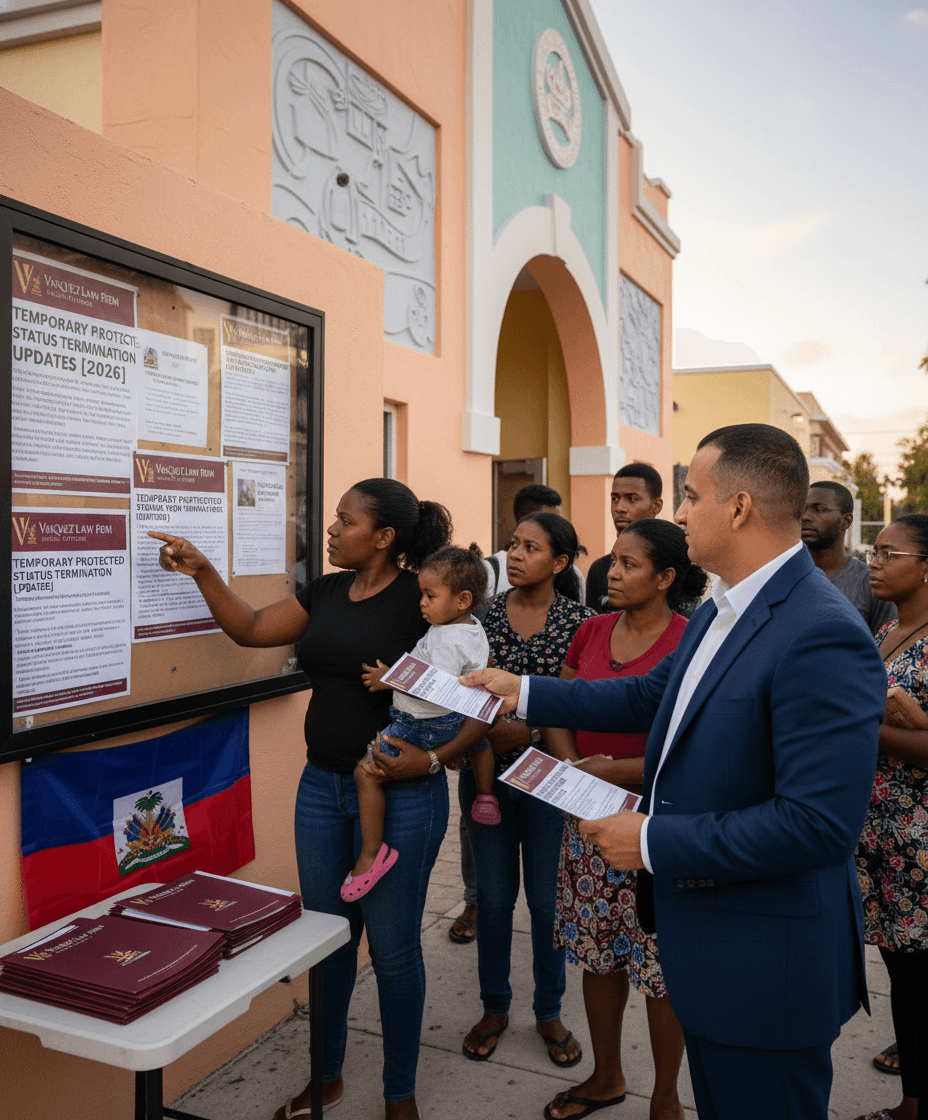
As of 2026, Temporary Protected Status (TPS) termination updates are crucial for immigrants, especially Dreamers in Charlotte and beyond. TPS provides relief from deportation for individuals from countries experiencing crisis. However, recent announcements have introduced changes and terminations affecting many TPS holders. This article explains what TPS termination means, who it affects, and essential steps you should take. At Vasquez Law Firm, we guide you through complex immigration changes with compassionate, bilingual service. If you or your loved ones are impacted by these updates, do not delay seeking advice to protect your status in the U.S.
Need help with your case? Our experienced attorneys are ready to fight for you. Se Habla Español.
Schedule Your Free Consultation
Or call us now: 1-844-967-3536
Quick Answer
Temporary Protected Status (TPS) termination means the end of protection from deportation for eligible immigrants from designated countries. As of 2026, many TPS holders face an urgent need to explore other legal status options to remain in the U.S. Work permits and protections end after the termination deadline. Immediate action is critical to avoid losing your status.
- TPS provides temporary protection from deportation
- Termination ends all TPS benefits and authorization
- Alternative immigration options must be sought quickly
- Legal deadlines vary by individual circumstances
- Vasquez Law Firm offers bilingual guidance and representation
Understanding Temporary Protected Status (TPS)
Temporary Protected Status is a humanitarian program allowing immigrants from specific countries affected by armed conflict, natural disasters, or extraordinary conditions to stay and work legally in the U.S. temporarily. The Secretary of Homeland Security designates eligible countries, and the U.S. Citizenship and Immigration Services (USCIS) administers TPS.
How TPS Works
TPS grants registered individuals protection from removal and a work permit, generally for periods of 6 to 18 months, which can be extended if conditions remain unsafe in their home countries. TPS holders are allowed to travel abroad with prior authorization but are not considered permanent residents.
TPS Eligibility Basics
To qualify for TPS, applicants must continuously reside in the U.S. since a specified date, come from a designated country, pass background checks, and meet other USCIS requirements. TPS is not a path to citizenship but can serve as a bridge to other immigration forms.
Recent Changes and Termination Trends
In recent years, Trump administration policies led to several TPS terminations, which Biden administration later reviewed. As of 2026, some terminations have taken effect or been scheduled for certain countries. These updates reflect shifting policies and legal challenges affecting many TPS recipients in places like Charlotte.
Key Steps to Take After TPS Termination
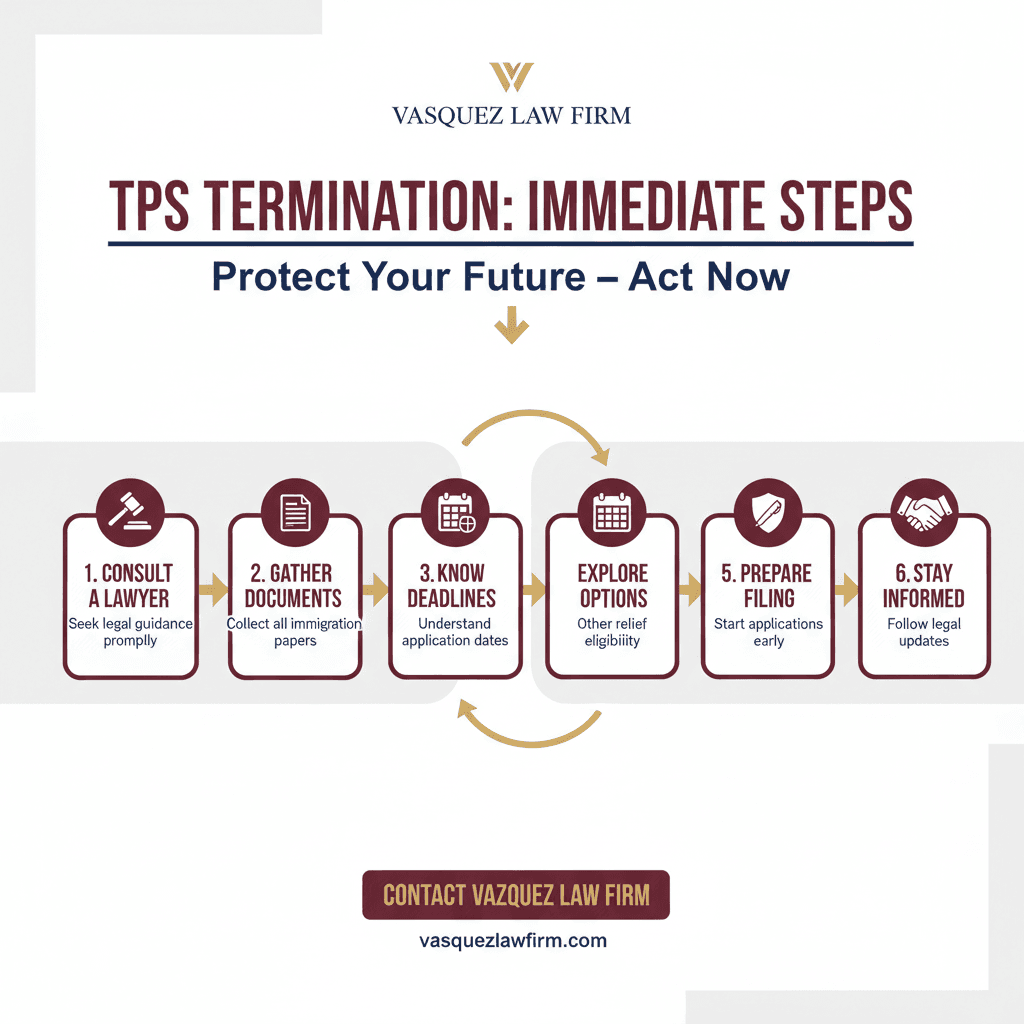
- Stay Informed: Regularly check official USCIS announcements for status changes and deadlines.
- Evaluate Eligibility for Other Immigration Relief: Explore family petitions, asylum, or other humanitarian programs.
- Gather Documentation: Collect TPS approval notices, identity papers, and proof of continuous residence.
- Consult an Immigration Attorney: Schedule a confidential consultation to discuss your situation and options, especially in North Carolina and Florida.
- File Alternative Applications Timely: Submit other immigration benefit applications before TPS protections expire.
- Maintain Legal Status: Avoid unauthorized stays that can lead to removal proceedings.
Don't wait to get the help you deserve. Call us now for immediate assistance. Se Habla Español.
Documents or Evidence Checklist for TPS Cases
- Form I-797 TPS approval notices
- Current and previous TPS employment authorization documents (EADs)
- Passport and national identity cards
- Birth certificates or other proof of identity
- Proof of continuous residence, such as rental agreements, bills, paystubs
- Any immigration applications filed, receipt notices, or denial letters
- Proof of family relationships if filing for petitions
Timeline: What to Expect After TPS Ends
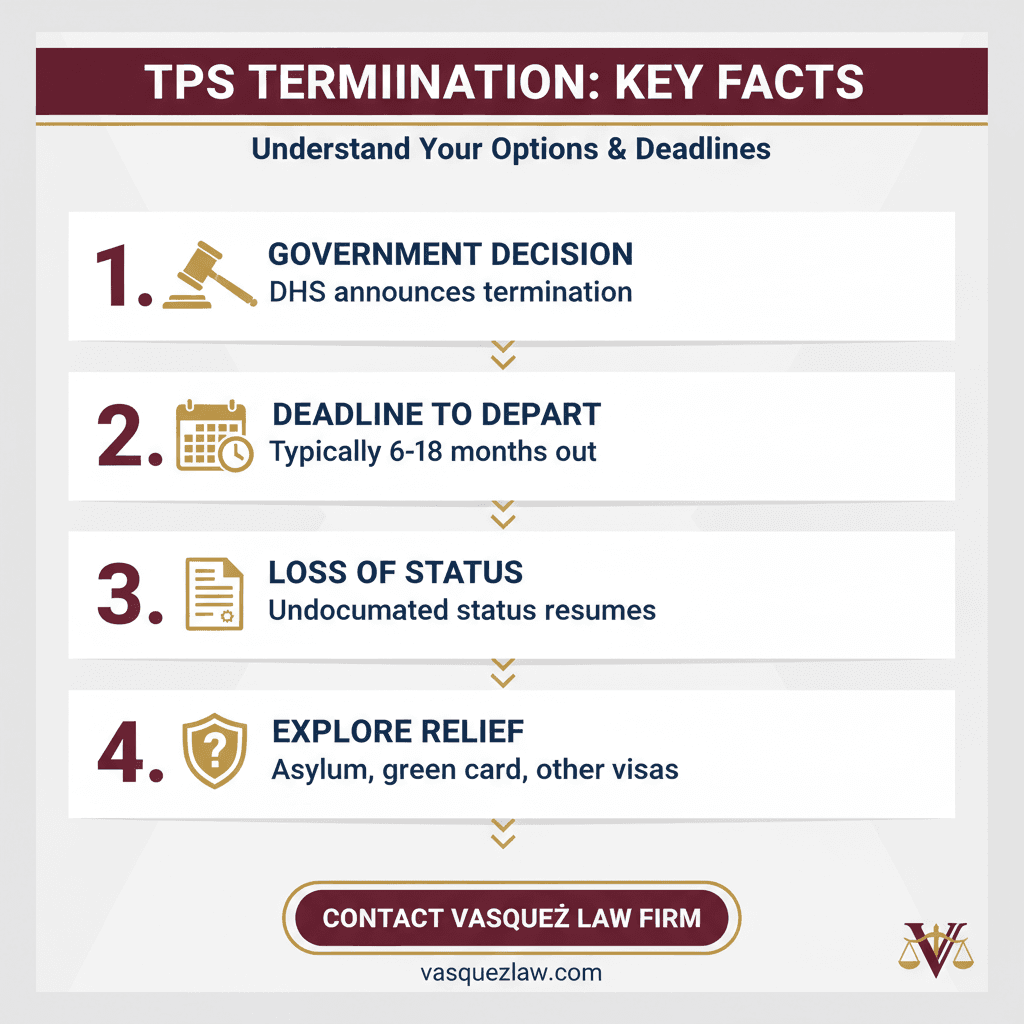
- Termination Announcement: Official USCIS notifications outline affected countries and dates.
- Grace Period: Typically lasts 60-180 days after termination when work authorization ends.
- Deadline for Alternative Filings: Must be met before grace period expires to maintain protection.
- Work Permit Expiration: Authorization to work ends with or shortly after TPS termination date.
- Potential Removal Proceedings: If alternative status is not secured, deportation risks rise.
Costs and Fees to Consider
- USCIS filing fees vary by application type (e.g., adjustment of status, family petition, asylum application)
- Attorney fees depend on case complexity, ranging from consultations to full representation
- Medical examinations may be required for certain benefits
- Translations and document certification costs
- Fee waivers may be available for those who qualify based on income
Common Mistakes and How to Avoid Them
- Missing deadlines for alternative status applications — Fix: Mark calendars, seek attorney help early
- Failing to submit complete documentation — Fix: Use a checklist and review all records carefully
- Ignoring changes in TPS status announcements — Fix: Follow USCIS updates regularly
- Not consulting an immigration attorney — Fix: Get expert advice to avoid costly errors
- Overstaying after TPS ends without other legal status — Fix: Apply for new status before expiration dates
- Using inaccurate or fraudulent documents — Fix: Only use genuine legal paperwork
- Not informing family members about TPS terminations — Fix: Communicate early about possible impacts
- Failing to understand the difference between TPS and permanent residency — Fix: Educate yourself about immigration law basics
If you only remember one thing: Act swiftly after TPS termination announcements to protect your lawful presence and explore other immigration solutions.
North Carolina, Florida, and Nationwide Notes
North Carolina Notes
In North Carolina, including cities like Charlotte, TPS recipients should seek local legal help promptly. The state does not have specific TPS laws but coordinates with federal guidelines. Vasquez Law Firm is experienced with local immigration courts and remains updated on federal immigration enforcement in the region.
Florida Notes
Florida has a large TPS recipient community. Local attorneys can assist with state-specific challenges, such as accessing employment and social services. Vasquez Law Firm’s bilingual staff is ready to support clients throughout Florida facing TPS termination issues.
Nationwide Concepts
TPS is federally regulated. Its termination and extensions depend on federal decisions. All TPS holders, no matter the U.S. location, must operate within federal timelines and rules. Checking USCIS and Department of Homeland Security announcements is vital. Immigration courts nationwide may become involved if removal proceedings start after TPS ends.
When to Call a Lawyer Now
- If you have received a TPS termination notice
- If your work authorization is about to expire
- If you want to apply for a green card or other legal status
- If you have been placed in removal or deportation proceedings
- If you need help reviewing your immigration options
- If you want to file asylum or humanitarian protection claims
- If you face difficulties obtaining or renewing TPS documentation
- If you want bilingual legal support in Charlotte, NC, Florida, or nationwide
- If you fear USCIS or ICE enforcement actions related to TPS termination
About Vasquez Law Firm
At Vasquez Law Firm, we combine compassion with aggressive representation. Our motto "Yo Peleo" (I Fight) reflects our commitment to standing up for your rights.
- Bilingual Support: Se Habla Español - our team is fully bilingual
- Service Areas: North Carolina, Florida, and nationwide immigration services
- Experience: Over 15 years helping clients navigate complex legal matters
- Results: Thousands of successful cases across multiple practice areas
Attorney Trust and Experience
Attorney Vasquez holds a Juris Doctor degree and is admitted to practice in both the North Carolina State Bar and Florida Bar. With over 15 years of dedicated legal experience, he has built a reputation for providing personalized attention and achieving favorable outcomes for his clients.
Don't wait to get the help you deserve. Call us now for immediate assistance. Se Habla Español.
Frequently Asked Questions
What is Temporary Protected Status (TPS)?
Temporary Protected Status (TPS) is a humanitarian program allowing immigrants from designated countries affected by conflict or disasters to stay and work legally in the U.S. temporarily. TPS protects recipients from deportation and grants employment authorization for the duration of the designation.
What countries currently qualify for TPS?
TPS is designated for specific countries based on conditions. As of 2026, countries like Haiti, Yemen, Syria, and Venezuela qualify. The list updates periodically, so staying informed through USCIS is necessary.
What does TPS termination mean for recipients?
TPS termination ends protections against deportation and the ability to work legally. Without alternative legal status, recipients may face removal. Immediate legal action is vital to preserve lawful presence in the U.S.
Can TPS holders apply for a green card?
TPS does not directly grant permanent residency, but holders may qualify via other paths such as family petitions or employment. Consulting an attorney helps identify the best route for each case.
What are the key steps after TPS termination?
Important steps include staying informed, evaluating other immigration options, gathering your documents, seeking legal advice, and applying for suitable statuses before the termination period ends.
How can Vasquez Law Firm assist with TPS termination issues?
We provide bilingual legal help navigating TPS changes, identifying alternative statuses, preparing applications, and representing clients facing removal in Charlotte, NC, Florida, and nationwide.
Is there a deadline to act after TPS termination?
Yes, TPS termination comes with deadlines before protections and work permits expire. Acting quickly ensures maintaining lawful status and avoiding deportation risk.
Where can I get official updates on TPS status?
The official USCIS website publishes TPS updates, extensions, and terminations. Regularly checking it helps you stay informed and prepared.
Sources and References
- USCIS official guidelines on TPS
- Executive Office for Immigration Review (EOIR)
- U.S. Department of State Visa Information
Take the first step toward justice today. Our team is standing by to help. Se Habla Español.
Start Your Free Consultation Now
Call us: 1-844-967-3536
Se Habla Español - Estamos aquí para ayudarle.


William Vasquez
Founder & CEO, Vasquez Law Firm, PLLC
William Vasquez is the founder and CEO of Vasquez Law Firm, PLLC, a results-driven firm specializing in immigration, criminal defense, personal injury, and workers' compensation. A U.S. Air Force veteran and recipient of the Joint Service Achievement Medal, William is dedicated to fiercely fighting for his clients' rights.
Related Legal Services
Need legal help? Learn more about immigration case consultation, or contact us for a free evaluation.
You can also visit statewide immigration legal services for more information.