What Is Sole Custody and How Does It Work in 2026?
Learn what sole custody means and how it affects your rights in 2026. Contact Vasquez Law for a free consultation and expert family law help.
Vasquez Law Firm
Published on March 17, 2026

Have questions? Talk to an attorney — free evaluation.
Call 1-844-967-3536What Is Sole Custody and How Does It Work in 2026?
Sole custody means one parent has the legal right and responsibility to make decisions about a child's life. In Charlotte, North Carolina, and Florida, understanding sole custody is crucial for families navigating custody disputes in 2026. This article explains what sole custody entails, how it compares to full custody, what it means for visitation, and the legal process involved. Vasquez Law Firm offers bilingual support to help you protect your rights and your child's best interests.
Need help with your case? Our experienced attorneys are ready to fight for you. Se Habla Español.
Fighting for Custody?
Your children's wellbeing comes first. We advocate for fair custody arrangements.
Schedule Your Free Consultation
Or call us now: 1-844-967-3536
Quick Answer
Sole custody means one parent has exclusive legal rights to make important decisions while the other parent usually retains visitation rights. Courts award sole custody when joint custody isn't suitable for the child's best interests.
- Legal decision-making by one parent
- Visitation rights generally preserved for the other parent
- Requires court approval and evidence
- Different from physical custody arrangements
- Can be modified if circumstances change
What Exactly Is Sole Custody?
Imagine a situation where one parent makes all the key decisions for a child’s welfare. This is sole custody. In 2026, sole custody means that only one parent has the legal authority to decide on education, health care, religion, and other important matters. The other parent usually maintains visitation rights but does not get a say in major decisions.
Many families wonder how sole custody differs from full custody. While the terms are often used interchangeably, full custody might imply both legal and physical custody concentrated with one parent. Sole custody primarily refers to legal custody: decision-making power. Physical custody could be joint or sole and affects where the child lives. For example, a child might reside mostly with one parent but have the other parent actively involved in decisions.
Understanding these distinctions helps protect your rights whether you reside in Charlotte, North Carolina, or in Florida.
How to Apply for Sole Custody
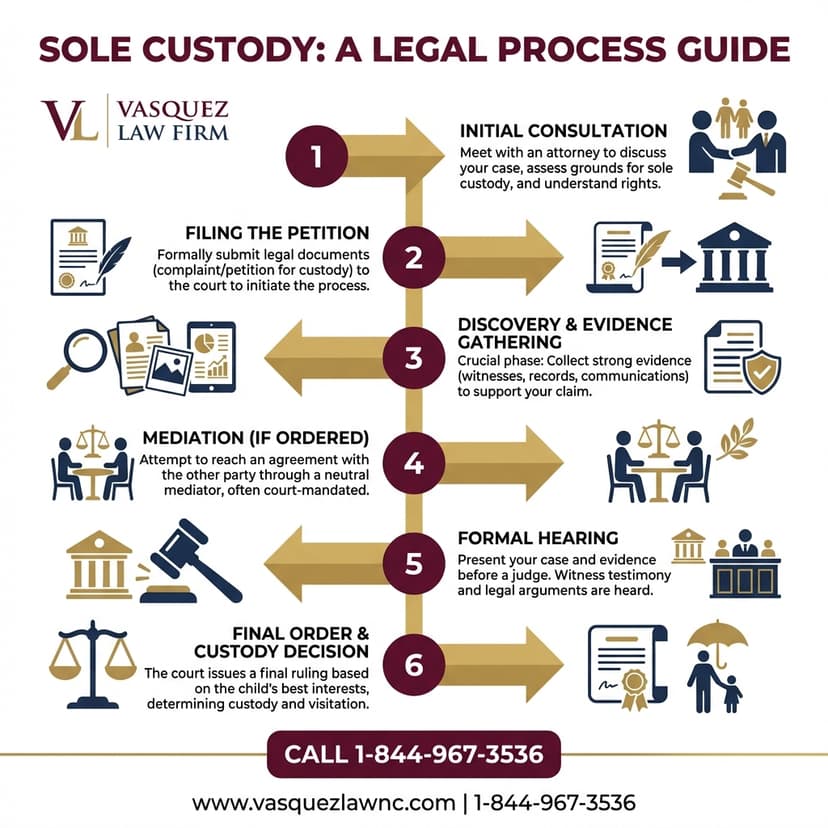
Applying for sole custody involves filing official custody paperwork with the family court. In North Carolina and Florida, this means submitting a petition stating why sole custody is necessary for the child's well-being. You must provide evidence such as documentation of the other parent's inability to care properly or harmful behavior.
Step 1: Gather Evidence
Collect relevant documents like school records, medical reports, and witness statements. Evidence shows the court why sole custody serves the child’s best interest.
Step 2: File Custody Petition
Submit the required forms to your local family court in Charlotte or your Florida jurisdiction. The petition outlines your custody request and must comply with state laws.
Step 3: Attend Hearings
The court schedules hearings where both parents may present their case. A judge decides based on evidence and child's best interest.
If you want to understand the specific forms needed or how to start your application, our family law services can guide you through every step with personalized advice.
Visitation Rights With Sole Custody
Even if you have sole custody, the other parent normally retains visitation rights unless the court decides otherwise. For example, courts typically order reasonable visitation because maintaining the parent-child relationship benefits the child.
One common question is, "If I have sole custody, do I have to allow visitation?" Usually, yes, unless visitation poses harm. Sole custody focuses on legal decision-making, not eliminating time with the other parent. Visitation can be supervised or restricted depending on circumstances.
Visitation in North Carolina
NC courts enforce visitation schedules tailored to the child's needs. The non-custodial parent’s access may be supervised if there are safety concerns.
Visitation in Florida
Florida courts also aim for reasonable parenting time, encouraging co-parenting unless factors justify restrictions.
Visitation Modifications
Parenting time agreements can be adjusted as children grow or situations change. Communication often helps avoid lengthy court processes.
Common Mistakes in Sole Custody Cases
- Failing to provide evidence: Without clear proof, courts favor joint custody. Prepare documents and witnesses carefully.
- Ignoring visitation orders: Refusing visitation can lead to legal penalties or custody modifications.
- Not consulting a family law attorney: The legal process is complex and requirements vary by state.
- Discussing custody issues publicly: Social media posts can negatively affect your case.
- Overlooking child’s preference: Courts may consider the child’s opinions depending on age and maturity.
- Delaying legal action: Acting quickly protects your rights and the child's stability.
- Assuming custody equals termination of rights: Sole custody doesn’t end other parent's legal rights unless decided by the court.
If you only remember one thing: Careful preparation and legal guidance are keys to managing sole custody cases effectively.
Timeline and What to Expect
The timeline for sole custody cases varies but generally follows these stages:
- Weeks 1-2: Filing paperwork and gathering evidence.
- Weeks 3-6: Court schedules preliminary hearing; temporary custody may be set.
- Weeks 7-12: Discovery phase where both parents exchange information.
- Weeks 13-20: Custody hearings occur; judge reviews evidence.
- Week 20: Final custody order issued.
Delays may happen due to court schedules or complexity of the case. Understanding this timeline helps families plan accordingly.
Costs and Fees: What Impacts the Price
Sole custody case costs depend on various factors, including attorney fees, court filing fees, and time spent in hearings. Legal representation is crucial since mistakes can lead to costly outcomes.
- Attorney hourly rates or flat fees
- Number of court hearings required
- Need for expert witnesses or evaluations (e.g., psychological assessments)
- Complexity of custody disputes
Vasquez Law Firm offers affordable consultation options to help you understand potential fees before starting your case.
When to Call a Lawyer
- If the other parent is abusive or neglectful
- If you want to file for sole custody and need guidance
- If visitation disputes cause tension
- If you suspect the child’s welfare is at risk
- If you need help preparing paperwork correctly
- If the other parent is trying to modify custody unfairly
- If court deadlines are approaching
- If you want to negotiate custody agreements
About Vasquez Law Firm
At Vasquez Law Firm, we combine compassion with aggressive representation. Our motto "Yo Peleo" (I Fight) reflects our commitment to standing up for your rights.
- Bilingual Support: Se Habla Español - our team is fully bilingual
- Service Areas: North Carolina, Florida, and nationwide immigration services
- Experience: Over 15 years helping clients navigate complex legal matters
- Results: Thousands of successful cases across multiple practice areas
Attorney Trust and Experience
Attorney Vasquez holds a Juris Doctor degree and is admitted to practice in both the North Carolina State Bar and Florida Bar. With over 15 years of dedicated legal experience, he has built a reputation for providing personalized attention and achieving favorable outcomes for his clients.
Don't wait to get the help you deserve. Call us now for immediate assistance.
Se Habla Español
Frequently Asked Questions
What exactly does sole custody mean?
Sole custody gives one parent full legal decision rights about the child’s care, such as schooling and health. The other parent usually retains visitation rights but has no say in major decisions unless modified by court order.
How hard is it to get sole custody in North Carolina?
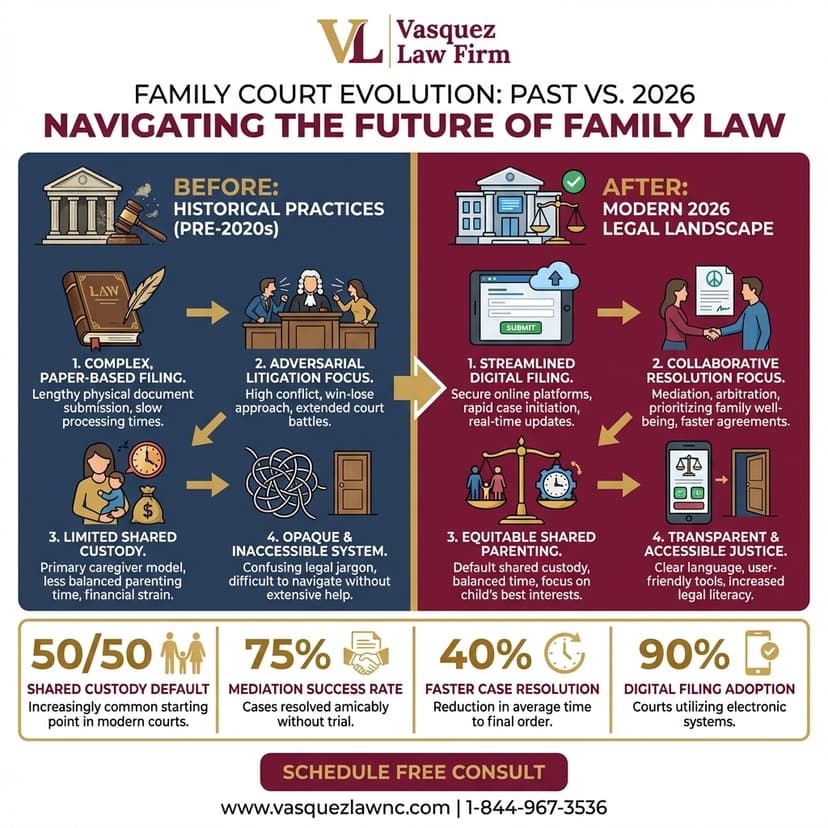
It is tough because courts prioritize joint custody unless there is proof that sole custody better protects the child. Evidence of abuse, neglect, or inability to care for the child often influences decisions.
What Are My Options in Family Court?
Answer 3 questions to understand your rights
Question 1 / 3
What family legal issue are you facing?
Keep Reading
What are the disadvantages of sole custody?
Disadvantages include heavier responsibility for one parent, potential limits on the other parent’s involvement, and possible emotional impact on the child’s relationship with the non-custodial parent.
Does sole custody terminate parental rights?
No. Sole custody does not end the other parent's rights unless the court explicitly terminates them. It mainly concerns legal decision authority.
If I have sole custody do I have to allow visitation?
Usually yes, unless visitation is unsafe. Courts encourage visitation to support the parent-child bond even with sole custody.
What paperwork is required for sole custody application?
Common documents include a custody petition, financial statements, parenting plans, and evidence supporting the need for sole custody, all filed with the family court.
Can sole custody be modified later?
Yes, if circumstances change significantly, either parent can request a modification through the court showing that it's in the child's best interest.
What does sole custody mean for the other parent?
The other parent loses legal decision power but usually keeps visitation rights. Their parental rights are preserved unless terminated by court order.
Sources and References
- North Carolina Courts custody guide
- Florida Courts child custody information
- Legal Information Institute on custody
- N.C. Gen. Stat. § 50-13.1
- Fla. Stat. § 61.13
Take the first step toward justice today. Our team is standing by to help.
Start Your Free Consultation Now
Call us: 1-844-967-3536
Se Habla Español - Estamos aquí para ayudarle.
Vasquez Law Firm
Legal Team
Our experienced attorneys at Vasquez Law Firm have been serving clients in North Carolina and Florida since 2011, with 70+ years of combined attorney experience. We specialize in immigration, personal injury, criminal defense, workers compensation, and family law.