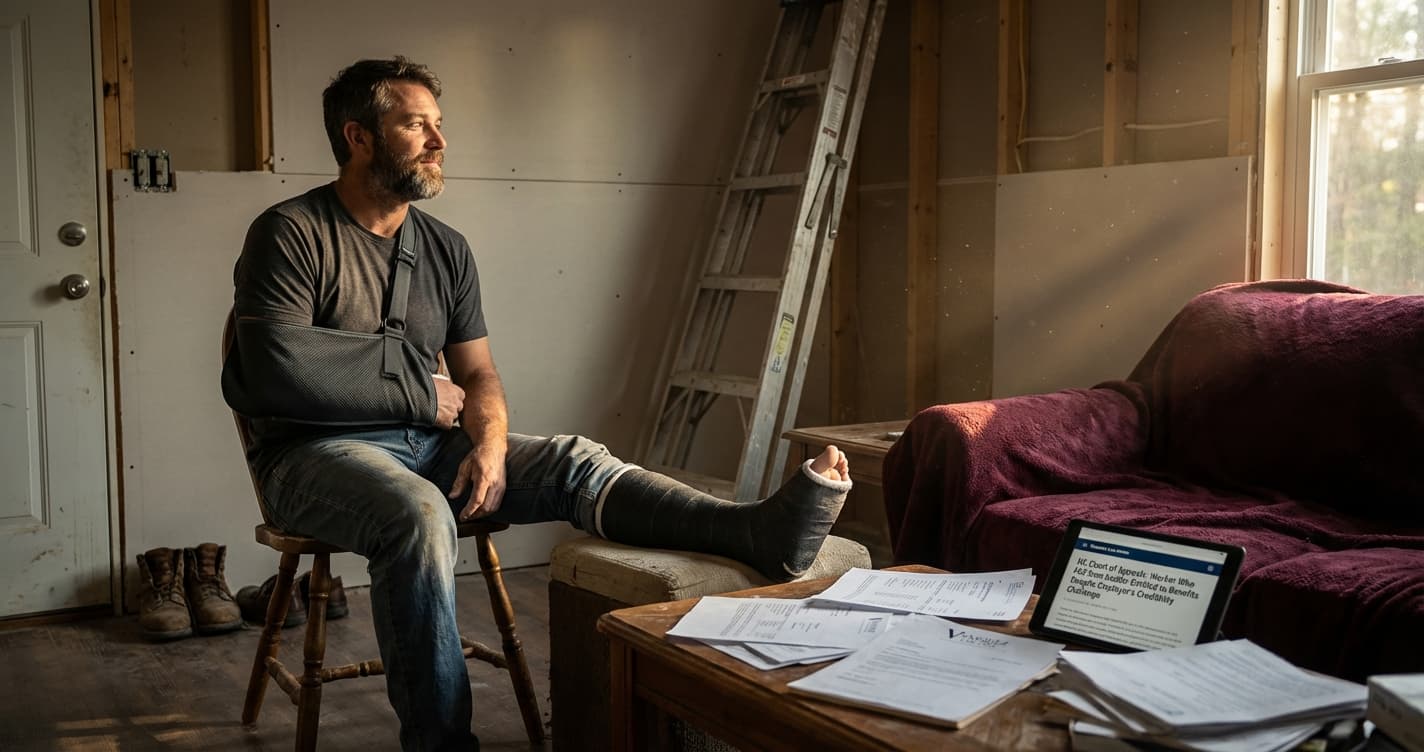
Is a Corrections Officer Entitled to COVID-19 Workers Comp Presumption?
Explore whether corrections officers in North Carolina are entitled to a presumption that their COVID-19 diagnosis is compensable under workers' compensation laws. Understand your rights and how to navigate the claims process effectively.
Published on December 12, 2025· Updated March 3, 2026
Hurt on the job?
Free review of your workers' comp claim.
Free & confidential · Se habla espanol · 24/7
Have questions? Talk to an attorney - free evaluation.
Call 1-844-967-3536Hurt on the Job? Claim What You Are Owed
A review of your workers' comp claim - we handle the fight.
Is a Corrections Officer Entitled to COVID-19 Workers Comp Presumption?
As the ongoing impact of COVID-19 continues to reshape various aspects of society, legal questions arise regarding worker protections, especially for those in high-risk professions. Recently, a pertinent issue was highlighted by WorkersCompensation.com, questioning whether a corrections officer is entitled to a presumption that his COVID-19 diagnosis is compensable under workers' compensation laws. This situation is particularly relevant for employees in North Carolina, where the legal landscape may offer specific protections for corrections officers and other first responders.
Hurt at work? You have rights.
NC workers' comp covers medical bills and lost wages — even for undocumented workers. 15-min call to see what you qualify for.
Understanding the Legal Issue
The presumption of compensability in occupational diseases, including COVID-19, has become a focal point for discussions surrounding workers' compensation claims. In North Carolina, the law allows for certain occupations, particularly those involving direct public interaction, to have a more straightforward path to proving that an illness or injury is work-related.
For corrections officers, their daily exposure to inmates and potentially crowded conditions places them at higher risk for contracting illnesses like COVID-19. This raises critical questions: Are they automatically entitled to workers' comp benefits if they contract COVID-19? And what does the presumption mean in practical terms?
Client Rights and Options
For clients in North Carolina, it’s crucial to understand the rights you possess in the context of workers’ compensation claims related to COVID-19. The presumption of compensability can significantly impact your claim:
- Occupational Disease Definition: Under North Carolina law, occupational diseases are defined as conditions that arise out of and in the course of employment. COVID-19 may qualify as such, especially for those in high-risk roles.
- Automatic Presumption: Certain employees, including corrections officers, may benefit from a presumption that their COVID-19 diagnosis is work-related. This means that the burden of proof shifts to the employer to disprove the work-relatedness of the condition.
- Filing a Claim: If you believe your COVID-19 diagnosis is work-related, it is essential to file a claim with the North Carolina Industrial Commission as soon as possible to ensure your rights are protected.
Step-by-Step Process for Filing a Claim
Here’s a step-by-step guide on how to proceed if you are a corrections officer diagnosed with COVID-19:
- Document Your Diagnosis: Obtain medical documentation that confirms your COVID-19 diagnosis.
- Gather Evidence: Collect all evidence that supports your claim, including records of your work environment, exposure, and any safety measures taken by your employer.
- File Your Claim: Submit your workers' compensation claim to the North Carolina Industrial Commission. Ensure that you meet all deadlines and provide necessary documentation.
- Consult a Lawyer: Engage a knowledgeable workers' compensation attorney to help navigate the complexities of your case and ensure that your rights are protected.
- Follow Up: Stay in contact with your attorney and follow up on your claim status regularly.
Common Mistakes to Avoid
While navigating a workers' compensation claim, particularly during a pandemic, it’s easy to make mistakes that can jeopardize your case. Here are some common pitfalls to avoid:
- Delaying Your Claim: Timeliness is crucial. Delays can lead to complications or even denial of your claim.
- Inadequate Documentation: Failing to provide sufficient medical evidence and documentation can weaken your claim.
- Not Seeking Legal Help: Workers’ compensation laws can be complex. Not utilizing a legal expert could result in missing out on potential benefits.
How Vasquez Law Firm Can Help
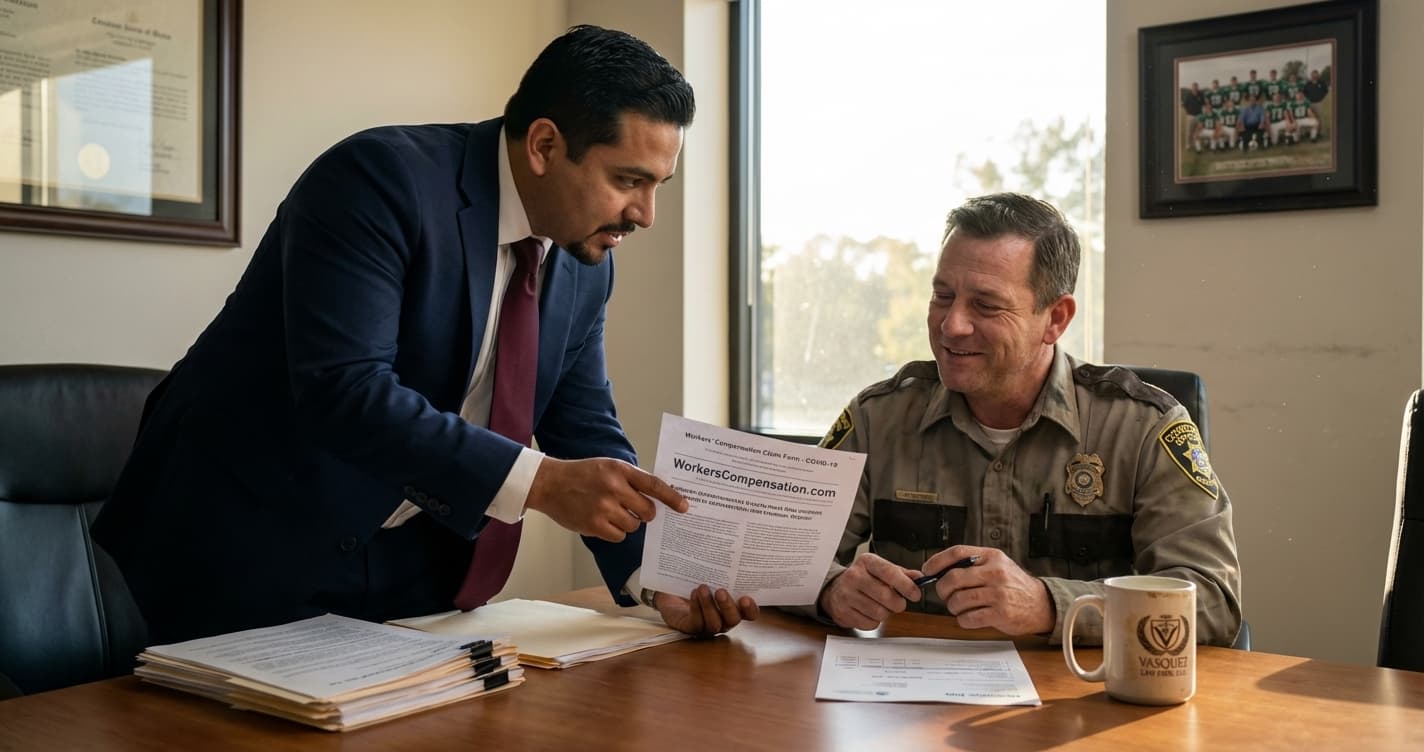
At Vasquez Law Firm, we understand the unique challenges that corrections officers face, especially during these unprecedented times. Our experienced team is committed to helping clients navigate the workers' compensation process with ease and confidence. Here’s how we can assist you:
- Expert Guidance: Our attorneys specialize in workers' compensation law and are knowledgeable about the nuances of North Carolina law.
- Personalized Service: We offer tailored legal solutions that meet your specific needs and circumstances.
- Bilingual Services: Se Habla Español. We provide services in both English and Spanish to ensure clear communication and understanding.
- Free Case Evaluation: We offer a no-obligation consultation to discuss your case and explore your options.
Frequently Asked Questions
1. What should I do if I believe I contracted COVID-19 at work?
If you believe your COVID-19 diagnosis is work-related, seek medical attention and notify your employer immediately. Then, contact a workers' compensation attorney to discuss filing a claim.
2. How long do I have to file a COVID-19 workers' compensation claim in North Carolina?
You generally have two years from the date of your injury or diagnosis to file a claim. However, it’s best to act quickly to preserve your rights.
3. Will I be entitled to wage loss benefits if I am unable to work due to COVID-19?
Yes, if your claim is approved, you may be entitled to wage loss benefits while you are unable to work due to your illness.
Contact Us for a Free Case Evaluation
If you or a loved one is a corrections officer who has contracted COVID-19 and you believe it is work-related, don’t hesitate to reach out for help. Contact Vasquez Law Firm today at (phone) for a free case evaluation. Our team is here to guide you through the process and advocate for your rights. Se Habla Español.
Am I Eligible for Workers' Comp?
3 quick questions to check your eligibility
Question 1 / 3
Where were you injured?
Workers' Compensation in North Carolina: What You Need to Know
North Carolina's workers' compensation system provides critical protections for employees who are injured on the job or develop occupational diseases. Understanding how the system works is essential for injured workers and their families.
Who Is Covered Under NC Workers' Compensation?
North Carolina's Workers' Compensation Act (G.S. Chapter 97) requires most employers with three or more employees to carry workers' compensation insurance. Key coverage points:
Keep Reading
- Most private-sector employees are covered regardless of immigration status
- Coverage applies to both full-time and part-time employees
- Independent contractors are generally not covered, but misclassification of employees as contractors is common and challengeable
- Agricultural workers and domestic service workers have some specific rules that apply to their coverage
Types of Benefits Available
Injured workers in North Carolina may be entitled to several types of benefits:
- Medical benefits: Employers must pay for all necessary and related medical treatment, including doctor visits, hospitalization, surgery, physical therapy, and prescription medications
- Temporary Total Disability (TTD): If you cannot work at all due to your injury, you receive 66⅔% of your average weekly wage, subject to a maximum set by the state
- Temporary Partial Disability (TPD): If you can work in a limited capacity at reduced wages, you receive 66⅔% of the difference between your pre-injury wages and post-injury earnings
- Permanent Partial Disability (PPD): Compensation for permanent impairment to a specific body part based on a schedule in the statute
- Permanent Total Disability (PTD): For workers who are permanently and totally disabled, ongoing compensation
- Death benefits: For workers who die as a result of a work-related injury, dependents receive death benefits
- Vocational rehabilitation: Assistance returning to work, potentially in a different capacity or occupation
Steps to Take After a Workplace Injury
- Seek medical attention immediately—your health is the priority
- Report the injury to your employer in writing as soon as possible (you generally have 30 days to report under NC law)
- Follow your authorized treating physician's recommendations
- File a workers' compensation claim with the NC Industrial Commission (Form 18) within two years of the injury
- Keep detailed records of all medical treatment, lost time from work, and communications with your employer and their insurance carrier
- Consult with a workers' compensation attorney, especially if your claim is disputed, your benefits are terminated, or you have a permanent injury
Common Reasons Workers' Comp Claims Are Denied
- The employer claims the injury did not arise out of or in the course of employment
- Late reporting of the injury
- Disputed causation (pre-existing conditions)
- Allegations of willful misconduct or intoxication at the time of injury
- Employer claims the worker is an independent contractor, not an employee
A denied claim is not the end of the road. Workers have the right to appeal denials through the NC Industrial Commission. An experienced workers' compensation attorney can help build a strong appeal.
Frequently Asked Questions About Workers' Compensation
Can I sue my employer for a workplace injury?
In most cases, workers' compensation is the exclusive remedy against an employer for a workplace injury. This means you generally cannot sue your employer in civil court for your injuries. However, if a third party (such as a manufacturer of defective equipment or a negligent driver on the road during a work errand) was responsible for your injury, you may have a separate civil lawsuit against that third party in addition to your workers' compensation claim.
What if my employer doesn't have workers' compensation insurance?
If your employer is required to carry workers' compensation insurance and fails to do so, you still have rights. You can pursue a claim through the NC Industrial Commission's Uninsured Employers' Fund, and your employer faces significant penalties for non-compliance.
Will I be fired for filing a workers' compensation claim?
North Carolina law prohibits employers from retaliating against employees for filing workers' compensation claims. However, proving retaliation can be challenging. If you believe you were terminated or otherwise penalized for filing a workers' comp claim, consult with an attorney immediately.
Vasquez Law Firm: Workers' Compensation Attorneys in North Carolina
If you have been injured at work, you deserve knowledgeable legal representation to protect your rights and maximize your recovery. Vasquez Law Firm's attorneys handle workers' compensation claims throughout North Carolina. Contact us for a free case evaluation. Se Habla Español.
Hurt at work? Our workers' compensation attorneys can review your claim.
Related Topics

William Vasquez
Founder & CEO, Vasquez Law Firm, PLLC
William Vasquez is the founder and CEO of Vasquez Law Firm, PLLC, a results-driven firm specializing in immigration, criminal defense, personal injury, and workers' compensation. A U.S. Air Force veteran and recipient of the Joint Service Achievement Medal, William is dedicated to fiercely fighting for his clients' rights.
Related Legal Services
Need legal help? Learn more about NC workers compensation legal team, or contact us for a free evaluation.
You can also visit statewide workers compensation attorneys for more information.