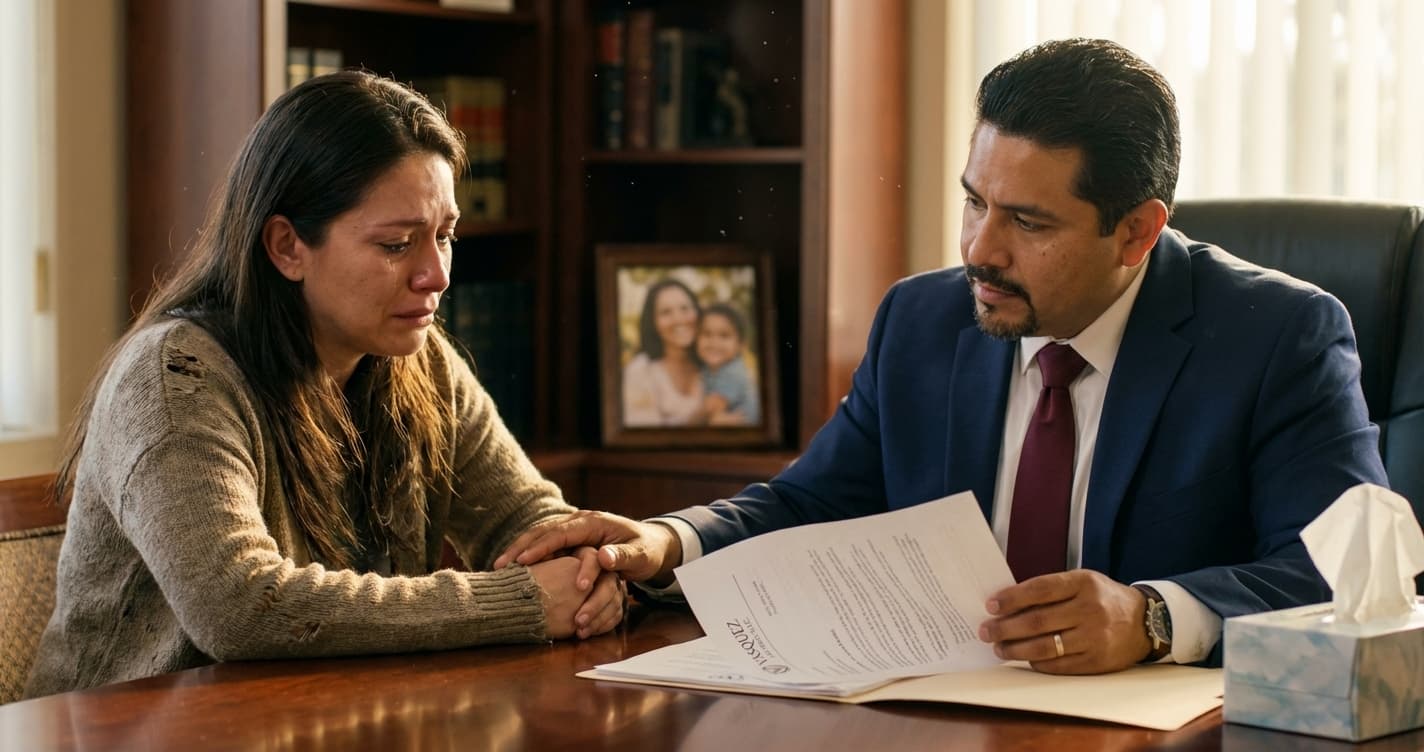
How to Protect Your Rights in a NC Divorce in 2026
Need a divorce lawyer NC? Learn separation rules, custody, property, and next steps. Call 1-844-967-3536 (Se Habla Español) for help.
Published on December 20, 2025

Have questions? Talk to an attorney - free evaluation.
Call 1-844-967-3536How to Protect Your Rights in a NC Divorce in 2026
Searching for a divorce lawyer NC usually means one thing: you need clear answers fast. North Carolina divorce law has strict rules about separation, filing, child custody, and dividing property. Small mistakes can delay your case or cost you money. This guide explains what to expect, what the courts look for, and how to prepare—so you can make smart decisions from day one.
Going Through a Divorce in NC?
NC requires 1 year of separation. We protect your assets, custody rights, and future.

Talk with a family law attorney before you file. Call 1-844-967-3536 or request a consultation. Se Habla Español.
Why Family Law Credentials Are in the News (and Why It Matters)
Board certification signals focused family law skill
Family law is complex, and many lawyers practice in several areas at once. That’s why the legal community pays attention when an attorney earns advanced recognition in family law.
For example, a recent legal news item highlights an attorney earning board certification in family law: Melody King Earns Board Certification in Family Law - Ward and Smith, P.A.. The takeaway for clients is simple: deep family law experience matters when your finances and children are on the line.
How to use credentials when choosing your attorney
Credentials are only one part of the decision, but they can help you compare lawyers. When you speak with a potential attorney, ask practical questions like:
- How many divorce cases do you handle each year?
- Do you regularly handle custody, support, and property division (not just “simple” divorces)?
- What is your strategy for negotiation vs. litigation?
When You Should Call a Divorce Lawyer in NC
Uncontested vs. contested divorce: the real difference
In North Carolina, many people use “divorce” to mean several legal issues at once. The divorce itself ends the marriage, but you may also need orders for custody, child support, alimony, or property division.
If you and your spouse agree on everything, your case may be “uncontested.” If there are disagreements—especially about kids, money, or safety—having a divorce lawyer NC can help you protect your position and present your facts clearly.
High-risk situations where legal help is critical
Some cases are higher stakes from the start. Get legal advice early if any of these apply:
- Domestic violence, threats, stalking, or harassment
- A spouse hiding money, running up debt, or draining accounts
- One parent wants to relocate with a child
- A business, rental property, retirement accounts, or stock options are involved
- You suspect substance abuse that affects parenting
Multi-state families: living in Orlando but divorcing under NC law
Many families have ties to more than one state. You might live in orlando now, but still have a North Carolina marriage, property, or custody case. Jurisdiction rules can be tricky, and filing in the wrong place can waste time.
Attorney Vasquez, JD, is admitted to the North Carolina State Bar and the Florida Bar. That matters for people balancing moves between North Carolina and orlando, or coordinating related issues across state lines.
North Carolina Divorce Basics (What the Law Requires)

The 1-year separation requirement (most common path)
North Carolina’s most common divorce is “absolute divorce.” In most cases, you must live separate and apart for at least one year before filing. The core rule is found in N.C. Gen. Stat. § 50-6.
“Separate and apart” usually means living in different homes. If you are unsure whether your separation date counts, talk to a lawyer before filing paperwork or signing agreements.
Is North Carolina a no-fault divorce state?
For absolute divorce, North Carolina is largely no-fault. You typically do not have to prove marital misconduct to end the marriage. However, fault-like conduct can still matter for related issues like alimony (for example, “illicit sexual behavior” can affect eligibility).
Where to file and where to find court forms
Divorce filing is handled through the North Carolina court system. The North Carolina Judicial Branch website is a reliable starting point for court information: North Carolina Courts (nccourts.gov).
Even if you are “DIY-ing” some steps, it helps to have a divorce lawyer NC review your plan—because property rights and support claims can be lost if not handled correctly.
Property, Debt, and Support: What Most People Worry About
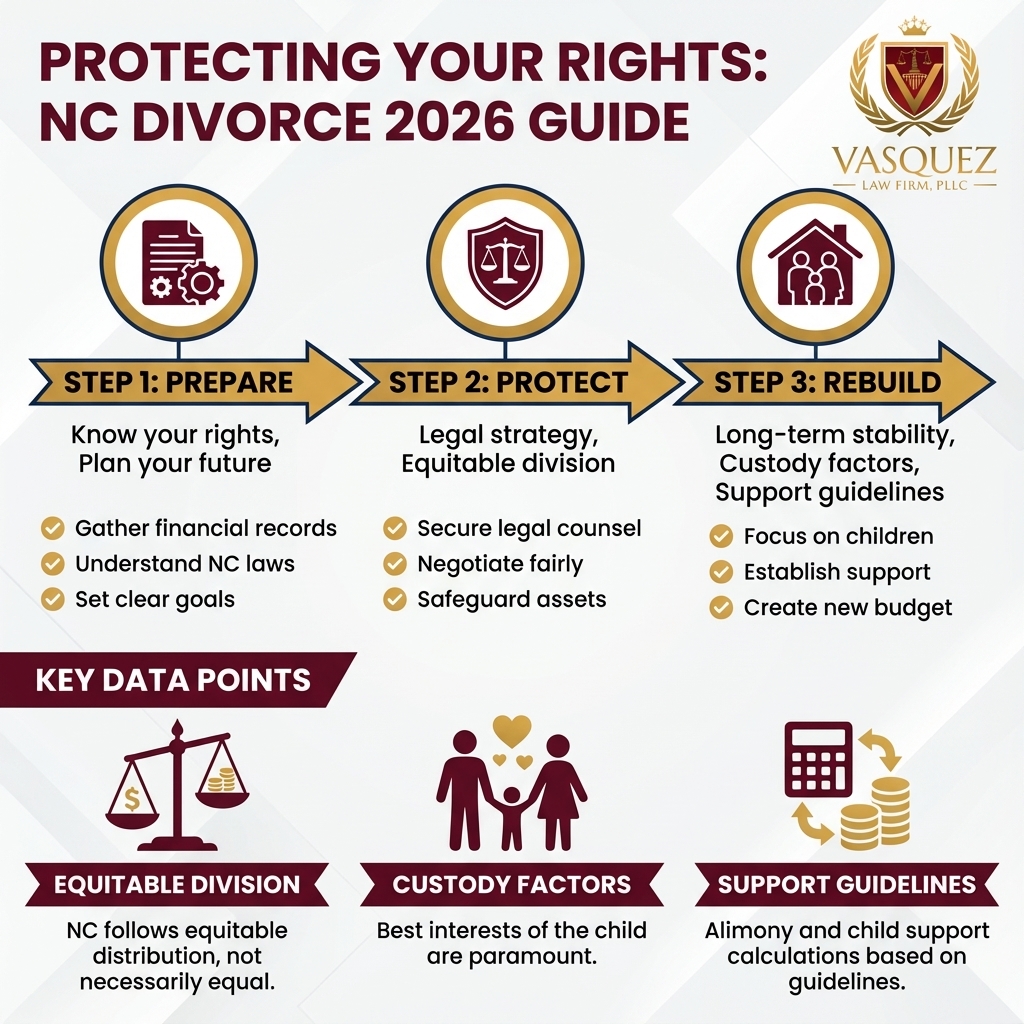
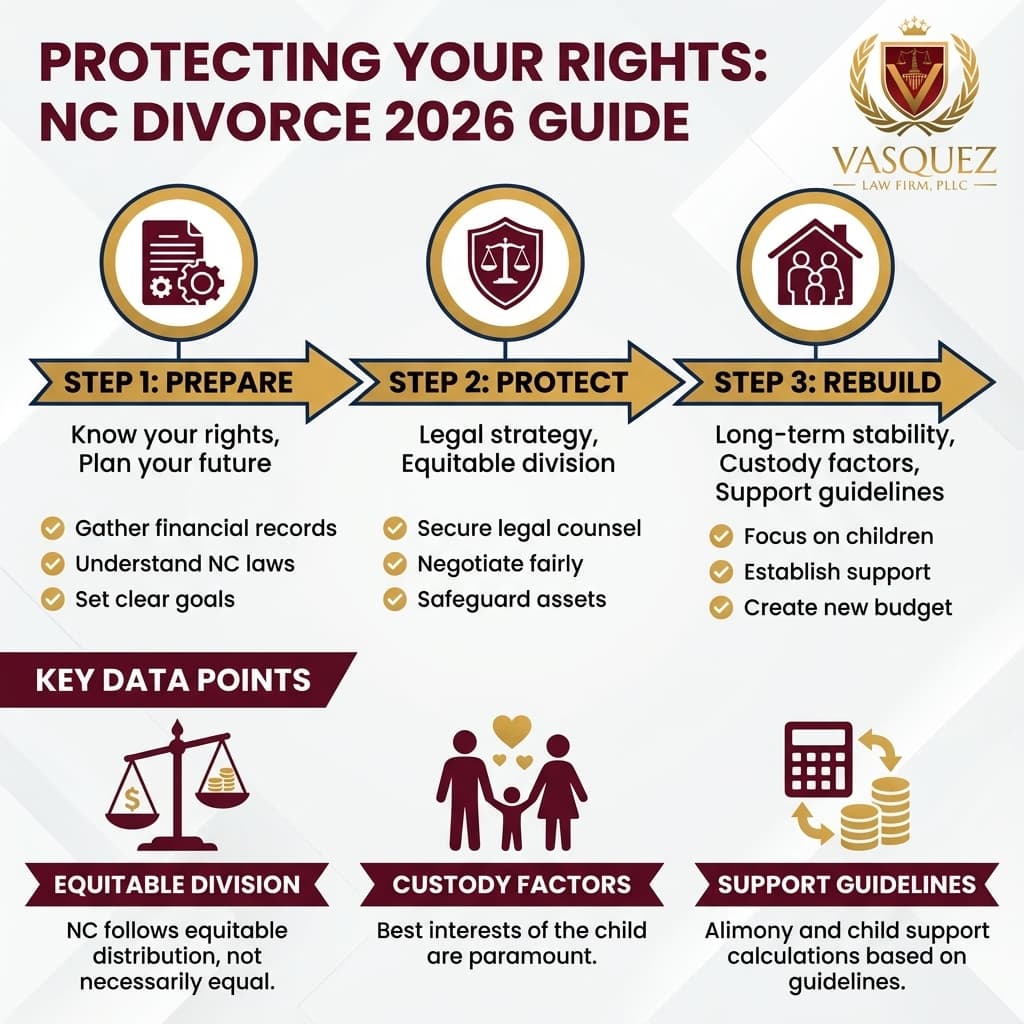
Equitable distribution: not always 50/50
North Carolina uses “equitable distribution” to divide marital property and marital debt. The main statute is N.C. Gen. Stat. § 50-20. “Equitable” often starts with the idea of an equal split, but the court can divide differently based on specific factors.
North Carolina appellate cases discuss how courts analyze distribution and marital vs. separate property. Examples include White v. White, 312 N.C. 770 (1985), and Quick v. Quick, 305 N.C. 446 (1982). Your facts control the outcome, so documentation is key.
Alimony and postseparation support
Support between spouses can be decided in several ways, including temporary “postseparation support” and longer-term alimony. North Carolina’s alimony framework appears in N.C. Gen. Stat. § 50-16.3A.
Courts look at income, earning capacity, marital standard of living, and many other factors. Marital misconduct may also matter in alimony claims, so get advice before you accuse (or admit) anything in writing.
A practical financial checklist before (and during) divorce
Whether you hire a divorce lawyer NC immediately or not, start collecting records early. Bring or gather:
- Tax returns (last 2–3 years)
- Pay stubs and proof of other income
- Bank statements and credit card statements
- Mortgage statements, deeds, and car titles
- Retirement statements (401(k), pension, IRA)
- Business records (if either spouse is self-employed)
Need a strategy, not just paperwork? Call 1-844-967-3536 to discuss your next step with our team. Se Habla Español. You can also message us here.
Child Custody and Parenting Time in NC
Legal custody vs. physical custody
North Carolina custody decisions focus on the “best interests of the child.” The custody statute is N.C. Gen. Stat. § 50-13.2. Courts can award legal custody (decision-making) and physical custody (where the child lives) in different combinations.
What makes a strong parenting plan
A strong plan is clear and realistic. It reduces conflict by spelling out the details. Many plans include:
- Weekly and holiday schedules
- Transportation and exchange locations
- School decisions, medical decisions, and activities
- Communication rules (calls, texts, co-parenting apps)
- Right of first refusal (when one parent needs childcare)
Relocation and long-distance parenting
Relocation disputes can become urgent. If one parent wants to move—whether across North Carolina or out of state to orlando—the court will consider how the move affects the child and the child’s relationship with both parents.
If you expect a move, get guidance early. Timing matters, and the wrong move can hurt custody.
The NC Divorce Process: Timeline, Steps, and Common Mistakes
Step-by-step: what most cases look like
While every case is different, many North Carolina divorces follow a similar path:
- Separation begins (often the key date for many issues).
- Planning and documentation (financial records, parenting schedules, safety plans).
- Filing for absolute divorce once the one-year requirement is met.
- Negotiation/mediation for custody, support, and property (if needed).
- Court hearings if agreements are not reached.
- Final orders and implementation (transfers, refinancing, updated plans).
What Are My Options in Family Court?
Answer 3 questions to understand your rights
Question 1 / 3
What family legal issue are you facing?
Keep Reading

Top mistakes to avoid
These mistakes can create expensive delays:
- Moving out without a plan for parenting time
- Posting about the divorce on social media
- Hiding assets (courts can penalize this)
- Signing a separation agreement without legal review
- Letting emotions drive texts and emails (they can become exhibits)
Protecting your rights before the divorce is final
In North Carolina, some claims must be handled carefully so you do not accidentally waive them. A divorce lawyer NC can help you time filings and agreements so property division and support issues are addressed the right way.
How Vasquez Law Firm, PLLC Helps Families Move Forward
Focused family law guidance (15 years) + Se Habla Español
At Vasquez Law Firm, PLLC, our goal is to reduce uncertainty and help you make informed decisions. Attorney Vasquez, JD, has 15 years of experience in family law and is admitted to the North Carolina State Bar and the Florida Bar. Se Habla Español.
We work with clients who are local to North Carolina and also clients with life transitions tied to places like orlando (new jobs, military moves, or family support). The key is building a plan that fits your facts and protects your long-term stability.
What we can help you handle
Divorce is rarely only one issue. Our team can help with:
- Absolute divorce filings and strategy
- Separation agreements and negotiation
- Child custody and visitation
- Child support and enforcement
- Equitable distribution of property and debt
- Alimony and postseparation support
Learn more about our Family Law services and meet our team on the Attorney Vasquez and attorneys page.
What to bring to your consultation
To make your time count, bring what you can—don’t worry if you don’t have everything:
- Basic timeline: marriage date, separation date, children’s details
- Recent pay information and a monthly budget
- List of assets and debts (even estimates)
- Any court papers, police reports, or prior orders
Frequently Asked Questions About Hiring a Divorce Lawyer in NC
Costs, timelines, and “what happens next”
Q1: How much does a divorce lawyer cost in NC?
Costs depend on whether your case is uncontested or contested, and whether there are hearings about custody, support, or property. The best way to estimate cost is to review your facts and likely next steps in a consultation.
Q2: How long does divorce take in North Carolina?
Most people must be separated for one year before filing for absolute divorce under N.C. Gen. Stat. § 50-6. After filing, timing depends on service of process, court schedules, and whether other claims (custody, property, support) are contested.
Kids, support, and property division
Q3: Can we share custody 50/50 automatically?
There is no automatic schedule. The court focuses on the child’s best interests under N.C. Gen. Stat. § 50-13.2. Some families do share time evenly, but only if it works for the child’s needs and the parents’ schedules.
Q4: Is marital property always split 50/50?
Not always. The court divides marital property “equitably” under N.C. Gen. Stat. § 50-20. That can be equal, but it can also be unequal depending on statutory factors and evidence.
Interstate issues and choosing the right lawyer
Q5: I live in orlando now—can I still file in North Carolina?
Possibly, but it depends on residency, where your spouse lives, and where the cause of action is proper. Also, custody jurisdiction can involve special rules. A consultation can help you avoid filing in the wrong state or at the wrong time.
Q6: What should I look for when choosing a divorce lawyer NC?
Look for relevant experience, clear communication, a strategy that fits your goals, and comfort discussing sensitive issues. Ask about prior cases similar to yours (custody disputes, high-asset division, relocation, support). Also confirm licensing and local court familiarity.
Ready to protect your children, your finances, and your peace of mind? Call 1-844-967-3536 or schedule your consultation with Vasquez Law Firm, PLLC today. Se Habla Español.
Disclaimer: This article is for general information and does not create an attorney-client relationship. Laws and procedures change, and outcomes depend on specific facts. For advice about your situation, consult a licensed attorney.

William Vasquez
Founder & CEO, Vasquez Law Firm, PLLC
William Vasquez is the founder and CEO of Vasquez Law Firm, PLLC, a results-driven firm specializing in immigration, criminal defense, family law, personal injury, and workers' compensation. A U.S. Air Force veteran and recipient of the Joint Service Achievement Medal, William is dedicated to fiercely fighting for his clients' rights.