Colorado immigrants are desperately seeking legal help
Colorado immigrants are desperately seeking legal help. They often run into fake lawyers and other scams. - The Denver Post. Get help: 1-844-967-3536.
Published on January 9, 2026· Updated February 11, 2026
Talk to an immigration attorney
Free call. A clear plan for your case.
Free & confidential · Se habla espanol · 24/7

Have questions? Talk to an attorney - free evaluation.
Call 1-844-967-3536Worried how the latest immigration news affects you?
Schedule a confidential case review with an immigration attorney - know exactly where you stand.
Colorado immigrants are desperately seeking legal help
Across the U.S., immigrants are trying to protect their families, keep their jobs, and stay on a legal path. But a growing problem is making that harder: fraud. The headline “Colorado immigrants are desperately seeking legal help. They often run into fake lawyers and other scams. - The Denver Post” highlights what many people experience when they are scared, rushed, and unsure who to trust. Scammers often pretend to be attorneys, take money, and then disappear—or file the wrong paperwork and put families at risk.
Need legal help?
Immigration in NC and FL. Personal injury and workers compensation across NC. Criminal defense in Johnston and Harnett counties, and traffic tickets in 10 NC counties. Tell us your county and we will tell you exactly what we can do.
Even if you live far from Colorado, the same patterns show up in North Carolina communities like smithfield. If you or a loved one needs immigration help, getting real legal advice early can help you avoid costly mistakes.
Worried you may be dealing with a fake lawyer or a bad immigration “helper”? Call 1-844-967-3536 to talk with our team. Se Habla Español. You can also request a consultation online.
What This News Means for smithfield Residents
Why immigration fraud surges when fear and policy changes surge
When immigration rules feel uncertain, demand for help goes up fast. That demand creates a market for “fast fixes,” and that is where scams thrive. The news cycle also adds confusion—especially when people hear about possible policy changes, enforcement shifts, or benefits rules.
How “public charge” headlines can fuel scams
Recent coverage about public-charge proposals can add to fear and misinformation. Scammers may tell families they will be “deported for using benefits” or that they must pay for a “special filing” to stay safe. This fear-driven sales pitch is common and dangerous.
For context, the public-charge concept is tied to federal immigration law and can affect certain applications. A key statute is 8 U.S.C. § 1182 (inadmissibility grounds, including public charge at § 1182(a)(4)). But the details depend on your case type, your status, and the specific rule in effect at the time of filing.
Key takeaway from the headline
The headline “Colorado immigrants are desperately seeking legal help. They often run into fake lawyers and other scams. - The Denver Post” is a warning: when you are desperate for help, you are most likely to be targeted. The safest first step is confirming that the person advising you is licensed and qualified.
Related news coverage discussing how policy proposals can affect immigrant families is available here: Migration Policy Institute analysis on the public-charge rule and immigrant families.
The Most Common Immigration Scams (and How They Work)
1) “Notario” and fake attorney scams
One of the most common scams involves someone calling themselves a “notario” or “immigration consultant.” In many Latin American countries, a notario can be a high-level legal professional. In the U.S., a notary public is not a lawyer.
Red flags include:
- They claim they can “guarantee” a visa, green card, or asylum approval.
- They refuse to give a bar number or proof of licensure.
- They tell you not to talk to a real lawyer because it will “mess up the case.”
2) Filing the wrong forms, or filing nothing at all
Some scammers take payment, give you a receipt, and never file anything. Others file random forms that do not match your goals, which can trigger a denial or even place you into removal proceedings depending on the facts.
Always verify what was filed by checking official case systems and receipts. USCIS case tools are available at USCIS.gov.
3) Threat calls, texts, and “ICE officer” impersonation
Scammers may call pretending to be immigration officers and threaten arrest unless you pay immediately. They may demand gift cards, wire transfers, or crypto.
Remember:
- Real government agencies do not demand gift cards.
- Real legal notices arrive in writing and can be verified.
- Do not share A-numbers, passport numbers, or SSNs with unknown callers.
How to Verify a Lawyer (and Protect Your Case)
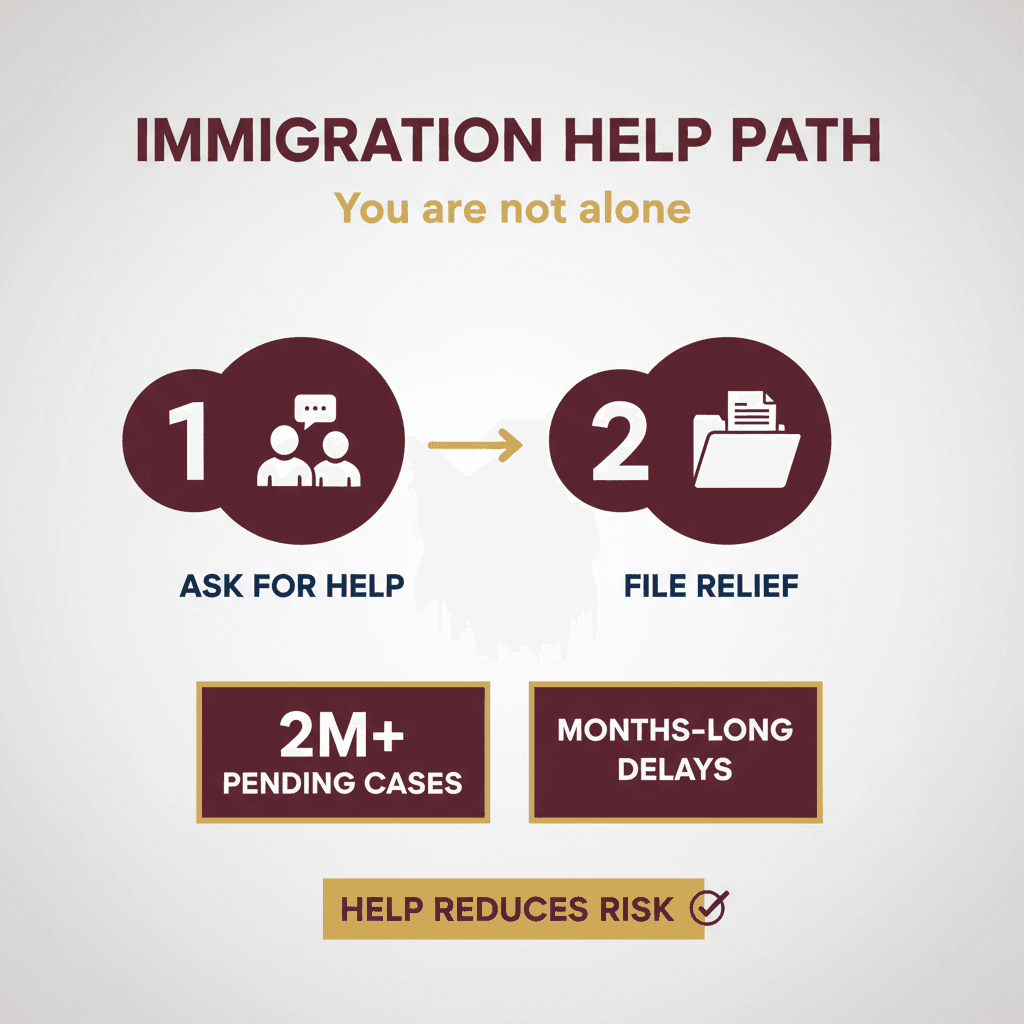
Step 1: Confirm the person is licensed and in good standing
A real attorney should be able to provide a bar number and the state where they are licensed. You can also ask where they went to law school and where they practice. If they refuse, that is a major warning sign.
Step 2: Get a written agreement that explains the work
You should receive a written fee agreement (often called a representation agreement) that clearly states:
- What the lawyer will do
- What the lawyer will not do
- Total fees, payment terms, and refund policies
- Who will handle the case day-to-day
Step 3: Keep copies of everything—forms, receipts, and proof of filing
Keep a file with:
- Copies of every form submitted
- USCIS receipt notices (I-797) and tracking numbers
- Supporting evidence (IDs, tax records, affidavits, police reports)
If your matter involves immigration court, you may also need to track hearings and filings through the Executive Office for Immigration Review (EOIR).
Legal Background: Why Bad Advice Can Create Big Immigration Problems
Public charge: what it is (and what it is not)
“Public charge” is a legal term that can affect admissibility in certain immigration applications. It does not mean every benefit use leads to denial, and it does not apply the same way in every case. The law and guidance can change, so you should rely on current, official sources and qualified legal advice.
For visa processing and consular guidance, official information is available at the U.S. Department of State visa portal.
Unauthorized practice of law (UPL) can destroy timelines
Immigration deadlines matter. Missing a filing date, submitting inconsistent statements, or failing to attend a hearing can have long-term consequences. Even “small” errors can lead to denials, requests for evidence, or lost work authorization time.
If your case is in court, the risk is higher
When a case is in immigration court, the stakes are serious. A missed hearing can result in an in absentia removal order in many situations. If you have court paperwork, do not rely on a consultant or a friend of a friend—get real legal guidance.
If you’re unsure whether your paperwork was filed correctly, get a second opinion now. Call 1-844-967-3536. Se Habla Español. You can also message us through /contact.
If You Think You Were Scammed: Practical Steps to Take Today
1) Stop paying and stop sharing personal information
If you suspect fraud, stop sending money and do not provide more documents. Ask for your full file immediately, including copies of everything “filed,” and any receipts.
2) Verify your case status with official sources
Depending on your situation, you may be able to confirm whether a filing exists through USCIS receipt numbers and online tools at USCIS.gov. If you have immigration court issues, EOIR tools and guidance are at justice.gov/eoir.
3) Document what happened (it matters later)
Save:
- Receipts, contracts, and business cards
- Text messages, emails, and voicemails
- Ads or social media posts where services were offered
What's Your Immigration Situation?
Answer 3 questions - we'll tell you your options
Question 1 / 3
What best describes your situation?
Keep Reading

This documentation can help a real attorney assess damage control options, including refiling correctly, responding to government notices, or addressing missed deadlines. The goal is to protect your immigration record and reduce future risk.
How Vasquez Law Firm, PLLC Helps Families Avoid Fraud and Move Forward
Experienced, accountable legal guidance
Vasquez Law Firm, PLLC focuses on immigration law and works with clients who need clear steps and honest answers. Attorney Vasquez, JD, has 15 years of experience and is admitted to the North Carolina State Bar and the Florida Bar.
When people read headlines like “Colorado immigrants are desperately seeking legal help. They often run into fake lawyers and other scams. - The Denver Post”, they often ask the same question: “How do I find someone real?” A real law firm will explain options, risks, and timelines in plain language—and put it in writing.
Case audits: find out what was filed and what needs fixing
Many clients come to us after paying someone else. We can review what happened and build a plan. That plan may include:
- Checking whether forms were filed and whether they were correct
- Responding to USCIS requests for evidence (RFEs) or notices
- Correcting errors before they cause bigger problems
Learn more about our Immigration Law services and how we handle complex, high-stakes filings.
Serving smithfield residents with bilingual support
We regularly help families serving smithfield residents and surrounding areas. If you need help near the Johnston County Courthouse area or you travel often through Raleigh, Clayton, Selma, or Goldsboro, we can help you understand what documents matter and what steps to take next.
If you want to learn more about our team and background, visit our Attorney Vasquez page. Se Habla Español.
Frequently Asked Questions (FAQ)
Fraud and fake lawyer questions
1) How can I tell if someone is a real immigration lawyer?
A real lawyer will provide their full name, the state(s) where they are licensed, and a bar number you can verify. They will also give you a written agreement and copies of what they file. If they guarantee results or refuse to prove licensure, treat it as a red flag.
2) Is a “notario” allowed to handle my immigration case?
In the U.S., a notary public is not an attorney and generally cannot give legal advice. Some non-attorneys may be authorized to help in limited ways (like accredited representatives through specific programs), but many “notario” services are unauthorized. When in doubt, verify credentials before you sign or pay.
Public charge and benefits questions
3) Will using public benefits automatically ruin my immigration case?
Not automatically. Public-charge rules are technical and depend on the benefit type, the immigration application, and the rules in effect at the time. Because misinformation is common, rely on official guidance and a qualified attorney to review your facts.
4) Why do scammers talk so much about public charge?
Because fear sells. Scammers use scary headlines to pressure families into paying fast. The more complicated the rule, the easier it is for a scammer to confuse someone. Headlines like “Colorado immigrants are desperately seeking legal help. They often run into fake lawyers and other scams. - The Denver Post” show how often that pressure leads to fraud.
What to do if you already paid someone
5) I already paid a fake lawyer. Can my case be saved?
Sometimes, yes. The first step is to gather documents, confirm what was filed, and address any deadlines. A lawyer may be able to correct filings, respond to notices, or rebuild the case strategy. The sooner you act, the more options you usually have.
6) What should I bring to a consultation?
Bring every document you have: IDs, passports, immigration papers, receipts, forms, messages, and any notices from USCIS or immigration court. If you are in smithfield or nearby, we can review your paperwork and explain next steps in plain language. Se Habla Español.
Disclaimer: This article is for general information and is not legal advice. Every case is different.
Don’t let a scammer control your future. If you need trustworthy immigration help in smithfield or anywhere in North Carolina, call 1-844-967-3536 today. Se Habla Español. Or request your free case evaluation now.
One last reminder: the headline “Colorado immigrants are desperately seeking legal help. They often run into fake lawyers and other scams. - The Denver Post” reflects a national problem. Protect yourself by verifying credentials, keeping copies, and getting advice from accountable professionals like Vasquez Law Firm, PLLC.

William Vasquez
Founder & CEO, Vasquez Law Firm, PLLC
William Vasquez is the founder and CEO of Vasquez Law Firm, PLLC, a results-driven firm specializing in immigration, criminal defense, personal injury, and workers' compensation. A U.S. Air Force veteran and recipient of the Joint Service Achievement Medal, William is dedicated to fiercely fighting for his clients' rights.
Related Legal Services
Need legal help? Learn more about speak with an immigration lawyer, or contact us for a free evaluation.
You can also visit our NC immigration team for more information.