Who Is at Fault in a Chain-Reaction Collision in 2026?
A chain-reaction collision can be complex. Learn how fault is determined in North Carolina and protect your rights. Contact Vasquez Law for a free consultation today.
Published on March 9, 2026
Injured? Get what your case is worth
Free review.
Free & confidential · Se habla espanol · 24/7
Have questions? Talk to an attorney - free evaluation.
Call 1-844-967-3536Get What Your Injury Is Worth
Schedule your consultation.
Who Is at Fault in a Chain-Reaction Collision in 2026?
Imagine being stopped at a red light in Smithfield, only to feel a sudden impact from behind, pushing your vehicle into the car in front of you. This is a common scenario in a chain-reaction collision, where multiple vehicles are involved in a series of impacts. Determining fault in these complex accidents is often challenging, requiring a thorough investigation to establish who is legally responsible for the damages and injuries. As of 2026, North Carolina law applies specific rules to these multi-vehicle incidents, making it crucial for victims to understand their rights and how to pursue compensation.
Need help with your case? Our experienced attorneys are ready to fight for you. Se Habla Español.
Schedule Your Free Case Evaluation
Or call us now: 1-844-967-3536
Quick Answer
In a chain-reaction collision in North Carolina, fault is typically determined by identifying the initial negligent driver whose actions set the sequence of events in motion. However, multiple drivers can share fault, especially if subsequent drivers also acted negligently. Evidence like police reports, witness statements, and vehicle damage assessments are crucial for establishing liability.
- The driver who initiated the first impact is often primarily at fault.
- Subsequent drivers may also be found partially at fault for failing to maintain a safe distance or react appropriately.
- North Carolina's contributory negligence rule can significantly impact your claim.
- An experienced personal injury attorney can help investigate and build your case.
Understanding a Chain-Reaction Collision
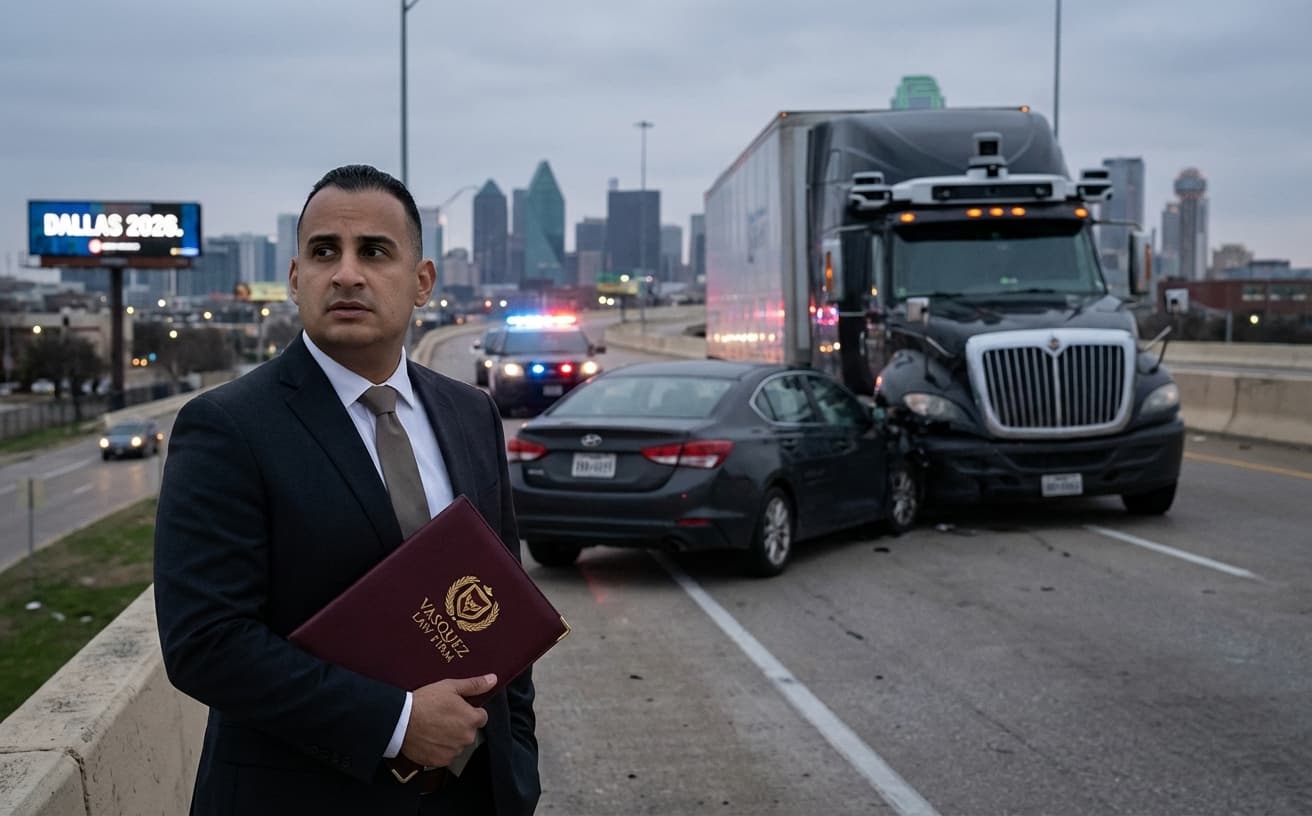
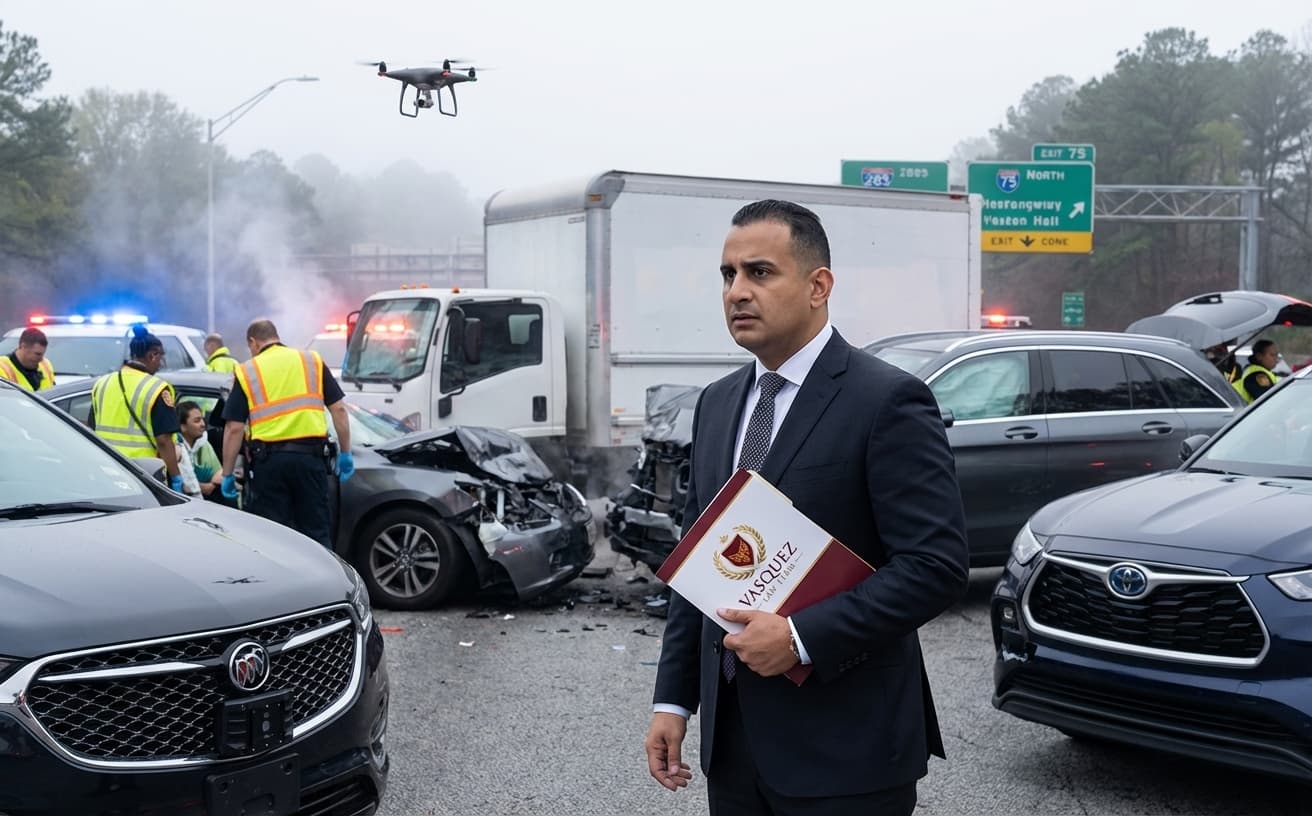
A chain-reaction collision, sometimes called a multi-car pileup or chain collision, involves three or more vehicles crashing into each other in quick succession. These incidents often occur on busy highways or at intersections, where traffic can suddenly stop or slow down. For example, if a driver slams on their brakes unexpectedly, and the car behind them fails to stop in time, causing a rear-end collision that then pushes the second car into a third, and so on, that's a classic chain-reaction scenario.
The complexity arises because each impact creates its own set of damages and potential injuries. It's not always just one driver hitting another; it's a series of impacts, each with its own force and direction. This makes it challenging to pinpoint exactly who caused what damage and who is ultimately responsible for the overall incident. In 2026, investigators will meticulously reconstruct the scene to determine the sequence of events and the role of each driver.
How Fault Is Determined in North Carolina
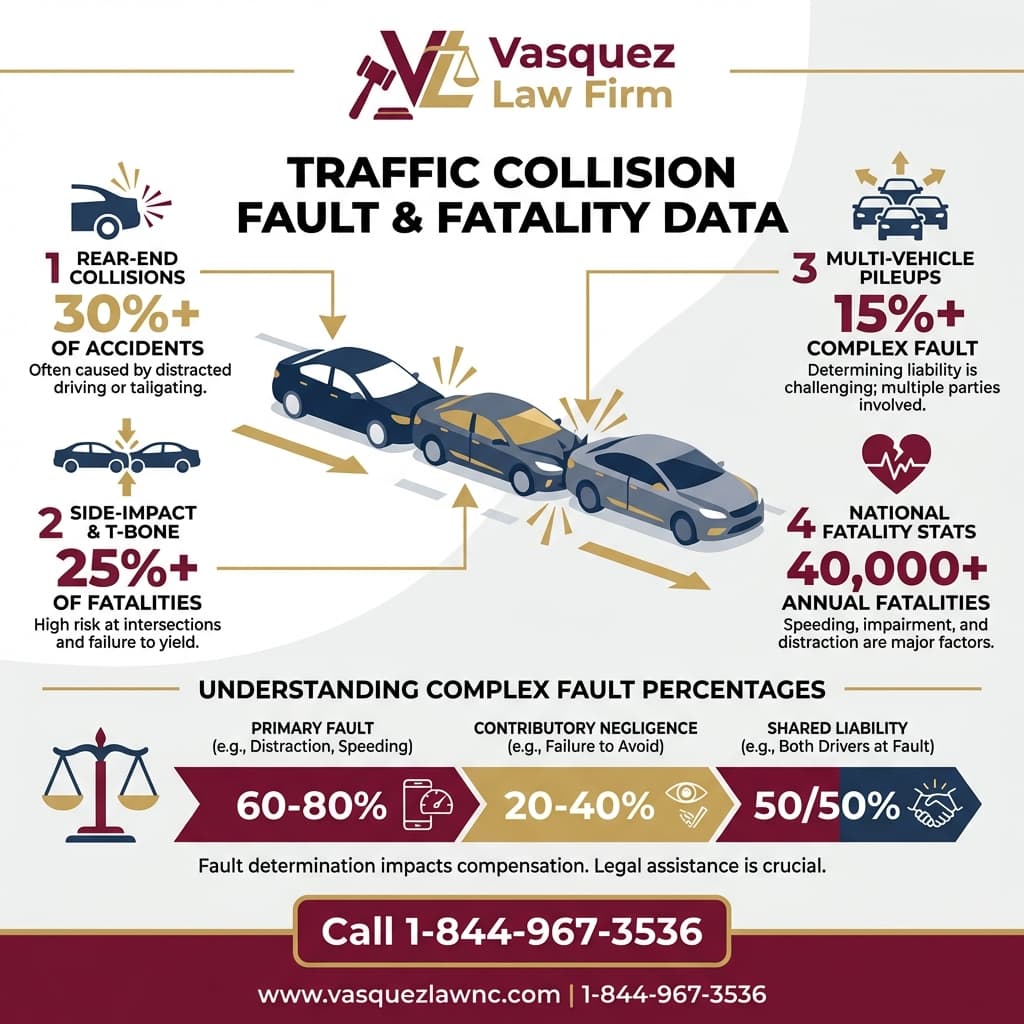
North Carolina operates under an "at-fault" insurance system, meaning the person responsible for causing an accident is liable for the damages. However, determining fault in a chain-reaction collision is rarely straightforward. Consider a scenario where Driver A rear-ends Driver B, pushing Driver B into Driver C. In this instance, Driver A is likely the primary at-fault party for initiating the chain.
However, what if Driver B also failed to maintain a safe following distance from Driver C, or Driver C suddenly stopped without warning? The law recognizes that fault can be shared. North Carolina follows a strict contributory negligence rule, meaning if you are found even 1% at fault for the accident, you could be barred from recovering any damages. This rule makes proving fault definitively in a multi-car accident absolutely critical.
Primary and Secondary Liability
In many chain-reaction collisions, the driver who initiates the first impact is considered primarily liable. This usually involves a driver who was distracted, speeding, or following too closely. However, secondary liability can also arise. If a driver in the middle of the chain had ample opportunity to stop but failed to do so, they might share some fault. For instance, if the initial impact was minor, but a subsequent driver hit the second car at a high speed, causing more severe damage, that subsequent driver could hold significant responsibility.
Establishing these distinctions often requires expert analysis and detailed accident reconstruction. Law enforcement officers at the scene will document the positions of the vehicles, skid marks, and points of impact, but their initial report might not fully assign fault. An attorney can help gather additional evidence and consult with experts to build a stronger case regarding specific liabilities.
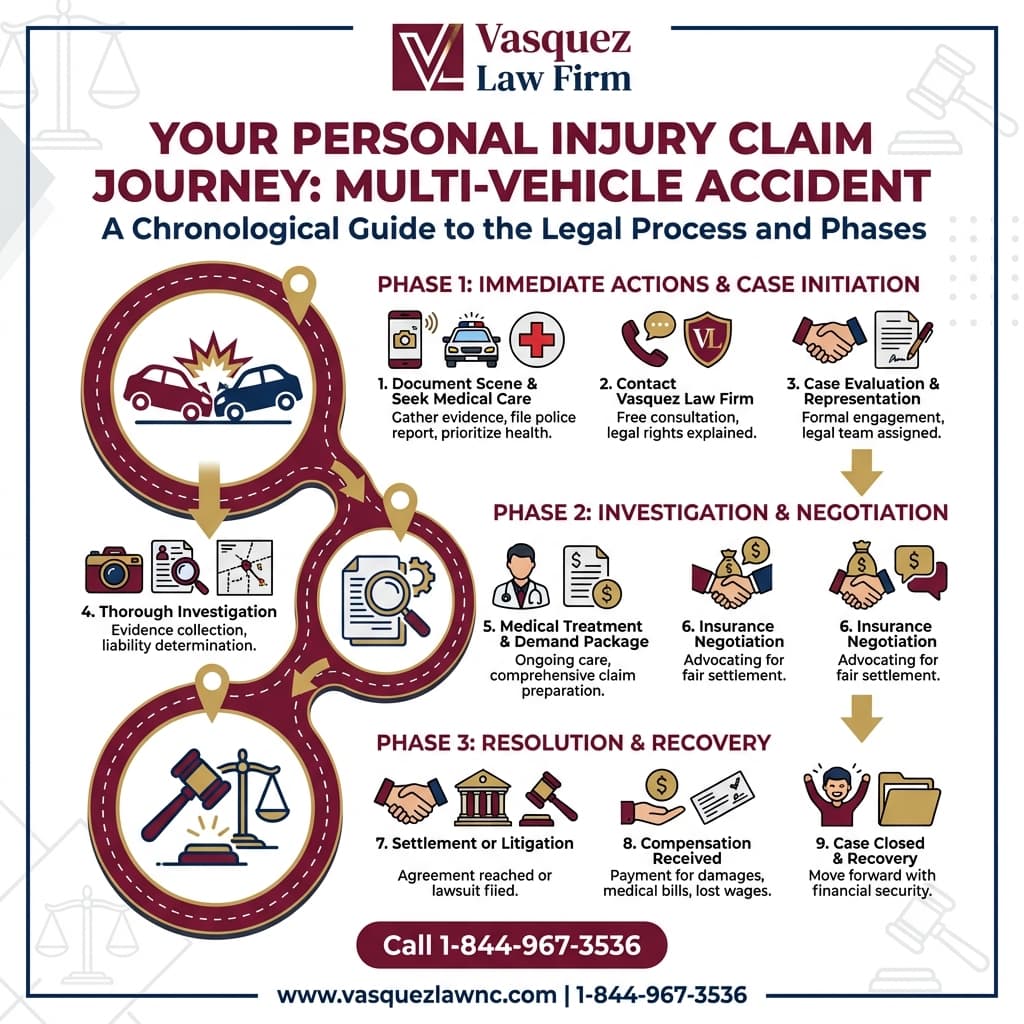
Step-by-Step: What to Do After a Chain Collision
The moments immediately following a chain-reaction collision are chaotic, but your actions can significantly impact your future claim. Prioritize safety and evidence collection to protect your rights.
- Ensure Safety: Move vehicles to the shoulder if possible and safe. Turn on hazard lights. Check for injuries and call 911 for emergency services if anyone is hurt or if vehicles are blocking traffic.
- Contact Law Enforcement: Always call the police, even if damages seem minor. A police report is vital for insurance claims and legal proceedings, documenting the scene and initial observations.
- Exchange Information: Collect contact details, insurance information, and license plate numbers from all drivers involved. Note the make, model, and color of each vehicle.
- Document the Scene: Take photos and videos of all vehicles involved, road conditions, traffic signals, skid marks, and any visible injuries. The more visual evidence, the better.
- Seek Medical Attention: Even if you feel fine, see a doctor immediately. Some injuries, like whiplash or concussions, may not manifest symptoms until hours or days later. Documenting your injuries early is crucial.
- Do Not Admit Fault: Avoid discussing fault with other drivers or their insurers. Stick to the facts. Anything you say can be used against you later.
- Contact a Personal Injury Attorney: Before speaking extensively with insurance companies, consult with an attorney. They can protect your rights and guide you through the complex claims process. Vasquez Law Firm specializes in these types of cases.
Documents and Evidence Checklist
Gathering comprehensive evidence is paramount for a successful personal injury claim after a chain-reaction accident. A well-documented case makes it easier to prove fault and the extent of your damages.
- Police Accident Report: Obtain a copy as soon as it's available.
- Photographs/Videos: Of the accident scene, vehicle damage, and injuries.
- Witness Statements: Contact information and written accounts from any witnesses.
- Medical Records: All documentation related to your injuries, treatments, and prognosis.
- Bills and Receipts: For medical care, vehicle repairs, and any other accident-related expenses.
- Wage Loss Documentation: If you missed work, gather pay stubs or employer statements.
- Communication Records: Keep a log of all interactions with insurance companies and other parties.
Timeline: What to Expect After Your Collision
Understanding the general timeline after a chain-reaction collision can help manage expectations and reduce stress. While every case is unique, here's a typical progression:
- Immediately After the Accident (Day 0-7): Seek medical attention, report to police, exchange info, collect initial evidence. Contact your insurance company and a personal injury attorney.
- Investigation Phase (Week 1-8): Your attorney will gather evidence, review police reports, interview witnesses, and potentially consult with accident reconstructionists. Medical treatments begin and continue.
- Demand Letter (Month 2-6): Once your medical treatment is complete or stabilized, your attorney will compile all damages and send a demand letter to the at-fault driver's insurance company.
- Negotiation (Month 3-9): Insurance companies will respond to the demand, often with a lowball offer. Your attorney will negotiate to achieve a fair settlement.
- Filing a Lawsuit (Month 6-12+): If negotiations fail, a lawsuit may be filed. This initiates the litigation process, which can involve discovery, depositions, and potentially a trial.
- Settlement or Trial (Year 1-3+): Most cases settle before trial. If not, the case proceeds to court for a verdict.
Costs and Fees: What Impacts the Price
Concerns about legal fees often deter victims from seeking representation after a chain-reaction collision. However, most personal injury attorneys, including Vasquez Law Firm, work on a contingency fee basis. This means you don't pay any upfront legal fees.
Instead, the attorney's fee is a percentage of the final settlement or court award. If you don't win your case, you typically don't owe any attorney fees. This arrangement allows accident victims to pursue justice without financial strain. Other costs, such as court filing fees, expert witness fees, and medical record retrieval fees, are usually advanced by the law firm and reimbursed from the settlement. The specific percentage for attorney fees is agreed upon at the outset of your case.
Common Mistakes and How to Avoid Them
Navigating the aftermath of a chain-reaction collision is fraught with potential pitfalls that can jeopardize your claim. Being aware of these common mistakes can help you protect your rights and maximize your potential compensation in 2026.
- Admitting Fault: Never apologize or say anything that could be interpreted as admitting fault, even if you think you might be partially responsible. This can severely harm your claim due to North Carolina's contributory negligence rule. Stick to the facts when speaking with police or other drivers.
- Delaying Medical Attention: Waiting to see a doctor can make it harder to link your injuries directly to the accident. Always seek immediate medical evaluation, even for seemingly minor symptoms.
- Not Documenting the Scene: Failing to take comprehensive photos and videos can leave gaps in evidence. Document everything: vehicle positions, damage, road conditions, and any visible injuries.
- Giving a Recorded Statement to Insurers: Insurance adjusters, even from your own company, are looking for ways to minimize payouts. Never give a recorded statement without first consulting your attorney.
- Accepting the First Settlement Offer: Initial offers are almost always low. An attorney understands the true value of your claim and can negotiate for a fair amount.
- Not Calling the Police: Even for minor accidents, a police report provides an official record and crucial details that can be difficult to obtain later.
- Failing to Follow Medical Advice: If you stop treatment prematurely or don't follow your doctor's orders, the insurance company may argue that your injuries are not severe or are not accident-related.
- Not Hiring an Attorney: Trying to handle a complex chain-reaction collision claim on your own can lead to mistakes and significantly reduce your recovery. An attorney protects your interests.
If you only remember one thing: After a chain-reaction collision, prioritize your health and contact an attorney before engaging with any insurance company. Your attorney will guide you through the process and shield you from common pitfalls.
North Carolina Personal Injury Law
In North Carolina, personal injury claims stemming from a chain-reaction collision are governed by specific statutes and legal precedents. The state's strict contributory negligence rule (North Carolina General Statutes Chapter 1, Article 4) is a significant factor. If a plaintiff is found even slightly at fault for their injuries, they are generally barred from recovering damages. This makes proving the other party's sole negligence incredibly important.
The statute of limitations for personal injury claims in North Carolina is typically three years from the date of the accident (N.C. Gen. Stat. § 1-52(16)). This means you have a limited time to file a lawsuit. Missing this deadline can result in the loss of your right to pursue compensation, regardless of the merits of your case. It is crucial to act quickly after a chain-reaction collision in Smithfield or anywhere else in North Carolina.
When to Call a Lawyer Now After a Collision
After a chain-reaction collision, the sooner you involve a legal professional, the better. Here are urgent triggers indicating you should contact an attorney immediately:
- You've sustained significant injuries, requiring ongoing medical treatment.
- Multiple vehicles were involved, making fault determination complex.
- The insurance company is pressuring you to give a recorded statement or accept a quick settlement.
- The at-fault driver's insurance company denies liability or tries to shift blame to you.
- You've missed time from work due to your injuries and are losing wages.
- The police report does not clearly assign fault or seems inaccurate.
- You are receiving conflicting information from different insurance adjusters.
- There were fatalities or severe injuries involved in the accident.
- You are unsure of your rights or the legal process in North Carolina.
About Vasquez Law Firm
At Vasquez Law Firm, we combine compassion with aggressive representation. Our motto "Yo Peleo" (I Fight) reflects our commitment to standing up for your rights. We understand the physical, emotional, and financial toll a chain-reaction collision can take on you and your family.
- Bilingual Support: Se Habla Español - our team is fully bilingual and ready to assist you in your preferred language.
- Service Areas: We proudly serve clients throughout North Carolina, including Smithfield, and handle complex personal injury cases statewide.
- Experience: With over 15 years of dedicated legal experience, Attorney Vasquez has a proven track record of helping clients navigate complex legal matters and achieve favorable outcomes.
- Results: We have successfully handled thousands of cases across multiple practice areas, securing just compensation for our clients.
Attorney Trust and Experience
Attorney Vasquez holds a Juris Doctor degree and is admitted to practice in both the North Carolina State Bar and Florida Bar. With over 15 years of dedicated legal experience, he has built a reputation for providing personalized attention and achieving favorable outcomes for his clients. His deep understanding of North Carolina personal injury law, including the intricacies of chain-reaction collision cases, ensures that your rights are vigorously protected. Learn more about Attorney Vasquez and his commitment to justice.
Don't face your legal challenges alone. Our team is here to help you every step of the way.
Call today: 1-844-967-3536 | Se Habla Español
Frequently Asked Questions
What exactly is a chain-reaction collision?
A chain-reaction collision involves three or more vehicles crashing into each other in a continuous sequence. Typically, one initial impact causes subsequent vehicles to collide, often due to sudden stops or insufficient following distances. These accidents are particularly complex because multiple drivers might contribute to the overall damage, making fault difficult to assign. Investigators must reconstruct the entire sequence.
Who is usually found at fault in these accidents?
Often, the driver who initiated the first impact in the chain is found primarily at fault. This is usually the driver who rear-ended the car in front of them, setting off the sequence. However, other drivers might also share fault if they were following too closely, speeding, or distracted, thereby contributing to the subsequent impacts. North Carolina's contributory negligence rules are crucial here.
Can more than one driver be at fault?
Yes, absolutely. In a chain-reaction collision, it's common for multiple drivers to be assigned some degree of fault. For example, the initial driver might be 70% at fault, while a second driver who failed to stop in time might be 30% at fault for their specific impact. This multi-party liability complicates claims and makes legal representation essential for accurate fault assessment.
How does North Carolina's contributory negligence rule affect my claim?
North Carolina follows a strict contributory negligence rule. This means if you are found even 1% responsible for causing the chain-reaction collision, you are generally barred from recovering any compensation for your injuries or damages. This strict rule makes proving that another party was solely at fault critically important, highlighting the need for experienced legal counsel.
What kind of evidence is needed to prove fault?
Proving fault in a chain-reaction collision requires comprehensive evidence. This includes the police report, photographs and videos of the accident scene, vehicle damage, and injuries, witness statements, traffic camera footage if available, and expert accident reconstruction analysis. Medical records are also vital to link your injuries directly to the accident and establish their severity.
Should I talk to other drivers' insurance companies?
It is generally advisable to avoid giving recorded statements or discussing the details of the accident with other drivers' insurance companies without first consulting your attorney. Insurance adjusters are trained to minimize payouts, and anything you say could be used against your claim. Let your attorney handle all communications with insurance providers.
What if I was hit from behind in a chain reaction?
If you were hit from behind in a chain-reaction collision, you are typically not considered at fault for that specific impact, as the rear driver usually bears responsibility for maintaining a safe following distance. However, if your vehicle was then pushed into another car, determining overall liability can still be complex, requiring a full investigation to establish the sequence and impacts.
How long do I have to file a personal injury lawsuit in NC?
In North Carolina, the statute of limitations for most personal injury lawsuits, including those arising from a chain-reaction collision, is three years from the date of the accident. Failing to file your lawsuit within this timeframe typically results in losing your right to seek compensation. It is crucial to consult with an attorney promptly to ensure deadlines are met.
Can I still recover damages if I was partially at fault?
Under North Carolina's strict contributory negligence law, if you are found to be even 1% at fault for the accident, you are generally barred from recovering any damages. There are very limited exceptions, such as if the other driver was grossly negligent. This makes it crucial to have an attorney who can rigorously argue against any claims of your fault.
What types of damages can I claim after a multi-car accident?
After a multi-car accident in North Carolina, you may be able to claim various damages, including medical expenses (past and future), lost wages, loss of earning capacity, property damage, pain and suffering, emotional distress, and loss of consortium. The specific damages recoverable depend on the severity of your injuries and the impact on your life, all of which an attorney can help quantify.
Sources and References
- North Carolina Courts: Contributory Negligence
- North Carolina General Statutes Chapter 1, Article 4 (Statute of Limitations)
- North Carolina Department of Transportation (NCDOT)
Ready to take the next step? Contact Vasquez Law Firm today for a free, confidential consultation. We're committed to fighting for your rights and achieving the best possible outcome for your case.
Start Your Free Case Evaluation Now
Call us: 1-844-967-3536
Se Habla Español - Estamos aquí para ayudarle.

William Vasquez
Founder & CEO, Vasquez Law Firm, PLLC
William Vasquez is the founder and CEO of Vasquez Law Firm, PLLC, a results-driven firm specializing in immigration, criminal defense, personal injury, and workers' compensation. A U.S. Air Force veteran and recipient of the Joint Service Achievement Medal, William is dedicated to fiercely fighting for his clients' rights.
Related Legal Services
Need legal help? Learn more about personal injury case consultation, or contact us for a free evaluation.
You can also visit statewide personal injury attorneys for more information.