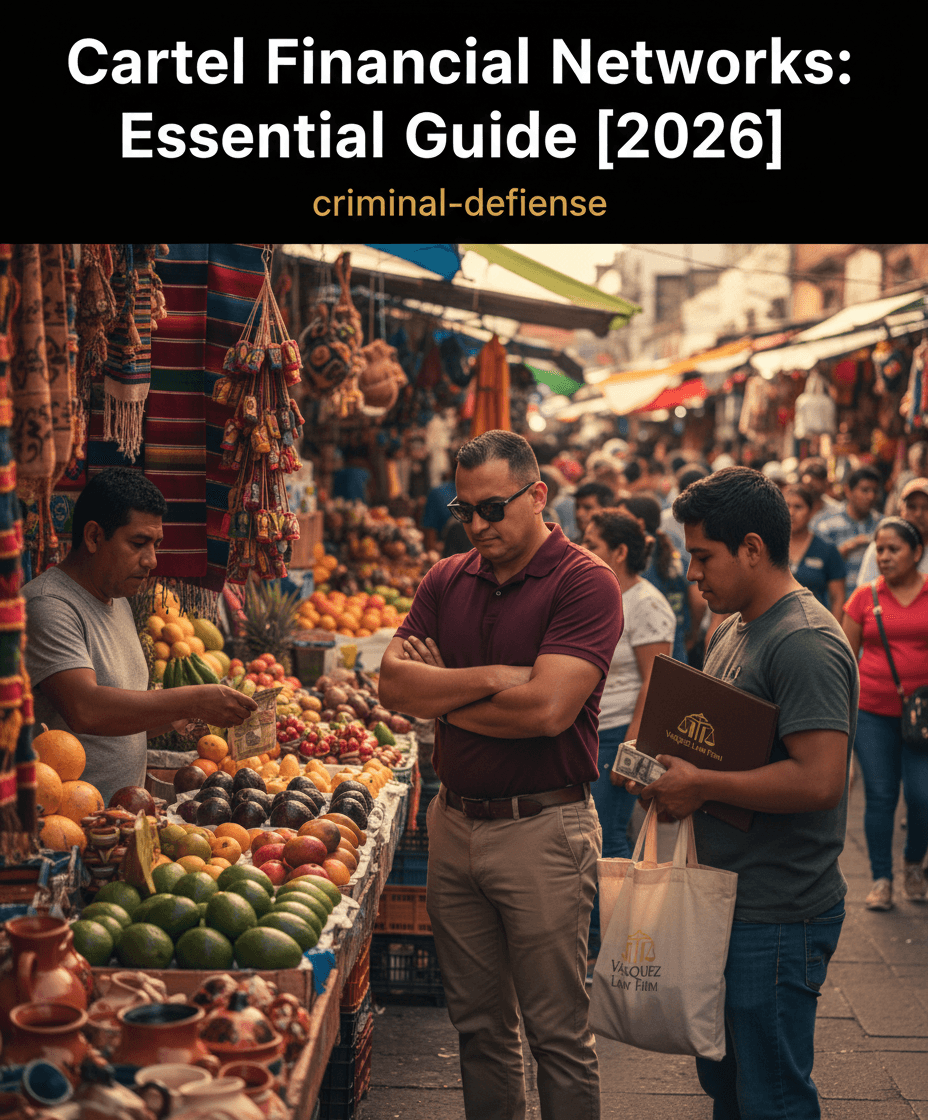
What You Need to Know About Cartel Financial Networks in 2026
Understand cartel financial networks in 2026. Learn key risks and legal insights. Contact Vasquez Law for a free criminal defense consultation.
Published on February 8, 2026
Have questions? Talk to an attorney - free evaluation.
Call 1-844-967-3536Protect Your Record and Your Freedom
A free, confidential case review - available 24/7 for emergencies.
What You Need to Know About Cartel Financial Networks in 2026
Cartel financial networks play a critical role in the operation of criminal organizations, especially in money laundering and illegal financing. In 2026, understanding how these networks operate is vital for those seeking justice or facing criminal charges in Raleigh or beyond. This article explores the structure, risks, and legal implications tied to cartel financial networks, offering a detailed guide to protect your rights and respond effectively. Whether you are a justice seeker or simply curious, our comprehensive guide helps unravel the complexities behind these illicit financial operations.
Need help with your case? Our experienced attorneys are ready to fight for you. Se Habla Español.
Schedule Your Free Consultation
Or call us now: 1-844-967-3536
Quick Answer
Cartel financial networks are organized groups that manage the flow and laundering of illegal money through complex financial systems. They often use banks, shell companies, and cryptocurrencies to hide illicit funds, making detection difficult. In 2026, government agencies like FinCEN are intensifying efforts to expose and disrupt these networks.
- Use multiple layers of financial transactions
- Exploit both traditional banks and cryptocurrencies
- Coordinate across national and international institutions
- Subject to investigation by FinCEN and DOJ
Understanding Cartel Financial Networks
Cartel financial networks represent a backbone of organized crime, allowing illicit groups to move large sums of money while evading law enforcement. These networks operate by funneling illegal proceeds through a variety of financial channels that may seem legitimate at first glance. The use of complex layering techniques with transactions both in the United States and abroad hides the origin of these funds.
In places like Raleigh, North Carolina, and throughout Florida, law enforcement intensifies monitoring of suspect activity. These cartels often use seemingly normal business transactions or real estate deals to disguise peddled money. They also exploit loopholes in financial regulations to avoid detection. In 2026, the Financial Crimes Enforcement Network (FinCEN) continues to upgrade its tracking mechanisms to catch these sophisticated operations.
Key Features of Cartel Financial Networks
- Layering: Multiple, complicated transfers to obscure fund origins.
- Integration: Introducing laundered money into the legitimate economy.
- International Reach: Cross-border transactions complicate investigations.
- Use of Cryptocurrency: Decentralized and harder to track.
How Government Agencies Respond
Federal agencies, such as FinCEN and the Department of Justice (DOJ), work collaboratively to track financial crime. They enforce strict rules and encourage financial institutions to report suspicious transactions. In 2026, there are increased requirements for banks to monitor and disclose transactions over $5,000, a key threshold that can signal potential money laundering.
North Carolina courts handle related criminal prosecutions with growing expertise, emphasizing the importance of strong legal defense for those impacted by these investigations.
Step-by-Step: How Cartel Networks Operate
- Placement: Illicit cash is introduced into the financial system, often through cash deposits or fake businesses.
- Layering: Funds are moved repetitively through various accounts and instruments such as wire transfers, shell companies, and cryptocurrencies to obscure their origins.
- Integration: Cleaned money is invested into legitimate businesses, real estate, or other assets.
Common Methods Cartels Use
- Structuring cash deposits to avoid $5000 reporting rules.
- Using Mexican financial institutions like Banamex to move funds internationally.
- Converting funds to cryptocurrency to evade traditional banking scrutiny.
Legal Implications
Engaging in or facilitating these steps can lead to serious federal charges including money laundering under 18 U.S.C. § 1956. Authorities analyze transaction patterns and related evidence to build their cases.
Common Mistakes in Handling Cartel Financial Cases
- Failure to seek early legal counsel: Many assume silence is best, but prompt legal help can protect rights.
- Ignoring financial documents: Not keeping records or trying to hide evidence can worsen outcomes.
- Speaking to investigators without advice: Innocent statements may be misconstrued.
- Underestimating FinCEN’s reach: This government agency has wide data access and analytical tools.
- Assuming small amounts are safe: Transactions over $5,000 are closely scrutinized.
If you only remember one thing: Never navigate cartel financial investigations without skilled legal representation.
Timeline: Investigations and Legal Proceedings
- Initial investigation may take several months, including surveillance and data analysis.
- Subpoenas and search warrants often follow once probable cause is established.
- Charges may be filed after evidence gathering; pretrial motions begin.
- Trial or plea negotiations can last months depending on case complexity.
- Sentencing and appeals processes conclude the judicial timeline.
Costs and Fees: What Impacts the Price
- Case complexity: More extensive investigations require more legal time.
- Evidence volume: Handling large amounts of financial data demands expert review.
- Trial length: Long trials increase fees.
- Expert witnesses: Financial analysts and forensic accountants add costs.
Common Mistakes and How to Avoid Them
- Misunderstanding legal process: Educate yourself to reduce anxiety and errors.
- Delaying response: Time is critical in cartel investigations.
- Trusting unqualified advisors: Always use licensed criminal defense attorneys.
- Overlooking jurisdiction differences: Laws vary between North Carolina and Florida.
- Not keeping communication documented: Keep written records of your legal interactions.
If you only remember one thing: Early and informed defense is your best protection.
NC, FL, and Nationwide Notes
North Carolina Notes
North Carolina has specialized courts and prosecutors focusing on financial crimes linked to cartels. Local rules complement federal laws, and defense strategies must be tailored to these frameworks.
Florida Notes
Florida often serves as a gateway for international money flows. Federal and state cooperation is strong, making investigations particularly aggressive. Expert legal counsel is critical here.
Nationwide Concepts (General Only, Rules Vary)
U.S federal law governs money laundering and related offenses nationwide. While local differences exist, most cartel financial crimes are prosecuted under statutes like 18 U.S.C. § 1956 and 31 U.S.C. § 5318, making federal defense expertise essential.
When to Call a Lawyer Now
- You receive a subpoena or search warrant related to financial records.
- Authorities contact you for questioning about cartel financial links.
- You are charged or formally investigated for money laundering.
- Your bank accounts are frozen or under scrutiny.
- You notice suspicious activity reports connected to your transactions.
- You suspect you are a target due to association with suspected individuals or businesses.
- You want to protect your rights before cooperating with law enforcement.
About Vasquez Law Firm
At Vasquez Law Firm, we combine compassion with aggressive representation. Our motto "Yo Peleo" (I Fight) reflects our commitment to standing up for your rights.
- Bilingual Support: Se Habla Español - our team is fully bilingual
- Service Areas: North Carolina, Florida, and nationwide criminal defense services
- Experience: Over 15 years helping clients navigate complex legal matters
- Results: Thousands of successful cases across multiple practice areas
Attorney Trust and Experience
Attorney Vasquez holds a Juris Doctor degree and is admitted to practice in both the North Carolina State Bar and Florida Bar. With over 15 years of dedicated legal experience, he has built a reputation for providing personalized attention and achieving favorable outcomes for his clients.
Don't wait to get the help you deserve. Call us now for immediate assistance.
Se Habla Español
Frequently Asked Questions
What is a financial cartel?
A financial cartel is a group that works in concert to manipulate financial systems illegally, often to launder money, avoid taxes, or finance criminal enterprises. These cartels use complex schemes to avoid detection by authorities.
Is FinCEN a real government agency?
Yes. FinCEN is a U.S. Treasury agency tasked with fighting financial crimes such as money laundering. It collects financial data and shares intelligence with law enforcement to combat criminal networks.
Is $5000 considered money laundering?
Transactions of $5000 or more are typically subject to financial institution reporting requirements, serving as a red flag for possible money laundering. Intent and source matter, but such amounts are closely monitored.
What are the three Mexican financial institutions involved in cartel operations?
The main Mexican banks flagged in cartel activities include Banamex, Santander México, and BBVA Bancomer. Authorities monitor these banks for suspicious activity linked to illicit funds.
How do cartels use cryptocurrency in financial networks?
Cartels use cryptocurrencies to transfer money quickly and anonymously, bypassing traditional bank scrutiny. This creates new challenges for law enforcement attempting to trace illicit transactions.
What role does FinCEN play in investigating cartel financial networks?
FinCEN helps identify suspicious financial activity and money laundering connected to cartels by analyzing transaction reports. It facilitates collaboration among agencies to prosecute complex financial crimes.
Can someone be charged for simply having financial ties to a cartel?
Yes, if those ties include involvement in illegal transactions or knowledge of illicit activity. Charges depend on evidence of intent or active participation in crimes.
What should I do if I'm under investigation for cartel financial activities in Raleigh?
If under investigation, do not speak with authorities before consulting an attorney. An experienced criminal defense lawyer can protect your rights and advise on the best steps forward.
Sources and References
- Financial Crimes Enforcement Network (FinCEN)
- Department of Justice Criminal Division
- North Carolina Courts
- 18 U.S.C. § 1956 - Money Laundering Statute
- 31 U.S.C. § 5318 - Financial Records Reporting
Take the first step toward justice today. Our team is standing by to help.
Start Your Free Consultation Now
Call us: 1-844-967-3536
Se Habla Español - Estamos aquí para ayudarle.


William Vasquez
Founder & CEO, Vasquez Law Firm, PLLC
William Vasquez is the founder and CEO of Vasquez Law Firm, PLLC, a results-driven firm specializing in immigration, criminal defense, personal injury, and workers' compensation. A U.S. Air Force veteran and recipient of the Joint Service Achievement Medal, William is dedicated to fiercely fighting for his clients' rights.
Related Legal Services
Need legal help? Learn more about criminal defense case consultation, or contact us for a free evaluation.
You can also visit criminal defense lawyers in Johnston County for more information.