What Happens to Asylee Families in Smithfield in 2026?
Learn what happens to asylee families in 2026, including rights, green card process, and benefits. Contact Vasquez Law for a free consultation today.
Published on March 20, 2026
Talk to an immigration attorney
Free call. A clear plan for your case.
Free & confidential · Se habla espanol · 24/7
Have questions? Talk to an attorney - free evaluation.
Call 1-844-967-3536Worried how the latest immigration news affects you?
Schedule a confidential case review with an immigration attorney - know exactly where you stand.
USCIS Case Status
Check your USCIS case status
Enter your receipt number and get the official status. Free, no registration.
What Happens to Asylee Families in Smithfield in 2026?
Asylee families face unique challenges and opportunities under U.S. immigration law. In 2026, understanding these changes is key for those in Smithfield, North Carolina, and Florida. This article explains how asylees can protect their rights, apply for derivative asylum for spouses and children, and navigate the green card process after asylum approval. We also cover common mistakes, timelines, and when to call a lawyer. Vasquez Law Firm is here to help with bilingual support and compassionate, aggressive representation.
Need help with your case? Our experienced attorneys are ready to fight for you. Se Habla Español.
Schedule Your Free Case Evaluation
Or call us now: 1-844-967-3536
Quick Answer
Asylee families in Smithfield 2026 can apply for derivative asylum status for spouses and children using form I-730. Green card applications can begin one year after asylum is granted. Timelines vary due to processing delays. Seeking legal help early improves chances of keeping families together and accessing benefits.
- Derivative asylum petition deadline is two years
- Green card applications start one year after asylum grant
- Processing times vary by USCIS workload
- Benefits include work authorization and social services
- Vasquez Law Firm offers bilingual support and free case evaluations
Overview of Asylee Families in 2026
Imagine a family from Central America who fled persecution arriving in Smithfield, NC, seeking asylum. After the principal applicant gains asylum approval, the question becomes how their spouse and minor children can join them legally. In 2026, U.S. immigration policies continue to support family unity through derivative asylum provisions. But these come with deadlines and documentation rules that can be overwhelming without guidance.
Asylee families are individuals or groups granted protection in the United States because they face persecution in their home countries. When one member obtains asylum status, their spouse and children may become derivative asylees. This legal recognition allows families to live, work, and eventually apply for permanent residency together.
In 2026, the key is understanding forms like I-730, the Refugee/Asylee Relative Petition, which must be filed within two years from the principal applicant’s asylum grant date. This petition initiates the process for family reunification. Families in Smithfield, North Carolina, and Florida must also comply with state-specific rules while adhering to federal immigration law.
Vasquez Law Firm's immigration team understands these nuances well. We assist asylee families in managing timelines, filing correct forms, and preparing evidence for USCIS.
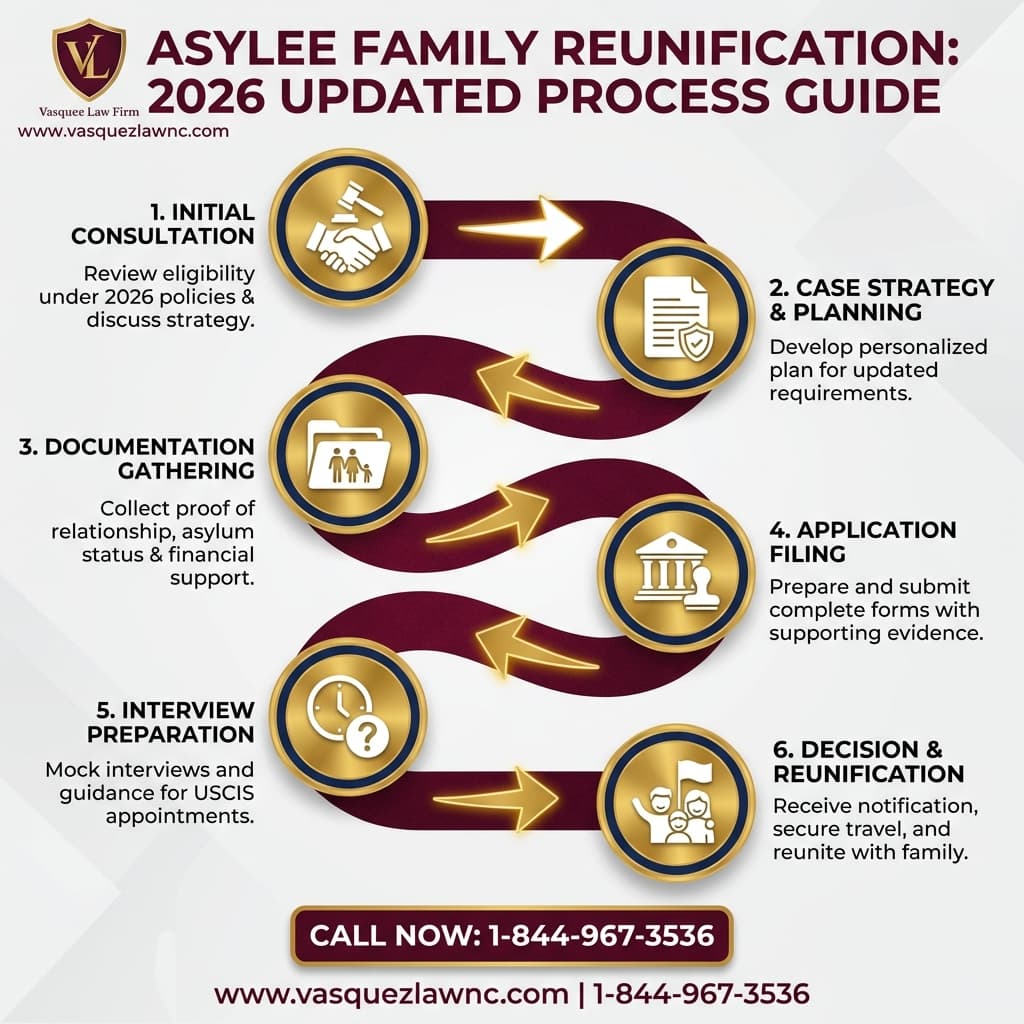
Step-by-Step Process for Asylee Families
- Asylum Approval for Principal Applicant: The process starts when the principal applicant is granted asylum by USCIS or an immigration judge. This approval is a critical milestone enabling derivative petitions.
- File Form I-730: The principal or derivative family members file the I-730 petition within two years of asylum approval. This petition includes spouses and unmarried children under 21 years old.
- USCIS Review and Background Checks: After submission, USCIS reviews the petition and conducts background checks. Processing times vary but expect delays due to backlogs in 2026.
- Interview and Biometrics: Derivative family members may be required to attend interviews and submit biometrics (fingerprints).
- Travel Authorization or Adjustment of Status: Upon approval, eligible family members abroad can apply for refugee travel documents or adjustment of status if inside the U.S.
- Apply for a Green Card: One year after asylum approval, asylees can apply for lawful permanent resident status (green card) via Form I-485.
This step-by-step approach helps reduce errors and omissions, making a stronger case for family reunification.
Key Documents and Evidence Checklist
- Approved asylum grant notice (Form I-94 with asylum endorsement)
- Completed Form I-730 petitions for each derivative relative
- Proof of family relationship (birth certificates, marriage certificates)
- Passports and identity documents for each family member
- Photographs meeting USCIS specifications
- Medical examination reports (if applying for refugee travel documents)
- Any documents supporting persecution claims, if relevant to family claims
- Copies of previous immigration filings
- Filing fees receipt or fee waiver documentation
Organizing these documents early helps speed processing and prevent denial risks.
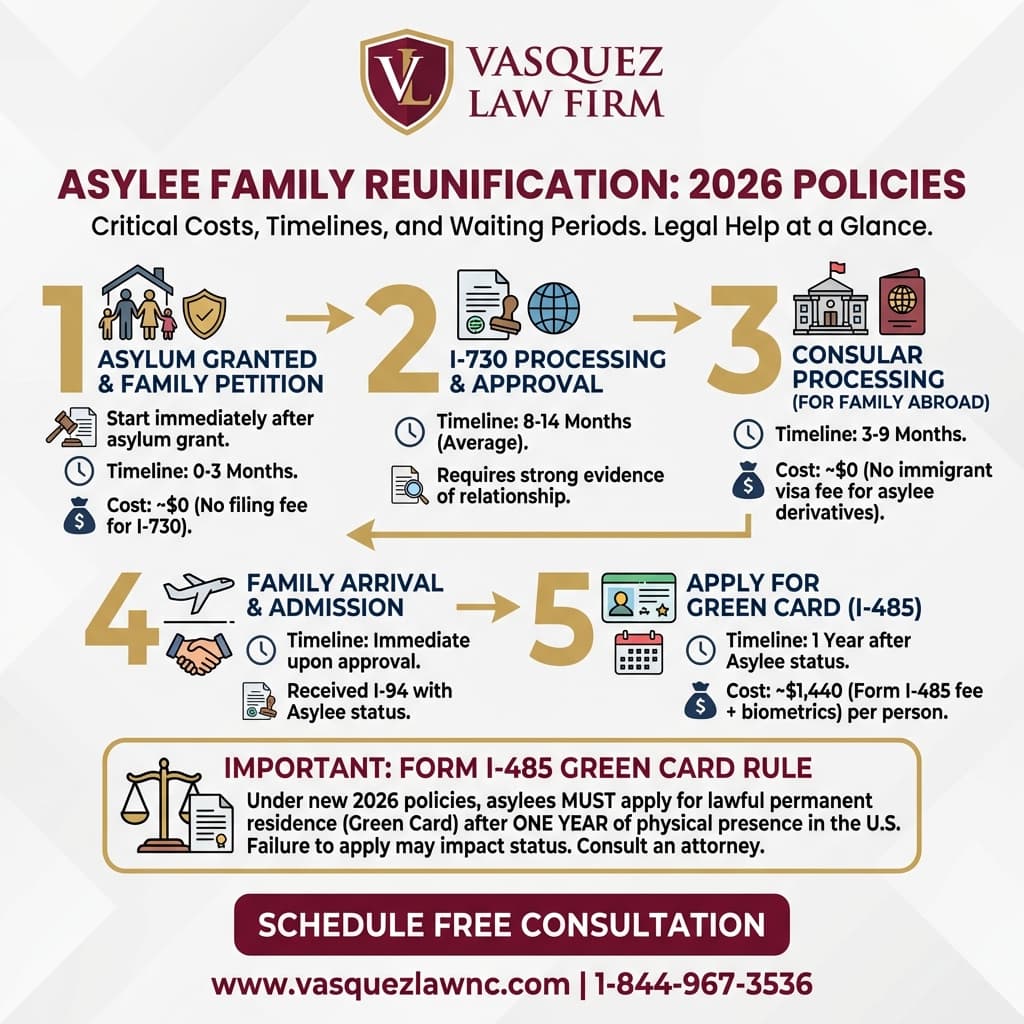
Timeline and What to Expect
- 0-6 months: Filing I-730 petition and initial USCIS review, including biometrics.
- 6-12 months: USCIS background investigation and scheduling of interviews, if applicable.
- 12-18 months: Approval notifications and travel document issuance for family members abroad.
- 1 year after asylum: The principal and derivative asylees become eligible to file Form I-485 for green cards.
- 9-18 months post Form I-485: Processing for permanent residency approval.
Keep in mind processing times can fluctuate, especially in 2026, due to changing policies and case backlogs. Always track case status on USCIS website for updates.
Costs and Common Mistakes to Avoid
- Filing Fees: Form I-730 currently costs $305 per petition. Form I-485 fees vary based on applicant’s age and circumstances.
- Medical Exams: Typically cost $200-$500 per person, required for green card applications and some travel documents.
- Attorney Fees: Hiring immigration attorneys can range widely, but often investing upfront prevents costly mistakes.
Common mistakes to avoid:
- Missing the two-year I-730 filing deadline
- Failing to submit complete evidence of family relationships
- Delaying green card applications beyond one-year eligibility
- Not responding timely to USCIS requests for evidence
- Ignoring state-specific rules in North Carolina or Florida that may affect benefits access
- Assuming asylee family members automatically become citizens
- Using incorrect forms or submitting outdated versions
- Neglecting to update contact information with USCIS, leading to missed notices
- Overlooking work authorization renewals for family members
If you only remember one thing: strictly observe deadlines and consult with an immigration lawyer to avoid unnecessary delays or denials.
NC, FL, and Nationwide Notes
North Carolina Notes
North Carolina hosts many asylee families, including those residing in Smithfield. State programs offer some support, but eligibility for public benefits like Medicaid or food assistance varies widely. Navigating these programs requires understanding both federal immigration status and state rules. Vasquez Law Firm helps clients access available resources while protecting immigration status.
Florida Notes
Florida has a significant immigrant population, including asylee families. As of 2026, state health programs and community services may have different eligibility criteria than NC. Lawyers with Florida experience guide families in accessing work permits, education options, and healthcare benefits alongside immigration relief.
Nationwide Concepts (General Only, Rules Vary)
Federal law governs asylum and derivative status consistently across states. However, practical benefits access differs widely. The U.S. Citizenship and Immigration Services (USCIS) decision-making follows national rules but adapts to local field office workloads. Rule changes and immigration court procedures impact timelines. Always confirm local updates applicable to Smithfield or Florida.
When to Call a Lawyer Now
- If you receive a Notice of Intent to Deny your I-730 petition
- If more than six months pass without USCIS updates
- If receiving Requests for Evidence (RFEs) or Notices of Interviews
- If you or family members are detained or face removal proceedings
- If you miss filing deadlines for derivative petitions
- If confused about eligibility for benefits as an asylee family
- If preparing to apply for green cards and need assistance
- If you experience language barriers or documentation issues
- If your family is separated indefinitely and you need reunification help
About Vasquez Law Firm
At Vasquez Law Firm, we combine compassion with aggressive representation. Our motto "Yo Peleo" (I Fight) reflects our commitment to standing up for your rights.
- Bilingual Support: Se Habla Español - our team is fully bilingual
- Service Areas: North Carolina, Florida, and nationwide immigration services
- Experience: Over 15 years helping clients navigate complex legal matters
- Results: Thousands of successful cases across multiple practice areas
Attorney Trust and Experience
Attorney Vasquez holds a Juris Doctor degree and is admitted to practice in the North Carolina State Bar. With over 15 years of dedicated legal experience, he has built a reputation for providing personalized attention and achieving favorable outcomes for his clients.
Don't wait to get the help you deserve. Call us now for immediate assistance.
Se Habla Español
Frequently Asked Questions
Can asylee families stay together legally in the U.S.?
Yes, asylee families have the right to live together legally under U.S. immigration law. Once the principal applicant is granted asylum, their spouse and children may apply for derivative asylum status to join them. However, family members must file form I-730, Refugee/Asylee Relative Petition, within two years of asylum approval. This process can take time, so early filing is important.
How long does it take to get a green card after asylum approval?
Generally, asylees can apply for a green card one year after their asylum approval. The green card process can take several months depending on USCIS processing times. In 2026, due to backlog, the wait can range from 9 to 18 months. It is crucial to file Form I-485, Application to Register Permanent Residence, timely and provide all required documentation to avoid delays.
Does derivative asylum cover children born after asylum approval?
Children born after the principal asylum grant are generally considered asylees automatically if born in the U.S. For children born abroad, they must be included in a separate petition or have their own application. It is important to update USCIS records to include any new family members for continuous protection and benefits.
Can asylum seekers be deported while their case is pending?
Asylum seekers may face deportation if their claim is denied or if they violate certain immigration rules. However, individuals with a credible fear of persecution generally receive protection during case processing. The risk is higher if the asylum process extends beyond typical timelines, which can happen in complex cases or backlog situations.
What benefits are available to asylee families in the U.S.?
Asylee families may access various benefits including work authorization, Social Security cards, certain public benefits, and eventually permanent residency. Eligibility for benefits can vary by state. In North Carolina and Florida, asylees typically qualify for employment authorization and some health services immediately after approval but should consult a lawyer to understand specific eligibility.
Who qualifies for asylum in the United States?
To qualify for asylum, applicants must prove persecution or a well-founded fear of persecution based on race, religion, nationality, membership in a particular social group, or political opinion. The process requires submitting Form I-589 within one year of arrival, unless exceptions apply. Legal advice improves chances due to the complexity of evidence and credibility requirements.
What are common mistakes asylee families should avoid?
Common mistakes include missing the two-year deadline to file derivative petitions, failing to submit complete evidence, neglecting timely green card applications, or misunderstanding eligibility for benefits. These errors can delay or jeopardize legal status. Working with experienced attorneys, like those at Vasquez Law Firm, helps avoid pitfalls and ensures proper filing.
What should I do if my I-730 petition is delayed?
If your I-730 Refugee/Asylee Relative Petition is delayed, you can contact USCIS for status updates and consider legal assistance. Delays can be caused by backlogs or missing information. Keeping all communication and records helps resolve issues. Vasquez Law Firm can help follow up and advise on next steps to protect your family’s status.
Sources and References
- U.S. Citizenship and Immigration Services (USCIS)
- U.S. Department of State
- Executive Office for Immigration Review
Dealing with this near Smithfield? Our Smithfield immigration lawyers can review your situation.
Take the first step toward justice today. Our team is standing by to help.
Start Your Free Case Evaluation Now
Call us: 1-844-967-3536
Se Habla Español - Estamos aquí para ayudarle.

William Vasquez
Founder & CEO, Vasquez Law Firm, PLLC
William Vasquez is the founder and CEO of Vasquez Law Firm, PLLC, a results-driven firm specializing in immigration, criminal defense, personal injury, and workers' compensation. A U.S. Air Force veteran and recipient of the Joint Service Achievement Medal, William is dedicated to fiercely fighting for his clients' rights.
Related Legal Services
Need legal help? Learn more about get immigration legal help today, or contact us for a free evaluation.
You can also visit our North Carolina immigration practice for more information.