Your Personal Injury Deposition Guide - Vasquez Law Firm
Your Personal Injury Deposition Guide - Vasquez Law Firm: learn what to expect, how to prepare, and protect your claim. Call 1-844-967-3536.
Published on January 11, 2026· Updated June 3, 2026
Injured? Get what your case is worth
Free review.
Free & confidential · Se habla espanol · 24/7

Have questions? Talk to an attorney - free evaluation.
Call 1-844-967-3536Get What Your Injury Is Worth
Schedule your consultation.
Your Personal Injury Deposition Guide - Vasquez Law Firm
If you’re injured and a lawsuit is filed, one step can feel especially stressful: the deposition. This Your Personal Injury Deposition Guide - Vasquez Law Firm style walkthrough explains what a deposition is, why it matters, and how to avoid common mistakes that insurance companies look for. We also connect recent reporting about strategic advocacy in Florida injury litigation to what people should expect in real-world cases—especially when your testimony can shape settlement value.
Need legal help?
Immigration in NC and FL. Personal injury and workers compensation across NC. Criminal defense in Johnston, Harnett, Pitt and Cumberland counties, and traffic tickets in 11 NC counties. Tell us your county and we will tell you exactly what we can do.
Whether you’re a driver after a crash, a pedestrian, or a worker hurt on someone else’s property, your words matter. Depositions are designed to lock in testimony, test credibility, and gather details for trial or settlement.
Need help preparing for a deposition? Vasquez Law Firm, PLLC is serving smithfield residents and clients across North Carolina and Florida. Call 1-844-967-3536 or request a free case evaluation. Se Habla Español.
What This News Means for smithfield Injury Claims
Depositions are part of “strategic advocacy”
A recent piece on strategic legal advocacy in Florida personal injury litigation highlights how strong preparation and smart case strategy can change outcomes. Depositions are a prime example. They are not “just a conversation.” They are sworn testimony that can be used later in court.
In many injury cases, the defense is trying to find gaps: prior injuries, unclear timelines, or statements that can be taken out of context. That’s why planning matters more than most people expect.
Why smithfield clients should care even if the crash felt “simple”
Many people in smithfield assume depositions only happen in big, dramatic lawsuits. In reality, even a straightforward car wreck can lead to a deposition if liability is disputed, injuries are serious, or the insurance company thinks the claim value is high.
Your deposition can impact:
- Settlement leverage and timing
- Whether the defense claims you are exaggerating
- How future medical care and lost wages are valued
The reporting that sparked this guide
The news discussion of strategic litigation provides a helpful reminder: preparation is not optional. You can review the referenced reporting here: Strategic legal advocacy for Florida personal injury litigation (Google News link).
What a Personal Injury Deposition Is (and Why It Matters)
A plain-English definition
A deposition is a question-and-answer session under oath. A court reporter records everything, and attorneys for both sides can ask questions. You usually answer out loud, and your answers are transcribed into a written record.
Many depositions happen in a conference room—not a courtroom. But the oath is real, and the transcript can be used later.
Where depositions fit in the lawsuit process
Depositions are part of “discovery,” the stage where each side gathers evidence. Discovery often includes:
- Written questions (interrogatories)
- Requests for documents (medical records, wage proof)
- Depositions of parties and witnesses
- Expert reviews (doctors, accident reconstruction)
Rules that govern depositions (North Carolina and Florida)
If your case is in North Carolina, depositions are governed by the North Carolina Rules of Civil Procedure, including Rule 30 (oral depositions) and Rule 32 (use of depositions in court). A good starting point for court process information is the North Carolina Judicial Branch website.
If your claim is in Florida, the Florida Rules of Civil Procedure also address depositions and discovery. While the exact rule numbers and practices may differ, the core purpose is the same: sworn testimony that can affect settlement and trial.
This article is written as a general educational resource—think of it as a Your Personal Injury Deposition Guide - Vasquez Law Firm style overview—so you can ask better questions and feel more prepared.
How to Prepare for Your Deposition (Step-by-Step)
1) Meet with your attorney and review the case file
Preparation should include a focused meeting with your attorney to review the facts, documents, and likely defense themes. Your lawyer may walk you through:
- The timeline (before, during, and after the incident)
- Your medical treatment and current symptoms
- Work limitations and lost income
- Photos, reports, and any recorded statements
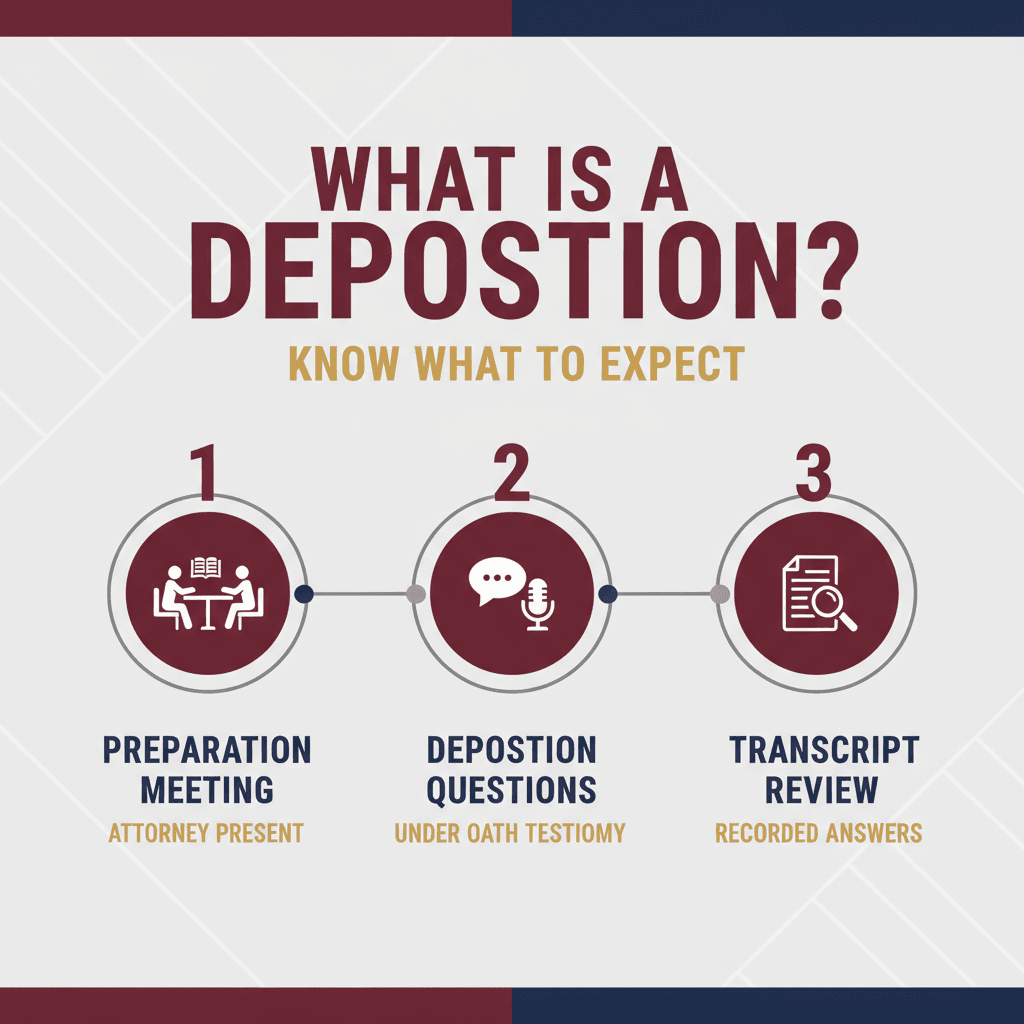
If you’re working with Vasquez Law Firm, PLLC, you’ll also get clear “do and don’t” guidance so you don’t feel like you’re guessing under pressure.
2) Gather key documents (and avoid surprises)
Depositions often lead to questions about documents you may not have looked at in months. Common examples include:
- Emergency room and follow-up treatment records
- Prescription history
- Employment records and pay stubs
- Prior accident or injury records
- Property damage photos and repair estimates
In vehicle collision cases, road conditions and construction zones may matter. For North Carolina roadway information and safety resources, you can reference the North Carolina Department of Transportation (NCDOT).
3) Practice answering questions the right way (short, true, and clear)
Good deposition answers are usually short and direct. A few rules that help most people:
- Listen fully before you answer.
- Answer only what was asked—don’t volunteer extra details.
- If you don’t know, say so. Guessing can hurt credibility.
- If you don’t remember, say so. Memory is not a test of character.
- Ask for clarification when a question is confusing.
Many people search for Your Personal Injury Deposition Guide - Vasquez Law Firm because they want a script. The truth is there is no perfect script—there is careful preparation and honest, measured answers.
What Happens During the Deposition (Room Setup, Process, Common Questions)
Who will be in the room?
Most depositions include:
- You (the witness)
- Your attorney
- The opposing attorney
- A court reporter (and sometimes a videographer)
In some cases, an insurance representative may attend. Depositions may be in-person or remote by video.
Common personal injury deposition questions
Expect questions in these areas:
- Background: name, address, work history
- Health history: prior injuries, conditions, medications
- The incident: what you saw, heard, and did
- Injuries: pain levels, limitations, daily activities
- Treatment: doctors, therapy, compliance with recommendations
- Damages: missed work, future care needs, out-of-pocket costs
How long does a deposition take?
Many depositions last a few hours. More complex cases may take longer, especially if there are multiple injuries, extensive treatment, or disputed liability.
If your case involves a crash near smithfield—for example, traffic on I-95 or local routes in Johnston County—questions may get detailed about speed, lane changes, lighting, and what you did in the minutes before impact.
Reminder: deposition preparation can protect your settlement value. Call 1-844-967-3536 to speak with our team, or message us online. Se Habla Español.
Common Deposition Mistakes (and How Insurance Lawyers Use Them)
Mistake #1: Guessing instead of saying “I don’t know”
Defense attorneys often ask questions that feel like they require an exact answer: distances, times, speeds, and medical details. If you guess and later evidence conflicts with your guess, the defense may claim you are unreliable.
It is okay to say:
- “I don’t know.”
- “I don’t remember.”
- “I’d need to see the document to answer accurately.”
Mistake #2: Overexplaining and volunteering facts
Long answers create more room for confusion. They also give the other side new topics to explore. Short, truthful answers are usually safer.
Mistake #3: Underestimating social media and surveillance
In many injury cases, insurers look at public posts to argue you are not as hurt as you claim. Even innocent photos can be misunderstood. Talk to your lawyer about safe, practical guidelines while your case is active.
Do I Have a Personal Injury Case?
Answer 3 quick questions to find out
Question 1 / 3
What happened to you?
Keep Reading

This is one reason people look for resources like Your Personal Injury Deposition Guide - Vasquez Law Firm: they want to avoid pitfalls that have nothing to do with the accident itself but can still affect credibility.
How Vasquez Law Firm, PLLC Helps You Get Deposition-Ready
15 years of experience and courtroom-ready preparation
Depositions are where strong cases can gain momentum—and where unprepared witnesses can lose it. Vasquez Law Firm, PLLC brings 15 years of experience in personal injury advocacy, with Attorney Vasquez, JD admitted to the North Carolina State Bar.
Our goal is not to “coach” a story. It is to help you tell the truth clearly, confidently, and consistently.
Serving smithfield residents with local insight
When your claim is tied to local roads, local providers, and local employers, details matter. We regularly work with clients who live or work in smithfield and throughout Johnston County. If your case proceeds in the local court system, understanding scheduling, procedure, and expectations can reduce stress. For general court information, see the NC Courts website.
Nearby areas we often help include Clayton, Garner, Selma, Benson, and Raleigh.
What you can expect from our deposition prep
Every case is different, but preparation often includes:
- A deposition prep meeting with likely question themes
- A review of medical timeline and key records
- Guidance on difficult topics (prior injuries, gaps in care)
- Practical tips for remote depositions (camera, audio, environment)
- Clear instructions on what to do if you need a break
If you’ve been reading articles like Your Personal Injury Deposition Guide - Vasquez Law Firm, the biggest takeaway is this: the best time to reduce deposition anxiety is before the deposition starts.
Frequently Asked Questions About Personal Injury Depositions
1) Do I have to attend my deposition?
In most cases, yes. If a lawsuit is filed and the opposing party properly notices your deposition, you are generally required to appear and testify under oath. Your attorney can object to improper notices or seek protective orders in limited situations, but skipping a deposition can lead to court sanctions. If your case is in North Carolina, discovery practice is guided by rules such as N.C. R. Civ. P. 30 and 32.
2) Can I bring notes to my deposition?
You can prepare with notes ahead of time, but using notes during the deposition can create issues. If you use a document to refresh your memory while testifying, the other side may have the right to see it. Ask your attorney what to bring and when it is appropriate to refer to records.
3) What if I realize I made a mistake in my answer?
Tell your lawyer right away. Depositions can sometimes be corrected through an “errata sheet” after you review the transcript, depending on jurisdiction and rules. But corrections should be handled carefully. Frequent or major changes may be used to challenge credibility.
4) Will my deposition decide my settlement amount?
It can strongly influence it. Insurers watch for consistency, clarity, and signs of exaggeration. A solid deposition can increase pressure to settle fairly, while a messy deposition may give the defense confidence to offer less or fight longer.
5) Should I talk about pain the same way I do with my doctor?
You should be honest and specific. Many people minimize pain in daily life but report it accurately in medical visits. Defense attorneys may compare your deposition answers to medical records. The safest approach is to describe what you can and cannot do, how symptoms change, and what activities trigger pain—without guessing or dramatizing.
6) Can I get a deposition in Spanish?
Often, yes. Interpreters can be arranged so you understand every question before answering. If Spanish is more comfortable, say so early. Our team is bilingual—Se Habla Español—and we can help coordinate language access so your testimony is accurate and fair.
People often search for Your Personal Injury Deposition Guide - Vasquez Law Firm because they want confidence walking into discovery. The right attorney support can make a real difference in how prepared you feel—and how well your testimony protects your claim.
Ready for clear, practical deposition guidance? Contact us today to discuss your injury case and next steps. Call 1-844-967-3536 or schedule your free case evaluation. Se Habla Español.
Helpful links: Learn more about our Personal Injury services, meet Attorney Vasquez, or request a free case evaluation.

William Vasquez
Founder & CEO, Vasquez Law Firm, PLLC
William Vasquez is the founder and CEO of Vasquez Law Firm, PLLC, a results-driven firm specializing in immigration, criminal defense, personal injury, and workers' compensation. A U.S. Air Force veteran and recipient of the Joint Service Achievement Medal, William is dedicated to fiercely fighting for his clients' rights.
Related Legal Services
Need legal help? Learn more about our personal injury legal services, or contact us for a free evaluation.
You can also visit our NC injury attorneys for more information.