When ICE came near a Kansas City school, 25 neighbors stepped up - Kansas City Star | What It Means
When ICE came near a Kansas City school, 25 neighbors stepped up - Kansas City Star. Learn your rights and call 1-844-967-3536 (Se Habla Español).
Published on January 14, 2026· Updated August 6, 2026
Talk to an immigration attorney
Free call. A clear plan for your case.
Free & confidential · Se habla espanol · 24/7

Have questions? Talk to an attorney - free evaluation.
Call 1-844-967-3536Worried how the latest immigration news affects you?
Schedule a confidential case review with an immigration attorney - know exactly where you stand.
When ICE came near a Kansas City school, 25 neighbors stepped up - Kansas City Star | What It Means
The story When ICE came near a Kansas City school, 25 neighbors stepped up - Kansas City Star highlights a fear many immigrant families share: what happens when immigration enforcement shows up near children and schools. Even if you live far from Kansas City, the same questions come up in every community—especially for parents trying to keep kids safe and stay on track with visas, green cards, or court dates. Below, we break down what this kind of incident can mean, what the law says about schools, and practical steps families in Raleigh can take to protect themselves.
Worried About Immigration Policy Changes?
New policies can affect your case. Get current legal advice from an experienced immigration attorney.
Worried about an ICE encounter near your child’s school? Call 1-844-967-3536 to speak with an immigration lawyer. Se Habla Español. You can also request a free case evaluation.
What Happened in the Kansas City School Story—and Why It Matters
The reported incident and community response
News reports described a tense moment when immigration enforcement activity was seen near a school and neighbors quickly organized to support families. For the original news context, see this Google News link to the February 2026 Visa Bulletin update story.
While the headline When ICE came near a Kansas City school, 25 neighbors stepped up - Kansas City Star focuses on community action, it also raises legal questions: Can ICE go to a school? Can a school share information? What should parents do if they see agents nearby?
Why stories like this trigger real legal risk
Immigration enforcement near schools can cause panic. In that panic, people may unknowingly give statements, hand over documents, or open the door without a warrant. Those split-second choices can affect bond, removal defense, and future immigration options.
This is why planning matters. You do not have to wait for a crisis to learn your rights and prepare your family.
How the Visa Bulletin ties into enforcement anxiety
Many families are already stressed because immigration timelines can feel unpredictable. Visa backlogs, priority dates, and policy shifts add pressure—especially for those waiting for family-based or employment-based green cards. The U.S. Department of State explains how immigrant visa processing works, including the Visa Bulletin system, at travel.state.gov (U.S. visas).
When families fear enforcement, they may stop going to school events, medical visits, or even court. That can create new problems, including missed hearings and lost opportunities for lawful status.
Can ICE Come to a School? What the Rules Say (and Don’t Say)
“Sensitive locations” guidance and what it means in real life
For years, federal policy has generally discouraged immigration enforcement at or near “sensitive locations,” such as schools, places of worship, and hospitals. But policy guidance can change, and it is not the same as a permanent law passed by Congress.
In practice, that means families should not assume a school is an absolute enforcement-free zone. Instead, focus on what protections still apply: warrants, the right to remain silent, and limits on school record sharing.
Administrative warrants vs. judicial warrants
One of the biggest points of confusion is the word “warrant.” ICE may carry an administrative warrant (often signed by a DHS official). That is not the same as a judicial warrant signed by a judge.
- Judicial warrant (signed by a judge): may allow entry into certain private areas, depending on its scope.
- Administrative warrant (ICE/DHS paperwork): may authorize arrest in certain situations, but it often does not automatically allow entry into a private home without consent.
If agents are near a school or a home, it is smart to ask: “Do you have a warrant signed by a judge?” You can ask to see it. Do not lie and do not run. Stay calm.
Schools, student records, and privacy basics
Public schools have privacy duties regarding student education records. Many school districts also have internal policies about law enforcement access to campuses. The details vary, but the key idea is consistent: schools usually do not want staff making on-the-spot immigration decisions.
Parents can ask their school what it will do if any law enforcement agency requests access or information, and whether the school requires proper legal process before releasing records.
Your Rights (and Your Child’s Rights) During ICE Contact Near a School
The right to remain silent and to ask for counsel
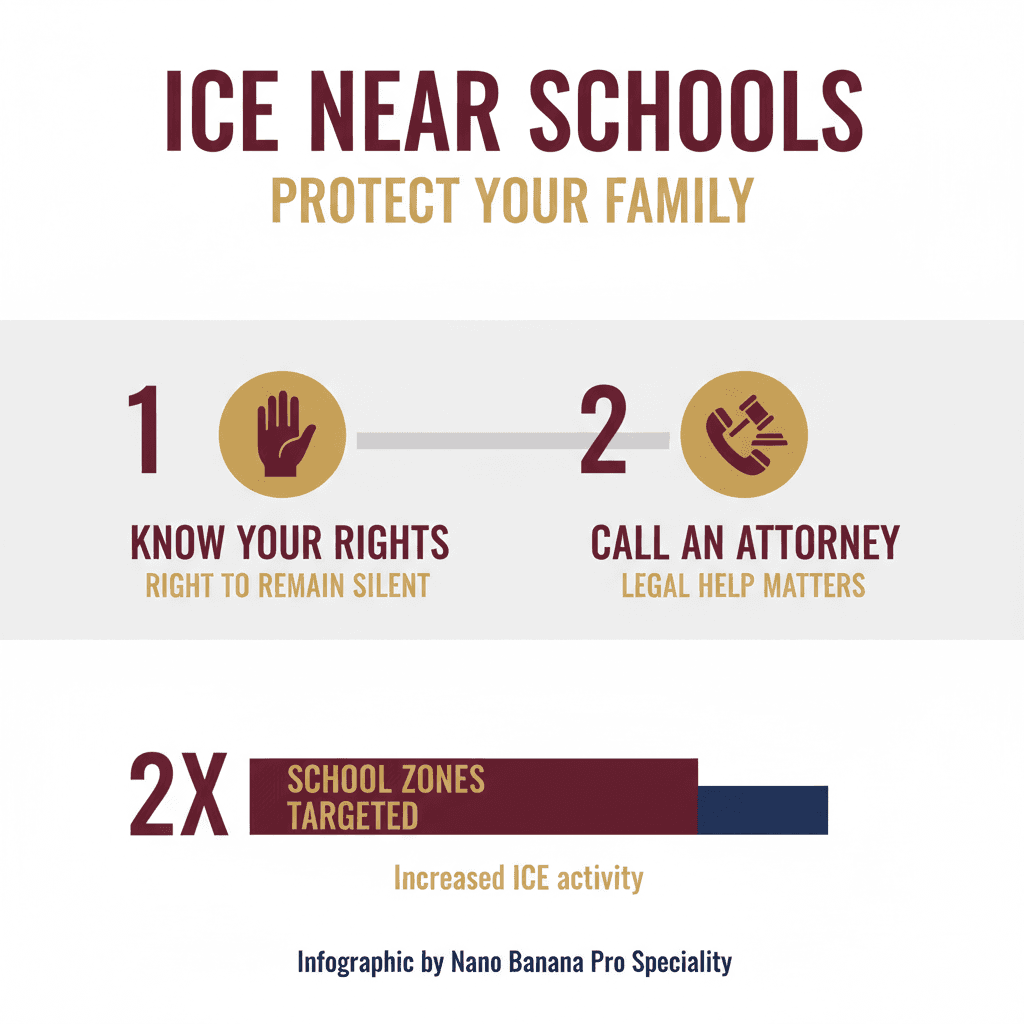
If ICE approaches you, you can say: “I am going to remain silent.” You can also say: “I want to speak to a lawyer.” Even in immigration matters, these words matter.
If you are detained and placed in removal proceedings, your case is handled in immigration court under the rules in the Executive Office for Immigration Review (EOIR). Immigration court is civil, not criminal, but the consequences can still be life-changing.
What to do if ICE asks questions
People often talk because they are scared or want to “clear things up.” But small details can be used later in court. If ICE asks where you were born, how you entered, or your status, you can choose not to answer.
Helpful, low-risk steps include:
- Ask if you are free to leave. If yes, calmly leave.
- If not, say you will remain silent and want an attorney.
- Do not hand over false documents or claim to be a U.S. citizen.
Children at school and pickup procedures
Parents often worry: “If I don’t show up, will my child be stranded?” Schools typically release children only to approved adults on the emergency contact list. Make sure your child’s school has accurate pickup contacts.
This is one practical lesson families take from When ICE came near a Kansas City school, 25 neighbors stepped up - Kansas City Star: community support is powerful, but planning is even better.
A Practical Safety Plan for Immigrant Families (Before Anything Happens)
Create a family “immigration safety folder”
Keep copies (not originals) of key documents in a safe place. This helps a trusted person assist you if you are detained.
- Passport ID page, visa pages, and I-94 (if any)
- Receipts from USCIS (I-797 notices), pending applications
- Any immigration court paperwork (NTA, hearing notices)
- Marriage and birth certificates (copies)
USCIS has official resources and forms at uscis.gov. Always rely on official sources or your lawyer—not rumors on social media.
Choose a trusted caregiver and update school contacts
Pick at least two trusted adults who can pick up your children if you cannot. Update the school’s emergency contact forms right away.
Also consider:
- Where your children would stay short-term
- Who can access funds to pay rent and utilities
- Who can contact your attorney if you are detained
Avoid common mistakes that can worsen an immigration case
We often see well-meaning families make choices that create bigger problems. Avoid:
- Using fake IDs or false Social Security numbers
- Signing papers you do not understand
- Missing immigration court dates
- Claiming U.S. citizenship if you are not a citizen
Need a plan now—not later? Call Vasquez Law Firm, PLLC at 1-844-967-3536. We can review your options and help you prepare. Se Habla Español.
What This News Means for raleigh Families and Schools
Local realities for families in raleigh
Even though the headline focuses on Kansas City, families in Raleigh, Cary, Durham, and Chapel Hill ask the same questions. Kids still need school. Parents still need work. And many households have mixed immigration status.
Serving Raleigh residents means focusing on prevention: safety planning, keeping immigration paperwork organized, and getting legal advice before a crisis happens.
What's Your Immigration Situation?
Answer 3 questions - we'll tell you your options
Question 1 / 3
What best describes your situation?
Keep Reading

Local courts, check-ins, and where cases may be heard
In North Carolina, immigration cases are handled in the federal immigration court system (EOIR). Many hearings for people living in the Triangle area may require travel depending on where the court is set. Separately, families may interact with local systems like the Wake County Justice Center in Raleigh for non-immigration matters.
If you ever have both criminal and immigration concerns, get legal advice quickly. A criminal charge can trigger immigration consequences, including detention and removal issues.
What to ask your child’s school (simple, practical questions)
Without creating fear, parents can ask schools about procedures. Consider asking:
- Who is authorized to speak with law enforcement on campus?
- Will the school require a judicial warrant to access non-public areas?
- How does the school protect student record privacy?
- What is the reunification plan if a parent cannot be reached?
Stories like When ICE came near a Kansas City school, 25 neighbors stepped up - Kansas City Star show that quick action matters—but the best time to ask these questions is before there is panic.
How Vasquez Law Firm, PLLC Helps Families Prepare and Respond
Experience, credentials, and what we focus on
At Vasquez Law Firm, PLLC, our team is led by Attorney Vasquez (JD), with 15 years of experience handling immigration matters. Attorney Vasquez is admitted to the North Carolina State Bar and the Florida Bar.
We serve clients in Raleigh and across North Carolina, including families who are worried about enforcement and those who want a stable long-term plan.
Immigration help that matches real-life problems
Our work often includes:
- Removal defense and immigration court strategy
- Family-based petitions and adjustment of status planning
- Work permits, renewals, and lawful presence strategy
- Hardship-based options when available under the law
Learn more about our Immigration Law services, and contact us early if you are worried about a possible ICE encounter.
Why fast legal advice can change outcomes
Early legal help can prevent missed deadlines, reduce the chance of damaging statements, and clarify what options you actually have. In many cases, a strong plan can keep a family working toward lawful status, even when fear is high.
If the news When ICE came near a Kansas City school, 25 neighbors stepped up - Kansas City Star feels close to home, that is a sign to prepare—not to hide.
Frequently Asked Questions (FAQ)
FAQ: ICE near schools and family safety
Below are common questions we hear from parents. Every case is different, so speak to a lawyer about your facts.
FAQ: Immigration process, court, and paperwork
1) Can ICE go onto a school campus?
Policies have often discouraged enforcement at schools, but policies can change and do not always create enforceable rights. Schools may also have their own access rules. If ICE is present, staff may ask for proper legal process before allowing access to non-public areas.
2) What should I do if ICE stops me while I’m picking up my child?
Stay calm. Ask if you are free to leave. If you are not free to leave, you can remain silent and request a lawyer. Do not present false documents or make false claims. If you are detained, get legal help immediately.
3) Can the school share my child’s records with ICE?
Schools have privacy obligations regarding education records, and many districts require legal process before sharing records. You can ask the school about its policy and who is authorized to respond to law enforcement requests.
4) If I have a pending USCIS case, does that stop removal?
Not always. Some pending applications may provide protection in limited ways, but others do not automatically stop enforcement. A lawyer can review your receipts, status, and history to see whether you may qualify for relief or prosecutorial discretion.
5) What if I missed an immigration court date because I was scared?
Missing court can lead to an in-absentia removal order. In some situations, you may be able to file a motion to reopen, but deadlines and standards are strict. Contact an attorney right away to review options through EOIR procedures.
6) How can I prepare my family in raleigh without causing panic?
Focus on simple, calm steps: update school pickup contacts, keep copies of immigration paperwork, choose trusted caregivers, and save a lawyer’s number. Preparation reduces fear. Families in Raleigh can take these steps without changing daily life.
As the headline When ICE came near a Kansas City school, 25 neighbors stepped up - Kansas City Star shows, community support helps—but legal planning gives you stability.
Ready to protect your family and your future? Call 1-844-967-3536 or request a free case evaluation with Vasquez Law Firm, PLLC. Se Habla Español. If you are in Raleigh or nearby, we can help you build a clear plan and respond fast if enforcement affects your family.
Disclaimer: This article is for general education only and does not create an attorney-client relationship. For advice about your situation, consult a licensed attorney.

William Vasquez
Founder & CEO, Vasquez Law Firm, PLLC
William Vasquez is the founder and CEO of Vasquez Law Firm, PLLC, a results-driven firm specializing in immigration, criminal defense, personal injury, and workers' compensation. A U.S. Air Force veteran and recipient of the Joint Service Achievement Medal, William is dedicated to fiercely fighting for his clients' rights.
Related Legal Services
Need legal help? Learn more about get immigration legal help today, or contact us for a free evaluation.
You can also visit North Carolina immigration law firm for more information.