Valley attorneys and activists brace for ICE enforcement ramp-up - Axios | What It Means for Immigrants
Valley attorneys and activists brace for ICE enforcement ramp-up - Axios: learn your rights, risks, and next steps. Call 1-844-967-3536.
Published on January 11, 2026· Updated February 11, 2026
Talk to an immigration attorney
Free call. A clear plan for your case.
Free & confidential · Se habla espanol · 24/7

Have questions? Talk to an attorney - free evaluation.
Call 1-844-967-3536Worried how the latest immigration news affects you?
Schedule a confidential case review with an immigration attorney - know exactly where you stand.
Valley attorneys and activists brace for ICE enforcement ramp-up - Axios | What It Means for Immigrants
Reports warning that Valley attorneys and activists brace for ICE enforcement ramp-up - Axios are raising real fear for immigrant families. When enforcement increases, everyday moments—driving to work, checking in with ICE, or going to a court date—can carry higher stakes. This article explains what a ramp-up can look like, the legal process behind arrests and removal cases, and practical steps you can take to protect yourself and your family.
ICE encounter or deportation risk?
Time-sensitive cases need quick action. We answer 24/7 for emergency immigration matters. Free 15-min call.
Worried about ICE activity or a loved one’s immigration status? Talk with an immigration attorney before a small issue becomes a crisis. Call 1-844-967-3536 or request a free case evaluation. Se Habla Español.
1) What the Axios Story Means (and Why It’s Spreading)
Why this headline is traveling beyond the Valley
The phrase “Valley attorneys and activists brace for ICE enforcement ramp-up - Axios” reflects a broader national pattern: when resources shift toward enforcement, local communities feel it quickly. Even if you live far from the Rio Grande Valley, headlines like this matter because ICE enforcement priorities can change across regions.
For families in orlando and across Central Florida, the practical question is simple: “Could this affect me or someone I love?” In many cases, the answer depends on your current immigration status, any past encounters with immigration officials, and whether you have a pending court case or prior removal order.
News context: where the conversation started
Immigration policy discussions have been active nationwide, including weekly summaries and reporting that highlight enforcement trends. You can review the related news context here: This Week in Immigration: January 9, 2025 (news link).
What to focus on (instead of rumors)
When communities feel pressure, misinformation spreads fast. Focus on verifiable facts and your personal risk factors, such as:
- Whether you have an existing removal order or missed a court hearing
- Whether you have pending USCIS applications (asylum, family petition, U visa, VAWA, TPS)
- Any criminal arrests or convictions (even old or minor ones)
- Past interactions with CBP, ICE, or border processing
2) What an ICE “Ramp-Up” Can Look Like in Real Life
Common enforcement settings
An ICE enforcement ramp-up can include more home visits, more detainers, and more arrests connected to check-ins or prior orders. While ICE activity varies by area, common settings include:
- ICE check-ins (appointments at local offices)
- Jail releases (coordination when someone is booked and released)
- Targeted operations (attempts to arrest specific individuals)
- Worksite enforcement in limited situations
If you’re in orlando, it’s smart to plan ahead even if you have not seen ICE in your neighborhood. Enforcement can shift quickly and without much public notice.
Administrative immigration enforcement vs. criminal charges
Many ICE arrests are administrative (civil immigration) matters, not criminal cases. That means the process often moves through immigration court under the Immigration and Nationality Act (INA), not state court.
However, some situations can involve criminal allegations (for example, illegal reentry after removal). If law enforcement is involved, your exposure can increase, and you should seek legal advice immediately.
The removal process in a nutshell
Most removal cases follow a general path:
- Arrest or apprehension (sometimes followed by detention)
- Notice to Appear (NTA) and immigration court scheduling
- Master Calendar hearing (short hearing to set issues and deadlines)
- Individual hearing (trial-like hearing where relief is decided)
- Decision and possible appeal to the BIA
If you or a loved one has a case in the EOIR immigration court system, you can find official information at the Executive Office for Immigration Review (EOIR).
3) Your Rights During ICE Contact (What Helps and What Hurts)
You have the right to remain silent
Many people hurt their case by talking too much. You can say you want to remain silent and ask to speak with a lawyer. Do not guess, exaggerate, or “fill in gaps” if you are nervous.
In enforcement moments sparked by stories like Valley attorneys and activists brace for ICE enforcement ramp-up - Axios, the safest approach is calm, respectful, and minimal communication.
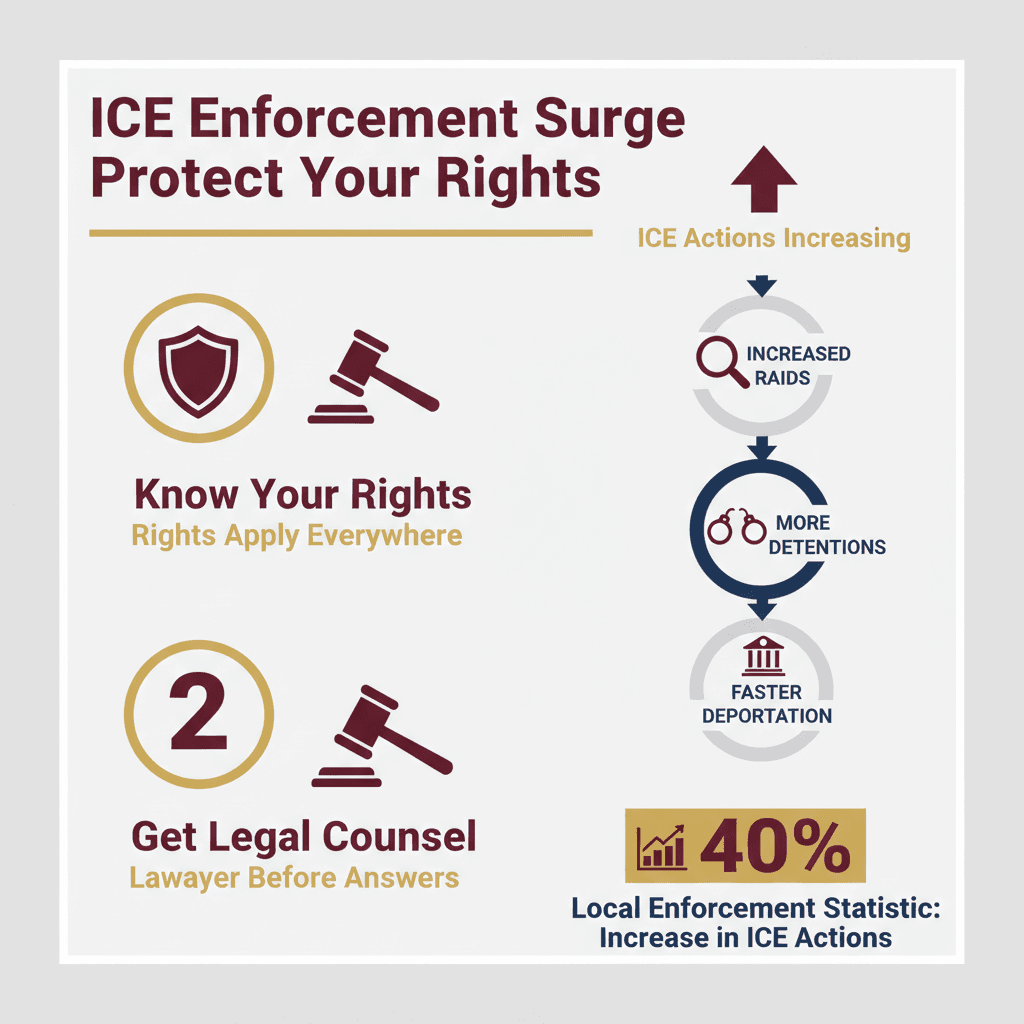
Warrants and entry into your home
ICE may present paperwork that looks official. In many cases, the document may be an administrative warrant, not a judge-signed warrant. The difference matters.
- If officers ask to enter, you can ask them to slide the warrant under the door or hold it up to a window.
- You can ask, “Is this signed by a judge?” and review the name and address.
- You generally do not have to open the door unless they have proper legal authority.
Important: This topic is fact-specific. Get legal advice tailored to your situation.
What documents to carry (and what not to carry)
Consider carrying:
- A valid photo ID (if you have one)
- Proof of pending immigration filings (receipts, hearing notices)
- Your attorney’s contact information
Avoid carrying false documents. If you’re unsure what to keep on you, ask an attorney for a plan that fits your status and goals.
4) Legal Options If Enforcement Increases
Pending benefits and USCIS filings
Many people have lawful options, but they are time-sensitive. You can review official benefit categories and updates at USCIS.gov. Common filings that may help in enforcement-heavy periods include:
- Family-based petitions (I-130) and adjustment of status (where eligible)
- Asylum, including defensive asylum in immigration court
- VAWA self-petitions for certain survivors of abuse
- U visas for certain crime victims who cooperate with law enforcement
- TPS (Temporary Protected Status) when designated
Relief in immigration court
If you are placed in proceedings, you may be able to apply for relief depending on your history and family ties. Examples include:
- Cancellation of removal (for certain lawful permanent residents or nonpermanent residents)
- Asylum, withholding of removal, or CAT protection
- Adjustment of status in limited court-based scenarios
Even when a person is not eligible for a long-term solution, strong lawyering can still matter—bond, release strategies, and procedural defenses can change the outcome.
Consular processing and visas (when leaving the U.S. is part of the plan)
Some cases require consular processing abroad, which can carry risks—especially if unlawful presence bars apply. For official visa basics, visit the U.S. Department of State visa page.
Do not leave the U.S. based on advice from friends or social media. A brief trip can trigger multi-year bars or make it difficult to return.
Need a clear plan before enforcement ramps up? Call 1-844-967-3536 to speak with our team. We can help you understand your options and next steps. Se Habla Español. Or request help here: /contact.
5) Practical Steps to Protect Your Family Right Now
Build a simple “ICE safety plan”
Headlines like Valley attorneys and activists brace for ICE enforcement ramp-up - Axios should push families toward preparation, not panic. A basic safety plan can include:
- Memorize key phone numbers (spouse, trusted friend, attorney)
- Keep immigration documents and receipts in one safe folder
- Create a plan for children (who picks them up, who has authorization)
- List medical needs and prescriptions for household members
Avoid common mistakes that make cases worse
In our experience, the most damaging mistakes often happen in the first 24–72 hours after contact with ICE. Try to avoid:
- Missing court dates or check-ins
- Signing documents you do not understand
- Using false papers or giving false identity information
- Relying on a “notario” instead of a licensed attorney
Know where your case is (USCIS vs. EOIR vs. federal court)
Immigration cases can move through different systems. Knowing where you are in the process helps you respond correctly:
What's Your Immigration Situation?
Answer 3 questions - we'll tell you your options
Question 1 / 3
What best describes your situation?
Keep Reading

- USCIS handles many benefit applications and interviews.
- EOIR (immigration court) handles removal proceedings and court relief.
- Federal courts may get involved in certain appeals or habeas actions.
If you’re serving orlando residents and surrounding areas, we often see confusion when people have both a USCIS filing and an immigration court date. Coordinating the timeline is critical.
6) Why Legal Help Matters During an Enforcement Ramp-Up
Experience, strategy, and credibility in high-pressure moments
When enforcement pressure increases, strong legal guidance can prevent avoidable mistakes and help you present the best possible case. Vasquez Law Firm, PLLC is led by Attorney Vasquez, JD, with 15 years of experience in immigration law and bar admissions in the North Carolina State Bar and Florida Bar.
We assist clients in orlando and nearby communities, including Kissimmee, Winter Park, and Sanford. When appropriate, we help clients prepare for hearings connected to the Orlando Immigration Court and related federal processes.
How we help (before, during, and after ICE contact)
Our approach is practical and protective. Depending on your needs, we may help with:
- Case review, risk assessment, and plan-building
- USCIS filings and evidence packets
- Immigration court defense strategies
- Coordination with family members for emergency planning
Learn more about our Immigration Law services and meet our team, including Attorney Vasquez.
Evidence and deadlines win cases
Immigration cases are document-heavy. Deadlines come fast, and missing one can have serious consequences. This is especially true when the public conversation is heated and people feel rushed to take action because they heard Valley attorneys and activists brace for ICE enforcement ramp-up - Axios mentioned online or on TV.
If you have any paperwork from USCIS, EOIR, or ICE, keep copies and bring them to your consultation.
7) Frequently Asked Questions (FAQ)
1. Can ICE arrest me if I have a pending USCIS case?
It depends. A pending case does not automatically prevent arrest, especially if there is a prior removal order, missed hearing, or certain criminal history. However, pending filings can sometimes support arguments for discretion, release, or relief. Check your case status and talk to a lawyer.
2. What is a Notice to Appear (NTA), and why is it important?
An NTA is the charging document that starts removal proceedings. It lists allegations and the legal basis for removal. Errors in NTAs can matter, but you must respond correctly and never ignore immigration court notices.
3. Should I go to my ICE check-in if enforcement is increasing?
Missing a check-in can trigger serious consequences, including an arrest warrant or a claim that you failed to comply. If you are worried, speak with an attorney immediately before the check-in date. Your lawyer may help you prepare, evaluate risk, and plan what documents to bring.
4. Can I get bond after an ICE arrest?
Some people may request bond, but eligibility depends on many factors, including prior orders, certain convictions, and whether DHS claims you are subject to mandatory detention. Immigration bond is complex and time-sensitive, so legal guidance helps.
5. Does having U.S.-citizen children stop deportation?
Not automatically. U.S.-citizen children can be relevant for certain forms of relief, such as non-LPR cancellation of removal, but the legal standard is strict and requires specific proof. You should get a tailored evaluation.
6. I live in Florida, not Texas—why does “Valley” news matter to me?
Because policy shifts and enforcement priorities can expand beyond one region. The concerns raised by Valley attorneys and activists brace for ICE enforcement ramp-up - Axios can signal broader national changes. If you are in orlando, preparation and legal review are still smart, especially if you have a pending case or old removal order.
Take action before a problem escalates. If you or a loved one is at risk due to increased enforcement, contact Vasquez Law Firm, PLLC today. Call 1-844-967-3536 or request your free case evaluation. Se Habla Español.
Disclaimer: This article is for general information only and does not create an attorney-client relationship. Every immigration case is different.

William Vasquez
Founder & CEO, Vasquez Law Firm, PLLC
William Vasquez is the founder and CEO of Vasquez Law Firm, PLLC, a results-driven firm specializing in immigration, criminal defense, personal injury, and workers' compensation. A U.S. Air Force veteran and recipient of the Joint Service Achievement Medal, William is dedicated to fiercely fighting for his clients' rights.
Related Legal Services
Need legal help? Learn more about experienced immigration attorneys in Charlotte, or contact us for a free evaluation.
You can also visit immigration legal services throughout NC for more information.