How to Track Your USCIS Case Status and Avoid Delays
USCIS case status updates can be confusing. Learn how to track your case, respond to RFEs, and protect your rights—call 1-844-967-3536.
Published on January 8, 2026
Talk to an immigration attorney
Free call. A clear plan for your case.
Free & confidential · Se habla espanol · 24/7

Have questions? Talk to an attorney - free evaluation.
Call 1-844-967-3536Free Tool
Check Your USCIS Case Status Now
Enter your receipt number - get the official USCIS status in English or Spanish. No registration.
How to Track Your USCIS Case Status and Avoid Delays
Checking your uscis case status can feel like refreshing the same page over and over with no real answers. But each status message has a meaning, and the steps you take after a change can protect your timeline—and sometimes your ability to stay in the U.S. This guide explains where to check, what the most common updates mean, and when to get legal help.
Checking your USCIS case status?
Look up your case and see what each status actually means. Free tool, and a 15-min call if your case looks stuck.
If you’re in charlotte and want a professional review of your receipt notices, deadlines, or next steps, our team can help you make a clear plan.
Need clarity on your USCIS update? Call 1-844-967-3536 or request a free case evaluation. Se Habla Español.
What This News Means for Charlotte Residents Watching USCIS Updates
Why “case status” matters more during aggressive enforcement periods
Immigration enforcement and detention policies can change fast. Advocacy groups have warned about the risks of expanded detention and accelerated deportation strategies, which can make missed mail, deadlines, or hearing notices even more dangerous for families.
When enforcement pressure increases, the smallest USCIS delay can have bigger consequences—especially if you also have a court case, a prior removal order, or a deadline to extend status.
The recent Amnesty warning and how it connects to your case tracking
Amnesty International USA recently urged leaders to stop enabling detention and “reckless deportation” approaches (read the Amnesty International USA news report).
For many people, the practical takeaway is simple: you should treat every USCIS notice—receipt, biometrics letter, RFE, interview notice, or decision—as time-sensitive, and track it closely.
Local reality in Charlotte: mail, moves, and missed notices
In charlotte, we often see case problems after a move, a change in roommates, or mail delivery issues. USCIS typically sends notices by mail, and missing one can trigger denials or missed appointments.
If you move, update your address promptly and keep proof. A “no update” screen online does not always mean USCIS is not sending mail.
Where to Check USCIS Case Status (and Which Tool to Trust)
USCIS online case status tool and receipt numbers
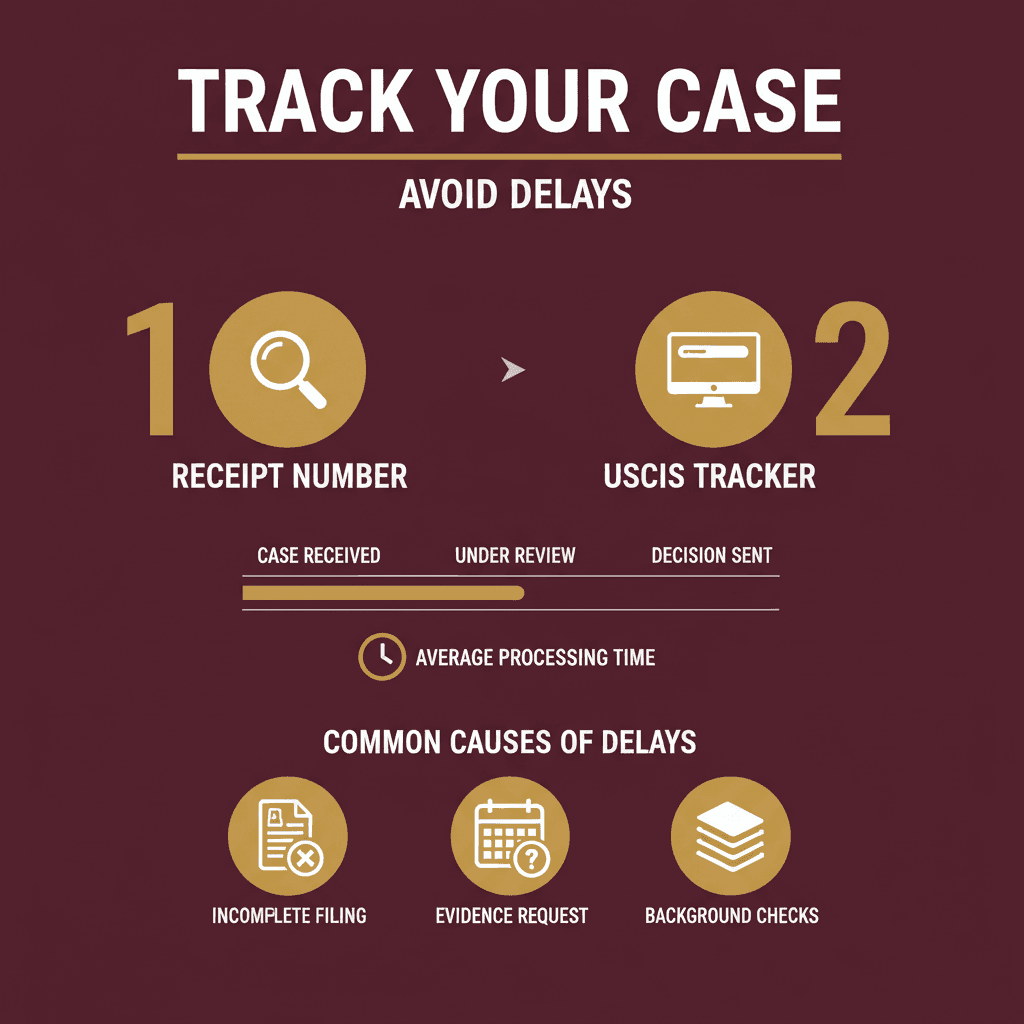
The most common way to check uscis case status is the official USCIS portal at USCIS.gov. You typically need your 13-character receipt number (for example: EAC, WAC, LIN, SRC, IOE, MSC/NBC).
Tips that prevent common errors:
- Type the receipt number without dashes, but keep letters.
- Use the exact receipt number on Form I-797 (Notice of Action).
- Don’t rely on screenshots from friends—each case is unique.
myUSCIS account alerts and document uploads
Many filings allow (or require) an online account where you can get alerts and sometimes view digital copies of notices. If your case was filed online, your account may show more detail than the public tracker.
Even with an account, keep hard copies of everything you send and receive. If a deadline is disputed, paper proof matters.
When the status isn’t USCIS: State Department, NVC, or immigration court
Not every immigration step is controlled by USCIS. If your case involves consular processing, you may also need the Department of State’s visa information resources at travel.state.gov.
If you are in removal proceedings, your timeline may also depend on the Executive Office for Immigration Review. For court-related updates, start with EOIR (U.S. Department of Justice) and talk to counsel before assuming USCIS can “fix” a court problem.
Common USCIS Case Status Updates (Plain-English Meanings)
“Case Was Received” and “Receipt Notice Was Sent”
These early updates usually mean USCIS accepted the package and created a file. Your priority date (if relevant) is often tied to this moment.
What to do next:
- Confirm the form type and applicant name are correct on the I-797.
- Save the receipt number in two places.
- Calendar likely next steps (biometrics, RFE window, processing time check).
“Biometrics Appointment Was Scheduled”
This means USCIS will collect fingerprints and photos. Missing biometrics can lead to denial for abandonment.
If you cannot attend, request a reschedule quickly and keep proof. If you are dealing with childcare, work barriers, or transportation in charlotte, ask for help early rather than missing the appointment.
“Request for Evidence Was Sent” (RFE) and “Notice of Intent to Deny” (NOID)
An RFE or NOID is serious. It is not “extra paperwork” and should be treated like a deadline-driven legal assignment.
Common RFE issues include:
- Missing translations or improper certification
- Insufficient financial sponsorship (Form I-864 issues)
- Questions about lawful entry, status, or eligibility
- Requests for relationship evidence in marriage cases
If your uscis case status shows an RFE was issued but you have not received it, contact USCIS and speak with an attorney. Deadlines generally do not pause just because mail is delayed.
Why Your USCIS Case Status Isn’t Moving (and What You Can Do)
Normal processing times vs. “stuck” cases
Many cases move slowly due to backlogs, security checks, or field office capacity. A quiet period does not automatically mean something is wrong.
Still, you should compare your timeline to published processing times and keep a record of:
- Receipt date
- Biometrics date
- Any RFE/NOID issuance and response date
- Interview date (if scheduled)
Common reasons cases stall: errors, missing mail, and background checks
In our experience, delays often come from fixable issues:
- USCIS data entry mistakes (wrong address, wrong A-number)
- RFEs that were answered but not properly matched to the file
- Additional review triggered by prior immigration history
- Security checks that take longer than expected
Sometimes, the public tracker is simply behind. That’s why saving your notices matters more than refreshing the page.
Escalation options: service requests, InfoPass-style help, and mandamus basics
If your uscis case status shows no movement well beyond normal times, you may have escalation options, such as a service request or congressional inquiry. In limited cases, a federal lawsuit (often called a “mandamus” action) may be considered to address unreasonable delays.
These steps can have risks. The best strategy depends on your form type, background, and what USCIS is likely to do next.
Worried your case is stalled or an RFE deadline is near? Talk with our immigration team at 1-844-967-3536. Se Habla Español. You can also message us here.
Legal Background: Eligibility Rules That Drive Many Status Updates
Adjustment of status and why lawful entry and bars matter
Many people checking uscis case status are waiting on green cards through adjustment of status. Eligibility depends on factors like lawful admission, visa availability, and possible bars.
A common statute in green card cases is INA § 245, codified at 8 U.S.C. § 1255, which governs who may adjust status in the United States.
USCIS procedure rules: filing, evidence, and interviews
USCIS case handling is guided by federal regulations. One key regulation is 8 C.F.R. § 103.2, which covers filings, evidence, and adjudications.
These rules help explain why USCIS issues RFEs, why incomplete filings can be rejected, and why interviews may be scheduled at a local field office like the USCIS office serving the charlotte area.
What's Your Immigration Situation?
Answer 3 questions - we'll tell you your options
Question 1 / 3
What best describes your situation?
Keep Reading

When USCIS status intersects with immigration court (EOIR)
If you are in removal proceedings, USCIS decisions can affect (but not always control) your case. Sometimes court schedules, continuances, or prior orders change what USCIS can do.
For people who have both a USCIS application and a court case, coordinating the strategy matters. This is especially true if hearings are held in the immigration court that serves the charlotte region or if related issues could land in federal court such as the U.S. District Court for the Western District of North Carolina in Uptown Charlotte.
How Vasquez Law Firm, PLLC Helps You Respond the Right Way
Focused immigration representation with 15 years of experience
Vasquez Law Firm, PLLC represents clients in immigration matters with practical, step-by-step guidance. Attorney Vasquez, JD, has 15 years of experience and is admitted to the North Carolina State Bar and the Florida Bar.
We help clients understand what a status update likely means, what USCIS is looking for, and what to do next—without guessing.
What we can do when your USCIS status changes (or doesn’t)
Depending on your case, our team may help with:
- RFE/NOID strategy and evidence organization
- Interview preparation and document checklists
- Address-change and notice-reissue problems
- Work permit and travel document timing plans
- Coordination between USCIS filings and EOIR court matters
To learn more about our approach, visit our Immigration Law services page.
Serving Charlotte residents and nearby communities
Our firm serves charlotte residents and clients across nearby communities in North Carolina, including Concord, Gastonia, Matthews, and Huntersville. If you need in-person planning or fast turnaround on an RFE response, local support can make a real difference.
Meet our team and credentials on our Attorney Vasquez page.
Frequently Asked Questions About USCIS Case Status
1) How often should I check my USCIS case status?
Once a week is usually enough unless you are expecting a specific notice (like an interview letter) or you have an RFE deadline. Checking multiple times a day won’t speed anything up, but it can increase stress and cause you to miss the bigger issue: preparing documents and staying eligible.
2) My case status says “RFE was sent,” but I didn’t get it. What should I do?
Act quickly. Confirm your address, check with anyone who receives mail at your home, and contact USCIS to request a copy or re-send. If you do not respond by the deadline, USCIS can deny the case. An attorney can also help you prepare a response framework while you wait for the RFE letter.
3) Why does my status say “Case Is Being Actively Reviewed” for months?
This message often means the case is in an internal review stage, but it does not tell you what USCIS is doing. It can involve background checks, supervisory review, or waiting for a slot at a field office. If you are beyond normal processing times, consider a service request or legal review.
4) Does an online status update count as official notice?
Usually, the controlling “official” notice is the paper (or account-posted) I-797 notice or decision. Online updates can be delayed or incomplete. Keep every notice, track dates, and do not ignore mailed letters because your online tracker did not change.
5) Can checking USCIS case status affect my case or trigger enforcement?
No. Checking your own case status does not cause enforcement action. However, your underlying immigration history could create risks if you miss notices, fail to appear for biometrics, or have a separate court case. If you fear detention or removal risk, get legal advice before taking steps like traveling or withdrawing applications.
6) When should I talk to a lawyer about my USCIS case status?
Consider legal help if you receive an RFE/NOID, have a prior denial, arrests, overstays, or removal proceedings, or if your case is far outside normal processing times. A lawyer can also help if the status looks “stuck” and you need a structured escalation plan.
Ready for a clear plan instead of guesswork? Contact Vasquez Law Firm, PLLC today. Call 1-844-967-3536 or schedule your consultation. Se Habla Español.

William Vasquez
Founder & CEO, Vasquez Law Firm, PLLC
William Vasquez is the founder and CEO of Vasquez Law Firm, PLLC, a results-driven firm specializing in immigration, criminal defense, personal injury, and workers' compensation. A U.S. Air Force veteran and recipient of the Joint Service Achievement Medal, William is dedicated to fiercely fighting for his clients' rights.
Related Legal Services
Need legal help? Learn more about learn about our immigration practice, or contact us for a free evaluation.
You can also visit NC immigration legal help for more information.