The way people think immigration works and the way it really does - Ohio Capital Journal | Reality Check
The way people think immigration works and the way it really does - Ohio Capital Journal: learn the real rules. Call 1-844-967-3536 (Se Habla Español).
Published on January 11, 2026· Updated February 11, 2026
Talk to an immigration attorney
Free call. A clear plan for your case.
Free & confidential · Se habla espanol · 24/7

Have questions? Talk to an attorney - free evaluation.
Call 1-844-967-3536Worried how the latest immigration news affects you?
Schedule a confidential case review with an immigration attorney - know exactly where you stand.
The way people think immigration works and the way it really does - Ohio Capital Journal | Reality Check
People often think U.S. immigration is a simple line: apply, wait, get approved, and move on. But The way people think immigration works and the way it really does - Ohio Capital Journal captures a truth many families discover the hard way—immigration is a maze of rules, deadlines, and “one mistake can cost years” consequences. Below, we break down the biggest misunderstandings and what the law actually requires, with practical steps you can take right now.
Need legal help?
Immigration in NC and FL. Personal injury and workers compensation across NC. Criminal defense in Johnston and Harnett counties, and traffic tickets in 10 NC counties. Tell us your county and we will tell you exactly what we can do.
Have questions about your immigration options? Talk to a legal team that does this every day. Call 1-844-967-3536 or request a free case evaluation. Se Habla Español.
What this headline means for smithfield families
Even when a story is based in another state, the core issues show up everywhere—including for people serving smithfield residents who are trying to reunite with family, keep a job, or avoid removal. The gap between “what people think” and “what the law actually says” can lead to missed filings, unlawful presence problems, and preventable denials.
Why this topic keeps coming up in real life
Immigration is not one system. It is many systems that overlap: U.S. Citizenship and Immigration Services (USCIS), the Department of State (consulates abroad), and immigration court (EOIR).
That overlap is where confusion happens. A person can be “in process” with one agency but still be at risk with another.
The news context driving the conversation
Recent immigration roundups, including this item from Boundless Immigration, highlight policy shifts, processing backlogs, and enforcement trends that shape outcomes for real families. Here is the news link for context: This Week in Immigration: January 9, 2025 (Google News RSS).
Local impact: how it shows up around smithfield
In and around smithfield, many families balance immigration steps with work schedules, school, and court dates. If you are dealing with a deadline tied to a hearing, a biometrics appointment, or a Request for Evidence (RFE), delay can be costly.
If you have an immigration issue connected to a local criminal charge or a past conviction, it can also affect eligibility. Coordination matters, especially when timelines move quickly.
Myths vs. reality: what people think immigration is vs. what it is
The phrase The way people think immigration works and the way it really does - Ohio Capital Journal fits because immigration outcomes often turn on technical details. Below are the most common myths we hear—and the legal reality behind them.
Myth #1: “Just get in line”
Many people assume there is a general “line” for anyone who wants to come to the U.S. In reality, most people can only apply through a specific legal category, and many categories have limited visas or strict requirements.
For example, family-based petitions can take years depending on the relationship and country caps. Work visas can require employer sponsorship and lottery selection.
- Reality: A valid category + eligibility + timing rules are required.
- Reality: Some people have no available pathway unless laws change.
Myth #2: “Marriage fixes everything”
Marriage to a U.S. citizen can be a strong pathway, but it is not a magic eraser. Prior immigration violations, certain criminal issues, or unlawful entries can trigger bars or require waivers.
Also, USCIS closely reviews marriages for legitimacy. A real relationship still needs good evidence and consistent paperwork.
- Reality: Many cases require a waiver under immigration law (INA § 212).
- Reality: Some people must process through a consulate and face re-entry bars.
Myth #3: “Asylum is easy if your country is dangerous”
Asylum is not granted simply because conditions are hard. Applicants generally must show persecution (or a well-founded fear) based on a protected ground like race, religion, nationality, political opinion, or membership in a particular social group.
There are also strict filing rules, including the one-year filing deadline, with limited exceptions.
How immigration really works: the systems, agencies, and rules
To understand The way people think immigration works and the way it really does - Ohio Capital Journal, it helps to know who does what. Immigration is divided across agencies, and each agency has its own process, forms, and evidence standards.
USCIS: applications and benefits
USCIS handles many common applications, including family petitions, green card applications, naturalization, DACA renewals (where available), and some work authorization.
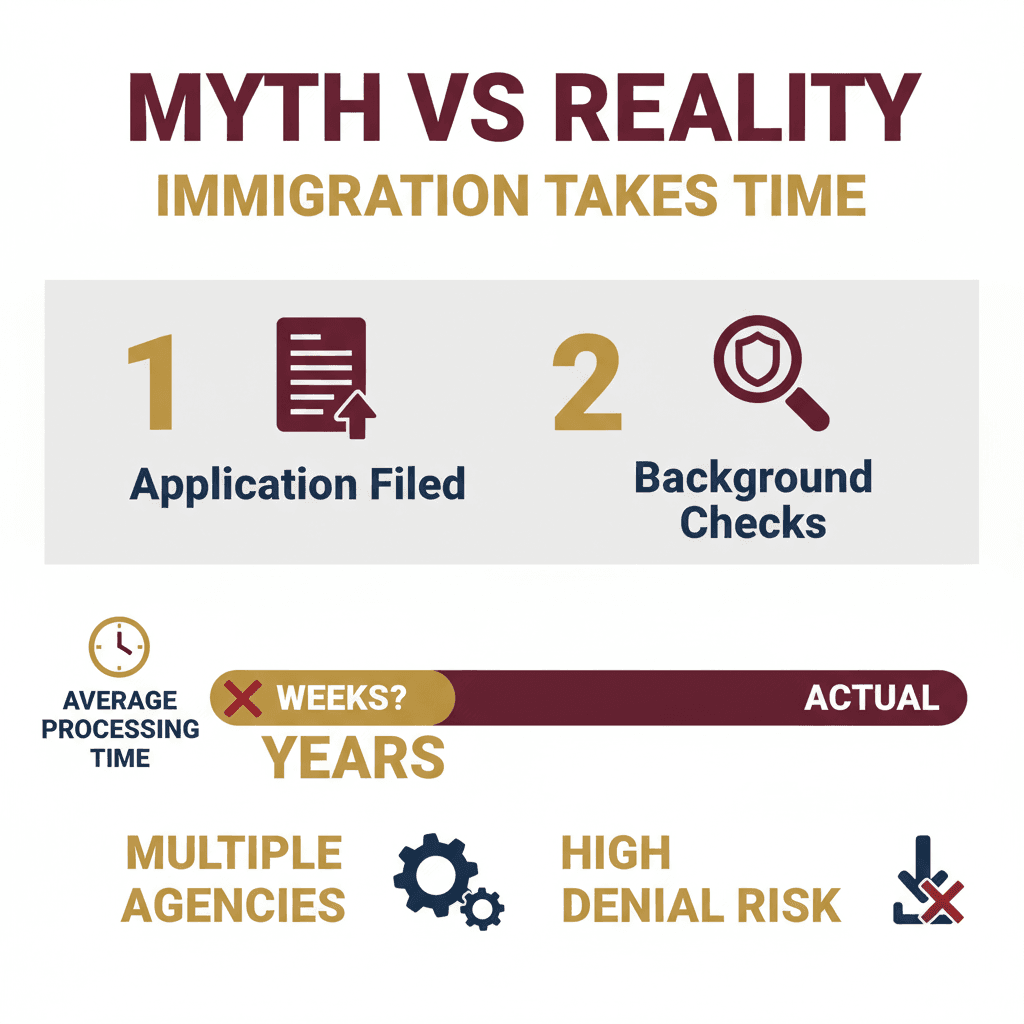
You can review official forms, updates, and processing guidance directly at USCIS.gov.
- File the correct form(s) with correct fees and supporting evidence.
- Attend biometrics (if required).
- Respond to any RFE or Notice of Intent to Deny (NOID).
- Attend the interview (many cases require one).
Department of State: consular processing abroad
If you are applying for an immigrant visa or many nonimmigrant visas abroad, the Department of State runs the consulate process. This includes DS-160/DS-260 submissions, medical exams, and interviews.
Start with the official visa information at travel.state.gov (U.S. visas).
- Key point: A USCIS-approved petition is often only one step.
- Key point: The visa interview can still result in refusal under INA § 212 grounds of inadmissibility.
EOIR: immigration court and removal defense
Immigration court is overseen by the Executive Office for Immigration Review (EOIR). Court cases have strict hearing schedules, filing deadlines, and procedural rules.
For court and appeal structure, see justice.gov/eoir. Court is also where people may request relief like cancellation of removal, asylum, or adjustment of status (if eligible).
Why cases get delayed or denied (and how to reduce risk)
The frustration behind The way people think immigration works and the way it really does - Ohio Capital Journal is often about time and uncertainty. Many delays are not random—they come from missing evidence, eligibility issues, security checks, or backlogs.
Paperwork errors and “small” omissions
Many denials happen for fixable reasons: wrong fee, missing signature, outdated edition date, or weak supporting documents. Even when USCIS allows a response, deadlines can be tight.
Common evidence gaps include:
- Inconsistent addresses or employment history
- Missing certified court dispositions
- Weak bona fide marriage documentation
- Unclear translations or uncertified translations
Inadmissibility and bars many people don’t know exist
U.S. immigration law includes “inadmissibility” rules that can block a green card or visa, even if you have a qualifying relative. These rules are found in INA § 212 (8 U.S.C. § 1182) and include issues like unlawful presence, misrepresentation, and certain criminal grounds.
Sometimes a waiver is possible. Sometimes it is not. A strategy decision early can prevent years of delay.
Backlogs, priority dates, and court scheduling
Some delays come from annual visa limits and priority dates, especially in family- and employment-based categories. Others come from staffing, security checks, or court backlogs.
If you live near smithfield, your timeline may depend on where your case is processed and what system you are in (USCIS vs. consulate vs. court). It is normal to feel stuck—but you should still track deadlines and respond quickly to notices.
Don’t guess with your status. If you received an RFE, NOID, or a court notice, call 1-844-967-3536. We can help you plan next steps. Se Habla Español. Contact us.
The real legal pathways people use (and where misconceptions happen)
Immigration options depend on facts: how you entered, your family ties, your record, and whether you are in court. Below are common pathways and the “catch” people often miss—another reason The way people think immigration works and the way it really does - Ohio Capital Journal resonates.
Family-based immigration: petitions vs. green cards
A family petition (like Form I-130) is not the same as a green card. It is often step one. The green card step may be adjustment of status (inside the U.S.) or consular processing (outside the U.S.).
Adjustment of status is governed by 8 U.S.C. § 1255 and related regulations (including 8 C.F.R. Part 245). Eligibility can turn on lawful entry, visa availability, and inadmissibility rules.
Work-based options: sponsorship and timing
Many employment paths require an employer willing to sponsor and document the role and wage requirements. Some categories also require labor certification (PERM) before the immigrant petition can be filed.
Also, work visas are not “one size fits all.” For many people, the right plan is a combination of short-term status management and long-term sponsorship strategy.
What's Your Immigration Situation?
Answer 3 questions - we'll tell you your options
Question 1 / 3
What best describes your situation?
Keep Reading
Humanitarian relief: asylum, TPS, VAWA, U visas
Humanitarian options can protect people in danger, survivors of abuse, and victims who help law enforcement. But each option has strict definitions and evidence standards.
- Asylum: requires a protected-ground nexus and usually filing within one year.
- TPS: depends on country designation and eligibility rules.
- VAWA: for certain abused spouses/children/parents of U.S. citizens or LPRs.
- U visa: for certain crime victims who are helpful to law enforcement.
These cases can be powerful, but they are document-heavy. A weak filing can delay relief and increase risk.
How Vasquez Law Firm, PLLC helps clients close the gap between “think” and “real”
At Vasquez Law Firm, PLLC, we focus on turning confusion into a clear plan. Attorney Vasquez, JD has 15 years of experience and is admitted to the North Carolina State Bar and the Florida Bar. Our goal is to help clients understand both the opportunities and the risks, in plain English (y en español—Se Habla Español).
A strategy-first approach (not just filling forms)
Immigration is not only paperwork. It is legal analysis. We start by identifying which system you are in (USCIS, consulate, or court) and which deadlines control your case.
Then we build a plan that fits your facts, including:
- Entry history and current status
- Family relationships and visa categories
- Criminal and immigration records (if any)
- Possible waivers and risk points
Serving smithfield residents with practical, local support
We routinely help people serving smithfield residents who need guidance on notices, appointments, and court filings. If your situation touches a local issue—like obtaining certified records—having a plan can save time.
For many clients, that includes getting documents from the Johnston County Courthouse in Smithfield and ensuring the records match what immigration expects.
Where to start on our website
If you want to learn more about the types of cases we handle, visit our Immigration Law services page. You can also review our team on the Attorney Vasquez and attorneys page.
When you are ready, you can request a free case evaluation to discuss next steps.
Frequently asked questions
These FAQs address the most common misunderstandings behind The way people think immigration works and the way it really does - Ohio Capital Journal. Every case is different, so treat these as general information, not legal advice.
Family and marriage-based questions
Can I get a green card if I entered without inspection (EWI)?
Sometimes, but not always. Many people who entered without inspection cannot adjust status under 8 U.S.C. § 1255 unless a specific exception applies (such as certain grandfathering under INA § 245(i)). Others must consular process and may face unlawful presence bars that require a waiver.
Does marrying a U.S. citizen prevent deportation?
No. Marriage can create an immigration pathway, but it does not automatically stop removal proceedings. In court, you may need to seek relief (like adjustment of status) and request time to complete filings, and eligibility depends on your record and admissibility.
Timing, work permits, and travel
How long does immigration take?
It depends on the category, the agency, and your history. Some work authorization may be available while a case is pending, but not in every category. Backlogs, priority dates, and RFEs can add months or years.
Can I work while my green card case is pending?
Maybe. Some applicants can request employment authorization (EAD) based on a pending application. But eligibility depends on what you filed, your current status, and whether the law allows it for your category.
Court and enforcement questions
What happens if I miss an immigration court date?
Missing a hearing can result in an in absentia removal order. Reopening may be possible in limited situations, but it is time-sensitive and fact-specific. If you have a hearing notice, talk with counsel immediately.
Do I have to tell USCIS about an arrest even if the case was dismissed?
Often, yes. Many forms ask about arrests, charges, and citations—not just convictions. You typically need certified dispositions and, in some cases, arrest reports. Failing to disclose can create misrepresentation problems under inadmissibility rules.
Next steps: get answers based on your exact facts
If you feel stuck or confused, you are not alone. The gap described by The way people think immigration works and the way it really does - Ohio Capital Journal is exactly where people lose time—or accidentally create bigger problems.
Vasquez Law Firm, PLLC can help you understand your options, reduce risk, and move forward with a plan that fits your life—whether you are in smithfield or a nearby community.
Ready to protect your future? Call 1-844-967-3536 or book your consultation online. Se Habla Español. Schedule your consultation today.
Legal disclaimer: This article provides general information, not legal advice. Reading this content does not create an attorney-client relationship. For advice about your situation, consult an attorney.

William Vasquez
Founder & CEO, Vasquez Law Firm, PLLC
William Vasquez is the founder and CEO of Vasquez Law Firm, PLLC, a results-driven firm specializing in immigration, criminal defense, personal injury, and workers' compensation. A U.S. Air Force veteran and recipient of the Joint Service Achievement Medal, William is dedicated to fiercely fighting for his clients' rights.
Related Legal Services
Need legal help? Learn more about immigration case consultation, or contact us for a free evaluation.
You can also visit NC immigration legal help for more information.