What Defense Wins Reveal About Personal Injury Cases in Raleigh NC
personal injury lawyer raleigh nc—A defense win shows how injury claims fail. Learn the proof you need. Se Habla Español. Call 1-844-967-3536.
Published on January 5, 2026
Injured? Get what your case is worth
Free review. No fee unless we win.
Free & confidential · Se habla espanol · 24/7
Have questions? Talk to an attorney - free evaluation.
Call 1-844-967-3536Get What Your Injury Is Worth
Schedule your consultation - no fee unless we win.
What Defense Wins Reveal About Personal Injury Cases in Raleigh NC
If you searched for a personal injury lawyer raleigh nc, here’s a hard truth: it’s not always the “big injury” that loses a case—it’s missing proof. A recent medical malpractice defense win highlights how insurers and defense teams attack causation, documentation, and expert support. Understanding those tactics can help North Carolina injury victims protect their cases from day one.
Need legal help?
Immigration in NC and FL. Personal injury and workers compensation across NC. Criminal defense in Johnston and Harnett counties, and traffic tickets in 10 NC counties. Tell us your county and we will tell you exactly what we can do.
Quick Summary (Read This First)
What happened: A medical malpractice case ended in a defense win—showing how quickly a claim can fail when key proof is missing or challenged.
Why it matters to you: The same defense strategies are used in car wrecks, slip-and-falls, and malpractice claims across North Carolina, including Raleigh—especially attacks on causation and credibility.
What to do now: Preserve evidence, get consistent medical care, and avoid recorded statements or paperwork that can be used to shift blame.
What This News Means for North Carolina Residents
Why a defense win is a warning for injured people
News coverage about a defense verdict in a medical malpractice case can feel distant—until you realize the playbook is the same in almost every injury claim. Defense teams focus on a few themes: “the injury wasn’t caused by this event,” “the person was already hurt,” or “the care met the standard.” That story is easier to sell when records are incomplete or timelines are messy.
Here is the news item that prompted this discussion: Defense counsel secures win in medical malpractice case. Even without every fact, the takeaway is clear: if the plaintiff can’t prove each legal element with reliable evidence, the defense can win.
What this means in Raleigh and beyond
In Raleigh, many injury cases involve I-40 and I-440 crashes, delivery-truck collisions, unsafe store floors, apartment stair defects, and medical errors. Whether your case is against an insurer, a business, or a hospital system, the other side is trained to create doubt.
That’s why people looking for a personal injury lawyer raleigh nc should focus less on slogans and more on how cases are actually proven: medical records, witness statements, expert opinions (when required), and clean timelines.
The North Carolina “pressure points” defenses use
Some rules and real-world factors make cases harder in North Carolina than people expect:
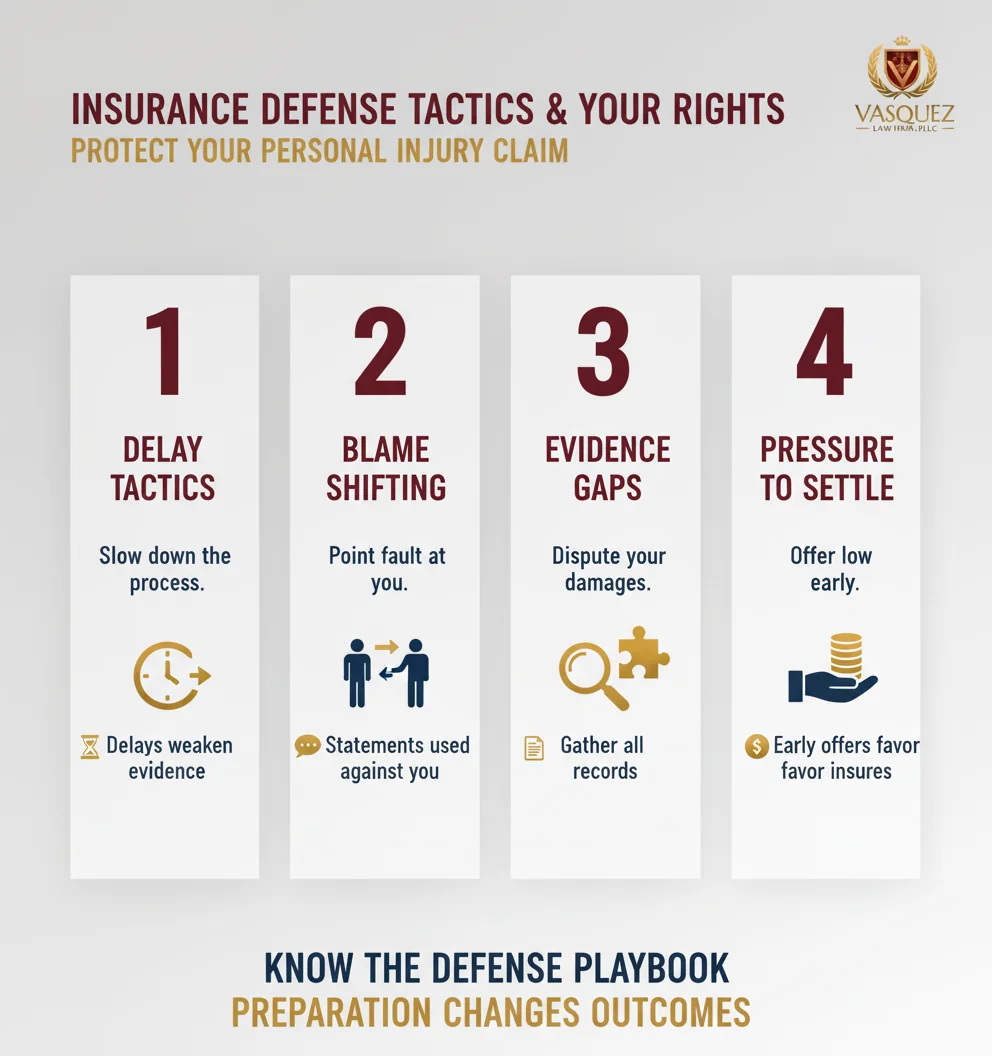
- Contributory negligence: If the defense proves you contributed even slightly to the injury, it can bar recovery in many negligence cases.
- Causation battles: The defense often admits you’re hurt but argues the wreck (or incident) didn’t cause this injury.
- Documentation gaps: Missed appointments, delayed treatment, or inconsistent complaints can be framed as “not serious” or “unrelated.”
What to Do in the Next 24-48 Hours
Preserve proof before it disappears
The first two days after an injury are when evidence is most likely to vanish. Video gets overwritten. Witnesses forget details. Vehicles get repaired. Medical notes get locked into a narrative that can be hard to change later.
Get medical care that creates a clear timeline
Defense teams love “gaps” between the event and the first treatment. If you can do so safely, get evaluated and describe symptoms clearly and consistently. Ask for copies of discharge paperwork and imaging results.
Control communications that could be used against you
Be careful with recorded statements, social media, and signing broad authorizations. These are common tools used to reframe facts and shift blame.
If this situation applies to you, take these steps NOW:
- Step 1: Document everything—photos, videos, scene conditions, vehicle damage, visible injuries, and a timeline of symptoms.
- Step 2: Get medical evaluation promptly and follow the treatment plan (including referrals, PT, and imaging).
- Step 3: Do NOT sign releases or give a recorded statement until you understand how it can be used to challenge causation or fault.
- Step 4: Consult with a legal expert to understand your rights and options
Warning Signs & Red Flags to Watch For
Red flags that a claim is being positioned to lose
In the defense-win news story, the result likely came from doubt—about what happened, what caused the injury, or whether the standard of care was met. In everyday injury claims, similar “setup” tactics can start early.
Red flags in your medical documentation
If your records don’t match your actual symptoms, the defense may argue your injury is minor or unrelated. Errors can happen in charting, and small inconsistencies can be amplified later.
Red flags that the other side is shifting fault onto you
North Carolina’s contributory negligence rule means fault allegations can be case-ending. Watch for leading questions and statements that push you to accept blame.
These are signs your case may be in jeopardy:
- The insurer focuses more on your “past injuries” than the crash or incident itself.
- You’re pressured to give a recorded statement or sign a broad medical authorization immediately.
- Your medical care has delays, missed appointments, or notes that understate pain and limitations.
Seeing these signs? Vasquez Law Firm, PLLC has handled hundreds of denied claims in North Carolina. Attorney Vasquez knows the tactics insurers use. Get a free case evaluation.
Your Rights: What You CAN and CANNOT Do
You can seek care and build your medical proof
Your medical records often become the “spine” of your case. You generally have the right to seek evaluation and to request copies of your own records and bills. You also have the right to ask providers to correct factual errors through appropriate procedures.
You can protect yourself in insurance communications
Insurance adjusters may sound friendly, but their job is to control payouts. You can decline to guess, speculate, or agree with blame-shifting language.
You cannot miss legal deadlines or ignore fault risks
In North Carolina, timing and fault issues can end a case quickly. Do not assume “I’ll deal with it later” is safe—especially when evidence is perishable and defenses start early.
YOU HAVE THE RIGHT TO:
- Request copies of your medical records, bills, and imaging reports.
- Decline to provide a recorded statement until you understand the consequences.
- Seek legal counsel before signing releases, settlement documents, or broad authorizations.
YOU CANNOT:
- Assume the insurer must “take your word for it”—proof still drives outcomes.
- Miss strict filing deadlines or ignore fault allegations (contributory negligence can be fatal).
Vasquez Law Firm, PLLC helps North Carolina clients understand and protect their rights every day.
Documents You'll Need (Save This Checklist)
Medical documents that prove injury and causation
In many defense wins, the turning point is “we can’t connect the dots.” The best way to connect the dots is complete medical documentation—created close in time to the incident and consistent over follow-up visits.
Incident proof that shows what happened
Photos, reports, and witness information help pin down the facts before memories fade and conditions change.
Loss records that prove financial impact
Injury claims are not just about pain. They’re also about wages, future care, mileage, and the real costs you absorb after someone else’s negligence.
Gather these documents NOW (before they disappear):
- Crash/incident report number and any available reports (police, business, or hospital incident reports).
- All medical records and bills (ER, urgent care, PCP, specialists, PT, imaging).
- Photos/videos of injuries, the scene, hazards, vehicles, and property damage.
- Witness names, phone numbers, and a short note of what they saw.
- Proof of lost income (pay stubs, HR letter, missed-shift records, self-employment invoices).
Tip: Keep all documents organized in one folder - it makes the process much easier.
KEY TAKEAWAY:
Defense teams don’t need to prove you’re “not hurt.” They often win by proving the evidence doesn’t clearly link the injury to the event—or that you share fault.
Legal Background and Context
What you must prove in most injury cases
Most personal injury cases are built on negligence. While each case is unique, the core elements usually include:
- Duty: The other party had a legal duty to act with reasonable care.
- Breach: They failed to meet that duty.
- Causation: That breach caused your injury (often the hardest-fought issue).
- Damages: You suffered measurable harm (medical costs, lost wages, pain and suffering).
Time limits: why waiting can quietly destroy a case
North Carolina has firm deadlines for filing many injury lawsuits. For many negligence claims, the general statute of limitations is three years (often discussed under N.C. Gen. Stat. § 1-52). Medical malpractice has additional rules and timing issues (often discussed under N.C. Gen. Stat. § 1-15(c)). Missing the deadline can mean the court must dismiss the case, no matter how serious the injury is.
For public records, filings, and court processes, the North Carolina court system provides resources at North Carolina Judicial Branch (nccourts.gov).
Why medical malpractice is a “proof-intensive” example
Medical malpractice cases help illustrate why defense teams win: they often require qualified expert review of the standard of care and causation. Even outside malpractice, experts can matter—such as accident reconstruction, biomechanical analysis, or future care planning.
In traffic-collision cases, roadway and crash-report basics can also matter. The North Carolina Department of Transportation provides driver and roadway safety information at NCDOT.gov.
KEY TAKEAWAY:
If you’re in Raleigh or anywhere in North Carolina, your case strength often depends on clean timelines, consistent medical documentation, and anticipating contributory-negligence arguments.
How Vasquez Law Firm, PLLC Helps North Carolina Clients Win These Cases
How we build the proof defenses attack
Do I Have a Personal Injury Case?
Answer 3 quick questions to find out
Question 1 / 3
What happened to you?
Keep Reading
When someone searches for a personal injury lawyer raleigh nc, they’re often looking for two things: clarity and protection. At Vasquez Law Firm, PLLC, our approach is evidence-first—because that’s what holds up when the defense tries to poke holes in the story.
How we keep deadlines and paperwork under control
Cases can fall apart because of missed deadlines, incomplete documentation, or early missteps with insurers. Our team tracks records, communications, and filing requirements so the case stays organized and credible.
Local focus for Raleigh-area claims
Raleigh cases may involve Wake County providers, local roadways, and area businesses. We tailor investigations to the facts—because what persuades an insurer in negotiation is not always what persuades a jury if the case must be tried.
Our experienced team, led by Attorney Vasquez, has helped hundreds of North Carolina clients. Here's exactly how we help:
- Step 1: We review your case for free and tell you honestly if you have a claim
- Step 2: We handle all paperwork and deadlines so nothing gets missed
- Step 3: We fight insurance tactics - we know their playbook
- Step 4: We maximize your settlement or take it to hearing if needed
Learn more about our approach to Personal Injury services and the kinds of cases we handle.
Real example: "We recently helped a Charlotte construction worker whose claim was denied. Insurance said his injury 'wasn't work-related.' We gathered evidence, fought the denial, and won him $45,000 in benefits plus ongoing medical care." - Attorney Vasquez
Experience and credentials: Attorney Vasquez, JD has 15 years of experience and is admitted to the North Carolina State Bar and the Florida Bar. Se Habla Español.

Frequently Asked Questions (Specific to This Situation)
FAQs triggered by a defense win in a malpractice case
The defense-win headline raises a practical fear: “If a patient can lose a malpractice case, can I lose my injury case too?” These questions address that exact concern for Raleigh-area injury claims.
1) If a malpractice case can lose on proof, what does that mean for my Raleigh car accident claim?
It means your case can be challenged on the same core issues: causation (did the crash cause the injury?) and damages (how serious is it, and what did it cost you?). Strong documentation early—photos, prompt medical evaluation, and consistent follow-up—makes it harder for the defense to argue your injury came from something else.
2) What’s the most common “defense win” argument in North Carolina injury cases?
Two of the most common are: (1) you share fault (contributory negligence), and (2) your injuries were preexisting or not caused by the incident. Defense teams often use prior medical history, gaps in treatment, and inconsistent statements to build these arguments.
3) After reading about a malpractice defense verdict, should I worry that I need an expert for my injury case in Raleigh?
Not every injury case needs an expert, but some do—especially where causation is disputed (for example, complex spinal injuries, traumatic brain injuries, or cases with significant preexisting conditions). Malpractice cases are a good reminder that the more technical the claim, the more important qualified expert support can be.
4) Can the insurance company use my medical records to argue my injury isn’t from the accident?
Yes. They may compare your current complaints to prior injuries, prior imaging, or even general medical history to argue an alternate cause. That’s why it’s important that medical records clearly describe the crash/incident history, symptom onset, and functional limits, and that you correct factual errors when appropriate.
5) Does it matter if my injury treatment was in Wake County versus another county in North Carolina?
It can. Treatment location affects where records come from, which providers may be witnesses, and sometimes the logistics of gathering certified records. The legal standards are statewide, but the practical evidence-gathering can be easier or harder depending on where you treated.
6) If the defense argues I was “partly at fault,” is my case over in North Carolina?
In many negligence cases, contributory negligence can be a complete bar to recovery if proven. That’s why early statements matter and why evidence (like photos, witnesses, and vehicle damage patterns) can be critical to showing you acted reasonably.
7) How long do I have to file an injury lawsuit in North Carolina if negotiations stall?
Many negligence claims are subject to a three-year statute of limitations (commonly discussed under N.C. Gen. Stat. § 1-52), but the correct deadline depends on the claim type and facts. Malpractice claims can involve different timing rules (often discussed under N.C. Gen. Stat. § 1-15(c)). If the deadline passes, the court can dismiss the case even if liability seems clear.
Don't Navigate This Alone
If you're dealing with injury claim proof issues after a crash, fall, or possible medical error, Vasquez Law Firm, PLLC can help. With 15+ years serving North Carolina, we know what works.
Free case evaluation. Bilingual team. No fees unless we win.
Call Now: 1-844-967-3536
Se Habla Español - Hablamos Su Idioma

William Vasquez
Founder & CEO, Vasquez Law Firm, PLLC
William Vasquez is the founder and CEO of Vasquez Law Firm, PLLC, a results-driven firm specializing in immigration, criminal defense, personal injury, and workers' compensation. A U.S. Air Force veteran and recipient of the Joint Service Achievement Medal, William is dedicated to fiercely fighting for his clients' rights.
Related Legal Services
Need legal help? Learn more about get personal injury legal help today, or contact us for a free evaluation.
You can also visit injury attorneys serving all of North Carolina for more information.