What You Need to Know About Motor Vehicle Negligence Claims in 2026
Understand motor vehicle negligence in 2026 and how it affects car accident cases. Contact Vasquez Law Firm for a free consultation in Charlotte today.
Published on February 9, 2026
Injured? Get what your case is worth
Free review.
Free & confidential · Se habla espanol · 24/7
Have questions? Talk to an attorney - free evaluation.
Call 1-844-967-3536Get What Your Injury Is Worth
Schedule your consultation.
What You Need to Know About Motor Vehicle Negligence Claims in 2026
Motor vehicle negligence plays a critical role in personal injury claims following car accidents in Charlotte and beyond. Understanding what motor vehicle negligence means in 2026, how it is proven, and the steps to take after an accident can dramatically impact the outcome of your case. This essential guide covers the most common types of negligence, the legal process specific to North Carolina and Florida, and how to protect your rights. Whether you are a driver, passenger, or pedestrian, knowing your options and obligations is vital. Vasquez Law Firm offers compassionate and aggressive personal injury legal support to help you navigate this complex area.
Need help with your case? Our experienced attorneys are ready to fight for you. Se Habla Español.
Schedule Your Free Case Evaluation
Or call us now: 1-844-967-3536
Quick Answer
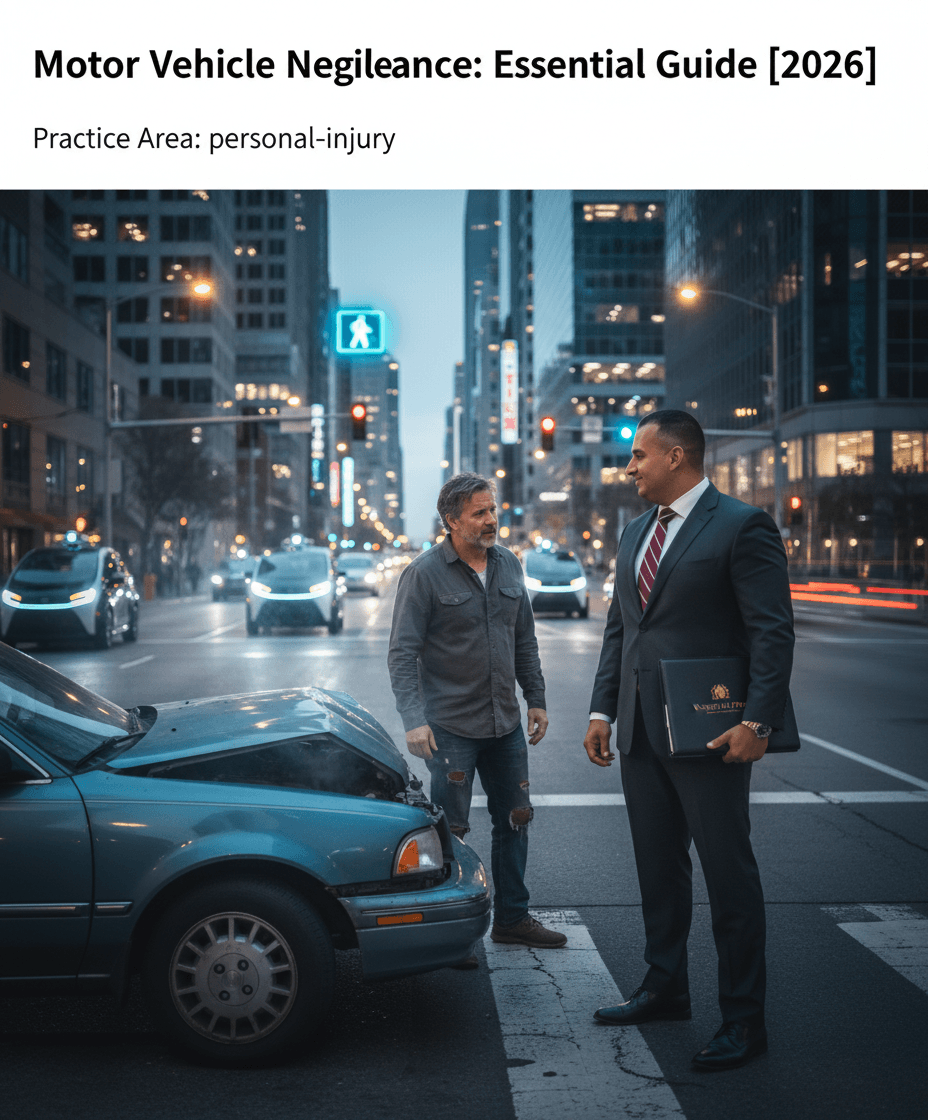
Motor vehicle negligence means a driver failed to act with reasonable care, causing a crash. This failure, like distracted driving or ignoring traffic laws, can lead to personal injury claims. If you are injured in Charlotte due to someone’s motor vehicle negligence, you may have legal options to recover damages.
- Negligence requires proving duty, breach, causation, and damages.
- Common causes include speeding, distracted or impaired driving.
- Documenting the accident is essential to support your claim.
- Consult a personal injury attorney early to protect your rights.
What Is Motor Vehicle Negligence?
Motor vehicle negligence involves a driver’s failure to exercise reasonable care while operating a vehicle, resulting in harm to others. In legal terms, negligence has four elements: a duty to act carefully, a breach of that duty, causation linking the breach directly to the accident, and damages suffered by the injured party.
Examples of motor vehicle negligence include texting while driving, running traffic signals, driving under the influence, or failing to yield the right of way. Each of these actions violates the duty every driver owes to others on the road.
In Charlotte and across North Carolina and Florida, understanding motor vehicle negligence is crucial to establishing liability in an accident case. Negligence is often the foundation for personal injury and wrongful death claims related to car crashes.
Types of Negligence in Auto Accidents
- Ordinary Negligence: Carelessness like distracted driving or speeding.
- Gross Negligence: Severe lack of care such as drunk driving or reckless behavior.
- Comparative Negligence: Shared fault where damages may be reduced proportionally.
- Contributory Negligence: Some states may bar recovery if the injured party is partly at fault.
Legal Duty of Care
Every driver has a legal duty to drive safely and follow traffic laws. This duty requires being alert, obeying speed limits, and taking precautions to avoid accidents. When this duty is breached, and someone is injured as a result, motor vehicle negligence is present.
Motor Vehicle Negligence vs. Intentional Acts
It’s important to note that negligence differs from intentional harm. Negligence is about carelessness or failure to act properly, while intentional acts involve purposely causing harm. Most car accident claims involve negligence, not intentional wrongdoing.
Step-by-Step: What To Do After An Accident
- Ensure Safety: Move to a safe location if possible and check for injuries.
- Call Emergency Services: Report the accident to police and request medical assistance if needed.
- Document the Scene: Take photos, write down details, and collect witness contact information.
- Exchange Information: Get the other drivers' names, insurance details, and vehicle information.
- File a Police Report: Cooperate with officers and obtain a copy of the report when available.
- Notify Your Insurance: Inform your insurer about the accident promptly.
- Seek Medical Care: Get medical evaluations even if you feel fine initially.
- Consult an Attorney: Contact a personal injury lawyer experienced in motor vehicle negligence for legal guidance.
Why Following These Steps Matters
Properly documenting your accident and notifying authorities protects your right to recover damages. Missing key steps can weaken your claim. An attorney can help ensure you gather the necessary evidence and understand your options.
Documents or Evidence Checklist
- Police report copy
- Photos of vehicles, scene, and injuries
- Medical records and bills
- Witness statements and contact info
- Insurance correspondences
- Repair estimates or invoices
- Accident diary or notes
- Traffic citations related to the crash
Keep Organized Records
Maintaining thorough records helps legal counsel build a strong case. It also accelerates negotiations or court proceedings if necessary.
Timeline: What to Expect in Your Case
- Immediate (Day 1-7): Report accident, seek medical care, collect evidence.
- Short Term (Weeks 2-4): Medical treatment continues, notify insurance, consult an attorney.
- Investigation Phase (Month 1-3): Investigation of facts, liability, and damages by attorneys and insurers.
- Settlement Negotiations (Month 3-6): Attempt to resolve claims through negotiation, mediation or demand letters.
- Litigation (6+ Months): If no settlement, case may proceed to filing a lawsuit and court trial.
Factors Impacting Timeline
Severity of injuries, complexity of facts, and cooperation of parties can speed up or delay the process. In Charlotte, attorney guidance helps keep your case moving efficiently.
Costs and Fees: What Impacts Your Case
- Medical treatment expenses and ongoing care
- Property damage repair or replacement costs
- Lost wages and reduced earning capacity
- Pain and suffering experienced
- Legal fees and court costs, often contingent on outcome
- Expert witness or investigation fees if needed
Understanding Contingency Fees
Many personal injury lawyers, including at Vasquez Law Firm, work on contingency. They get paid only if you recover compensation, making legal help accessible.
Common Mistakes and How to Avoid Them
- Not Seeking Immediate Medical Care: Prompt evaluation preserves health and evidence of injury.
- Failing to Report the Accident: Always file a police report to support your claim.
- Admitting Fault at the Scene: Avoid statements that could be used against you legally.
- Ignoring Insurance Deadlines: Notify insurers promptly to comply with policy requirements.
- Settling Too Early: Do not accept early offers without understanding your injury’s full impact or consulting a lawyer.
- Not Hiring an Attorney: Legal expertise is crucial for navigating complex negligence claims.
- Missing the Statute of Limitations: File claims within NC or FL deadlines to avoid losing rights.
If you only remember one thing: Protect your rights by documenting everything and contacting a qualified attorney early.
North Carolina and Nationwide Notes
North Carolina Notes
In North Carolina, comparative negligence and contributory negligence laws affect claims. The state follows the 'contributory negligence' rule, meaning if you are even 1% at fault, you may be barred from recovering damages. NC also requires timely filed claims per the statute of limitations, typically three years. Learn more about NC courts and motor vehicle laws from North Carolina Courts.
Nationwide Concepts (General Only)
Negligence principles are similar nationwide, with common elements like duty, breach, causation, and damages. However, states vary widely in comparative versus contributory negligence rules, damage caps, and insurance requirements. Consult local laws or attorneys to understand specifics.
When to Call a Lawyer Now
- If you or a loved one sustained serious injuries
- When fault is disputed or complex
- Following a hit-and-run or uninsured motorist accident
- If the insurance company denies or delays your claim
- When medical bills exceed insurance coverage
- For help gathering evidence or dealing with adjusters
- If you feel overwhelmed by the legal jargon or process
- To protect your rights before speaking with the other party’s insurer
About Vasquez Law Firm
At Vasquez Law Firm, we combine compassion with aggressive representation. Our motto "Yo Peleo" (I Fight) reflects our commitment to standing up for your rights.
- Bilingual Support: Se Habla Español - our team is fully bilingual
- Service Areas: Personal injury in North Carolina; immigration nationwide, including Florida
- Experience: Over 15 years helping clients navigate complex legal matters
- Results: Thousands of successful cases across multiple practice areas
Attorney Trust and Experience
Attorney Vasquez holds a Juris Doctor degree and is admitted to practice in the North Carolina State Bar. With over 15 years of dedicated legal experience, he has built a reputation for providing personalized attention and achieving favorable outcomes for his clients.
Don't wait to get the help you deserve. Call us now for immediate assistance. Se Habla Español.
Or schedule your free case evaluation today: Get Your Free Case Evaluation
Frequently Asked Questions
What does motor vehicle negligence mean?
Motor vehicle negligence occurs when a driver fails to exercise reasonable care on the road, causing an accident. It involves actions like speeding, distracted driving, or ignoring traffic signs that lead to harm or damages to others. Proving negligence is essential for personal injury claims in motor vehicle accidents.
What are the four types of negligence?
The four main types of negligence are: 1) Comparative negligence, where fault is shared; 2) Contributory negligence, where the plaintiff may be completely barred from recovery; 3) Gross negligence, involving severe carelessness; and 4) Professional negligence, specific to professions like doctors or lawyers.
How much is a negligence claim worth?
A negligence claim’s value depends on factors like the severity of injuries, medical expenses, lost wages, pain and suffering, and property damage. In North Carolina, settlements can vary widely based on these factors, though the average car accident settlement is typically several thousand dollars to higher amounts depending on the case facts.
What qualifies as negligence in an auto accident case?
Negligence in an auto accident is proven when a driver breached their duty to exercise reasonable care, directly causing the collision or injuries. Examples include running a red light, distracted driving, drunk driving, and failure to yield. This breach must be the proximate cause of the damage for liability.
Do you need a police report to file an insurance claim in NC?
While not always legally required, obtaining a police report after a car accident in North Carolina is highly recommended. Insurance companies often ask for a police report to verify the details of the accident when processing claims. It also helps establish evidence about fault and injuries.
What is average car accident settlement in North Carolina?
The average car accident settlement in North Carolina varies depending on injury severity, liability, and financial losses. Typical settlements range from $10,000 to $50,000 for moderate injuries, but complex cases involving serious injury or wrongful death may reach much higher amounts.
Can passengers sue for motor vehicle negligence?
Yes. Passengers injured due to a driver's negligence can file personal injury claims. The injury must be a direct result of the motor vehicle negligence. Both the at-fault driver and potentially other liable parties can be sued to recover damages for medical bills, pain, and losses.
How long do you have to file a negligence claim in NC?
In North Carolina, the statute of limitations for filing a personal injury claim based on motor vehicle negligence is generally three years from the date of the accident. Filing after this period usually results in the claim being barred. It is important to consult a lawyer early to preserve your rights.
Sources and References
- North Carolina Courts
- NCDOT official road safety information
- Legal definition of negligence from Cornell Law School
- N.C. Gen. Stat. § 1-52 - Statute of Limitations
- N.C. Gen. Stat. § 20-140 - Duties of Driver
Injured in an accident? Our personal injury attorneys can review your claim.
Take the first step toward justice today. Our team is standing by to help. Se Habla Español.
Start Your Free Case Evaluation Now
Call us: 1-844-967-3536
Se Habla Español - Estamos aquí para ayudarle.


William Vasquez
Founder & CEO, Vasquez Law Firm, PLLC
William Vasquez is the founder and CEO of Vasquez Law Firm, PLLC, a results-driven firm specializing in immigration, criminal defense, personal injury, and workers' compensation. A U.S. Air Force veteran and recipient of the Joint Service Achievement Medal, William is dedicated to fiercely fighting for his clients' rights.
Related Legal Services
Need legal help? Learn more about speak with a personal injury lawyer, or contact us for a free evaluation.
You can also visit injury attorneys serving all of North Carolina for more information.