Latest Trends in U.S. Immigration Law in 2025: Policy Shifts, Trump’s Changes, and What Immigrants Must Know
Latest Trends in U.S. Immigration Law in 2025: Policy Shifts, Trump’s Changes, and What Immigrants Must Know Introduction: Why 2025 Is a Turning Point for U.S.
Vasquez Law Firm
Published on December 6, 2025

<!-- Article Header -->
<div class="article-header">
  <!-- Metadata Bar -->
  <div class="metadata-bar" style="display: flex; align-items: center; gap: 1rem; margin-bottom: 1rem; flex-wrap: wrap;">
    <span style="background: #1a3a52; color: white; padding: 0.25rem 0.75rem; border-radius: 0.25rem; font-size: 0.875rem; font-weight: 600;">Educational</span>
    <span style="color: #cbd5e1; font-size: 0.875rem;">27 min read</span>
    <span style="color: #cbd5e1; font-size: 0.875rem;">0 views</span>
  </div>

  <h1 class="article-title">Latest Trends in U.S. Immigration Law in 2025: Policy Shifts, Trump’s Changes, and What Immigrants Must Know</h1>

  <div class="article-meta">
    <span class="author-company">Imigrar</span>
    <span>•</span>
    <time>December 6, 2025</time>
  </div>
</div>

<!-- Featured Image -->

<div class="featured-image" style="margin: 2rem 0;">
  <img src="https://qqrejcxtitkvwjuoiabl.supabase.co/storage/v1/object/public/images/blog-c230496e-c580-4deb-9c2a-2200e4866267-0-1764950587910.png" alt="Latest Trends in U.S. Immigration Law in 2025: Policy Shifts, Trump’s Changes, and What Immigrants Must Know" style="width: 100%; height: auto; border-radius: 0.5rem; box-shadow: 0 4px 6px rgba(0, 0, 0, 0.1);" />
</div>


<!-- Blog Content -->
<article class="blog-content">
  <h1>Latest Trends in U.S. Immigration Law in 2025: Policy Shifts, Trump’s Changes, and What Immigrants Must Know</h1> <h2>Introduction: Why 2025 Is a Turning Point for U.S. Immigration Law</h2> <h3>Understanding the fast‑changing 2025 immigration landscape</h3>
U.S. immigration has always evolved, but 2025 stands out as a year of exceptionally rapid change in federal immigration law, policy, and enforcement. New executive actions, shifting enforcement priorities, and mounting backlogs at USCIS, the immigration courts (EOIR), and U.S. consulates are reshaping how – and whether – people can enter, stay, and work in the United States. For anyone following the latest trends in law, immigration has become one of the most dynamic and consequential legal arenas.
It is important to distinguish between immigration law and immigration policy. Law refers to statutes passed by Congress (such as the Immigration and Nationality Act) and formal regulations issued through notice‑and‑comment rulemaking. Policy, by contrast, involves executive orders, agency memoranda, operating procedures, and enforcement priorities that determine how those laws are applied on the ground. In 2025, most day‑to‑day changes affecting immigrants arise from policy – not new legislation – which means they can shift quickly with each new directive or court ruling.
The return of Donald Trump to the White House in 2025 has accelerated these shifts. His administration’s immigration agenda centers on limiting asylum, expanding removals, tightening eligibility for benefits, and prioritizing what it calls “border security” and “invasion” prevention. These initiatives are influencing everything from asylum processing at the southern border to work visas, green card adjudications, and humanitarian programs.
This guide is informational only and does not constitute legal advice. Its purpose is to map the current landscape, highlight the most significant immigration law trends in 2025, and equip you with questions and strategies to discuss with a qualified immigration attorney. Every case is unique, and even small details in your history can drastically change your legal options.
Who needs to understand the latest trends in immigration law
The current environment affects virtually every segment of the immigrant community. Undocumented immigrants, asylum seekers, TPS holders, and DACA recipients face heightened enforcement risks and narrower avenues for relief. Family‑based petitioners sponsoring spouses, children, parents, or siblings must navigate longer backlogs, closer financial scrutiny, and increased security checks. Employers relying on H‑1B, L‑1, TN, E, or seasonal visa holders are reconsidering workforce and recruitment strategies in light of higher denial rates and greater compliance demands. Students, researchers, and investors are re‑evaluating long‑term paths amid greater uncertainty.
Staying on top of current trends in immigration law is now essential for long‑term planning. Whether you are considering filing an asylum claim, a marriage‑based green card, or an employment‑based petition, today’s rules may not be the same by the time your case is adjudicated. Many 2025 executive actions and rules are already being challenged in court, meaning that key policies may be partially implemented, blocked, or modified with little notice.
Because litigation and policy changes move quickly, relying on old articles, social media rumors, or advice from friends can be dangerous. Instead, it is critical to monitor official government updates, reputable legal organizations, and licensed immigration counsel who track the latest immigration policy developments. For ongoing learning, consider building a reading habit around the latest trends in law, including federal court decisions and agency guidance that directly affect immigration benefits and enforcement.
Big Picture: Latest Trends in U.S. Immigration Law for 2025
Key 2025 themes: enforcement, restriction, and targeted reform
The overarching story of 2025 is a decisive shift toward stricter enforcement and reduced access to protection, coupled with targeted – but limited – reforms in certain employment and humanitarian categories. At the border, the administration has pushed for expanded physical barriers, aggressive use of expedited removal, and rapid‑screening protocols that make it harder for asylum seekers to even access the system. In the interior, ICE and other agencies are under pressure to increase arrests, detentions, and removals, including for people who previously would not have been top priorities.
This enforcement‑first posture is in tension with other national interests. U.S. employers continue to report shortages in key sectors such as healthcare, technology, agriculture, and logistics. Families remain separated for years due to backlogs and restrictive rules. Faith‑based, humanitarian, and legal organizations warn that tighter policies may conflict with international refugee obligations and due process requirements. These competing pressures are driving many of the most important immigration law trends in 2025.
Migration patterns are also changing. Recent years have seen increased arrivals not only from Mexico and Central America, but also from South America, the Caribbean, Asia, and parts of Africa. This diversification has practical consequences: new language needs for local schools and courts, evolving labor market impacts, and shifting demographics in communities that had little prior immigration experience. At the same time, data indicate that overall immigrant admissions have decreased compared to earlier peaks, and the foreign‑born share of the population has grown more slowly or even declined in some categories.
For immigrants and employers alike, this means a more complex, risk‑sensitive environment. Strategies that were routine five or ten years ago may now face higher scrutiny or longer delays. Understanding these big‑picture themes is the first step toward realistic planning.
How Trump’s 2025 immigration policy agenda is driving change
The Trump administration’s 2025 immigration platform is explicit: reduce immigration in almost every category, from humanitarian protection to family‑ and employment‑based entries. Key objectives include expanding deportations, restricting asylum and refugee pathways, and tightening eligibility rules for visas, green cards, and naturalization. Executive actions under banners such as “Protecting the American People Against Invasion” are being used to justify broad assertions of power at the border and in the interior.
Among the most consequential moves are directives to increase collaboration between federal and local law enforcement, limit the use of prosecutorial discretion, and broaden the pool of people considered enforcement priorities. Proposed or implemented measures include mass‑deportation initiatives, heightened vetting requirements, obligations for asylum seekers to apply in third countries, and narrower definitions of certain eligibility criteria.
Some elements of this agenda touch on constitutional questions, such as proposals to limit birthright citizenship for certain children born in the United States. These efforts have already sparked high‑stakes litigation, including federal court orders temporarily blocking aspects of specific executive actions. As cases move through the courts, the practical rules on the ground may change multiple times. For anyone following the latest trends in law, the intersection of executive power, congressional authority, and constitutional protections in immigration will remain a central theme through 2025 and beyond.
Trump’s 2025 Immigration Policy Changes: What Has Changed and Who Is Affected
Core elements of Trump’s 2025 immigration strategy
At the core of Trump’s 2025 immigration strategy are three pillars: deterrence, removal, and restriction. Deterrence focuses on making both irregular and regular migration more difficult and less predictable, hoping fewer people will attempt to come. Removal expands detention capacity, accelerates immigration court proceedings where possible, and broadens categories of noncitizens targeted for deportation. Restriction tightens access to visas, benefits, and humanitarian protections through more stringent eligibility standards and procedural hurdles.
Several executive orders and agency memoranda revive or expand earlier policies that limit asylum, narrow refugee admissions, and increase interior enforcement. New or renewed initiatives call for tougher standards on credible‑fear interviews, additional bars to asylum eligibility, and increased cooperation with foreign governments to manage or externalize migration flows. Simultaneously, USCIS and the State Department are applying more exacting scrutiny to visa applicants, including extensive social media checks, employment verification, and, in some contexts, broader biometrics and background investigations.
These measures are controversial not only politically but legally. Civil rights organizations, states, and affected individuals argue that some policies overstep statutory authority, violate constitutional guarantees, or conflict with international obligations. As courts review these claims, parts of the 2025 agenda may be delayed, modified, or struck down, while others remain in force.
Legal and constitutional challenges to 2025 Trump policies
The rapid rollout of new immigration initiatives in 2025 has triggered a wave of lawsuits in federal courts nationwide. States with significant immigrant populations, national advocacy groups, and directly affected individuals have filed challenges to various executive orders, agency rules, and enforcement practices. Core claims include violations of the Administrative Procedure Act (improper rulemaking), the Due Process and Equal Protection Clauses, and provisions of the Immigration and Nationality Act itself.
One of the highest‑profile examples involves efforts to restrict or redefine birthright citizenship for certain U.S.‑born children of noncitizens. At least one federal court has issued a temporary restraining order blocking enforcement of a related executive action while the case proceeds. Similar litigation surrounds expanded border powers, asylum‑limiting rules, and cuts to refugee admissions. Courts have issued preliminary injunctions in some cases, partially freezing policies in specific jurisdictions or nationwide pending further review.
For immigrants, this legal back‑and‑forth can be disorienting. A rule may appear on a Monday, be challenged by Wednesday, and be partially blocked or narrowed weeks later. Nonetheless, court outcomes are crucial: they determine which policies are enforceable and which are not. Anyone affected by 2025 immigration initiatives should pay close attention to litigation developments and seek updated legal advice rather than assuming that a headline accurately reflects the current legal reality.
How Trump’s 2025 immigration changes are affecting immigrants on the ground
On the ground, early evidence points to declining new arrivals and increased departures among certain groups, reflecting a combination of enforcement, fear, and fewer legal options. Some undocumented individuals are leaving high‑risk states or retreating further into the shadows, limiting their engagement with schools, healthcare providers, and government agencies. Others are exploring long‑deferred legalization options out of concern that remaining without status is becoming more dangerous.
Mixed‑status families – where some members are U.S. citizens or permanent residents and others lack status – report heightened anxiety. Expanded cooperation between ICE and local police means that minor traffic stops or old misdemeanors can now trigger removal proceedings. Parents fear being separated from U.S.‑citizen children, and many are creating emergency plans, updating key documents, and seeking legal screenings for potential forms of relief.
In the benefits context, applicants across categories are seeing more Requests for Evidence (RFEs), Notices of Intent to Deny (NOIDs), and, in some cases, higher denial rates. Processing times remain unpredictable, in part because increased vetting consumes more agency resources. Against this backdrop, individualized legal screening is more important than ever. A careful review of a person’s immigration history, criminal record, travel patterns, and family ties may uncover both new risks and potential new opportunities, such as updated interpretations of relief categories or litigation‑driven policy openings.
Asylum and Refugee Law in 2025: Critical Changes for Humanitarian Relief
New limits on asylum access and border processing
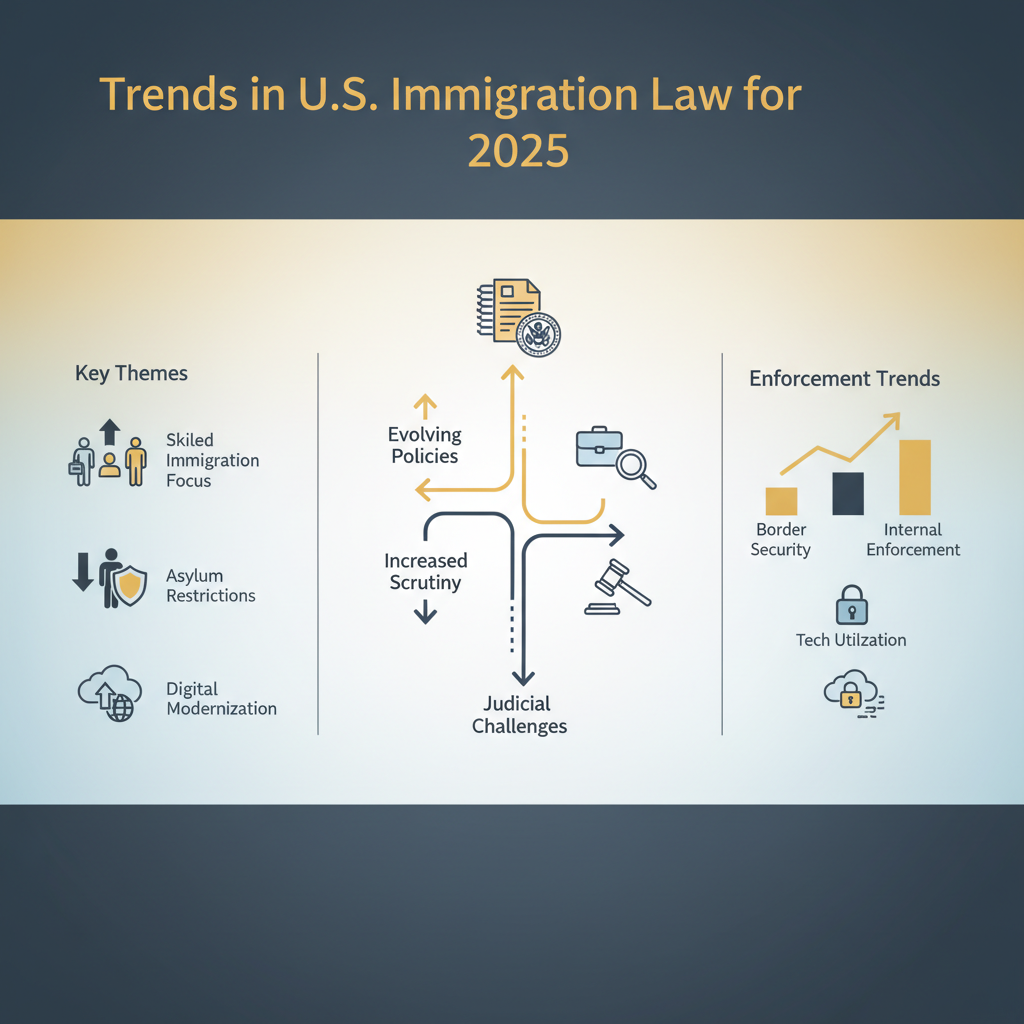
One of the most consequential 2025 immigration law trends is the tightening of asylum access at the U.S. border. Recent policies increasingly require asylum seekers to meet strict conditions before applying, such as seeking protection in transit countries, using designated ports of entry, or scheduling appointments through specific digital systems. Those who do not comply may face presumptions of ineligibility or fast‑track removal.
At the same time, border processing has become faster and more punitive. Expanded use of expedited removal allows officials to deport many individuals without a full hearing before an immigration judge, based primarily on initial screenings. Heightened credible‑fear standards make it harder for asylum seekers to pass that first interview, especially when they lack legal representation, interpreters, or time to gather evidence. These shifts compress timelines and increase the risk that people with serious protection needs are turned away.
Procedural requirements now play a larger role in outcomes. Even individuals with strong persecution claims may be denied if they do not satisfy new filing deadlines, documentary expectations, or technical entry requirements. For asylum seekers, understanding not only substantive law but also evolving procedural rules is essential.
Refugee admissions and humanitarian parole trends
The United States’ traditional refugee resettlement program is also under pressure. Trump’s 2025 actions include efforts to reduce overall refugee admissions and reorient priorities toward groups the administration views as more aligned with security or foreign‑policy objectives. Previous expansion‑oriented policies have been revoked or scaled back, and annual refugee ceilings have been adjusted accordingly.
These changes carry substantial global consequences. Fewer resettlement slots mean that vulnerable populations – including survivors of conflict, political dissidents, LGBTQI+ individuals, and religious minorities – have fewer options for long‑term safety. Regional refugee‑hosting countries face greater strain, and humanitarian organizations must cope with reduced resettlement opportunities.
Humanitarian parole, which allows temporary entry for urgent reasons, is also undergoing closer scrutiny. Programs designed for specific nationalities or crisis situations face reassessment, narrower eligibility, or additional vetting layers. Applicants may encounter higher evidentiary burdens and increased denials, particularly if a program is perceived as inconsistent with the administration’s broader enforcement emphasis.
What asylum seekers and refugees should do in response to 2025 changes
In this environment, asylum seekers and refugees must adopt a proactive, documentation‑driven approach. First, it is critical to seek early legal consultation with a licensed immigration attorney or accredited representative. Complex issues such as one‑year filing deadlines, transit‑country rules, bars to asylum, and alternatives like withholding of removal or Convention Against Torture (CAT) protection require careful analysis.
Second, applicants should meticulously document their claims. This includes detailed personal declarations; corroborating statements from witnesses; medical and psychological evaluations where relevant; and extensive evidence of country conditions, including reports from reputable human‑rights organizations and news outlets. Transit routes and prior protection attempts should be explained clearly, as they are now central to many eligibility determinations.
Third, it is wise to connect with reputable NGOs, legal clinics, and bar associations that track immigration law trends 2025 and related litigation. These organizations often provide updated know‑your‑rights materials, pro bono referrals, and alerts when court decisions alter how a specific rule is applied. Finally, asylum seekers must keep copies of every filing, attend all hearings on time, and promptly update addresses with the court and USCIS. Missing a notice or hearing can have severe consequences, including in‑absentia removal orders that are difficult to reopen.
Immigration Enforcement Trends in 2025: Undocumented Immigrants and Removal
Border enforcement: walls, surveillance, and “operational control”
Trump’s 2025 directives call for achieving “operational control” of the southern border through a mix of physical infrastructure, personnel, and technology. This includes renewed emphasis on wall construction or enhancement, increased Border Patrol staffing, and closer coordination with military and state resources in certain regions. Families and unaccompanied children are often caught in the middle, facing prolonged waits in unsafe conditions or rapid return procedures that may not fully assess their protection needs.
Beyond physical barriers, the government is investing in advanced surveillance systems: drones, sensors, automated license‑plate readers, and expanded biometric identification at ports of entry and in between. These tools enable more rapid detection and processing of migrants but also raise concerns about errors, profiling, and data retention. For people attempting to cross, the likelihood of detection – and swift apprehension – is higher than in the past.
Vulnerable groups, including those with medical needs or limited access to legal counsel, can be disproportionately affected by fast‑paced border operations. Shortened processing windows may not allow sufficient time to identify trafficking victims, children’s best interests, or credible fear claims. Where possible, individuals should seek legal advice before approaching the border and familiarize themselves with current protocols.
Interior enforcement and deportation priorities
Inside the United States, the 2025 strategy moves away from narrow enforcement priorities and toward broad applicability. In practice, this means that almost any undocumented person – and, in some cases, even some with temporary lawful status – could be considered a potential enforcement target. Old removal orders, minor criminal records, or prior immigration violations that once attracted little attention may now trigger active enforcement.
Collaboration between federal agencies and local law enforcement is expanding through agreements and informal cooperation channels. In some jurisdictions, this weakens so‑called “sanctuary” policies, making it easier to transfer individuals from local jails to immigration custody. Arrests, detention rates, and placement in removal proceedings are likely to rise, while the use of prosecutorial discretion (for example, terminating or administratively closing low‑priority cases) may decline.
Data from recent years indicate a gradual decline in the overall unauthorized population, partially attributed to stricter enforcement and deterrence measures. Whether this trend accelerates under 2025 policies will depend on economic conditions, conditions in sending countries, and the success or failure of mass‑deportation efforts.
Practical steps for undocumented immigrants and mixed‑status families
For undocumented individuals and mixed‑status families, preparation is key. One of the most important steps is creating a family emergency plan. This can include designating temporary caregivers for children (often through powers of attorney or similar instruments), identifying who will access bank accounts or leases, and safely storing vital documents such as passports, birth certificates, and immigration records.
At the same time, it is crucial to obtain a thorough legal screening for potential relief: cancellation of removal, asylum or related protections, family‑based options, U visas for crime victims, T visas for trafficking survivors, or protections under the Violence Against Women Act (VAWA). Many people who assume they have “no options” discover, after detailed review, that they may qualify for some form of relief or future eligibility if they take certain steps now.
Knowing your rights during encounters with immigration or police officers is also vital. In many circumstances, individuals have the right to remain silent, to refuse consent to certain searches, and to ask to speak with an attorney. Community organizations often provide workshops and wallet cards outlining these rights. Finally, families must avoid unauthorized “notarios” or unlicensed consultants who promise quick fixes; only licensed attorneys or DOJ‑accredited representatives are authorized to provide legal representation. For reputable help, look for internal referral pages such as [link: immigration lawyer nationwide] or [link: schedule immigration consultation].
Work Visas and H‑1B in 2025: New Regulations and Business Impacts
Latest trends in employment‑based immigration and work visas
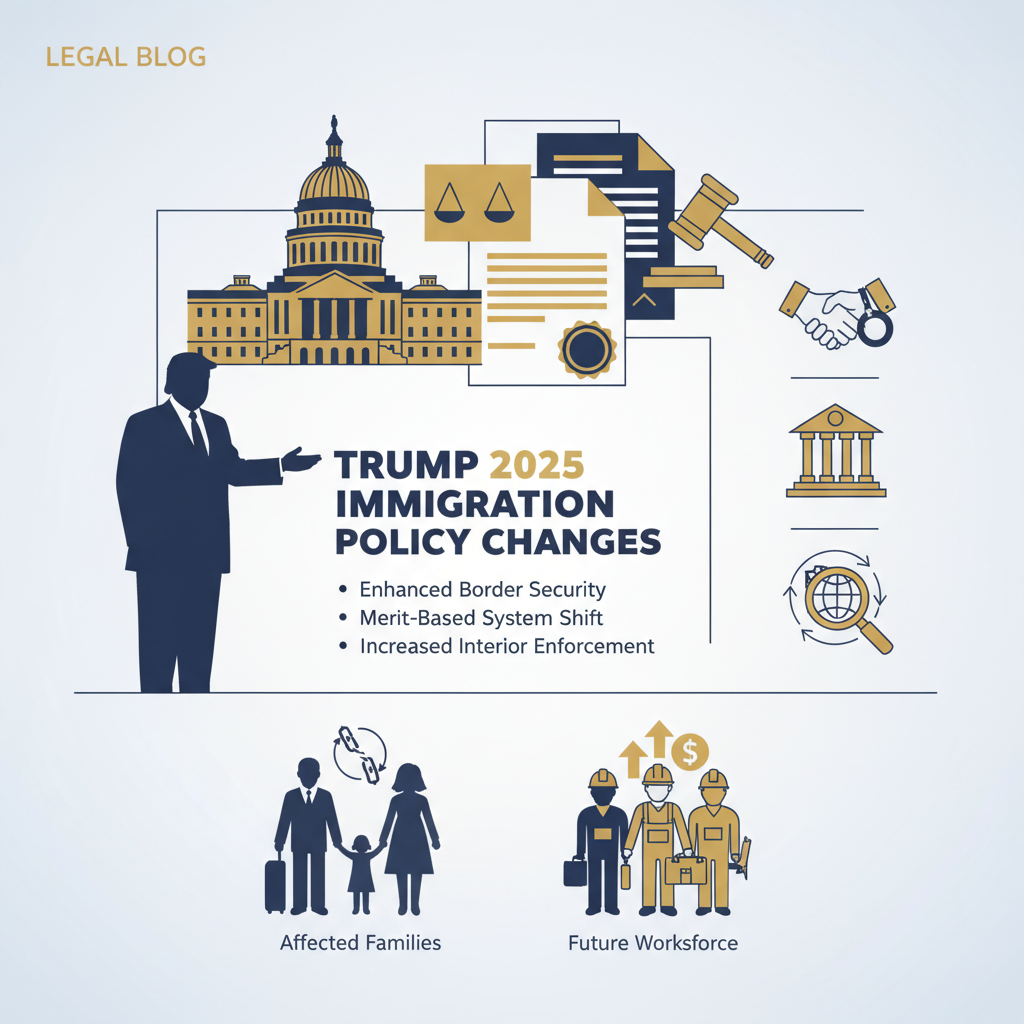
Employment‑based immigration is another focal point of the latest trends in law for 2025. Demand for major work visas – including H‑1B for specialty occupations, H‑2A/H‑2B for seasonal workers, L‑1 for intracompany transferees, O‑1 for individuals of extraordinary ability, and TN for certain Canadian and Mexican professionals – remains strong. However, the regulatory environment is tougher, and approval rates are more closely tied to meticulous documentation and employer compliance.
USCIS has signaled intensified scrutiny of employer sponsorship, particularly regarding wage levels, actual job duties, and the genuine need for a foreign worker. Labor condition applications (LCAs) and compliance with Department of Labor rules face more frequent audits and potential penalties. Site visits, unannounced inspections, and requests for additional records are increasingly common, especially in sectors perceived as high‑risk or heavily reliant on foreign labor.
For employers, policy volatility complicates workforce planning. Companies that previously relied on routine H‑1B renewals and smooth green‑card transitions must now build contingencies for RFEs, delays, and denials. Foreign professionals must be prepared for longer timelines, extra evidence requests, and potential gaps in work authorization if cases are not carefully timed and monitored.
2025 changes impacting H‑1B and high‑skilled workers
H‑1B workers and employers face several noteworthy 2025 developments. Regulatory guidance has tightened interpretations of what qualifies as a “specialty occupation,” requiring more detailed evidence that the role truly requires at least a bachelor’s degree in a specific field. The employer–employee relationship is under closer examination, particularly in third‑party placement or consulting arrangements, where USCIS may question whether the petitioner genuinely controls the employee’s work.
In addition, heightened background checks and expanded biometric requirements can slow processing. Security‑related vetting for nationals of certain countries may add further delays. Requests for Evidence frequently demand detailed organizational charts, project descriptions, contracts, and proof of the company’s financial health. Denials or shortened approval periods are more common in borderline cases.
These pressures affect workers already in the United States as well as those abroad. Extensions, amendments, and transfers all carry increased risk and should be planned well in advance. High‑skilled workers may wish to pursue parallel strategies, such as employment‑based green card sponsorship, to reduce long‑term reliance on temporary visas.
Actionable tips for employers and foreign workers
To navigate these employment‑based immigration law trends in 2025, employers and foreign nationals should focus on precision and planning. Employers should:
- File as early as possible and maintain comprehensive job descriptions detailing specialized duties and required qualifications.
- Conduct internal audits of I‑9 files, public access files, and past petitions to identify and correct compliance gaps.
- Prepare for potential site visits by training HR and managers on what to expect and how to respond.
- Develop contingency plans, including remote roles abroad, alternative visa categories, or staggered hiring timelines.
Foreign workers should:
- Keep copies of all petitions, approval notices, pay stubs, and performance reviews to support future filings.
- Track expiration dates carefully and consult counsel well before travel or job changes.
- Explore long‑term options such as PERM‑based green cards or self‑petition categories where available.
Partnering with experienced immigration counsel – ideally through a service that offers federal practice authority and operates 100% online – can significantly reduce risk. Firms like Imigrar, which include a licensed attorney from $799 and provide 24/7 support, can coordinate multi‑year strategies that align legal options with business needs. For more on this, see [link: employment‑based immigration services].
Family‑Based Immigration in 2025: Reunification Under Stricter Rules

Trends in petitions, processing times, and visa bulletin movement
Family‑based immigration remains the backbone of the U.S. system, but in 2025 it is increasingly constrained by backlogs, security checks, and evolving consular practices. I‑130 petitions for spouses, children, parents, and siblings continue to be filed at high volumes, yet many applicants experience extended waits, especially in preference categories subject to annual caps.
The Department of State’s Visa Bulletin reflects these pressures, with some family‑sponsored categories moving slowly or retrogressing. Policy shifts, such as reallocation of visa numbers or changes in consular staffing and priorities, can further lengthen wait times. Security‑related administrative processing at consulates adds unpredictability, particularly for applicants from certain regions or with complex backgrounds.
USCIS and consular officers are applying more stringent documentation requirements. Evidence of bona fide marital relationships, accurate civil documents, and financial support is scrutinized closely. Public‑charge assessments and affidavits of support receive particular attention, with officers evaluating not just income levels but also patterns of employment, tax compliance, and the credibility of joint sponsors.
New challenges for mixed‑status and low‑income families
Mixed‑status families and those with limited financial resources face special challenges under 2025 rules. Stricter enforcement means that petitioners or beneficiaries with prior unlawful entries, overstays, or minor criminal issues may face higher denial or removal risks. These factors can affect eligibility for adjustment of status, trigger three‑ and ten‑year unlawful‑presence bars, or require complex waivers.
Low‑income families may struggle to meet updated income thresholds or documentation standards for financial sponsorship. While joint sponsors are still an option, officers may probe more deeply into whether sponsors genuinely intend and are able to support the intending immigrant. Families must balance the desire for reunification with the risk that an unsuccessful filing could expose a loved one to enforcement.
Additional complications arise when family members are already in removal proceedings or living abroad in unstable or high‑risk environments. Coordinating between immigration court, USCIS, and consulates demands careful strategy and often the involvement of counsel comfortable with federal practice across multiple jurisdictions.
Strategies for families pursuing immigration in 2025
Families considering immigration filings in 2025 should begin with a careful, holistic assessment of their situation. This includes mapping out all entries and exits from the United States, any immigration court history, prior applications, and any contact with law enforcement. Identifying possible inadmissibility issues early allows time to prepare waiver strategies or, in some cases, to delay or sequence filings more safely.
Evidence remains central. Couples should gather extensive documentation of their relationship – joint leases, bank accounts, insurance policies, photos over time, travel records, and communications. Sponsors should collect tax returns, pay stubs, employment verification letters, and proof of assets where needed. Families should track the Visa Bulletin regularly and time filings to maximize opportunities when priority dates advance.
Safe travel planning is also essential. Consular interviews abroad can trigger re‑entry bars if inadmissibility issues are not properly addressed in advance. Before any departure, consult with a qualified attorney to understand potential risks and to develop backup strategies. To learn more about family options and timelines, see [link: family‑based immigration guide].
Green Cards and Permanent Residence: 2025 Policy Updates You Need to Know
Most important 2025 updates affecting green card seekers
In 2025, green card applicants – both inside and outside the United States – encounter an environment shaped by enhanced vetting, expanded biometrics, and closer scrutiny of immigration histories. Whether pursuing adjustment of status through USCIS or consular processing abroad, applicants must expect detailed questioning about prior entries, status violations, work without authorization, and any misrepresentations in earlier applications or interactions with border officials.
DHS initiatives to broaden biometric collection now reach more categories of applicants and may include new data types, such as DNA, in certain family‑based or fraud‑investigation contexts. Continuous vetting, in which background checks and information‑sharing continue after an initial approval, is becoming more common for some benefit holders. This means that post‑approval conduct – including arrests, extended trips abroad, or certain online activities – can affect future immigration filings.
Adjustments based on both employment and family ties are subject to these trends. Applicants with complicated histories should anticipate RFEs or interviews focused on discrepancies, unexplained absences, or past misstatements. Honest, consistent disclosures supported by documentation are essential to avoid allegations of fraud or willful misrepresentation, which can have lifetime consequences.
Employment‑ vs. family‑based permanent residence in 2025
Differences between employment‑based and family‑based permanent residence remain significant in 2025. Employment‑based categories may offer faster timelines for some nationalities, especially in higher preference categories or where visa numbers are underused. However, they typically require employer sponsorship, successful labor certification (PERM) processes, and long‑term job stability.
Family‑based categories, while often more straightforward in terms of eligibility, face longer queues for certain countries and relationships. For many, however, a combination of both routes may be viable: for example, a foreign professional currently in H‑1B status might be sponsored by both an employer and a U.S.‑citizen spouse, creating alternative pathways in case one route stalls.
Increased enforcement and uncertainty around temporary visas are pushing many individuals and families to prioritize permanent residence where possible. Maintaining lawful status, clean records, and strong documentation becomes even more important as scrutiny intensifies. Following the latest trends in law, especially regarding visa bulletin movements and court decisions affecting visa number allocation, can help applicants time their filings strategically.
Action steps for current and prospective green card applicants
Anyone pursuing a green card in 2025 should start by assembling a complete, chronological immigration history. This includes all I‑94 records, prior visas, approval notices, entry/exit stamps, and copies of every application ever filed. Gathering this information upfront helps identify potential red flags and ensures consistent answers across all forms and interviews.
Applicants should also be screened for grounds of inadmissibility – such as unlawful presence, certain criminal convictions, prior removals, or misrepresentation – and discuss possible waivers with a licensed attorney. Some issues that once seemed minor can now complicate or derail a case if not carefully addressed. In parallel, monitoring visa bulletin changes and USCIS processing trends enables better planning around job changes, travel, and family decisions.
Where feasible, consider “dual‑track” strategies: pursuing both employment‑ and family‑based options, or exploring humanitarian categories where applicable. Contingency planning is especially important given the fast‑evolving 2025 environment. Imigrar’s 100% online model with attorney included from $799 and 24/7 support allows applicants nationwide to get tailored guidance on the best permanent‑residence strategy for their situation. Learn more at [link: green card services].
Surveillance, Biometrics, and Civil Liberties: A New Era of Immigration Control

Expansion of biometric data collection and continuous vetting
A defining feature of 2025 immigration law trends is the expansion of biometric data collection and integrated surveillance. DHS has proposed and begun implementing rules that extend biometrics requirements to nearly all immigration benefit applicants, as well as certain U.S. citizens and permanent residents associated with those applications (for example, petitioning relatives). Traditional fingerprints and photographs are increasingly supplemented by voice prints, iris scans, and, in certain scenarios, DNA tests.
Age‑based exemptions are narrowing or disappearing, which means children and elderly applicants may also be required to provide biometrics. The concept of continuous vetting envisions ongoing background checks from the time of an initial application until naturalization – and sometimes even after – drawing on multiple government databases and, potentially, third‑party information sources.
While proponents argue that these measures enhance national security and fraud detection, they also significantly expand the government’s data collection footprint, raising important questions about oversight, data retention, and cross‑agency sharing.
Implications for privacy, due process, and moral character findings
Civil liberties organizations have expressed concern that broader biometrics and surveillance may erode privacy and due process protections. Centralized databases containing sensitive biometric and biographic data can be vulnerable to misuse, errors, or breaches. Individuals may find it difficult to correct inaccuracies or understand how their data is used in decision‑making.
Procedural changes surrounding biometrics appointments can also impact access to benefits. For example, shifting from a relatively flexible “good cause” standard to a stricter “extraordinary circumstances” threshold for rescheduling biometrics may cause otherwise eligible applicants to miss critical deadlines, resulting in denials or delays. Meanwhile, proposals to remove the longstanding presumption of good moral character for applicants under 14 could affect how certain juvenile records or conduct are evaluated.
For those monitoring the latest trends in law, these developments highlight a broader shift: immigration is no longer just about status and paperwork; it is increasingly intertwined with large‑scale data governance, algorithmic decision‑making, and civil‑rights considerations.
How applicants can prepare for an evolving surveillance landscape
Applicants cannot opt out of most biometrics requirements, but they can prepare strategically. First, understand in advance what types of data will be collected for your application type. Reading official notices carefully and asking questions of your attorney can demystify the process and help you anticipate potential issues.
Second, attend all biometrics appointments on time and keep copies of every notice and receipt. If you foresee a conflict (illness, travel, caregiving responsibilities), speak with counsel immediately about options and documentation to support any rescheduling request. Given stricter standards, last‑minute changes may be difficult.
Third, consult legal counsel if you have concerns about prior arrests, expunged records, or sensitive personal information that may surface through background checks or DNA requests. An attorney can help you assess disclosure obligations, prepare explanatory statements, and gather supporting evidence. Above all, ensure that information provided across different applications – immigration, employment, and otherwise – is accurate and consistent. Inconsistencies, even unintentional ones, can trigger fraud investigations in this data‑rich environment.
Staying Informed: How to Track the Latest Trends in U.S. Immigration Law
Best sources for reliable immigration law news and updates
Given the speed and scope of 2025 changes, having a reliable information strategy is essential. Official government sources should be the foundation: USCIS, DHS, EOIR (the immigration courts), and the Department of State regularly publish policy alerts, form changes, and processing updates. These notices may be technical, but they convey what is formally in effect.
Complementing official sources, reputable nonprofits and research organizations – such as major immigration advocacy groups, legal‑services networks, and think tanks – provide analysis of federal immigration law developments, including charts, infographics, and plain‑language summaries. National and local bar associations, including specialized immigration‑law sections, often publish practice advisories and host webinars that distill complex changes for both lawyers and the public.
Finally, many immigration law firms and legal‑tech providers maintain blogs and newsletters that track US immigration reform updates, visa bulletin forecasts, and enforcement trends. When tied to active legal practice, these resources can be particularly practical and timely. You can subscribe to alerts through providers like Imigrar at [link: immigration law updates newsletter].
How to evaluate immigration information online
Not all immigration information online is reliable. Social media threads, unmoderated forums, and outdated blog posts can spread myths – for example, that “everyone” is getting approved or denied, or that a single new rule eliminates long‑standing rights. To evaluate credibility, consider:
- Authorship: Is the content written or reviewed by a licensed attorney or recognized legal organization?
- Citations: Does it reference statutes, regulations, policy memos, or court cases that you can verify?
- Timeliness: When was it published or last updated, and does it mention subsequent litigation or policy reversals?
Whenever you encounter a major claim – for example, that a certain visa category has been “eliminated” or that mass relief is available through a little‑known program – cross‑check it against multiple trustworthy sources or consult a professional before acting. The cost of relying on incorrect information can be high, especially if it leads to missed deadlines or unnecessary contact with enforcement agencies.
Building a long‑term information strategy
Because immigration journeys often span years, staying informed is not a one‑time task but an ongoing commitment. Consider setting a weekly or monthly routine to:
- Review key news sources or email alerts relevant to your immigration category (asylum, family‑based, employment‑based, etc.).
- Check USCIS and Department of State updates for any changes affecting forms, filing fees, or processing locations.
- Monitor policy analysis from trusted organizations that explain how new rules may affect your case.
Maintain a personal immigration file – physical or digital – with copies of all applications, notices, receipts, and notes from attorney consultations. This not only helps your lawyer advise you accurately but also supports you if records are lost or questions arise in future filings.
Community support networks – including local immigrant organizations, faith communities, and legal clinics – can also help you react quickly to sudden policy shifts or enforcement actions. When combined with professional guidance from services like Imigrar’s 100% online process and 24/7 support, these networks provide a more resilient foundation for navigating constant change. For a curated collection of trusted resources, see [link: immigration resources hub].
Conclusion: Navigating 2025 Immigration Law Trends With Strategy and Support
Key takeaways from the latest trends in U.S. immigration law
The 2025 U.S. immigration landscape is defined by stricter enforcement, narrower humanitarian protections, and expanding surveillance and biometrics. Trump’s renewed immigration agenda is driving significant shifts in asylum and refugee policy, border and interior enforcement, and the vetting of visa and green‑card applicants. Many of these measures are under active legal challenge, creating a moving target for immigrants, families, and employers.
Family‑based, employment‑based, and permanent‑residence pathways now face more rigorous documentation demands, closer scrutiny of past conduct, and, in many cases, longer and less predictable timelines. Anyone navigating these systems must understand not only black‑letter law but also evolving policies, litigation outcomes, and practical adjudication trends. The latest trends in law show immigration at the center of national debates over security, economics, and human rights.
Actionable next steps for immigrants, families, and employers
In this environment, informed and proactive decision‑making is essential. Rather than reacting to headlines or rumors, individuals and organizations should:
- Seek individualized legal advice from licensed immigration attorneys who track 2025 policy and litigation developments.
- Develop a comprehensive strategy that maps all available options – temporary visas, permanent residence, humanitarian relief – and plans for contingencies such as delays or denials.
- Invest in thorough documentation and early preparation, from personal declarations to employer compliance systems and family financial records.
- Stay engaged with trustworthy information sources and community networks to respond quickly to new rules, opportunities, or risks.
Imigrar is designed to help you do exactly that – combining attorney representation from $799, a 100% online process, federal practice authority, and 24/7 support so you can navigate the U.S. immigration system with clarity and confidence, anywhere in the country. To explore personalized options based on your situation, start with [link: get started with Imigrar]. As U.S. immigration continues to evolve, staying vigilant, informed, and well‑advised is the most effective way to protect your future.
<!-- Brand Footer -->
<footer class="brand-footer">
  <p>Published by <strong class="author-company">Imigrar</strong></p>
  <img src="https://qqrejcxtitkvwjuoiabl.supabase.co/storage/v1/object/public/images/brand-logos/10869749-5bca-401c-9924-0e4fe879f407/1764956719072-logo.png" alt="Imigrar Logo" style="max-height: 40px; margin-top: 1rem; opacity: 0.7;" />
</footer>
Free Legal Consultation
Discuss your case with our experienced attorneys. We're available 24/7.
Vasquez Law Firm
Legal Team
Our experienced attorneys at Vasquez Law Firm have been serving clients in North Carolina and Florida for over 20 years. We specialize in immigration, personal injury, criminal defense, workers compensation, and family law.