Latest Trends in Law: 2025 U.S. Immigration Law Changes, Enforcement Shifts, and What Immigrants Must Know
Introduction: Why 2025 Is a Turning Point for U.S. Immigration Law The U.S.
Vasquez Law Firm
Published on December 6, 2025

<!-- Article Header -->
<div class="article-header">
  <!-- Metadata Bar -->
  <div class="metadata-bar" style="display: flex; align-items: center; gap: 1rem; margin-bottom: 1rem; flex-wrap: wrap;">
    <span style="background: #1a3a52; color: white; padding: 0.25rem 0.75rem; border-radius: 0.25rem; font-size: 0.875rem; font-weight: 600;">Educational</span>
    <span style="color: #cbd5e1; font-size: 0.875rem;">23 min read</span>
    <span style="color: #cbd5e1; font-size: 0.875rem;">0 views</span>
  </div>

  <h1 class="article-title">Latest Trends in Law: 2025 U.S. Immigration Changes Every Immigrant and Lawyer Must Know</h1>

  <div class="article-meta">
    <span class="author-company">Imigrar</span>
    <span>•</span>
    <time>December 6, 2025</time>
  </div>
</div>

<!-- Featured Image -->

<div class="featured-image" style="margin: 2rem 0;">
  <img src="https://qqrejcxtitkvwjuoiabl.supabase.co/storage/v1/object/public/images/blog-c230496e-c580-4deb-9c2a-2200e4866267-0-1764950587910.png" alt="Latest Trends in Law: 2025 U.S. Immigration Changes Every Immigrant and Lawyer Must Know" style="width: 100%; height: auto; border-radius: 0.5rem; box-shadow: 0 4px 6px rgba(0, 0, 0, 0.1);" />
</div>


<!-- Blog Content -->
<article class="blog-content">
  <h2>Introduction: Why 2025 Is a Turning Point for U.S. Immigration Law</h2>
The U.S. immigration system in 2025 is defined by volatility, heightened enforcement, and rapid policy shifts. What was once a relatively predictable legal framework has become a landscape of sweeping changes, where executive actions, new legislation, and aggressive enforcement strategies are reshaping how immigrants live, work, and seek protection in the United States. For individuals and families navigating this environment, understanding the latest trends in law is no longer optional—it’s essential for safety, compliance, and long-term planning.
The fast-changing 2025 immigration landscape
2025 has brought sweeping shifts in U.S. immigration policy, enforcement, and court activity. The current administration has moved decisively to expand immigration enforcement, broaden who is subject to removal, and restrict access to humanitarian protections like asylum and parole. These changes are not just theoretical; they are already affecting case processing, wait times, approval rates, and the daily lives of millions of immigrants and their families.
This post focuses on the latest trends in law with an emphasis on U.S. immigration law in 2025. We’ll distinguish between immigration policy (broad government goals and priorities) and immigration law (statutes, regulations, and court decisions), and explain how executive orders, new statutes, and agency rules are changing the legal landscape. Key players include the Department of Homeland Security (DHS), U.S. Citizenship and Immigration Services (USCIS), Immigration and Customs Enforcement (ICE), and the federal courts.
The changes in 2025 impact a wide range of people: families seeking reunification, workers on temporary visas, students, asylum seekers, refugees, Temporary Protected Status (TPS) holders, and employers who rely on immigrant labor. Whether you’re adjusting status, applying for a visa, seeking asylum, or simply trying to maintain lawful presence, the current environment demands careful attention to detail and proactive legal planning.
This guide is an informational overview, not legal advice. Immigration law is highly fact-specific and jurisdiction-dependent. If you have a pending case or are considering an application, it’s critical to consult a licensed immigration attorney who can assess your individual circumstances and provide tailored guidance.
How this guide is structured and what readers will learn
This article is designed to give you a clear, authoritative overview of the most important developments in U.S. . We’ll start with the big picture: the key legal and policy trends reshaping immigration, including enforcement, asylum, deportation, and benefits. You’ll learn how these trends translate into real-world outcomes for immigrants and their families.
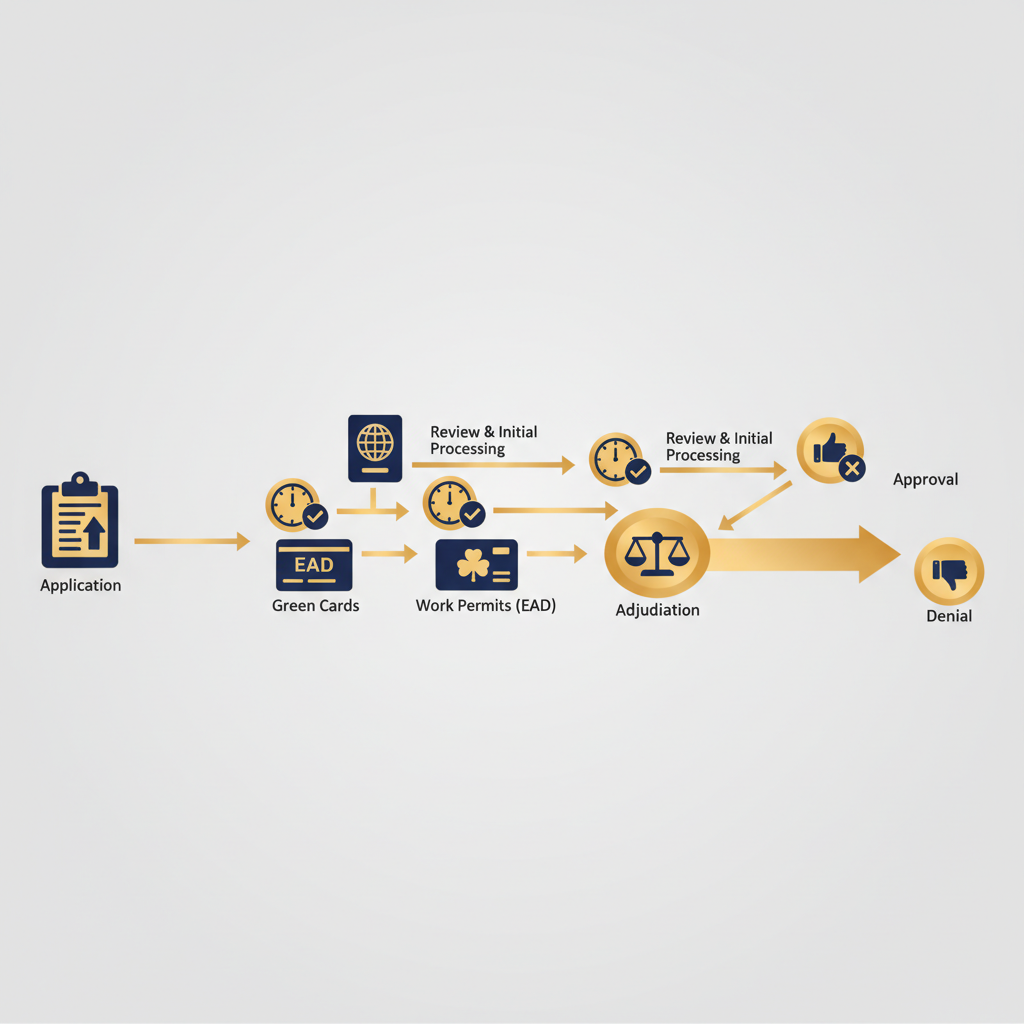
We’ll then examine major federal actions, including new executive orders and significant legislation like the Laken-Riley Act, and explain how they are rewriting the rules for detention, removal, and humanitarian relief. You’ll also get a breakdown of recent updates to visa, green card, and work permit (EAD) processing, including higher fees, stricter rules, and longer timelines.
A dedicated section covers recent court rulings and ongoing litigation, showing how judges are responding to new policies and where legal uncertainty remains. We’ll also discuss compliance and risk management strategies to help immigrants stay protected in this challenging environment.
Finally, we’ll address public benefits, taxes, and public charge concerns, and conclude with a practical FAQ and actionable next steps. By the end, you’ll have a solid understanding of the latest trends in law and be better equipped to navigate the current immigration system with confidence and clarity.
Big Picture: Latest Trends in U.S. Immigration Law in 2025
2025 has cemented a clear direction in U.S. immigration law: stricter policies, expanded enforcement, and a narrowing of humanitarian protections. The administration has prioritized border security, interior enforcement, and the removal of noncitizens with final orders or unlawful presence, while simultaneously tightening access to asylum, parole, and other forms of relief. These shifts are not isolated incidents; they represent a coordinated strategy that is fundamentally altering how immigration law is applied across the country.
Key 2025 legal and policy trends reshaping immigration
The most defining trend in 2025 is the shift toward much stricter immigration policies and expanded enforcement. Executive orders have directed DHS to “faithfully execute” immigration laws against all inadmissible and removable noncitizens, effectively revoking prior civil enforcement priorities that had focused on serious criminals and recent arrivals. As a result, almost any undocumented person, including those with longstanding ties to the U.S., can now be targeted for removal.
Border security, detention, and deportation have become central policy themes. The administration has expanded expedited removal, reduced prosecutorial discretion, and increased cooperation between ICE, CBP, local law enforcement, and in some cases the military and National Guard. This has led to more frequent raids, detentions, and deportations, both at the border and in interior communities.
At the same time, there is growing tension between enforcement goals, labor market needs, and humanitarian protection. While the administration is cracking down on unauthorized entry and expanding detention, many industries continue to rely heavily on immigrant labor, creating pressure for temporary work programs and parole initiatives. Humanitarian applicants—refugees, asylees, TPS holders, and victims of crime or trafficking—are facing more barriers to entry and fewer pathways to stability.
Demographic shifts in migration patterns are also shaping policy responses. Increased arrivals from Latin America, Asia, and Africa have prompted new regional strategies, including expanded use of humanitarian parole for certain nationalities and more aggressive deterrence measures at the southern border. The result is a system that is more complex, more volatile, and more difficult to navigate without experienced legal representation.
From policy to practice: how trends translate into real-world outcomes
These high-level trends have direct, tangible effects on individuals and families. Executive actions and agency guidance are reshaping how cases are processed, how long they take, and how likely they are to be approved. For example, broader enforcement priorities mean that even minor violations of status or past criminal issues can now trigger removal proceedings, increasing the risk for many immigrants who previously felt relatively secure.
Uncertainty and risk have grown significantly, especially for undocumented people and some lawful permanent residents. Green card holders are facing more scrutiny, particularly if they have any criminal history or have been outside the U.S. for extended periods. Mixed-status families are under particular pressure, as the deportation of one member can have devastating consequences for the entire household.
In this environment, compliance, documentation, and legal representation are more important than ever. Immigrants must maintain valid status where possible, renew documents early, keep detailed records of presence and employment, and attend all hearings and appointments. Missing a deadline or failing to appear can lead to an in-absentia removal order, which is extremely difficult to overturn.
For law firms and practitioners, these changes mean adapting practice models and strategies. Many immigration-focused firms are now emphasizing compliance counseling, litigation, and community education, helping clients navigate the latest trends in law while preparing for worst-case scenarios. This evolution in legal practice reflects the broader reality: in 2025, immigration law is not just about applications and petitions—it’s about risk management and long-term planning.
Executive Orders and Major Federal Actions: How the Current Administration Is Rewriting the Rules
The current administration has used executive authority and major legislation to fundamentally reshape U.S. immigration enforcement and policy in 2025. These federal actions are not merely symbolic; they are changing who is targeted for removal, how quickly deportations can occur, and what options remain available for asylum seekers, parolees, and other vulnerable populations. Understanding these moves is critical for anyone affected by the latest trends in law.
New enforcement-focused executive orders in 2025
A cornerstone of the administration’s 2025 immigration strategy is a new enforcement-focused executive order directing DHS to “faithfully execute” immigration laws against all inadmissible and removable noncitizens. This order effectively revokes prior civil enforcement priorities that had limited ICE’s focus to serious criminals and recent arrivals. Under the new guidance, DHS is instructed to pursue removal in a much broader range of cases, including individuals with unlawful presence and those with final orders of removal, regardless of their ties to the U.S.
The order also expands the use of expedited removal, allowing for faster deportations with limited court review. This means that certain noncitizens, including those apprehended near the border or with prior orders, can be removed without a full hearing before an immigration judge. Prosecutorial discretion—the ability of ICE to decide not to pursue removal in certain cases—has been significantly reduced, leaving fewer avenues for relief.
Another major development is the expanded use of military, National Guard, and local law enforcement in immigration enforcement at and near the border. This increased coordination has led to more frequent checkpoints, traffic stops, and raids, raising concerns about racial and language-based profiling in some jurisdictions. For immigrants, this means a higher risk of encounter with enforcement authorities, even in routine situations like driving or attending public events.
Legislative changes: The Laken-Riley Act and “One Big Beautiful Bill”
Alongside executive orders, Congress has passed significant legislation that is reshaping . The Laken-Riley Act, for example, expands mandatory detention for many noncitizens, including some who entered without inspection or have certain criminal histories. The law limits bond eligibility and reduces immigration judges’ discretion in custody decisions, making it harder for detained individuals to secure release while their cases proceed.
The Act also broadens who can be detained and subjected to expedited removal, further narrowing the window for relief. For practitioners, this means that custody battles and bond hearings have become even more critical, and that many clients may face longer detention times and harsher conditions.
Separately, the administration’s major immigration bill—often referred to as the “One Big Beautiful Bill”—includes several anti-immigrant measures, such as increased taxes on immigrants and reduced eligibility for key tax credits and public benefits for those without Social Security numbers. These provisions interact with existing Immigration and Nationality Act (INA) provisions, affecting deportation, detention, and relief options for a wide range of noncitizens.
How these federal moves answer: “How has the administration changed ?”
Together, these executive orders, statutes, and agency rules form a coordinated strategy of restriction and enforcement. The administration has changed by expanding enforcement priorities, accelerating removals, and narrowing relief pathways. Asylum seekers, recent arrivals, people with past removal orders, and those with minor criminal issues are feeling the impact first and most severely.
These changes also create significant legal uncertainty. Many of the administration’s actions are facing ongoing court challenges, and federal judges have issued injunctions, stays, and partial rulings that block or limit certain provisions. For example, courts have upheld some expansions of enforcement but have also limited certain data-sharing practices, such as the use of IRS information by ICE. This patchwork of rulings means that the practical impact of these policies can vary significantly by jurisdiction and over time.
For immigrants and their families, the takeaway is clear: the current environment demands up-to-date, localized legal advice. Relying on outdated information or general internet advice can lead to serious consequences. Consulting a qualified immigration attorney is essential to understand how these federal moves affect your specific situation and what options remain available.
Enforcement, Deportation, and Asylum: New Trends Immigrants Must Watch

2025 has brought a dramatic escalation in immigration enforcement, deportation, and restrictions on asylum and humanitarian parole. These changes are not limited to the border; they are being felt in communities across the country, affecting both undocumented individuals and some lawful residents. For anyone navigating the U.S. immigration system, understanding these new trends is critical to staying safe and compliant.
Expanded immigration enforcement and interior policing
Interior immigration enforcement has intensified significantly in 2025. ICE and CBP are conducting more frequent raids and detentions, not only at the border but also in homes, workplaces, protests, and even during routine traffic stops. These operations are increasingly coordinated with local police, USCIS, and in some cases the military and National Guard, creating a broader net for enforcement.
Expanded expedited removal is another major development. Under this authority, certain noncitizens can be removed without a full hearing before an immigration judge, significantly limiting their ability to challenge the decision. This is particularly relevant for individuals apprehended near the border or those with prior removal orders.
New immigration registration rules are also emerging, requiring some immigrants to register with DHS and raising concerns about data sharing and surveillance. For undocumented people, these rules increase the risk of detection and deportation, especially if they interact with government agencies or provide personal information without understanding their rights.
New trends in deportation and detention policy
Deportation and detention policies have become more aggressive and restrictive in 2025. Broader enforcement priorities mean that almost any undocumented person can now be considered a priority for removal, regardless of their length of residence, family ties, or contributions to the community. This has created a climate of fear and uncertainty, particularly in mixed-status families.
The Laken-Riley Act has expanded mandatory detention, making it harder for many noncitizens to secure bond or release while their cases proceed. Detention times are longer, conditions are often harsher, and access to humanitarian relief in detention is more limited. For green card holders, this means that even minor criminal issues or extended absences from the U.S. can now trigger detention and removal proceedings.
Employers are also feeling the impact, with increased worksite enforcement and higher compliance expectations. Businesses that rely on immigrant labor must ensure that their hiring practices and documentation are fully compliant with current rules, as failure to do so can expose them to fines, audits, and even criminal liability.
Asylum, humanitarian parole, and refugee pathways under pressure
Asylum and humanitarian parole pathways are under significant pressure in 2025. Restrictions on asylum eligibility, including transit and safe-third-country concepts, have made it harder for many to qualify for protection. Screening rules have been tightened, and credible fear interviews are more rigorous, increasing the likelihood of denial.
The CBP One app, which had been used to schedule asylum appointments at ports of entry, has been effectively ended, closing a key pathway for many asylum seekers. At the same time, the administration has moved to limit humanitarian parole programs, including the CHNV (Cubans, Haitians, Nicaraguans, Venezuelans) program and some family-based parole initiatives.
So, what are the new trends in deportation and asylum policies? In short: more barriers to entry, narrower eligibility, more rapid removals, and reduced access to parole. For those seeking protection, this means that legal representation is more important than ever, and that alternative forms of relief—such as withholding of removal, Convention Against Torture (CAT), VAWA, U visas, T visas, and Special Immigrant Juvenile Status (SIJS)—must be carefully evaluated.
Visas, Green Cards, and Work Permits: 2025 Processing and Policy Updates

For those pursuing family-based or employment-based immigration, 2025 has brought higher costs, more scrutiny, and longer processing times. Visa, green card, and work permit (EAD) policies and procedures are evolving rapidly, creating new challenges for applicants and employers alike. Staying informed about these changes is essential for successful outcomes and long-term planning.
Family-based and employment-based immigration trends
Family-based immigration continues to face significant hurdles in 2025. USCIS has increased scrutiny of I-130 petitions, leading to more Requests for Evidence (RFEs) and denials, particularly in cases involving complex family relationships or prior immigration violations. Sponsors are expected to provide more extensive documentation, and public-charge concerns remain a factor in many cases.
Visa bulletin wait times have lengthened for certain family and employment categories, especially for applicants from countries with high demand, such as India, Mexico, and the Philippines. This means that even approved petitions can result in years of waiting before a visa number becomes available.
Employment-based immigration is also affected by tighter rules and higher compliance expectations. Employers must ensure that their I-140 and I-485 filings are fully supported by evidence, and that they maintain accurate records for audits and enforcement actions. The risk of worksite raids and penalties has increased, making it critical for businesses to partner with experienced immigration counsel.
Recent updates to visa and green card processing
Visa and green card processing in 2025 is characterized by higher filing fees, stricter rules, and longer processing times. USCIS has implemented new fee structures that increase the cost of many applications, including naturalization, adjustment of status, and employment-based petitions. These higher fees are intended to fund agency operations but place additional financial burdens on applicants.
Security checks and background vetting have become more extensive, leading to more delays and administrative processing. Applicants should expect longer wait times and be prepared to provide additional documentation if requested. Temporary suspensions or halts in certain immigration benefits—such as travel bans or program cancellations—can also affect pending and approved cases, creating uncertainty for many families and workers.
So, what are the recent updates to visa and green card processing in 2025? In short: higher costs, more scrutiny, and slower timelines, with a greater risk of denial if applications are not carefully prepared and supported by strong evidence.
New work permit (EAD) and parole rules in 2025
Work permit (EAD) and parole rules have undergone significant changes in 2025. Some parole-based programs that required Form I-134A have been stopped or severely restricted, affecting EAD eligibility for CHNV parolees, Ukrainian parolees, and related categories. This has left many individuals without a clear path to work authorization, even if they are otherwise lawfully present.
DACA remains in a state of uncertainty: renewals are still allowed, but first-time applications are blocked by court orders. This means that many Dreamers can maintain their work permits for now, but new applicants have no access to DACA or its associated EADs. For those whose DACA expires, the risk of losing work authorization and falling out of status is very real.
More broadly, higher fees, new evidentiary demands, and processing backlogs are affecting EAD renewals and first-time filings across many categories. Applicants should file renewals well in advance of expiration and be prepared for delays. So, are there new work permit or EAD rules in 2025? Yes—tighter eligibility, program cancellations tied to parole and humanitarian programs, and increased processing challenges.
Court Battles and Legal Developments: How Judges Are Responding
The rapid pace of policy change in 2025 has triggered a wave of litigation, with courts playing a crucial role in shaping the practical impact of new immigration rules. Federal judges are being asked to balance enforcement authority against constitutional rights, due process, and humanitarian concerns. For immigrants and practitioners, understanding these court battles is essential to navigating the current system.
Key 2025 court rulings on immigration enforcement and rights
Several major court decisions in 2025 have allowed expanded immigration stops and raids, including in jurisdictions where race- and language-based stops have been challenged. These rulings have given enforcement agencies broad discretion to conduct checkpoints and traffic stops, increasing the risk of encounter for many immigrants, even in routine situations.
At the same time, courts have issued important decisions limiting some aspects of executive overreach. For example, federal judges have upheld or limited executive actions on parole, border restrictions, and registration, creating a patchwork of rules that vary by region. In some cases, courts have blocked or stayed parts of new policies, preserving certain protections for asylum seekers and other vulnerable groups.
One significant area of judicial oversight has been information sharing. Courts have ordered limits on certain data-sharing practices, such as the use of IRS information by ICE, recognizing the chilling effect such practices can have on tax compliance and access to public benefits. These rulings show that while courts are allowing many enforcement expansions, they are also preserving some checks on executive power.
Ongoing litigation and areas of legal uncertainty
Many of the administration’s immigration policies are facing ongoing challenges from advocacy groups, states, and affected individuals. These lawsuits target expanded enforcement, mandatory detention, asylum restrictions, and parole program cancellations, creating significant legal uncertainty. Injunctions, stays, and partial rulings mean that the practical impact of these policies can change rapidly and vary by jurisdiction.
DACA and similar programs remain in a precarious legal position, with active litigation in multiple courts. While renewals are currently allowed, the long-term future of DACA is uncertain, and any change in court rulings could have immediate consequences for hundreds of thousands of Dreamers.
For immigrants and their families, this means that relying on contested policies or outdated information can be risky. It is essential to check up-to-date guidance from trusted legal sources and to consult with a qualified immigration attorney before making decisions based on current rules. In a landscape defined by frequent litigation and rapid change, staying informed and proactive is the best way to protect your rights and your future.
Compliance and Risk Management: How Immigrants Can Stay Protected in 2025

In the current environment of heightened enforcement and rapid policy change, compliance and risk management are not optional—they are essential for safety and stability. Whether you are undocumented, a lawful permanent resident, or a U.S. citizen with immigrant family members, taking proactive steps to stay compliant and prepare for worst-case scenarios can make a critical difference.
Core legal compliance steps under stricter enforcement
The foundation of compliance is maintaining valid status where possible. This means renewing visas, green cards, and work permits well before they expire, and ensuring that all required filings are submitted on time. For students and temporary workers, it is especially important to follow the terms of your status, including employment restrictions and reporting requirements.
Address updates, court notices, and hearing attendance are also critical. Failing to appear at an immigration court hearing can result in an in-absentia removal order, which is extremely difficult to overturn. Make sure USCIS, ICE, and the immigration court have your current address and contact information, and respond promptly to any notices or requests.
Keeping thorough documentation is another key step. Maintain records of your presence in the U.S., employment history, tax filings, family relationships, and any legal proceedings. These documents can be invaluable if you are ever placed in removal proceedings or need to prove your ties to the U.S.
Finally, understand your rights when interacting with enforcement agents. You have the right to remain silent, the right to an attorney, and the right to refuse consent to a search. Providing information without understanding these rights can have serious consequences, so it is always best to consult an attorney before speaking with immigration authorities.
Strategies for navigating enforcement, detention, and raids
Creating a family safety plan is one of the most important steps you can take. This plan should include emergency contacts, powers of attorney for financial and medical decisions, childcare arrangements, and instructions for what to do if a family member is detained or deported. Share this plan with trusted friends, family, and your attorney.
Legal representation is crucial in bond requests, custody reviews, and challenges to expedited removal. An experienced immigration attorney can help you understand your options, file motions, and advocate for your release or relief from removal. Do not rely on general advice or social media rumors; seek counsel from a licensed professional.
Attending know-your-rights trainings can also be very helpful. These sessions, often offered by community organizations and legal aid groups, provide practical guidance on how to respond to enforcement encounters and what to expect in detention or court. They can also help you avoid misinformation and make informed decisions.
Recommended legal strategies under current trends
Under current immigration trends, the most effective legal strategies are early consultation, full relief screening, meticulous compliance, and contingency planning. Schedule a consultation with a qualified immigration attorney as soon as possible to review your options and risks, even if you are not currently in proceedings.
Screen for multiple forms of relief, including asylum, withholding of removal, Convention Against Torture (CAT), VAWA, U visas, T visas, SIJS, family petitions, and cancellation of removal. In many cases, there are multiple potential pathways, and an experienced attorney can help you identify the strongest options.
Consider proactive record-cleanup strategies, such as resolving minor criminal offenses, paying fines, and gathering evidence of rehabilitation. A clean record can improve your chances in many types of cases, including adjustment of status, naturalization, and cancellation of removal.
Finally, recognize that immigration-focused law firms are adapting to these changes by offering more compliance counseling, litigation, and community education. Partnering with a firm that understands the latest trends in law and is committed to your long-term success can make a significant difference in your immigration journey.
Special Focus: Public Benefits, Taxes, and Public Charge in 2025
Public benefits, taxes, and public charge concerns are increasingly intertwined with immigration outcomes in 2025. New or proposed restrictions on access to Medicaid, Medicare, SNAP, ACA plans, CHIP, and Head Start are creating hardship for many lawful immigrants, refugees, asylees, TPS holders, and other vulnerable groups. At the same time, tax changes are raising the effective burden on immigrants while limiting eligibility for key credits.
Public benefits restrictions and their immigration impact
Several states and federal agencies have implemented or proposed limits on access to public benefits for many lawful immigrants. These restrictions can affect eligibility for Medicaid, Medicare, SNAP, ACA plans, CHIP, and Head Start, increasing financial and health-related hardship for families who rely on these programs.
Refugees, asylees, TPS holders, and other humanitarian beneficiaries are often among the most affected, as they may have limited income and resources. For many, these benefits are essential for basic needs like food, healthcare, and childcare.
The administration is also considering a stricter public-charge rule, which could make it harder for some immigrants to obtain green cards or other benefits if they use certain public programs. This has created fear and confusion, with some immigrants disenrolling from needed benefits out of concern for their immigration status.
However, it is important to note that not all public benefits are considered in public-charge determinations, and that using certain programs may not affect your case. Before making any decisions about benefits, consult an immigration attorney to understand how your specific situation is affected.
Tax and financial changes targeting immigrants
Tax changes in 2025 are also having a significant impact on immigrants. Some proposals raise taxes on immigrants and limit eligibility for key tax credits, such as the Child Tax Credit and the Earned Income Tax Credit, for people without Social Security numbers. This can increase the effective tax burden on many immigrant families while reducing access to important financial support.
Despite these changes, tax compliance remains important for many immigration benefits. Demonstrating a history of tax filing and payment can support claims of good moral character, which is required for naturalization, adjustment of status, and cancellation of removal. It can also help establish ties to the U.S. and support certain forms of relief.
Given the complexity of these issues, coordination between tax professionals and immigration lawyers is highly recommended. A coordinated approach can help you meet your tax obligations while minimizing any negative impact on your immigration status and maximizing your eligibility for credits and benefits.
FAQs: Direct Answers to 2025 Immigration Trend Questions
Concise answers to the most searched 2025 immigration questions
- What are the latest trends in U.S. ? Stricter enforcement, expanded detention, narrowed asylum and parole, higher fees, slower processing, and more aggressive executive action.
- How have recent executive orders changed immigration law? They revoked prior enforcement priorities, broadened who is targeted for removal, expanded expedited removal, and increased military and local law enforcement involvement.
- What legal changes should immigrants be aware of in 2025? Mandatory detention expansion, new immigration registration rules, benefits restrictions, parole program cancellations, and DACA uncertainty.
- What are the new trends in deportation and asylum policies? More raids and interior enforcement, longer detention times, reduced access to asylum at the border, and limits on humanitarian parole programs.
- How is the current administration changing immigration enforcement? By broadening enforcement priorities, scaling up raids and detentions, and coordinating multiple agencies at the border and inland.
- What are the recent updates to visa and green card processing? Higher filing fees, stricter evidentiary standards, longer processing times, and program-specific halts or suspensions.
- How are courts responding to new immigration policies? Courts have allowed many enforcement expansions but have also limited some data sharing and preserved certain protections through injunctions and stays.
- What legal strategies are recommended under current immigration trends? Early legal consultation, full screening for all forms of relief, meticulous compliance with status and documentation requirements, and contingency planning for worst-case scenarios.
- Are there new work permit or EAD rules in 2025? Yes, program cancellations and policy shifts for parole-based programs and DACA have changed who can obtain and maintain EADs.
- How can immigrants stay compliant with the latest legal changes? Maintain valid status where possible, renew documents early, attend all hearings and appointments, keep detailed records, and stay informed through reliable legal sources and consultations with an attorney.
Conclusion: Navigating the Latest Trends in Law with Informed, Proactive Planning
Key takeaways for 2025 U.S. immigration trends
The overarching shift in 2025 is toward harsher enforcement, narrower relief, and higher procedural barriers. Immigration policy is increasingly focused on border security, interior enforcement, and the removal of noncitizens with unlawful presence or final orders, while humanitarian protections like asylum and parole are being restricted. These changes are creating greater uncertainty and risk for immigrants, families, and employers alike.
In this environment, immigration compliance must be treated as an ongoing, strategic process—not a one-time filing. Maintaining valid status, renewing documents early, attending all hearings, and keeping detailed records are essential steps for anyone in the U.S. immigration system. At the same time, understanding the latest trends in law and how they affect your specific situation is critical for making informed decisions.
The essential role of current, localized legal advice cannot be overstated. With frequent policy changes, court challenges, and jurisdiction-specific rules, relying on general information or outdated guidance can lead to serious consequences. A qualified immigration attorney can help you navigate the complexities of the system, identify all available options, and develop a realistic, long-term plan.
Practical next steps for immigrants, families, and practitioners
If you are an immigrant or family member affected by these changes, the most important step is to schedule a consultation with a licensed immigration attorney. Even if you are not currently in proceedings, an early review of your options and risks can help you avoid problems down the road and take advantage of any available relief.
Stay informed by signing up for reputable immigration law updates from bar associations, trusted nonprofits, and experienced practitioners. These alerts can help you track new rules, court decisions, and policy shifts as they happen.
Create or update a personal immigration plan that includes your status goals, timelines, documentation strategy, and emergency plans for detention or deportation. This plan should be reviewed regularly and adjusted as the law and your circumstances change.
Finally, remember that while the current environment is challenging, it is not hopeless. With informed, proactive planning and the right legal support, it is still possible to achieve your immigration goals and build a secure future in the United States. Stay engaged, stay informed, and take control of your immigration journey with confidence.
<!-- Brand Footer -->
<footer class="brand-footer">
  <p>Published by <strong class="author-company">Imigrar</strong></p>
  <img src="https://qqrejcxtitkvwjuoiabl.supabase.co/storage/v1/object/public/images/brand-logos/10869749-5bca-401c-9924-0e4fe879f407/1764956719072-logo.png" alt="Imigrar Logo" style="max-height: 40px; margin-top: 1rem; opacity: 0.7;" />
</footer>
Free Legal Consultation
Discuss your case with our experienced attorneys. We're available 24/7.
Vasquez Law Firm
Legal Team
Our experienced attorneys at Vasquez Law Firm have been serving clients in North Carolina and Florida for over 20 years. We specialize in immigration, personal injury, criminal defense, workers compensation, and family law.