Immigration lawyers warn of delays as new asylum rules take effect nationwide
Immigration lawyers warn of delays as new asylum rules take effect nationwide. Learn what to expect and call 1-844-967-3536 for help.
Published on January 9, 2026· Updated February 11, 2026
Talk to an immigration attorney
Free call. A clear plan for your case.
Free & confidential · Se habla espanol · 24/7

Have questions? Talk to an attorney - free evaluation.
Call 1-844-967-3536Worried how the latest immigration news affects you?
Schedule a confidential case review with an immigration attorney - know exactly where you stand.
Immigration lawyers warn of delays as new asylum rules take effect nationwide
Immigration lawyers warn of delays as new asylum rules take effect nationwide, and many families are already feeling the impact: longer wait times, more paperwork, and higher stakes at every step. If you or a loved one is seeking protection in the U.S., these changes can affect how quickly your case moves and what evidence you must gather to win.
Seeking Asylum in the US?
You must file within 1 year of arrival. Our attorneys can help build your case.
Need help understanding how the new asylum rules affect your case? Call Vasquez Law Firm, PLLC at 1-844-967-3536. Se Habla Español.
What this news means for asylum seekers (and why delays are likely)
Why this issue is in the spotlight now
National coverage has renewed public attention on immigration enforcement, due process, and safety when government authority and life-or-death decisions intersect. An opinion piece circulated widely through Google News highlights these tensions and the real-world consequences when immigration systems operate under pressure.
For readers who want the background that sparked this discussion, see the Google News link here: the USA Today opinion piece as shared via Google News.
What “new asylum rules” usually change in practice
When new asylum rules take effect nationwide, the text of the rule is only part of the story. Implementation often requires new forms, new interview scripts, new training, and new internal guidance—each of which can slow cases down.
In real life, changes often show up as:
- New screening standards at the border or after an arrest
- More detailed evidence expectations (documents, declarations, country reports)
- Different timelines for interviews and hearings
- Shifts in how judges and officers evaluate “credibility” and “nexus”
Why immigration lawyers expect delays nationwide
Immigration lawyers warn of delays as new asylum rules take effect nationwide because the asylum system runs through multiple agencies at once. If even one agency updates its process, the entire pipeline can slow down.
Common delay drivers include:
- Backlogs: Immigration courts and asylum offices already handle large caseloads.
- Operational rollouts: New guidance can pause adjudications while staff get trained.
- More requests for evidence: If rules require more proof, cases take longer to prepare and decide.
What these changes mean for charlotte residents seeking asylum
Why charlotte families may feel the impact quickly
Serving charlotte residents means seeing how national rules hit local families first: parents trying to keep children safe, workers rebuilding their lives, and students hoping to stay enrolled while their cases are pending. When processing slows, everything else becomes harder—work permits, travel decisions, and long-term stability.
Immigration lawyers warn of delays as new asylum rules take effect nationwide, and that warning matters in charlotte because many households rely on steady case movement to plan housing, employment, and schooling.
Local proceedings: asylum offices and immigration court
Asylum cases can involve USCIS asylum offices, immigration detention facilities, and the Executive Office for Immigration Review (EOIR). If your case is in removal proceedings, the timeline is tied to the immigration court calendar and the availability of hearings.
For official updates and court-related resources, EOIR is the authoritative source: Executive Office for Immigration Review (EOIR).
Nearby communities affected, too
We also see these rule changes affecting families throughout the region, including people commuting into charlotte from Concord, Gastonia, and Rock Hill. Delays do not stay “national” for long—they become local scheduling problems and missed opportunities if you are not prepared.
Legal background: the asylum laws and agencies involved
Where asylum rights come from
U.S. asylum is grounded in federal law under the Immigration and Nationality Act (INA). Asylum generally requires showing a well-founded fear of persecution based on a protected ground: race, religion, nationality, political opinion, or membership in a particular social group.
Key authorities include:
- 8 U.S.C. § 1158 (asylum eligibility and procedures)
- 8 U.S.C. § 1101(a)(42) (refugee definition used in asylum cases)
- 8 C.F.R. Part 208 (asylum regulations and procedural rules)
USCIS, DOJ/EOIR, and the State Department: who does what
Asylum is not handled by one single office. Depending on your situation, you may deal with:
- USCIS for affirmative asylum filings and related benefits information. Visit: USCIS.gov.
- EOIR (DOJ) for immigration court hearings, motions, and appeals in removal proceedings. Visit: justice.gov/eoir.
- U.S. Department of State for visa-related information and travel guidance that may intersect with immigration status questions. Visit: travel.state.gov U.S. visas.
Case law that still shapes asylum decisions
Even when regulations change, longstanding case law often still influences how “fear,” “persecution,” and “proof” are evaluated.
- INS v. Cardoza-Fonseca, 480 U.S. 421 (1987): clarified that asylum has a lower burden than withholding of removal.
- INS v. Elias-Zacarias, 502 U.S. 478 (1992): emphasized the need to prove the persecutor’s motive (the “nexus” to a protected ground).
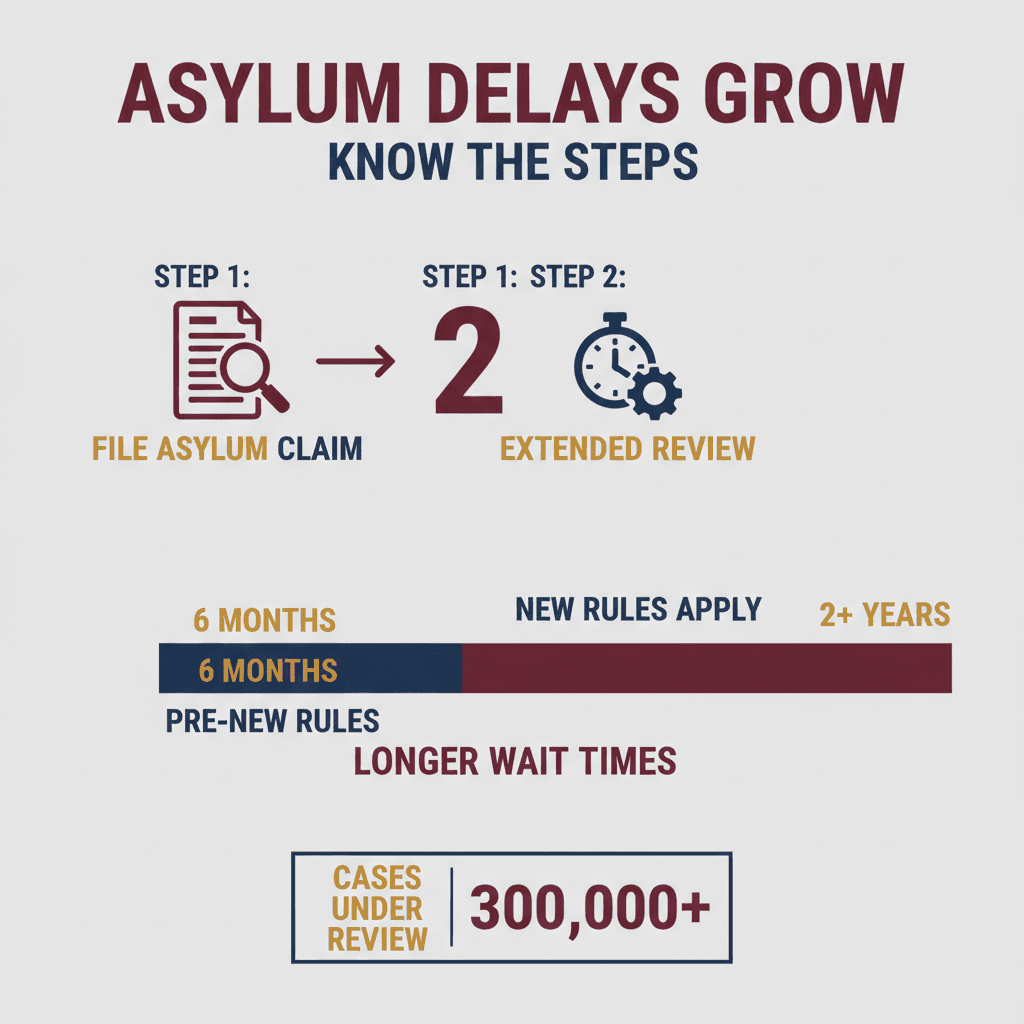
Where delays happen under new asylum rules (step-by-step)
Step 1: Screening and initial processing (often the first bottleneck)
If you are encountered at the border or after an arrest, early screening steps can be decisive. Under new rules, government officers may apply updated standards and checklists, which can slow referrals, interviews, and decisions.
Delays commonly happen when:
- Interview appointments are limited
- Interpreters are not available in time
- Officers request additional details or documents before proceeding
Step 2: Filing the asylum application and supporting evidence
Filing is not just “submitting a form.” A strong case often includes detailed declarations, witness statements, medical records, police reports (if available), and country conditions evidence.
When rules change nationwide, lawyers may need to adjust:
- How the personal declaration is structured
- What proof is prioritized (and how it is translated and authenticated)
- How deadlines are tracked to avoid procedural denials
Step 3: Hearings, continuances, and judge calendars
Immigration lawyers warn of delays as new asylum rules take effect nationwide because immigration court calendars can fill up fast—especially when judges must apply new legal standards or wait for updated guidance.
In removal proceedings, delays can be triggered by:
- Continuances to gather documents under new evidentiary expectations
- Interpreter scheduling issues
- Shifts in docket priorities
Worried your case will get stuck in the backlog? A tailored plan can prevent avoidable delays. Call 1-844-967-3536 or message us at /contact. Se Habla Español.
How to protect your asylum case during nationwide rule changes
1) Prepare like the government will ask for more proof
When rules change, adjudicators often ask for more detail. The best time to organize evidence is before you receive a request or hearing notice.
A practical checklist includes:
- Identity documents and translations
- Timeline of harm and threats (with dates and locations)
- Medical/mental health records (when relevant)
- Police reports or proof of attempts to seek protection (when safe and available)
- Country condition reports supporting your fear
2) Track deadlines carefully (including the one-year rule)
Many people do not realize that asylum has strict timing rules. In general, an applicant must file within one year of arriving in the U.S., unless an exception applies (such as changed or extraordinary circumstances). Missing a deadline can turn a strong fear-based claim into a much harder case.
If you are unsure about timing, get legal advice early—especially as immigration lawyers warn of delays as new asylum rules take effect nationwide and agency processing times fluctuate.
3) Avoid common mistakes that cause delays or denials
What's Your Immigration Situation?
Answer 3 questions - we'll tell you your options
Question 1 / 3
What best describes your situation?
Keep Reading
Small errors can create big problems when systems are strained. Examples include inconsistent addresses, incomplete work history, or statements that don’t match prior records.
Common avoidable issues:
- Submitting incomplete forms or unsigned pages
- Inconsistent dates between declarations and applications
- Failing to update address (which can lead to missed notices)
- Waiting too long to gather translations and certified copies
Why working with an experienced immigration attorney matters right now
Experience matters when the rules move fast
When immigration lawyers warn of delays as new asylum rules take effect nationwide, the underlying message is that strategy matters. Timing, evidence, and the order of filings can shape how long you wait—and whether you qualify for other protections if asylum becomes more difficult.
At Vasquez Law Firm, PLLC, your case is guided by Attorney Vasquez, a JD with 15 years of experience and bar admissions in the North Carolina State Bar and the Florida Bar.
What a lawyer can do to reduce delays
While no attorney can “skip the line,” skilled counsel can reduce avoidable setbacks and present your case clearly under the current legal framework.
Legal support may include:
- Building a strong declaration and evidence packet
- Preparing you for asylum interviews and court testimony
- Identifying alternative or backup relief (when available)
- Handling motions, filings, and deadlines in immigration court
Clear communication in English and Spanish
Asylum cases depend on details. If you are more comfortable in Spanish, you deserve legal help that removes language barriers. Our office is proud to say: Se Habla Español.
Frequently Asked Questions (FAQ)
1) What do the new asylum rules mean for my current case?
It depends on where your case is pending (USCIS or immigration court) and what stage you are in. Some changes apply immediately to new filings, while others affect interviews, evidentiary standards, or scheduling. An attorney can review your posture and explain what changes are most relevant.
2) Will my asylum interview or hearing be delayed?
Possibly. Immigration lawyers warn of delays as new asylum rules take effect nationwide because agencies often need time to train staff and update procedures. Backlogs, interpreter availability, and court calendar constraints can also push dates out.
3) Can I work while my asylum case is pending?
Many asylum applicants pursue employment authorization (work permits) when eligible. Eligibility and timing depend on your case type and procedural posture. Because rules and processing times change, it is important to confirm current requirements and avoid filing mistakes that can trigger delays.
4) What if I missed the one-year asylum filing deadline?
Missing the one-year deadline can seriously limit asylum eligibility, but exceptions may apply in some situations (for example, changed circumstances in your home country or extraordinary circumstances affecting your ability to file). You should get legal advice quickly to evaluate possible exceptions and alternative relief.
5) Does living in charlotte change how my asylum case is handled?
Your location can affect logistics, such as which offices handle filings, where interviews occur, and which immigration court hears your case if you are placed in removal proceedings. For many people in charlotte, local scheduling realities—like court backlogs—can influence timelines.
6) How can an attorney help if the delays are “nationwide”?
An attorney cannot control government calendars, but legal counsel can prevent avoidable delays and improve your readiness. That includes complete filings, strong evidence, consistent records, and preparation for testimony. It also includes tracking changes and responding quickly when agencies update procedures.
Need immigration help? Our immigration attorneys can review your case.
Take the next step today. If you’re hearing that immigration lawyers warn of delays as new asylum rules take effect nationwide, don’t wait until your notice arrives or your deadline passes. Contact Vasquez Law Firm, PLLC for guidance tailored to your situation.
Call 1-844-967-3536 or request help online: /contact. Se Habla Español.
Disclaimer: This article is for general educational information and does not create an attorney-client relationship. Immigration law changes frequently; consult a qualified attorney about your specific facts.

William Vasquez
Founder & CEO, Vasquez Law Firm, PLLC
William Vasquez is the founder and CEO of Vasquez Law Firm, PLLC, a results-driven firm specializing in immigration, criminal defense, personal injury, and workers' compensation. A U.S. Air Force veteran and recipient of the Joint Service Achievement Medal, William is dedicated to fiercely fighting for his clients' rights.
Related Legal Services
Need legal help? Learn more about our immigration legal services, or contact us for a free evaluation.
You can also visit our North Carolina immigration practice for more information.