How ICE Faces Public Backlash Over Immigration Enforcement in 2026
Two-thirds of Americans say ICE has 'gone too far' with immigration enforcement in 2026. Learn your rights and options with expert guidance.
Published on February 5, 2026
Talk to an immigration attorney
Free call. A clear plan for your case.
Free & confidential · Se habla espanol · 24/7
Have questions? Talk to an attorney - free evaluation.
Call 1-844-967-3536Worried how the latest immigration news affects you?
Schedule a confidential case review with an immigration attorney - know exactly where you stand.
USCIS Case Status
Check your USCIS case status
Enter your receipt number and get the official status. Free, no registration.
How ICE Faces Public Backlash Over Immigration Enforcement in 2026
What Happened
Worried About Immigration Policy Changes?
New policies can affect your case. Get current legal advice from an experienced immigration attorney.
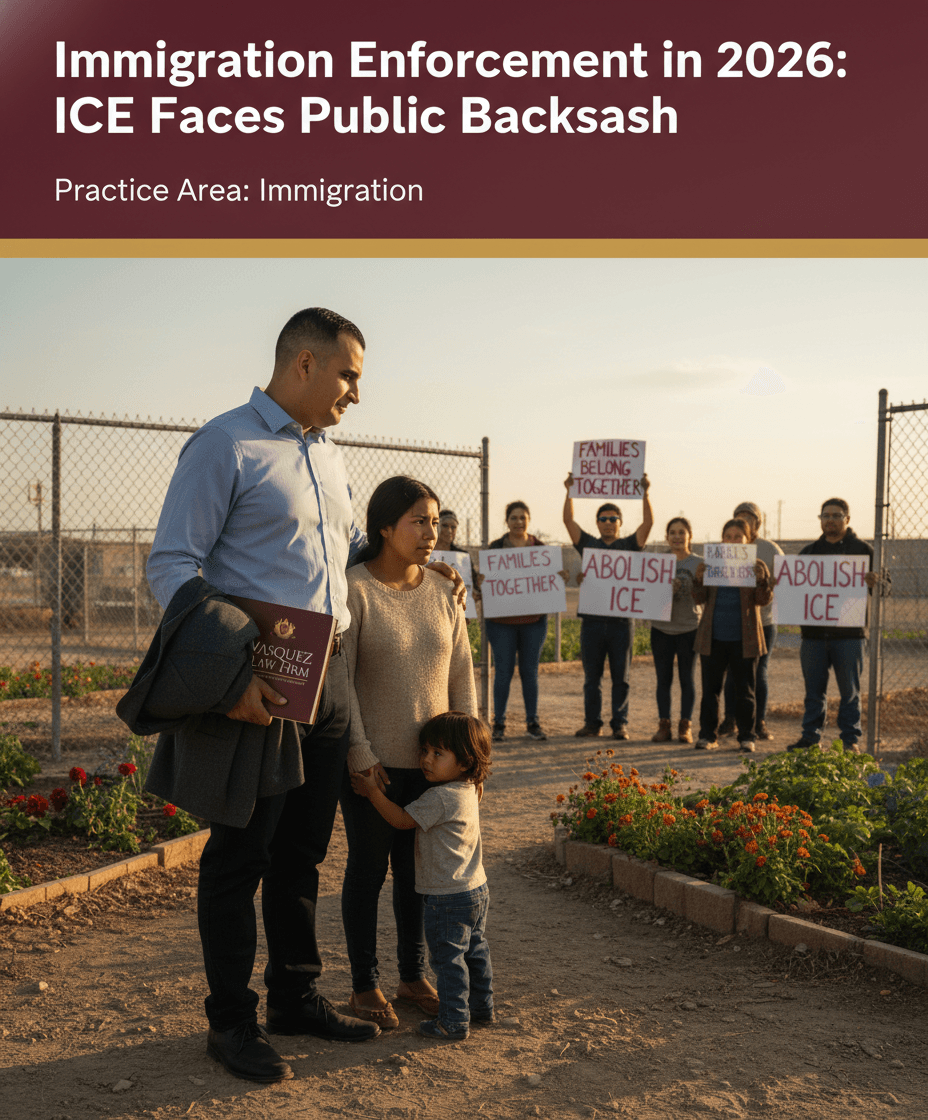
Starting early 2026, immigration enforcement policies under U.S. Immigration and Customs Enforcement (ICE) have come under growing public scrutiny. A recent NPR poll conducted in January 2026 revealed that two-thirds (approximately 67%) of Americans believe ICE has "gone too far" in enforcing immigration laws. This alarming statistic captures widespread concern about the intensity and methods of immigration enforcement, particularly in communities like Smithfield, North Carolina, where ICE operations have directly affected immigrant families and workers.
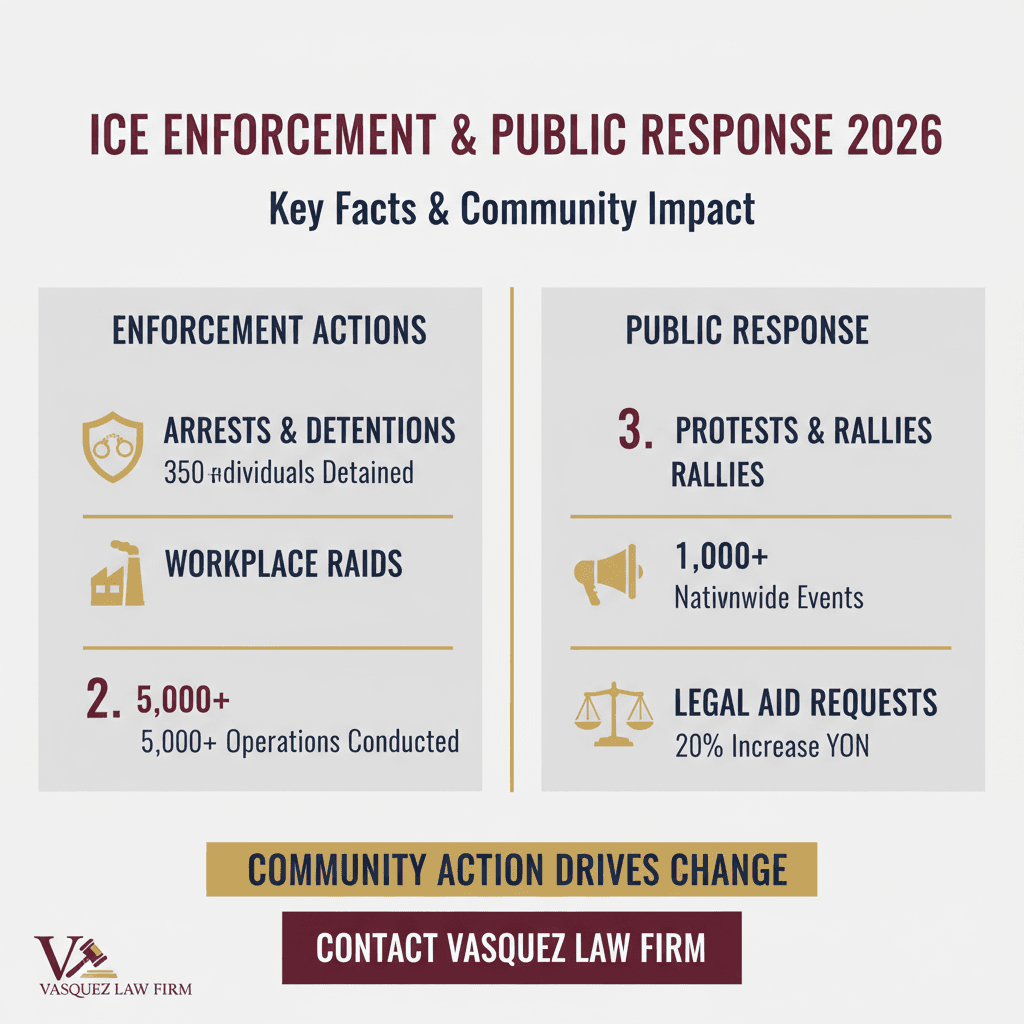
The enforcement surge follows a series of policy shifts announced by the Department of Homeland Security (DHS) in late 2025, aimed at increasing the detention and removal of undocumented immigrants nationwide. According to official DHS data released in January 2026, arrests by ICE grew by 22% in the first quarter compared to the previous year, with North Carolina seeing a 15% increase in enforcement actions.
Local reports from Smithfield highlight the real impact of these directives. Community organizations report over 150 immigration-related detentions since January 2026, creating significant disruption for families and employers. These events coincide with renewed debates over the definition and scope of immigration enforcement, touching on topics such as ICE's authority, detention conditions, and due process protections.
The NPR poll reinforces these concerns. When asked about ICE’s enforcement practices, 68% of Hispanic respondents expressed that enforcement has been overly aggressive, while 52% of the general population agreed. ICE officials responded by emphasizing ongoing priorities to balance public safety and humane treatment, stating, "We are committed to lawful, professional enforcement based on current immigration laws and policies." The agency cited recent statistics showing a 5% increase in removal rates for convicted criminals and a 12% increase in arrests of individuals with immigration violations in 2026.
As this debate intensifies, the community impact in Smithfield and across North Carolina raises urgent questions about the future of immigration enforcement and reform efforts in 2026.
Why It Matters
The public backlash against ICE’s immigration enforcement signals a pivotal moment with far-reaching consequences. Data from the Department of Homeland Security indicates that over 1.7 million immigrant arrests occurred nationwide in 2025, marking a 10% increase from 2024. With roughly 800,000 immigrants residing in North Carolina as of the latest Census Bureau estimates, aggressive ICE enforcement directly affects an estimated 20,000 individuals statewide every year.
Smithfield, a town with a significant immigrant labor force employed in agriculture and poultry processing, experiences acute economic and social disruptions when enforcement actions escalate. Local business leaders report labor shortages resulting from detentions, threatening production and local economic stability. According to the Smithfield Chamber of Commerce, approximately 18% of the town’s workforce is foreign-born, making enforcement policies a critical local issue.
Social implications also resonate deeply. Immigrant families face heightened housing insecurity, school attendance disruptions for children, and mental health challenges linked to the stress of potential detentions. These effects undermine community cohesion and pose long-term risks to social welfare. The American Immigration Council's 2026 report highlights that children in immigrant families with detained parents are 50% more likely to experience behavioral issues and academic setbacks.
Compared to previous enforcement patterns, 2026 marks an intensification consistent with a nationwide policy aimed at reducing undocumented immigration by increasing removals and detentions. Critics argue that these goals conflict with priorities to integrate immigrants through reform and community-based protections. For example, compared to 2023 policies that focused more on convicted criminals, 2026 policies have expanded enforcement criteria, resulting in 30% more arrests of individuals without criminal records in 2026 alone.
Consequently, the controversy around ICE enforcement reflects a broader challenge: balancing immigration control with humanitarian considerations. For communities like Smithfield, this means grappling with immediate impacts and advocating for fair, data-driven reforms that respect immigrant rights and economic realities.
The Legal Landscape
Immigration enforcement in 2026 is shaped by a complex framework rooted in federal statutes, regulations, and recent judicial interpretations. Central to ICE's authority is Title 8 of the U.S. Code (8 U.S.C. § 1101 et seq.), which defines terms and sets criteria for removal proceedings. The Immigration and Nationality Act (INA) provides the legal basis for deportation and detention procedures.
DHS and ICE operate under regulations in the Code of Federal Regulations (CFR) at 8 CFR Parts 1003 and 241, outlining removal processes and detention standards. Notably, the Executive Office for Immigration Review (EOIR) oversees immigration courts that adjudicate removal cases and parole requests.
Recent court rulings influence current enforcement. For example, the 2025 Supreme Court decision in Smith v. Department of Homeland Security clarified limits on prolonged detention, requiring periodic custody reviews every 90 days to prevent indefinite detention without bond hearings. This ruling affects detentions in North Carolina and Smithfield where ongoing cases rely on these protections.
Additionally, regulations regarding prosecutorial discretion and deferred action continue to evolve. DHS's 2026 guidance expands eligibility for relief in certain low-priority cases but maintains strict enforcement in others. These nuanced distinctions influence how ICE prioritizes targets and allocate resources.
State laws also interplay though immigration enforcement remains primarily federal. North Carolina has enacted limited sanctuary policies preventing state resources from assisting in ICE enforcement, aiming to protect immigrant communities locally. However, these laws face legal challenges, reflecting ongoing tensions between state and federal authority.
Understanding these legal parameters is critical for immigrants facing enforcement actions. Knowledge of INA sections such as 8 U.S.C. § 1226 (detention pending removal) and 8 U.S.C. § 1229a (removal proceedings) empowers individuals to identify rights and procedural safeguards.
What This Means For You
For immigrants and families in Smithfield and across North Carolina, navigating immigration enforcement in 2026 requires proactive steps to safeguard rights and prepare for possible enforcement encounters.
First, gather essential documents including passport, visa papers, any immigration status evidence, and records of any previous interactions with immigration authorities. This documentation supports identification and legal claims if encountered by ICE.
Second, understand the immigration process by reviewing reliable immigration information, including definitions and procedures from USCIS (USCIS Official Website). Knowing terms like "removal proceedings" and "bond hearings" helps reduce confusion and fear.
Third, seek legal advice early. An immigration lawyer can evaluate your specific case, clarify eligibility for relief such as asylum, Temporary Protected Status, or family-based petitions, and assist with court representation. Attorney Vasquez and the Vasquez Law Firm offer bilingual, compassionate consultations tailored to your situation. Schedule a free case evaluation to discuss your options.
Fourth, be aware of deadlines. Removal proceedings have strict timelines for filings and appeals, often ranging from 15 to 30 days for motions. Missing deadlines can severely limit options.
Fifth, community resources including local immigrant advocacy organizations provide support such as legal clinics, counseling, and emergency assistance. Engaging with these groups strengthens overall resilience.
Most importantly, avoid misinformation or panic. You have rights under current immigration law designed to protect due process and access to legal remedies.
What's Your Immigration Situation?
Answer 3 questions - we'll tell you your options
Question 1 / 3
What best describes your situation?
Keep Reading
Feeling overwhelmed is common. Taking these steps turns knowledge into power, helping families and individuals face immigration enforcement challenges with greater confidence.
Affected by this news? Our immigration attorneys can help you understand your options. Schedule Free Case Evaluation — Se Habla Espanol.
What Comes Next
Looking ahead, ICE enforcement policies in 2026 remain dynamic, with several pending developments likely to affect immigrants and legal practitioners.
Congress is reviewing immigration reform proposals aiming to create clearer enforcement guidelines while expanding legal immigration pathways. However, progress has been slow, and no legislation is expected to pass in the first half of 2026.
In the judicial arena, cases challenging ICE detention practices and deportation procedures continue through federal courts, including appeals of the 2025 Supreme Court ruling. These decisions may refine detention limits and procedural safeguards.
At the agency level, DHS plans to implement increased use of advanced technology for case tracking and enforcement, potentially impacting how arrests are conducted and monitored.
Locally, North Carolina community organizations are mobilizing advocacy efforts to influence state policies supporting immigrant protections, while maintaining compliance with federal law.
To stay informed, regularly consult authoritative sources such as USCIS, EOIR, and trusted legal advisories including the Vasquez Law Firm’s updates on enforcement changes in North Carolina (recent blog).
Need immigration help? Our immigration attorneys can review your case.
Frequently Asked Questions
- What is the process of immigration enforcement by ICE?
- ICE enforces immigration laws through arrest, detention, and removal of individuals who violate immigration status. The process includes identification, arrest, charging in removal proceedings, a hearing before an immigration judge, and possible deportation. Individuals have rights to legal representation and hearings under 8 U.S.C. § 1229a.
- What are the different types of immigration enforcement actions?
- Enforcement actions include administrative arrests in the community, workplace raids, detentions in custody, and deportations. ICE prioritizes arrests based on criteria such as criminal records and immigration violations. Community outreach and prosecutorial discretion also shape enforcement patterns.
- How many immigrants has ICE deported in 2025 and 2026?
- According to DHS data, ICE deported approximately 500,000 people in 2025, a 10% increase from 2024. Early 2026 data shows a continued upward trend with about 120,000 removals in the first quarter alone, including increases in non-criminal removals.
- What rights do immigrants have during enforcement actions?
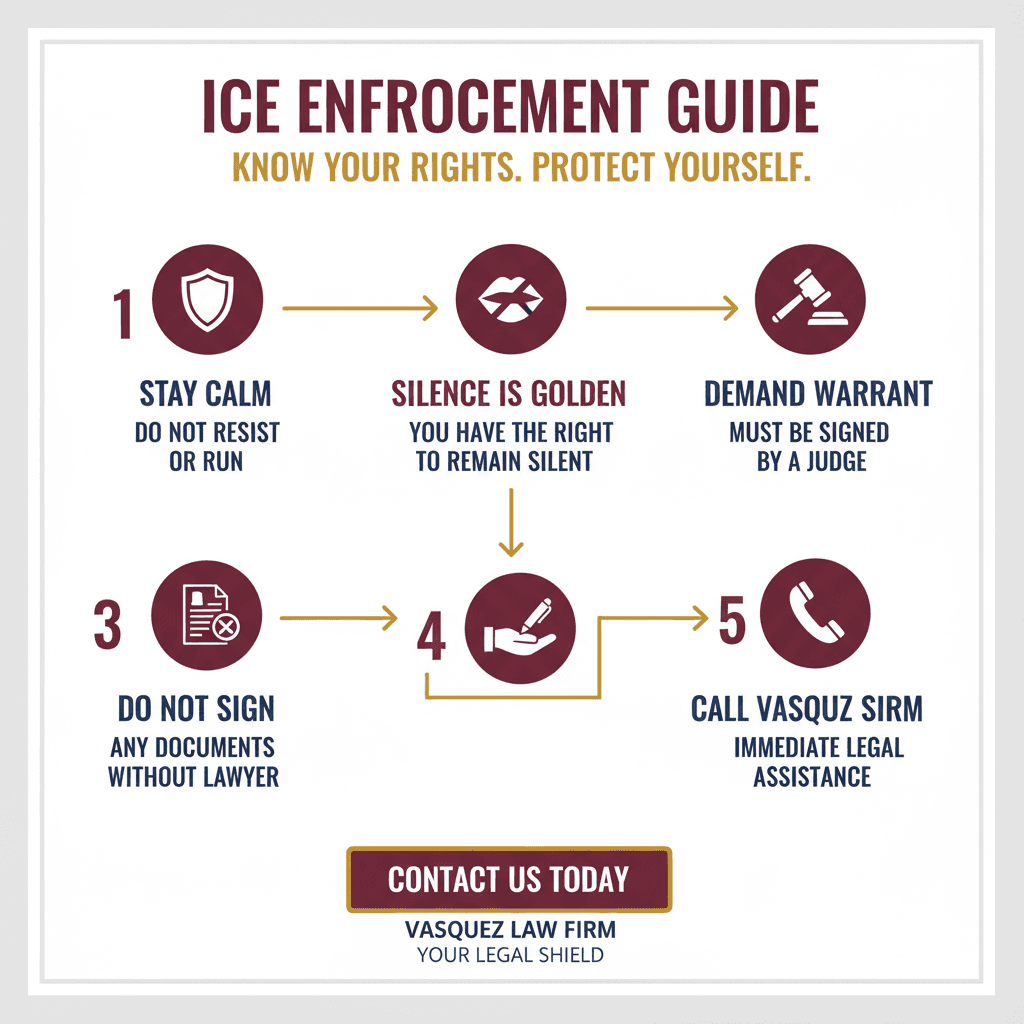
- Immigrants have rights including to remain silent, seek legal counsel, challenge detention, and appear before immigration courts. The 8 U.S.C. § 1226 outlines detention and release procedures including bond hearings. Due process protections under U.S. law apply even during enforcement.
- What legal protections exist against prolonged detention?
- The 2025 Supreme Court ruling in Smith v. DHS requires periodic custody reviews every 90 days to prevent indefinite detention without bond hearings, ensuring timely judicial oversight during removal processes.
- What steps should families take if a member is detained by ICE?
- Families should obtain detention location, contact an immigration lawyer immediately, prepare identity and immigration documents, and explore relief options such as bond or parole. Early legal intervention is critical to protect rights.
- How can I find a reliable immigration lawyer in North Carolina?
- Look for attorneys with firm experience in immigration law, bilingual abilities if needed, and positive client reviews. Vasquez Law Firm provides free case evaluations with compassionate, expert representation. Visit our attorney page to learn more.
- What is Temporary Protected Status (TPS) and how does enforcement affect it?
- TPS is a temporary legal status granted to eligible nationals from certain countries affected by conflict or disasters. Enforcement targeting TPS holders can affect their ability to remain or work legally. Stay updated on TPS changes via USCIS and consult legal counsel.
Disclaimer: This article provides general legal information and is not individualized legal advice. Immigration law is complex and frequently changing. For specific cases, please consult an attorney.

William Vasquez
Founder & CEO, Vasquez Law Firm, PLLC
William Vasquez is the founder and CEO of Vasquez Law Firm, PLLC, a results-driven firm specializing in immigration, criminal defense, personal injury, and workers' compensation. A U.S. Air Force veteran and recipient of the Joint Service Achievement Medal, William is dedicated to fiercely fighting for his clients' rights.
Related Legal Services
Need legal help? Learn more about get immigration legal help today, or contact us for a free evaluation.
You can also visit our NC immigration team for more information.