Immigration Court Backlog Reaches Record Levels in 2026
Immigration court backlog hits record highs in 2026. Learn what this means and how to act. Contact Vasquez Law Firm for a free consultation.
Published on February 9, 2026· Updated August 3, 2026
Talk to an immigration attorney
Free call. A clear plan for your case.
Free & confidential · Se habla espanol · 24/7
Have questions? Talk to an attorney - free evaluation.
Call 1-844-967-3536Check your case status now
Look up your immigration case below, then talk to an attorney about what it means — free.
Questions about your result?
Talk to an attorney about your case — free, no obligation.
Immigration Court Backlog Reaches Record Levels in 2026
Check your own case: look up your immigration court (EOIR) case status free - enter your A-Number to see your next hearing date, judge, court, and case clock. No login.
Need legal help?
Immigration in NC and FL. Personal injury and workers compensation across NC. Criminal defense in Johnston, Harnett, Pitt and Cumberland counties, and traffic tickets in 11 NC counties. Tell us your county and we will tell you exactly what we can do.
Disclaimer: This article provides general legal information and not individualized legal advice. Consult an attorney for guidance about your specific case.
What Happened
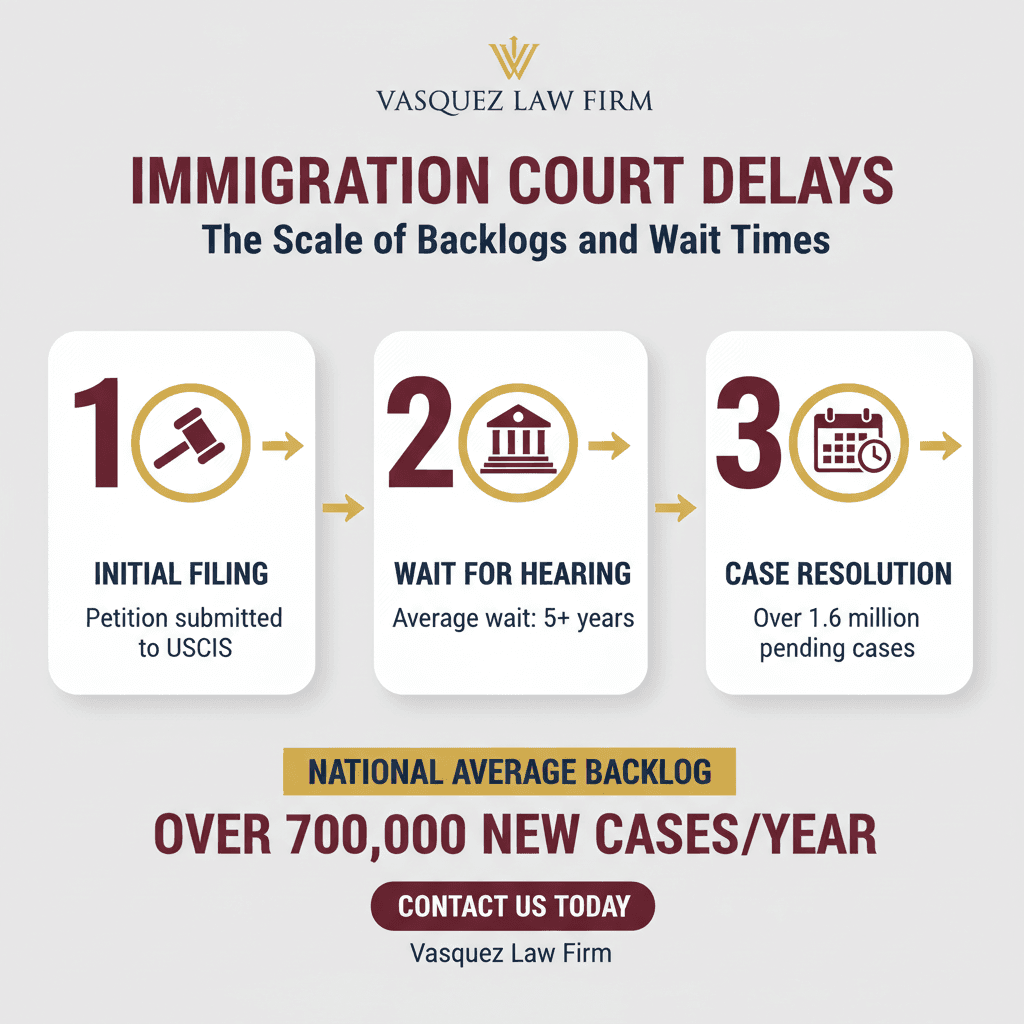
Starting February 2026, more than 1.7 million immigrants nationwide are waiting for their cases to be heard in immigration courts, the highest backlog ever recorded. According to the Executive Office for Immigration Review (EOIR) January 2026 data report, the immigration court backlog has surged 12% since the previous year, setting a new record after steady increases throughout 2024 and 2025.
The Newark immigration court, a major hub in the Eastern District, currently holds over 90,000 pending cases, reflecting a local backlog trend that mirrors the national crisis. Average wait times nationally have stretched to nearly 900 days, or almost two and a half years, from the initial filing to final disposition, based on data from the Transactional Records Access Clearinghouse (TRAC) Immigration Court Backlog report released in January 2026.
The backlog has been attributed to a combination of factors: increased filings in recent years despite attempts to limit new case submissions, staffing shortages in immigration judges and support personnel, and procedural delays worsened by pandemic-era disruptions. The backlog is further compounded by complex legal motions and appeals, which extend the court’s ability to clear pending cases. In January 2026, the EOIR reported around 570 active immigration judges, a slight increase from 540 in early 2024, yet insufficient to reduce the backlog significantly.
U.S. Immigration and Customs Enforcement (ICE) stated that enforcement priorities focusing on national security and serious criminal cases have shifted some resources away from general immigration court proceedings, affecting case throughput. At the same time, USCIS backlogs for related immigration applications such as adjustment of status or asylum processing contribute indirectly to court delays.
Attorney Vasquez, JD, from Vasquez Law Firm in North Carolina, commented, "The mounting immigration court backlog impacts families and communities in Smithfield and across North Carolina and Florida. It's not just a number; it translates to years of uncertainty for people pursuing lawful immigration relief."
Why It Matters
The immigration court backlog affects an estimated 1.7 million individuals nationwide according to EOIR data, with an average wait time close to 900 days. This extensive delay creates significant social and economic burdens, especially for immigrants living in states like North Carolina and Florida where immigration is integral to community fabric and local economies.
Extended wait times mean ongoing uncertainty for families, many of whom face prolonged separation or inability to access work authorization while in limbo. Studies show that delays over 18 months correlate with decreased mental health and increased financial strain among immigrant populations (American Immigration Council, 2025). In cities like Smithfield, immigrants contribute substantially to industries such as agriculture, hospitality, and construction, but court delays reduce the stability workers have, affecting local economic vitality.
Resource allocation for immigration courts has stagnated despite the growing backlog. EOIR’s fiscal reports document only a 4% increase in budget from 2024 to 2026, insufficient to match the demand for timely adjudications. Critics argue this gap highlights a disconnect between stated priorities of a functioning immigration system and actual performance.
Comparing to earlier years, the backlog has doubled since 2017 when around 860,000 cases were pending. This raises questions on policy effectiveness. For example, programs aimed at expediting or reducing filings, such as the delegation of immigration authority under Section 287(g) of the Immigration and Nationality Act—used in some jurisdictions to involve local law enforcement—have had limited impact on reducing court caseloads nationwide, per ICE and local reports.
Moreover, the backlog intensifies pressure on U.S. immigration courts already strained by complex case types, including asylum claims. Data from TRAC shows that asylum cases now constitute near 40% of pending cases, often requiring more resources due to their complexity and evidentiary requirements.
The Legal Landscape
The immigration court system is governed primarily by the Immigration and Nationality Act (INA) codified at 8 U.S.C. § 1101 et seq., with adjudication sessions overseen by the Executive Office for Immigration Review under the U.S. Department of Justice.
Section 287(g) of the INA allows certain state and local law enforcement agencies to enter agreements with ICE to perform immigration enforcement functions, a policy referenced in Vasquez Law Firm’s previous analysis (Section 287(g) blog). However, this delegation does not affect court backlogs directly since court proceedings remain federal judicial functions.
In 2025, several court rulings addressed due process concerns related to backlog-induced delays. The U.S. Court of Appeals for the Ninth Circuit emphasized procedural fairness with extended wait times, triggering calls for administrative action. Additionally, EOIR regulations (8 CFR Part 1003) provide for expedited hearings in certain cases, but the sheer number of pending cases renders these rules ineffective as systemic solutions.
Recent legislative proposals in Congress aim to allocate increased funding and expand judge appointments to mitigate court delays. However, no comprehensive reform has passed as of early 2026. The backlog remains a critical legal challenge, as increased wait times risk violating constitutional guarantees of timely hearings under 5 U.S.C. § 555(b) and the due process clause.
Legal experts highlight that immigration courts operate unlike traditional Article III courts, creating unique procedural rules and administrative oversight that impact how cases proceed. This administrative framework also limits the ability to appeal decisions quickly, further exacerbating delays.
What This Means For You
Immigrants with pending cases should take steps to prepare for extended court waits. Start by gathering all immigration-related documents such as Notices to Appear, work authorization cards, passports, and any USCIS correspondence. Keeping detailed records of hearings and filings is essential.
Track your EOIR case status regularly online using the official system at EOIR Case Status. Timely updates can prevent missed hearings, which increase the risk of removal orders.
If you have not already done so, consider applying for work authorization if eligible, as some applicants can legally work while awaiting decisions. Consult USCIS guidelines at USCIS.gov for deadlines and form instructions.
What's Your Immigration Situation?
Answer 3 questions - we'll tell you your options
Question 1 / 3
What best describes your situation?
Keep Reading
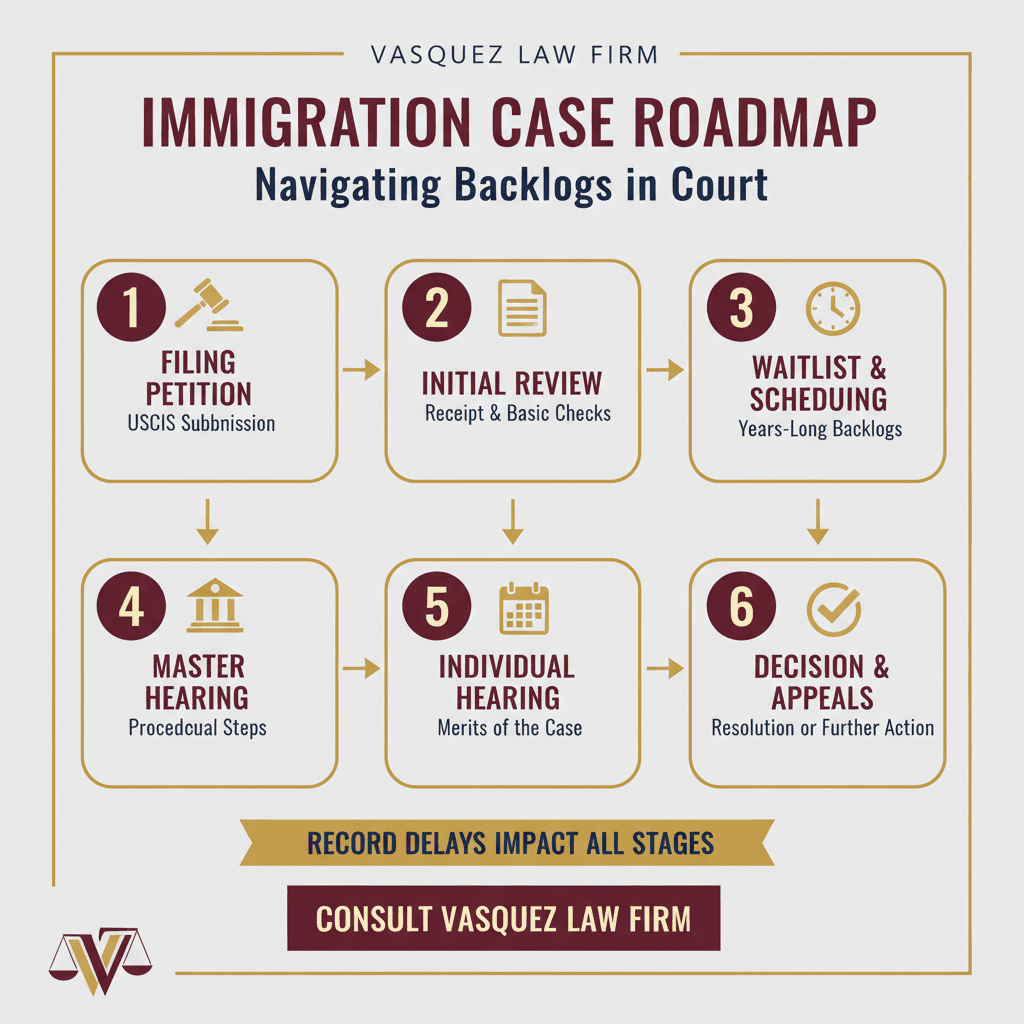
If facing court delays or confusion about deadlines, it is critical to work with an immigration lawyer who understands the backlog’s impact in Smithfield, North Carolina, and Florida areas. They can help you meet filing deadlines, negotiate continuances, and explore alternative relief options such as motions to reopen or adjustment of status when possible.
Remember that communication is key in immigration proceedings. Provide correct contact information to EOIR to avoid lost notices, and be prepared for appearances even with long waits. Legal counsel can also help monitor any limited emergency or expedited hearing opportunities that sometimes arise.
Affected by this news? Our immigration attorneys can help you understand your options. Schedule Free Case Evaluation
What Comes Next
Looking ahead, the immigration court backlog is not expected to ease substantially until late 2027 or beyond unless significant systemic changes occur. Pending legislation in the 2026 Congressional session proposes funding boosts and judge increases, but debates continue over their scope and effectiveness.
EOIR announced plans for additional digital case management tools and remote hearings to improve efficiency, with pilot programs starting mid-2026. These changes could help reduce procedural hurdles contributing to delays.
Watch for upcoming court decisions related to backlog challenges and potential policy shifts impacting detention priorities, which can influence case speeds. Keeping informed through reliable sources like EOIR, USCIS, and legal advisories is crucial.
For immigrants in Smithfield, North Carolina, and Florida, staying connected with local legal aid organizations and firms such as Vasquez Law Firm ensures access to evolving support resources and helps navigate this challenging period.
Need immigration help? Our immigration attorneys can review your case.
Frequently Asked Questions
- How long is the immigration court backlog?
- The backlog currently averages about 900 days nationwide, meaning cases typically take nearly two and a half years from filing to final decision, with some jurisdictions like Newark exceeding this timeline.
- What does backlog mean in immigration?
- Backlog refers to the number of immigration cases waiting to be heard or completed in immigration courts, exceeding the system’s capacity to timely process them.
- What is the backlog of immigration cases?
- As of early 2026, over 1.7 million cases are pending in U.S. immigration courts, a record high that reflects growing demand and limited resources.
- Is there a backlog at USCIS?
- Yes, USCIS also experiences significant processing delays for applications like adjustment of status and asylum, which impact the overall immigration system and court timelines indirectly.
- Can I request an expedited hearing because of the backlog?
- Expedited hearings are possible but rare and granted only in exceptional circumstances such as urgent humanitarian needs or severe hardship. An immigration attorney can assess eligibility and submit requests.
- How can I check my immigration court case status?
- You can check your case status online through the EOIR website using your receipt number or Alien Registration Number to stay updated on hearing dates and case progress.
- Does the backlog affect deportation enforcement?
- Yes, delays in court proceedings can prolong detention or pending removal, but ICE prioritizes enforcement for certain cases, which can vary by region and policy shifts.
- What should I do if I miss an immigration court hearing?
- Missing a hearing can result in removal orders in absentia. Contact a qualified immigration attorney immediately to explore motions to reopen the case and avoid deportation.
Do not navigate this alone. Contact Vasquez Law Firm for guidance specific to your situation. Get Legal Help Now

William Vasquez
Founder & CEO, Vasquez Law Firm, PLLC
William Vasquez is the founder and CEO of Vasquez Law Firm, PLLC, a results-driven firm specializing in immigration, criminal defense, personal injury, and workers' compensation. A U.S. Air Force veteran and recipient of the Joint Service Achievement Medal, William is dedicated to fiercely fighting for his clients' rights.
Related Legal Services
Need legal help? Learn more about NC immigration legal team, or contact us for a free evaluation.
You can also visit immigration legal services throughout NC for more information.