How a year of policy changes reshaped Florida immigration
How a year of policy changes reshaped Florida immigration law in 2025 - Tampa Bay Times: learn your options and call 1-844-967-3536.
Published on January 9, 2026· Updated August 6, 2026
Talk to an immigration attorney
Free call. A clear plan for your case.
Free & confidential · Se habla espanol · 24/7

Have questions? Talk to an attorney - free evaluation.
Call 1-844-967-3536Worried how the latest immigration news affects you?
Schedule a confidential case review with an immigration attorney - know exactly where you stand.
How a year of policy changes reshaped Florida immigration
If you live, work, or do business in Florida, immigration rules may have felt different in 2025. In plain terms: more checks at work, more information-sharing between agencies, and more pressure on mixed-status families. This guide breaks down How a year of policy changes reshaped Florida immigration law in 2025 - Tampa Bay Times and what it can mean for you—especially if you travel between states or have family in Florida.
Worried About Immigration Policy Changes?
New policies can affect your case. Get current legal advice from an experienced immigration attorney.
Because immigration is mostly federal law, state policy changes often affect how rules get enforced day to day. That can impact hiring, arrests, detention, and even whether people feel safe reporting crimes. Below, we connect the dots and explain practical steps you can take now.
Worried about how Florida’s enforcement changes affect your case? Talk with an immigration lawyer before you file, travel, or respond to a notice. Call 1-844-967-3536 or request a free case evaluation. Se Habla Español.
1) What Changed in 2025 (And Why It Felt Different)
Headlines and community conversations in 2025 often focused on public safety, worksite enforcement, and cooperation with federal immigration agencies. While states cannot create new federal immigration categories, they can shape enforcement through contracts, training, data sharing, and employer compliance efforts.
Policy changes vs. federal immigration law
Federal law still controls most immigration outcomes: visas, green cards, asylum, deportation, and naturalization. Key agencies include USCIS (benefits), EOIR immigration courts (removal cases), and the Department of State for visas through U.S. visa processing.
State-level changes often affect:
- How employers verify work authorization
- When local agencies communicate with federal authorities
- How quickly a person can be transferred to immigration detention
Why 2025 felt like a shift for families and employers
Even small procedural changes can create big real-world consequences. For example, increased auditing of I-9 forms can lead to job loss. More detention transfers can shorten the time to find counsel or gather documents.
In discussions tied to How a year of policy changes reshaped Florida immigration law in 2025 - Tampa Bay Times, the core theme is not that federal law “changed overnight,” but that enforcement became more coordinated and more visible.
What recent commentary and news coverage highlighted
Public debate about enforcement can intensify after high-profile incidents and opinion pieces. One example in the broader national conversation is this USA Today opinion article referenced in Google News. These pieces don’t change the law, but they shape priorities and public messaging—often followed by more enforcement activity.
2) Who Is Most Impacted by Florida Enforcement Shifts
In our experience, enforcement-driven years affect more than undocumented residents. U.S. citizens and lawful permanent residents can feel the ripple effects too—especially in families and workplaces.
Mixed-status families
When one family member has lawful status and another does not, enforcement changes can create fear around routine tasks: driving, reporting crimes, or even attending school events. A simple traffic stop can become an immigration referral depending on local practices.
Common legal needs include:
- Family petitions and adjustment planning
- Consular processing risk review
- Bond and detention defense support
Employers, contractors, and workers
Florida’s policy direction has pushed many employers to tighten compliance. That typically means more I-9 training, more E-Verify use where required, and quicker action when records don’t match.
At the federal level, employer sanctions and I-9 rules come from the Immigration Reform and Control Act (IRCA). The central statute is 8 U.S.C. § 1324a, which governs unlawful employment and verification duties.
Students, visitors, and snowbirds
Florida has a high volume of international visitors and students. Policy changes can increase scrutiny after an arrest or contact with law enforcement. Even if charges are dropped, immigration consequences can remain.
If you are unsure about visa compliance, start with official guidance and then get legal advice:
- Review your visa type and rules on travel.state.gov.
- Confirm benefit eligibility and filing basics through USCIS.
- Ask a lawyer to assess risks tied to arrests, overstays, or prior removal orders.
3) The Legal Framework: Federal Law Drives Outcomes, States Shape Enforcement
To understand How a year of policy changes reshaped Florida immigration law in 2025 - Tampa Bay Times, it helps to separate “immigration law” from “immigration enforcement.” Your immigration status is decided under federal statutes and regulations. But local and state practices can influence whether you get placed into removal proceedings in the first place.
Removal (deportation) proceedings and immigration court
Deportation cases are handled in immigration court under the Department of Justice. The process is governed by the Immigration and Nationality Act and regulations, with hearings overseen within EOIR. If you or a loved one is facing removal, learn the court structure at EOIR’s official site.
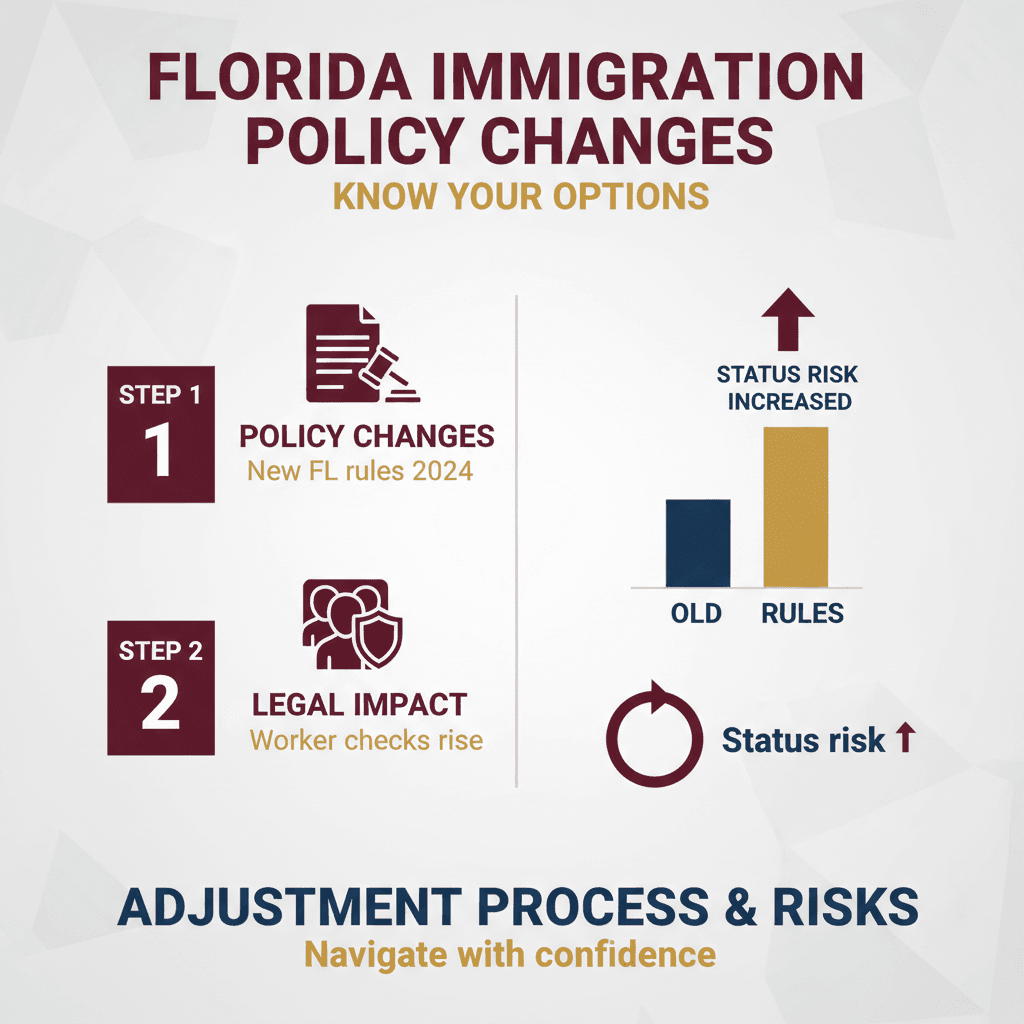
Key point: A state policy change might increase referrals to ICE or detainers, but the legal fight happens in federal court settings (immigration court and federal courts).
Immigration benefits: USCIS, consular processing, and eligibility
Green cards, naturalization, work permits, and many humanitarian protections are processed by USCIS. Adjustment of status is governed in part by 8 U.S.C. § 1255. If you are eligible to adjust, timing and travel choices matter—especially during periods of increased enforcement.
The “crimmigration” overlap: arrests can trigger immigration action
Many 2025 concerns centered on what happens after an arrest. Some offenses are considered “deportable” or can block relief. Even a non-citizen with lawful status can face issues if charged with certain crimes.
Important: The immigration impact depends on the statute of conviction, the sentence, and your history—not just the police report. That’s why legal review matters early.
Already dealing with an arrest, a detainer, or job verification problems connected to Florida? Call Vasquez Law Firm, PLLC at 1-844-967-3536. We can explain options in clear terms. Se Habla Español.
4) Real-World Effects Seen in 2025: Work, Travel, Detention, and Family Plans
Clients often ask, “What changed for me?” Here are practical areas where a policy-heavy year can reshape day-to-day life and legal strategy.
Worksite compliance and I-9 / E-Verify pressure
More compliance pressure typically means more employer audits and quicker responses to “no-match” issues. Workers may feel pushed to “fix” paperwork fast, which can lead to mistakes or fraud allegations.
Safer steps if there is a work authorization question:
- Do not use false documents or someone else’s identity.
- Ask for a written explanation from HR about what is needed.
- Talk to an immigration lawyer about lawful options (renewal, replacement documents, or benefit eligibility).
Detainers, jail transfers, and speed of ICE involvement
When local agencies cooperate more closely with federal authorities, ICE may learn about arrests sooner. That can reduce time for family to locate a person or hire counsel.
If a loved one is detained:
- Write down the person’s full name, date of birth, and A-number (if known).
- Gather immigration paperwork (prior orders, receipts, passports, visas).
- Get a legal screening for bond eligibility and defense options.
Travel risks for non-citizens (even with pending applications)
During enforcement-heavy periods, travel can carry extra risk—especially for people with old removal orders, prior overstays, or arrests. Some people who travel assume a pending case “protects” them. That is not always true.
Before leaving the U.S., ask a lawyer about:
- Advance parole requirements
- Unlawful presence bars
- Prior deportation / expedited removal history
5) What This Means for smithfield Residents With Florida Ties
You do not have to live in Florida to be affected by Florida enforcement trends. Many people in smithfield have family in Tampa, Orlando, Miami, and throughout the Gulf Coast. Others travel for seasonal work, construction jobs, caregiving, or school.
Multi-state families and “where to file” confusion
Immigration filings are federal, but your address, travel patterns, and court venue can matter. If you live in smithfield and a relative is detained in Florida, your case may involve multiple jurisdictions quickly.
We often help clients coordinate:
- Family evidence collection from North Carolina while a case proceeds in Florida
- Consular processing steps for relatives abroad
- Emergency planning for children and finances
Local access to counsel and documents
Serving smithfield residents means we know how hard it can be to manage an immigration crisis while working full time. Getting certified copies, identity records, and affidavits quickly can be the difference between strong and weak evidence.
Nearby resources that often come up for documentation include the Johnston County Courthouse and local vital records offices. (Exact procedures vary by document type.)
What to do now if you’re worried
Here is a practical checklist you can follow today:
What's Your Immigration Situation?
Answer 3 questions - we'll tell you your options
Question 1 / 3
What best describes your situation?
Keep Reading

- Know your status: keep copies of approvals, I-94, and receipts.
- Plan for emergencies: choose a trusted contact and store key documents.
- Get a case review: do not wait for an arrest or workplace audit.
These steps matter even more when people search for answers about How a year of policy changes reshaped Florida immigration law in 2025 - Tampa Bay Times and want a clear plan, not rumors.
6) How Vasquez Law Firm, PLLC Helps After a Year of Policy Changes
Vasquez Law Firm, PLLC focuses on immigration law and case strategy that matches real enforcement conditions—not just what the forms say. Attorney Vasquez, JD has 15 years of experience and is admitted to the North Carolina State Bar and the Florida Bar. That matters when your life crosses state lines.
Services we commonly provide
We tailor advice to your goals, risk level, and timeline. Our immigration practice can help with:
- Family-based petitions and adjustment of status planning
- Consular processing preparation and waiver screening
- Removal defense support, bond strategy, and evidence organization
- Naturalization and derivative citizenship reviews
Learn more about our Immigration Law services and how we approach complex cases.
Why experience matters when enforcement ramps up
In a year like 2025, the “right” strategy often depends on small details: a prior entry, an old order, or a charge that seems minor. We help clients avoid preventable errors—like filing the wrong application, traveling at the wrong time, or submitting inconsistent records.
Clear communication and bilingual support
Immigration cases are stressful. We prioritize plain-language explanations, written next steps, and consistent updates. Se Habla Español, so you can ask questions in the language you prefer.
If you want to learn more about our team, visit Attorney Vasquez and our attorneys page.
Frequently Asked Questions
1) Did Florida change federal immigration law in 2025?
No. Federal immigration law is set by Congress and enforced by federal agencies. But Florida can change state enforcement priorities, cooperation practices, and compliance pressure on employers. Those changes can increase the chances that a person is referred to ICE or flagged in a work setting.
2) If I live in smithfield, can Florida enforcement still affect me?
Yes. Many smithfield residents travel to Florida for work or have family there. If a loved one is detained in Florida, your family may need quick legal coordination across states. Also, travel and arrest history can affect your immigration case anywhere in the U.S.
3) What should I do if my employer asks for new work authorization documents?
Stay calm and respond carefully. Do not provide false documents. Ask for a written explanation of what is needed and consult a lawyer before making changes that could create fraud allegations. Employer verification rules are governed by IRCA and 8 U.S.C. § 1324a.
4) Can a traffic stop lead to immigration problems?
It can, depending on local practices and whether the stop leads to arrest, booking, or fingerprints shared with federal systems. The immigration impact depends on your status, prior history, and whether any charges result in a conviction.
5) Should I travel outside the U.S. with a pending green card or waiver case?
Not without legal advice. Some people need advance parole, and others risk triggering unlawful presence bars or complications at reentry. A lawyer can review your history and your current filings before you travel.
6) How do I know if I’m in immigration court?
Usually you will receive a Notice to Appear (NTA), but sometimes people learn after detention. You can also consult counsel who can help confirm status and venue. For general information on immigration court structure, see EOIR.
Next Steps: Protect Yourself With a Plan
In many households, the biggest harm from an enforcement-heavy year is uncertainty—people wait too long, trust rumors, or file without a strategy. If you have Florida ties, an old immigration issue, or a family member at risk, getting advice now can prevent a crisis later.
When people search How a year of policy changes reshaped Florida immigration law in 2025 - Tampa Bay Times, they are usually looking for one thing: what to do next. The right answer depends on your facts, but you can start by gathering records and getting a personalized legal review.
Ready for clear answers? Call 1-844-967-3536 or schedule your free case evaluation with Vasquez Law Firm, PLLC. We serve smithfield residents and clients with Florida immigration concerns. Se Habla Español.
Disclaimer: This article is for general information and does not create an attorney-client relationship. Immigration outcomes depend on individual facts and changing policies.

William Vasquez
Founder & CEO, Vasquez Law Firm, PLLC
William Vasquez is the founder and CEO of Vasquez Law Firm, PLLC, a results-driven firm specializing in immigration, criminal defense, personal injury, and workers' compensation. A U.S. Air Force veteran and recipient of the Joint Service Achievement Medal, William is dedicated to fiercely fighting for his clients' rights.
Related Legal Services
Need legal help? Learn more about speak with an immigration lawyer, or contact us for a free evaluation.
You can also visit our North Carolina immigration practice for more information.