High School Student Doing Laundry Among Those Detained In Morris Co. ICE Raid - Patch | Know Your Rights
High School Student Doing Laundry Among Those Detained In Morris Co. ICE Raid - Patch: learn your rights in ICE actions. Call 1-844-967-3536.
Published on January 13, 2026· Updated February 11, 2026
Talk to an immigration attorney
Free call. A clear plan for your case.
Free & confidential · Se habla espanol · 24/7

Have questions? Talk to an attorney - free evaluation.
Call 1-844-967-3536Worried how the latest immigration news affects you?
Schedule a confidential case review with an immigration attorney - know exactly where you stand.
High School Student Doing Laundry Among Those Detained In Morris Co. ICE Raid - Patch | Know Your Rights
The headline High School Student Doing Laundry Among Those Detained In Morris Co. ICE Raid - Patch is a painful reminder that immigration enforcement can affect everyday life—school, work, and even simple errands. If you or a loved one worries about ICE contact, it helps to understand what agents can (and cannot) do, what rights still apply, and what steps to take right away.
ICE encounter or deportation risk?
Time-sensitive cases need quick action. We answer 24/7 for emergency immigration matters. Free 15-min call.
Worried about an ICE arrest or detention? Talk to an immigration lawyer before small issues turn into big ones. Call 1-844-967-3536 or request a consultation. Se Habla Español.
What This News Means for Orlando Residents
Why this story hit home
Stories about ICE raids often focus on numbers. But the phrase High School Student Doing Laundry Among Those Detained In Morris Co. ICE Raid - Patch highlights something more personal: people can be detained during normal, harmless activities.
Even if the event happened outside Florida, families in orlando and across Central Florida ask the same question: “Could this happen to us?” Understanding the process helps you plan and respond.
Bigger policy context: expanding or limiting immigrant rights
National debates can influence how aggressively enforcement happens, how local agencies cooperate, and what protections immigrants can access. For additional context on shifting policy and rights discussions, see the reporting here: New York Times coverage on expanding immigrant rights.
The local reality in Central Florida
People in orlando, Kissimmee, Winter Park, and Sanford may face immigration consequences from traffic stops, prior court dates, old removal orders, or identity confusion. If ICE believes someone is removable, they may attempt an arrest at home, at work, or in public.
If someone is detained, the case often moves quickly. Families may need to locate the person, request a bond hearing, and gather documents within days—not weeks.
How ICE Raids and Arrests Often Happen (And What to Watch For)
Common enforcement patterns
While every situation is different, many enforcement actions follow a few patterns. ICE may target a specific person, but others can be questioned or detained depending on the circumstances.
- Home visits early in the morning or late at night
- Worksite enforcement tied to audits or investigations
- Targeted arrests based on prior removal orders or missed court
- Collateral arrests when ICE encounters other undocumented people
Administrative warrants vs. judicial warrants
One of the most misunderstood issues is the “warrant.” ICE commonly uses administrative paperwork (often tied to immigration authority), which is not the same as a warrant signed by a judge.
Practical takeaway: If ICE comes to your door, you can ask them to slide the warrant under the door or hold it up to a window. Look for a judge’s name and a court signature.
ICE detainers and local jails
Another pathway is through local arrest and jail booking. ICE may issue a “detainer” request asking a jail to hold someone longer. Detainers raise complex legal and policy issues and can affect release timing.
If your loved one is in custody, time matters. The earlier an attorney reviews the person’s immigration history, the better the chance of identifying bond options or relief.
Know Your Rights During ICE Encounters (Simple, Practical Steps)
If ICE comes to your home
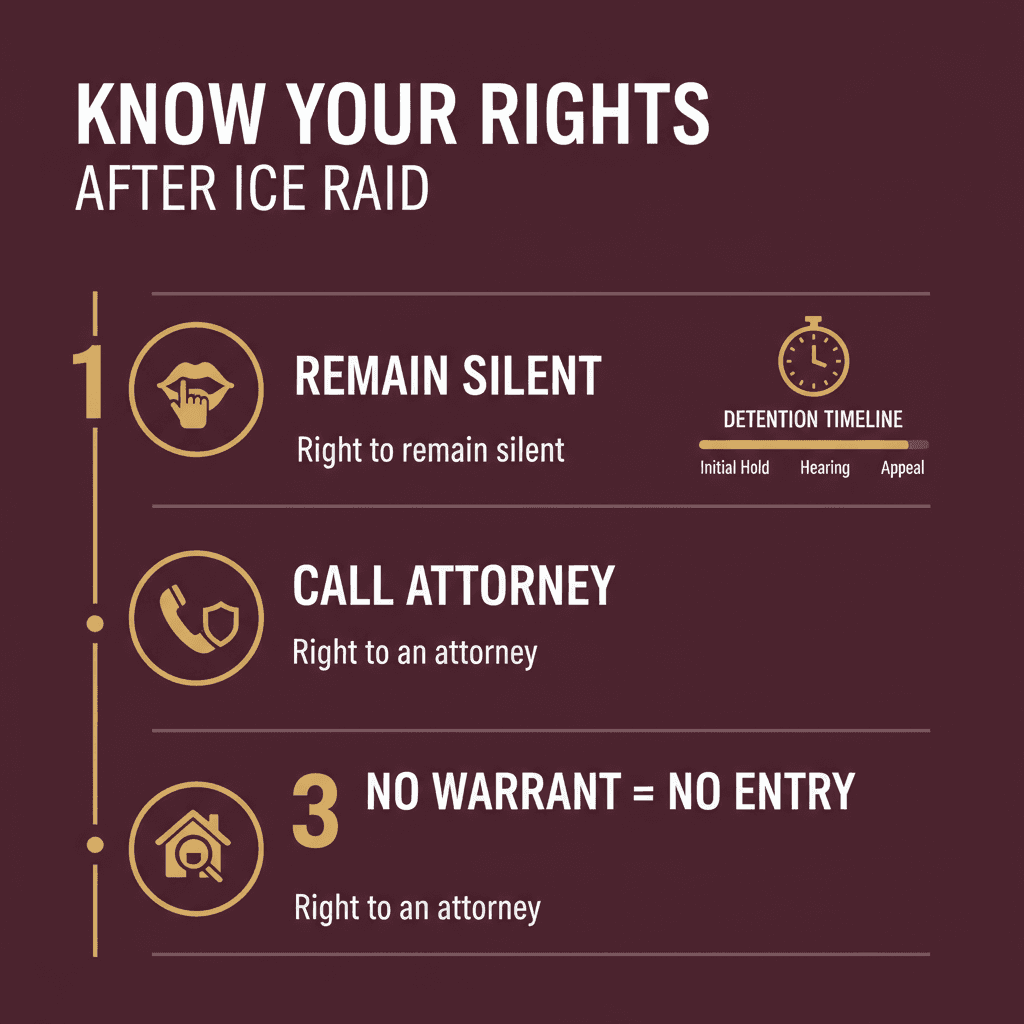
If you remember only three rules, make them these:
- Stay calm and do not open the door unless you understand the warrant.
- Ask, “Am I free to leave?” If yes, leave calmly.
- You can remain silent and ask to speak with a lawyer.
This matters because statements about where you were born, how you entered, or your status can be used later in removal proceedings.
If you are stopped in public
ICE encounters can happen in parking lots, on public transportation, or outside businesses. The headline High School Student Doing Laundry Among Those Detained In Morris Co. ICE Raid - Patch shows how routine errands can turn into life-changing events.
- Do not run or resist.
- Do not present false documents or lie about identity.
- Do not sign papers you do not understand.
What documents to carry (and what not to carry)
Some people choose to carry proof of lawful status, if they have it. Others carry a card stating they wish to remain silent and speak to a lawyer.
Avoid carrying fake IDs or someone else’s documents. That can create criminal exposure and make immigration relief harder.
Special Concerns for Students and Families
What parents should plan now
When minors are involved, families need an emergency plan. Even if a child is a U.S. citizen, a parent’s detention can trigger sudden custody and school disruptions.
Consider preparing:
- A list of emergency contacts
- School pickup authorization forms
- Medical and allergy information
- Copies of immigration documents in a safe place
School privacy and student records
Schools generally have strong privacy rules around student records. But families should be careful about what they share with anyone claiming to be “from the government.” Ask for identification and contact an attorney.
Why the “doing laundry” detail matters legally
The detail in High School Student Doing Laundry Among Those Detained In Morris Co. ICE Raid - Patch matters because it shows how “normal life” locations can become enforcement sites. In many cases, the key legal questions become:
- Was the person actually the intended target?
- Was there a lawful basis to stop or detain them?
- Were any constitutional rights violated?
These details can affect suppression arguments, credibility findings, and bond strategy—especially when identity mistakes happen.
Need help fast? If someone you love was detained, do not wait for “the next hearing notice.” Call 1-844-967-3536 to speak with our team and protect your options. Se Habla Español. You can also message us here.
What Happens After Someone Is Detained: The Immigration Court Process
The Notice to Appear (NTA) and removal proceedings
After an arrest, ICE may issue a Notice to Appear (NTA). This document starts removal proceedings under federal law. The main hearing process is governed by 8 U.S.C. § 1229a, which outlines removal proceedings before an immigration judge.
Many people think immigration court works like criminal court. It does not. There is no public defender, and the government prosecutor is trained and prepared. Having counsel can change outcomes.
Bond hearings: who may qualify
Some detainees can request release on bond, while others face mandatory detention based on specific grounds. Bond rules are complicated and fact-specific, including prior immigration orders, criminal history, and the type of custody.
If your family is in orlando, cases may connect to the Orlando Immigration Court depending on where the person is detained and where proceedings are set. In addition, families often coordinate paperwork, affidavits, and support letters while managing work and childcare.
Possible relief: asylum, cancellation, adjustment, and more
Relief depends on the person’s history, entry, family ties, and any past arrests. Common forms of relief can include:
What's Your Immigration Situation?
Answer 3 questions - we'll tell you your options
Question 1 / 3
What best describes your situation?
Keep Reading

- Asylum (for those who fear persecution)
- Cancellation of removal (for certain long-term residents with strong equities)
- Adjustment of status (for some who qualify through family or other routes)
- Motions to reopen (for some prior orders)
You can learn about immigration benefits and processes directly from the government at USCIS and visa pathways at the U.S. Department of State visa information page. Court procedures and judge information can be found through EOIR (Executive Office for Immigration Review).
How Vasquez Law Firm, PLLC Can Help After an ICE Raid
Experience that matters in fast-moving detention cases
At Vasquez Law Firm, PLLC, our immigration team understands how quickly detention cases move. Attorney Vasquez, JD, has 15 years of experience and is admitted to the North Carolina State Bar and the Florida Bar.
When families call us after a raid, we focus on immediate steps that protect long-term options—especially when the facts resemble High School Student Doing Laundry Among Those Detained In Morris Co. ICE Raid - Patch, where a person may be picked up during a routine activity.
What we try to do in the first 72 hours
Early action can change the direction of a case. Depending on the facts, we may:
- Help the family locate the detainee and confirm custody status
- Review immigration history for prior orders or missed hearings
- Identify bond arguments and prepare supporting evidence
- Screen for relief options (asylum, cancellation, adjustment, U/T visas)
- Coordinate a safe plan for children, housing, and employment letters
Serving Orlando residents with bilingual support
Our firm regularly assists clients serving orlando residents and families throughout Central Florida. We understand the local pressures—work schedules, school needs, and the stress of showing up at hearings while caring for family.
If you need help understanding your options, visit our Immigration Law services page, learn more about our team on the Attorney Vasquez profile page, or contact us directly for a free case evaluation.
Frequently Asked Questions (FAQ)
1) Can ICE detain someone who is not the “target” of a raid?
Yes. While many actions are targeted, people can be detained if ICE believes they are removable or if identity questions arise. That is why planning and knowing your rights matters.
2) Do I have to open the door for ICE?
You generally do not have to open the door unless ICE has a valid judicial warrant signed by a judge. You can ask to see the warrant through a window or have it placed under the door.
3) Should I answer questions about where I was born or my status?
You have the right to remain silent. In many cases, it is safer to say you want to speak with a lawyer. Admissions about alienage, entry, or prior removals can be used in immigration court.
4) How do we find a loved one after an ICE detention?
Start by collecting the person’s full legal name, date of birth, and A-number (if known). Then contact an attorney quickly. An attorney can help confirm custody and guide next steps, including bond strategy and court timing.
5) Can a student qualify for any immigration protection?
It depends on the student’s history and family situation. Some may qualify through family petitions, Special Immigrant Juvenile Status (SIJS), asylum, or other humanitarian options. A careful screening is essential before filing anything.
6) If I live in Orlando, where will my immigration court hearing be?
Many Central Florida matters connect to the Orlando Immigration Court, but venue can depend on where the government files the case and where the person is detained or lives. A lawyer can confirm the correct court and deadlines.
If you or a loved one was detained—or you fear an ICE encounter—get legal advice now. Call 1-844-967-3536 or schedule a consultation with Vasquez Law Firm, PLLC. Se Habla Español.
Important: This article is for general information and is not legal advice. Every case is different, and small facts can change the outcome.

William Vasquez
Founder & CEO, Vasquez Law Firm, PLLC
William Vasquez is the founder and CEO of Vasquez Law Firm, PLLC, a results-driven firm specializing in immigration, criminal defense, personal injury, and workers' compensation. A U.S. Air Force veteran and recipient of the Joint Service Achievement Medal, William is dedicated to fiercely fighting for his clients' rights.
Related Legal Services
Need legal help? Learn more about experienced immigration attorneys in Charlotte, or contact us for a free evaluation.
You can also visit NC immigration legal help for more information.