How to Apply for a Green Card in 2026 and What Has Changed
Green card application 2026 guide: eligibility, forms, fees, and public-charge updates. Call 1-844-967-3536 (Se Habla Español) today.
Published on January 30, 2026
Talk to an immigration attorney
Free call. A clear plan for your case.
Free & confidential · Se habla espanol · 24/7

Have questions? Talk to an attorney - free evaluation.
Call 1-844-967-3536Free Tool
Check Your USCIS Case Status Now
Enter your receipt number - get the official USCIS status in English or Spanish. No registration.
How to Apply for a Green Card in 2026 and What Has Changed
Planning a green card application 2026 can feel stressful—especially with news reporting possible changes to the “public charge” policy and other screening rules. This guide breaks down the green card process in clear terms, explains what may change, and shares real-world tips to help you file the right case the first time.
Filing or renewing a green card?
Adjustment-of-status timing, RFEs, and travel risks all change with new policy. 15-min review of your specific case.
If you want a tailored plan, Vasquez Law Firm, PLLC can review your options and help you avoid delays. Our team serves charlotte residents and families across North Carolina, and Se Habla Español.
Have questions about your green card application 2026? Call 1-844-967-3536 or request help online. Se Habla Español.
What This News Means for charlotte Residents Applying in 2026
Why “public charge” is back in the headlines
Recent reporting has warned that a future administration could expand a stricter public-charge rule and increase harm to immigrant families. Here is the article that sparked many questions: analysis of how a renewed public-charge rule could affect immigrant families.
Public charge is not a new concept. It comes from U.S. immigration law and has been revised many times through regulations and policy guidance.
What you should do now (even before rules change)
If you are preparing a green card application 2026, the best move is to build a strong file based on today’s requirements while staying flexible for updates. That means accurate forms, complete evidence, and a clear financial sponsorship plan.
For many families in charlotte, the biggest risk is not “the law changing overnight.” It is filing an incomplete case, missing a deadline, or misunderstanding sponsorship rules.
Local impact: interviews, appointments, and delays
Most green card cases involve biometrics and sometimes an interview. If you live in charlotte, your case may require appointments at nearby USCIS facilities and supporting records from local institutions.
If your case is in Immigration Court, hearings may be connected to federal immigration processes overseen by the Executive Office for Immigration Review (EOIR), which has its own rules and timelines.
Green Card Basics for 2026: Paths, Terms, and Key Agencies
Adjustment of status vs. consular processing
Most applicants get a green card in one of two ways:
- Adjustment of status (applying from inside the U.S.), usually through USCIS.
- Consular processing (applying through a U.S. embassy or consulate), coordinated through the Department of State and USCIS.
USCIS is the main agency for filings and interviews inside the U.S. You can confirm current forms, fees, and instructions at USCIS.gov.
Common eligibility categories in 2026
While every case is unique, many green cards are based on:
- Family (spouse of a U.S. citizen, parent/child, family preference categories)
- Employment (employer sponsorship, certain self-petitions)
- Humanitarian options (asylee/refugee adjustment, certain special immigrant categories)
- Diversity Visa (for eligible countries and winners of the DV lottery)
If you are applying through a consulate, start with the U.S. Department of State visa information page to understand interview steps and required civil documents.
Important terms you will see on forms
These terms show up often in a green card application 2026:
- Petitioner: the person or employer sponsoring you
- Beneficiary: the person seeking the green card
- Affidavit of Support: the financial contract many family-based applicants need
- Inadmissibility: legal reasons USCIS or a consulate can deny (health, fraud, unlawful presence, certain crimes, and more)
Green Card Application 2026: Step-by-Step Process (What to Expect)
Step 1: Choose the correct process and filing strategy
The first decision is whether you qualify to file inside the U.S. (adjustment) or must process through a consulate. This depends on your category, entry history, and whether you are in lawful status.
Many delays come from choosing the wrong path or filing too early without eligibility.
Step 2: File the right forms with the right evidence
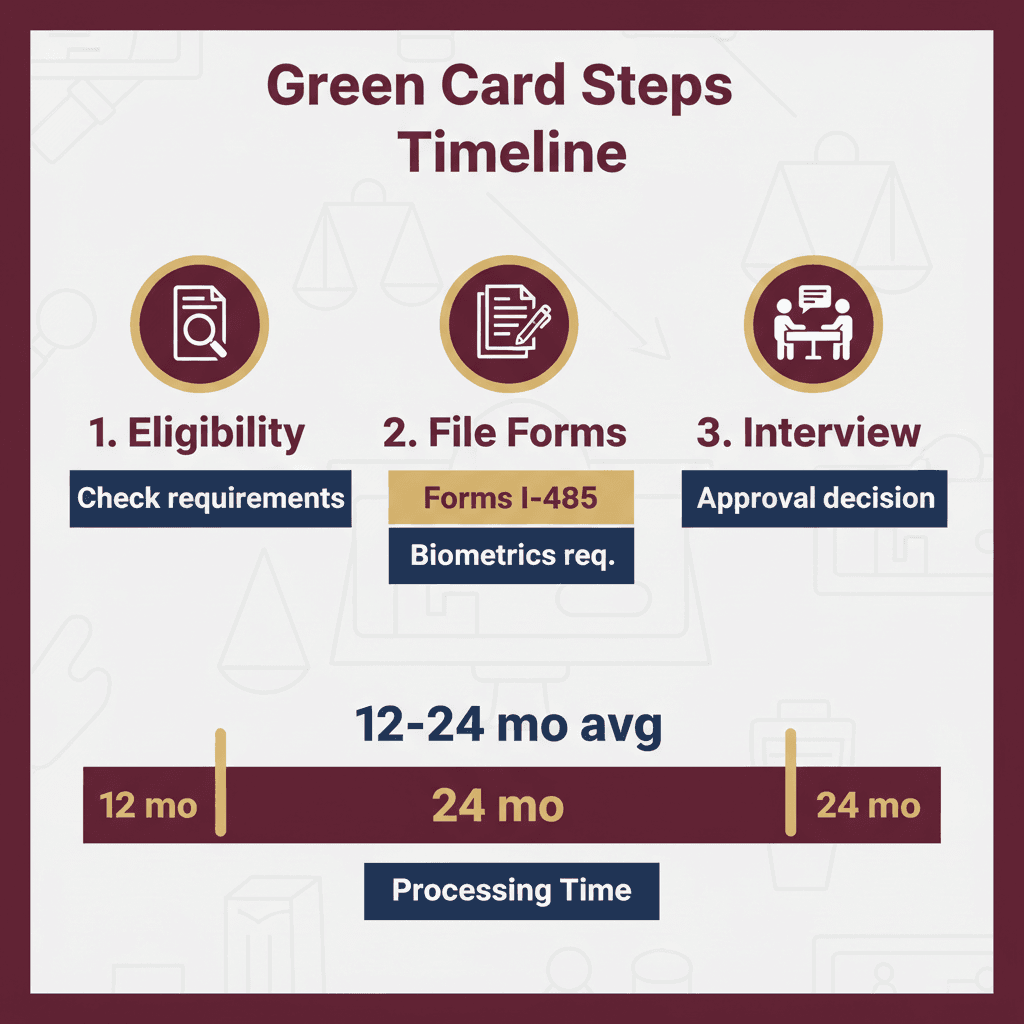
Typical filings may include a petition (family or employment based) and the green card application itself. For adjustment cases, you may also file for work and travel permission while the case is pending.
USCIS is strict about signatures, fees, and required documents. Even small errors can trigger rejections or long Requests for Evidence (RFEs).
Step 3: Biometrics, interview, and decision
After USCIS accepts the case, most applicants attend a biometrics appointment. Some cases also have an interview where an officer asks questions about eligibility and reviews your documents.
In charlotte, planning ahead for appointments helps, especially for families juggling work, school, and childcare.
Public Charge in 2026: What It Is, Who It Applies To, and How to Prepare
The legal concept behind public charge
Public charge is a ground of inadmissibility in the Immigration and Nationality Act (INA). The statute is found at 8 U.S.C. § 1182(a)(4). In plain terms, the government can deny some applicants if it believes they are likely to become primarily dependent on government support.
Public-charge policy has changed over time through regulations and guidance. Because of that, it is smart to prepare your file with strong financial evidence even when the rule is less strict.
Who is most impacted (and who may be exempt)
Public charge concerns often come up in family-based cases that require an Affidavit of Support. However, not every applicant is treated the same, and some categories can be exempt or treated differently depending on the law.
If you are unsure, do not guess. A quick review before filing a green card application 2026 can prevent avoidable denial risks.
How to strengthen your case if rules get stricter
If public-charge screening becomes tougher, strong documentation matters more. Consider preparing:
- Clear proof of the sponsor’s income (tax transcripts, W-2s, recent pay stubs)
- Evidence of lawful employment or employability (job letters, licenses, training)
- Proof of assets (bank statements, property equity documentation)
- Proof you understand your financial plan (budget, household contributions)
Also be careful with inconsistent addresses, gaps in work history, and missing translations. These issues can slow cases down even when your eligibility is strong.
Worried about public charge or sponsorship rules for 2026? Talk with our immigration team. Call 1-844-967-3536. Se Habla Español.
Top Mistakes That Delay or Deny Green Card Cases (and How to Avoid Them)
Mistake #1: Missing or weak evidence
USCIS and consulates decide cases based on what you submit. If you do not include a required document, the agency may issue an RFE, schedule a second interview, or deny the case.
Create a checklist and submit organized evidence with clear labels.
Mistake #2: Ignoring inadmissibility risks
Some applicants are eligible in theory, but still “inadmissible” for separate reasons. Common examples include prior immigration violations, misrepresentation, or certain criminal charges.
These issues may require a waiver. Waivers are technical, and the evidence must match the legal standard.
Mistake #3: Bad timing with travel, moves, or missed notices
Moving without updating your address, missing an appointment, or traveling without proper permission can cause serious problems. This is especially true for adjustment cases where travel rules can be strict.
If you are preparing a green card application 2026, set up mail tracking and keep copies of everything you send.
How Vasquez Law Firm, PLLC Helps With Green Card Applications in 2026
Experience, credentials, and local focus
Vasquez Law Firm, PLLC is led by Attorney Vasquez, JD, who has 15 years of experience in Immigration Law and is admitted to the North Carolina State Bar. We focus on practical strategies that fit your real life, not generic advice.
We are proud to be serving charlotte residents and families throughout the region, including nearby communities like Matthews, Pineville, Gastonia, and Concord.
What's Your Immigration Situation?
Answer 3 questions - we'll tell you your options
Question 1 / 3
What best describes your situation?
Keep Reading

What we do in a green card case
Our team helps clients prepare for a green card application 2026 by building a case that is clear, complete, and well-supported. Depending on your needs, we can:
- Confirm eligibility and choose the safest process (adjustment vs. consular)
- Prepare and file forms with supporting evidence and legal explanations
- Identify inadmissibility issues early and discuss waiver options
- Prepare you for the interview with practice questions and document review
Local, practical details that matter in charlotte
Local logistics can make a difference. For example, if you need records, certified copies, or translations, planning around work schedules and appointment availability can prevent last-minute problems.
When cases involve federal processes, many people recognize the Charles R. Jonas Federal Building in Uptown charlotte as a key federal landmark—another reminder that immigration cases are document-driven and deadline-driven.
Frequently Asked Questions: Green Card Application 2026
1) What is the best way to start a green card application in 2026?
Start by confirming (1) your eligibility category, (2) whether you can file inside the U.S. or must use consular processing, and (3) whether any inadmissibility issues apply. Then build a document checklist and review current instructions on USCIS before filing.
2) Could public-charge rules change in 2026?
Policy changes are possible with new regulations or guidance. Because public charge is tied to 8 U.S.C. § 1182(a)(4), changes often happen through how the rule is defined and applied. The safest approach is to prepare strong financial sponsorship evidence and stay updated through official sources and legal counsel.
3) Can I work while my adjustment of status is pending?
Many applicants file for employment authorization while an adjustment case is pending, but eligibility depends on your category and filing posture. Working without authorization can create complications in some cases, so get legal advice before relying on assumptions.
4) How long will a green card application take in 2026?
Processing times vary by category, location, background checks, and agency workload. Some cases move quickly, while others take much longer due to visa-number backlogs or RFEs. Always check official processing-time tools and plan for delays.
5) What if I have a prior overstay or unlawful presence?
Unlawful presence can trigger bars to reentry and may affect whether you should file inside the U.S. or through a consulate. In some situations, a waiver may be available, but waivers require specific evidence and a strong legal argument.
6) Do I need a lawyer for a green card application in 2026?
You are not required to hire a lawyer, but legal help can be valuable when there are prior immigration issues, criminal concerns, insufficient financial sponsorship, or complicated family situations. A lawyer can also reduce the risk of RFEs and help you prepare for interviews.
Ready to file your green card application 2026 with confidence? Call 1-844-967-3536 or request a consultation today. Se Habla Español.
Next Steps Checklist for a Strong 2026 Filing
Document checklist (starter list)
Use this as a starting point and adjust based on your category:
- Passports, I-94 (if applicable), and immigration documents
- Birth certificates (with certified translations if needed)
- Marriage/divorce documents (if filing through a spouse)
- Tax transcripts and proof of income for the sponsor
- Police/court records (if any arrests or charges happened)
- Medical exam results (when required)
Timeline planning tips
- Verify your current status and travel history before filing.
- Collect civil documents early (some take weeks to obtain).
- Budget for filing fees, medical exams, and translations.
- Keep copies of everything and track delivery confirmations.
When to get legal advice right away
Talk to an immigration lawyer before filing if any of these apply:
- You entered without inspection or have multiple entries
- You had prior removal proceedings or a deportation order
- You used a false document or gave incorrect info to an officer
- You have arrests, charges, or convictions (even if dismissed)
- Your sponsor’s income is below the guideline or hard to prove
For personalized guidance, visit our Immigration Law services page and learn how we approach family- and employment-based strategies.

William Vasquez
Founder & CEO, Vasquez Law Firm, PLLC
William Vasquez is the founder and CEO of Vasquez Law Firm, PLLC, a results-driven firm specializing in immigration, criminal defense, personal injury, and workers' compensation. A U.S. Air Force veteran and recipient of the Joint Service Achievement Medal, William is dedicated to fiercely fighting for his clients' rights.
Related Legal Services
Need legal help? Learn more about get immigration legal help today, or contact us for a free evaluation.
You can also visit our NC immigration team for more information.