What You Need to Know About Criminal Defense Rights During an Arrest in NC
Understand your rights during an arrest in North Carolina and Florida. Learn essential steps and avoid common mistakes. Contact Vasquez Law Firm for help.
Published on February 2, 2026
Protect your record and your freedom
Free, confidential review. 24/7.
Free & confidential · Se habla espanol · 24/7
Have questions? Talk to an attorney - free evaluation.
Call 1-844-967-3536Protect Your Record and Your Freedom
A confidential case review - available 24/7 for emergencies.
What You Need to Know About Criminal Defense Rights During an Arrest in NC and FL
Being aware of your criminal defense rights during an arrest is crucial to protecting yourself legally. In North Carolina and Florida, understanding your rights can impact the outcome of your case. This article provides essential information on what to do and expect, mistakes to avoid, and when to contact a lawyer.
Need help with your case? Our experienced attorneys are ready to fight for you. Se Habla Español.
Schedule Your Free Case Evaluation
Or call us now: 1-844-967-3536
Quick Answer
Understanding your rights during an arrest is essential. Key rights include:
- Right to remain silent
- Right to an attorney
- Protection against unlawful searches
- Right to know charges against you
- Right to bail consideration
Why Knowing Your Rights Matters
Knowing your rights during an arrest can significantly affect your legal situation. It can prevent self-incrimination and ensure law enforcement acts within legal boundaries. Being aware of your rights helps maintain fairness in the criminal justice system and protects you from potential abuses of power.
Step-by-step: What to do when arrested
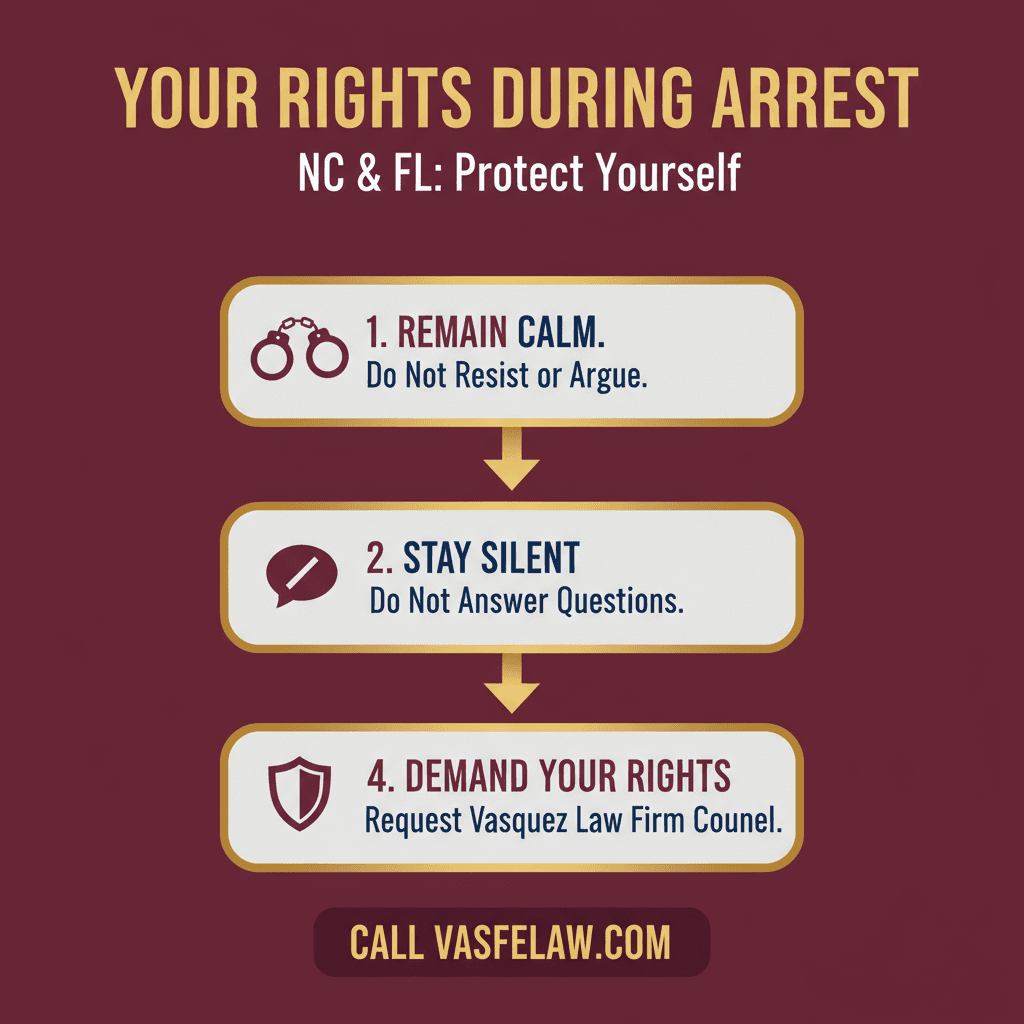
- Stay calm and do not resist arrest.
- Clearly state that you wish to remain silent and ask for an attorney immediately.
- Do not consent to any searches of your person or property.
- Remember details of the arrest for later discussion with your attorney.
- Do not provide any explanations, excuses, or stories to the police.
Documents or evidence checklist to gather
- Arrest reports
- Names and badge numbers of arresting officers
- Any written statements made
- Photographs of any injuries
- Witness contact information
Timeline: What to expect after an arrest
- Initial Arrest: Immediately after, you should be informed of your rights.
- Booking: The process of record creation, fingerprinting, and photographing.
- Arraignment: Typically occurs within a few days; charges are formally read.
- Pre-trial: May involve motions, plea bargaining, or preparing defense.
- Trial: Could take weeks or months, depending on case complexity.
Costs and fees: What impacts the price
- Severity and complexity of charges
- Length of trial and preparation required
- Need for expert witnesses or additional investigations
- Attorney’s experience and reputation
Common mistakes and how to avoid them
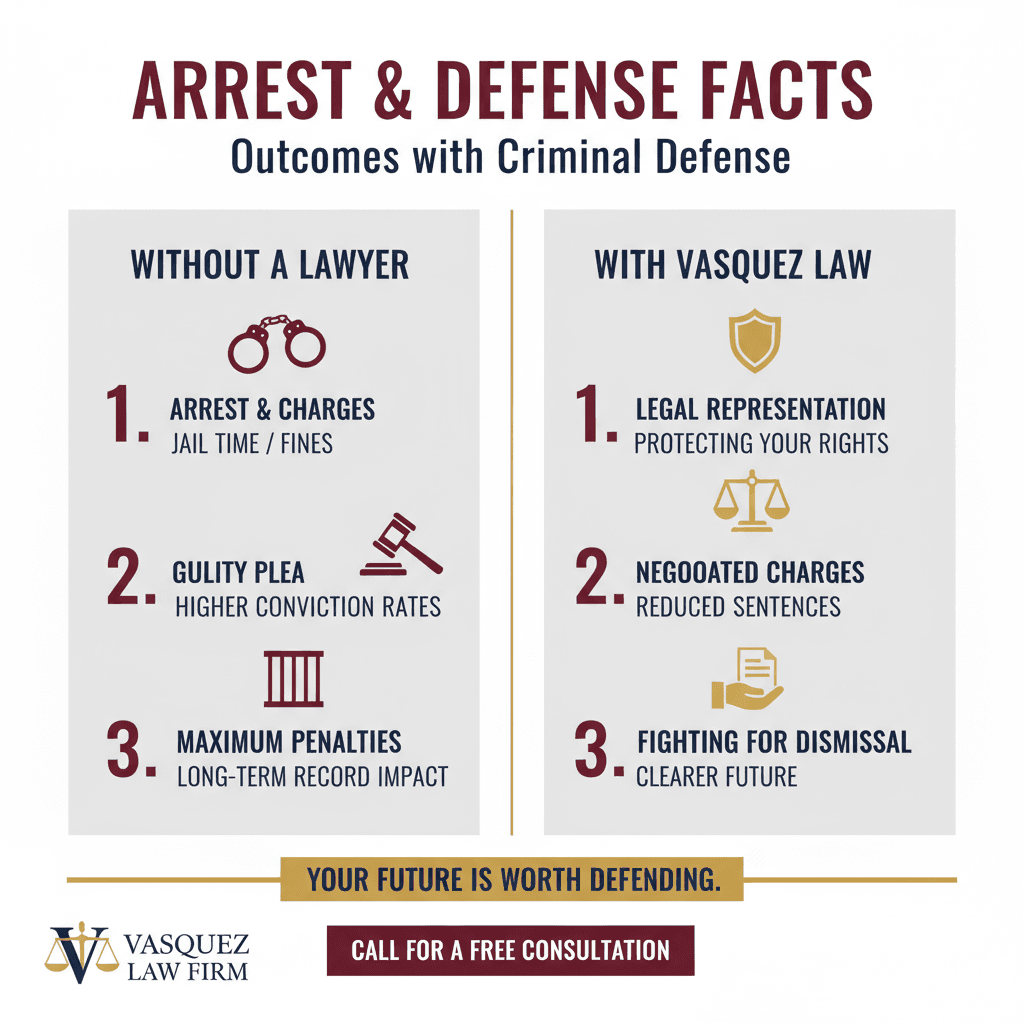
- Making statements without an attorney - Always insist on legal representation.
- Resisting arrest physically - Stay calm and comply to avoid additional charges.
- Neglecting to gather your own evidence - Document everything, seek corroborating information.
- Failing to understand the charges - Ask for clarification.
- Ignoring court dates - Always attend or risk further legal consequences.
If you only remember one thing: Invoke your right to remain silent until your attorney is present.
North Carolina Notes
NC notes
In North Carolina, being aware of state-specific laws affecting your rights during an arrest is crucial. State laws provide distinct avenues for challenging unlawful arrests and obtaining evidence to support your defense.
When to call a lawyer now
- If you're arrested or detained, request an attorney immediately.
- If you perceive any rights violations during the arrest process.
- When facing significant penalties that could impact your future.
- If you're unfamiliar with the criminal process and need guidance.
- When charged with serious offenses such as a felony.
- To discuss potential plea deals or negotiating terms.
About Vasquez Law Firm
At Vasquez Law Firm, we combine compassion with aggressive representation. Our motto "Yo Peleo" (I Fight) reflects our commitment to standing up for your rights.
- Bilingual Support: Se Habla Español - our team is fully bilingual
- Service Areas: Criminal defense in Johnston and Harnett counties, NC; immigration nationwide, including Florida
- Experience: Over 15 years helping clients navigate complex legal matters
- Results: Thousands of successful cases across multiple practice areas
Attorney Trust and Experience
Attorney Vasquez holds a Juris Doctor degree and is admitted to practice in the North Carolina State Bar. With over 15 years of dedicated legal experience, he has built a reputation for providing personalized attention and achieving favorable outcomes for his clients.
Don't face your legal challenges alone. Our team is here to help you every step of the way.
Call today: 1-844-967-3536 | Se Habla Español
Frequently Asked Questions
What should I do if I’m arrested in North Carolina?
Remain calm, do not resist, and ask to speak to an attorney immediately. By understanding and invoking your rights, you can avoid self-incrimination mistakes.
Can I refuse a search during an arrest?
Yes, you have the right to refuse any searches unless the police have a warrant. Politely stating your refusal is critical.
Why is it important to remain silent?
Remaining silent prevents you from unintentionally confessing or providing incriminating information. Request legal counsel to guide your statements.
How soon can I get bail?
Bail arrangements can sometimes be made immediately after booking, but it often requires a bail hearing within a day or two.
What if the arrest feels unlawful?
Immediately request an attorney. Document all details and potential witnesses to contest the legality in court.
What are my rights to an attorney?
Every individual has the right to speak with an attorney immediately after an arrest, which is crucial for mounting a defense.
Are my rights the same in NC and FL?
While there are federal rights applicable nationwide, each state, including NC and FL, may have additional specific laws regarding arrests.
What’s the difference between a felony and misdemeanor?
Felonies are more serious crimes with harsher penalties, while misdemeanors are less serious, often with lighter sentences.
Sources and References
Facing charges? Our criminal defense attorneys can review your case.
Ready to take the next step? Contact Vasquez Law Firm today for a free, confidential consultation. We're committed to fighting for your rights and achieving the best possible outcome for your case.
Start Your Free Case Evaluation Now
Call us: 1-844-967-3536
Se Habla Español - Estamos aquí para ayudarle.

William Vasquez
Founder & CEO, Vasquez Law Firm, PLLC
William Vasquez is the founder and CEO of Vasquez Law Firm, PLLC, a results-driven firm specializing in immigration, criminal defense, personal injury, and workers' compensation. A U.S. Air Force veteran and recipient of the Joint Service Achievement Medal, William is dedicated to fiercely fighting for his clients' rights.
Related Legal Services
Need legal help? Learn more about learn about our criminal defense practice, or contact us for a free evaluation.
You can also visit criminal defense lawyers in Johnston County for more information.