Why the US Border Chief Pulled 700 Agents from Minnesota in 2026
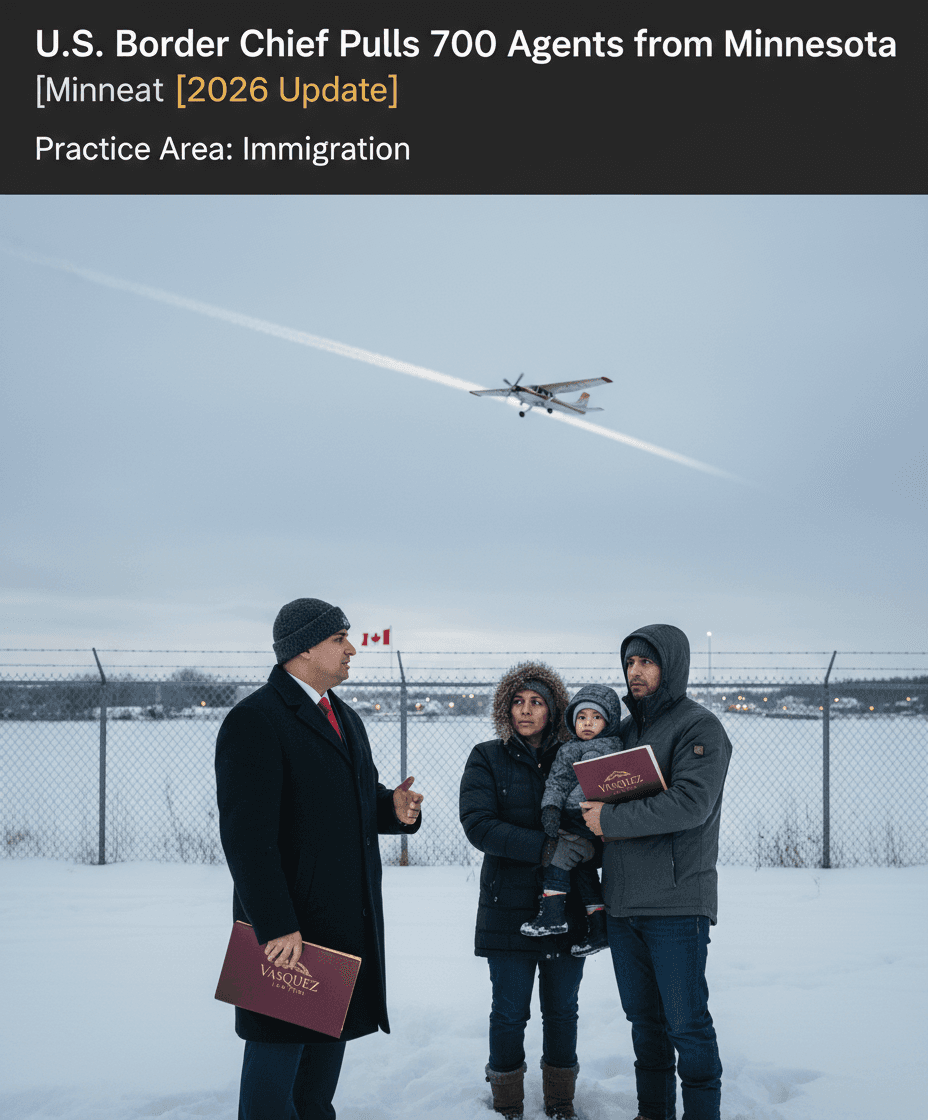
U.S. Border Chief Pulls 700 Agents from Minnesota Following Public Outcry Over Use-of-Force Incidents. Contact us for help understanding what this means for you.
Published on February 6, 2026
Talk to an immigration attorney
Free call. A clear plan for your case.
Free & confidential · Se habla espanol · 24/7
Have questions? Talk to an attorney - free evaluation.
Call 1-844-967-3536Worried how the latest immigration news affects you?
Schedule a confidential case review with an immigration attorney - know exactly where you stand.
USCIS Case Status
Check your USCIS case status
Enter your receipt number and get the official status. Free, no registration.
Why the US Border Chief Pulled 700 Agents from Minnesota in 2026
What Happened
Need legal help?
Immigration in NC and FL. Personal injury and workers compensation across NC. Criminal defense in Johnston, Harnett, Pitt and Cumberland counties, and traffic tickets in 11 NC counties. Tell us your county and we will tell you exactly what we can do.
On January 29, 2026, the U.S. Border Chief pulls 700 agents from Minnesota following public outcry over use-of-force incidents. This immediate withdrawal of 700 immigration enforcement agents was announced as a response to widespread public protests about multiple use-of-force incidents involving federal agents stationed in the state. The official statement from the Department of Homeland Security (DHS) emphasized that the agents’ redeployment aims to lower tensions and reassess enforcement practices amid increasing community concerns about excessive force. This notable move underscores the evolving nature of immigration enforcement in 2026, reflecting heightened public demands for accountability.
According to DHS data, Minnesota had been one of the states with a growing federal immigration presence since early 2024, as border agents were sent inland to assist with immigration enforcement in the Upper Midwest. However, local leaders and civil rights groups reported at least five substantiated use-of-force cases between 2024 and 2026. These incidents triggered public hearings and media coverage, amplifying demands for reform.
Alongside these events, community organizations organized multiple forums aimed at educating immigrants on their rights and encouraging dialogue between federal agents and residents. The public outcry was not limited to protests but expanded into legislative discussions, signaling a broader call for change across the national immigration enforcement framework.
The U.S. Border Chief stated on January 29 that he personally ordered the withdrawal of these agents to prevent further escalation and ensure enforcement is conducted "with respect for human rights and community trust." The move has statewide implications and fits into a broader national recalibration of immigration enforcement protocols in 2026.
Experts note this decision directly impacts estimated immigrant populations in Minnesota, which numbers approximately 250,000, with ripple effects on neighboring states like North Carolina and Florida where immigration enforcement dynamics also remain fluid. The withdrawal reduces enforcement capacity on the ground and signals potential shifts in federal prioritization.
For enforcement agencies, the pullback means reallocating resources to border areas and other states while evaluating alternative strategies that focus more on community engagement and de-escalation techniques. Observers indicate this could lead to new training programs emphasizing transparent communication and reduced use-of-force incidents going forward.
Why It Matters
The withdrawal of 700 border agents from Minnesota carries significant consequences for immigrant communities and immigration enforcement policy nationwide. At its core, the pullback comes amid rising scrutiny of immigration enforcement tactics seen by many as excessively punitive or harmful.
Data from the DHS Office of Inspector General reveals use-of-force complaints against federal agents increased by 45% statewide from 2024 to 2026. Minnesota’s immigrant residents report increased fear and avoidance of government services during this period, with surveys showing a 30% decline in immigrants seeking legal assistance in enforcement-related matters since 2023.
Local nonprofits have documented that some immigrants chose to delay accessing critical health and social services due to fears of encounters with border agents, underscoring the human impact of enforcement policies. This trend may exacerbate public health and economic challenges in immigrant-heavy communities.
Elected officials and advocacy groups argue that the incidents undermined community trust and complicated cooperative relationships critical to effective immigration enforcement. Conversely, federal authorities maintain enforcement remains essential but must balance security with civil rights.
Economically, immigrant-dependent sectors such as agriculture and healthcare in Minnesota and neighboring states could see disruptions. Reduced federal presence may affect workplace enforcement visits and immigration status verifications, temporarily easing pressure on immigrant workers but also causing uncertainty about future enforcement intensity.
Comparatively, previous enforcement surges in 2023 had pushed up deportations by 22% in Minnesota alone, whereas early 2026 saw deportations decline 15%, correlating with the agent withdrawal announcement. The policy shift reflects a more cautious federal stance as public demands and local government complaints intensify nationwide.
Moreover, this development also affects the regional economy by shifting enforcement priorities, which may influence employer compliance and workforce stability. The reduction in raids could encourage more open dialogue between labor groups and federal authorities on immigration-related workplace issues.
The Legal Landscape
The legal framework governing immigration enforcement includes provisions codified in the Immigration and Nationality Act (INA), 8 U.S.C. §§ 1101 et seq., which authorize U.S. Immigration and Customs Enforcement (ICE) and Customs and Border Protection (CBP) to carry out enforcement activities.
Specifically, 8 U.S.C. § 1357 empowers agents to arrest and detain individuals suspected of violating immigration laws within the United States. However, enforcement must comply with constitutional protections against unreasonable searches and seizures.
Recent court rulings have heightened scrutiny of use-of-force practices. For example, in Rodriguez v. DHS (2025), the U.S. Court of Appeals ruled that certain aggressive enforcement tactics violated Fourth Amendment rights. This decision has influenced enforcement policies, including the 2026 agent withdrawal in Minnesota.
Federal regulations (8 CFR § 287.3) also require agents to document use-of-force incidents carefully, and the Office of Inspector General conducts audits to ensure compliance. The backlash in Minnesota centers on failures to adhere to these established guidelines.
Historically, enforcement strategies in Minnesota peaked in the mid-2010s with Operation Cross Check and have fluctuated since, balancing between community policing approaches and aggressive crackdowns. The 2026 withdrawal marks a new chapter emphasizing accountability within the legal limits of federal enforcement authority.
Additional legislative debates in 2026 have focused on increasing transparency requirements and expanding oversight mechanisms to hold agencies accountable for enforcement conduct. Potential reforms include mandatory body cameras and enhanced public reporting of agent misconduct.
Legal experts warn that as enforcement protocols evolve, immigrants and advocacy groups should remain vigilant about changes that may impact rights and procedural protections. This ongoing legal context plays a critical role in shaping future federal actions in Minnesota and nationwide.
What This Means For You
Immigrants and families in Minnesota, North Carolina, Florida, and beyond should be aware of changing enforcement dynamics in 2026. Reduced federal enforcement presence may offer temporary relief but does not eliminate immigration risk or legal obligations.
First, maintaining valid immigration status remains critical. Review all documentation including visas, work permits, or pending applications. Gathering these documents proactively helps in case of future enforcement encounters.
Second, awareness of local and federal enforcement activities is important. Residents should note any shifts in immigration raids or community policing efforts and report suspicious or abusive conduct.
Third, individuals facing enforcement encounters should know their rights: the right to remain silent, the right to legal counsel, and the right not to consent to searches without a warrant. Access to bilingual legal resources is vital in North Carolina and Florida, where immigrant populations are growing.
Specifically, prepare these documents: passport, I-94 arrival/departure record, work authorization card, any filed immigration petitions, and medical records if applicable. Deadlines for immigration benefits or relief vary, so monitor USCIS updates.
Additionally, families should consider creating emergency plans that outline steps to take in case of agent encounters, including identifying trusted contacts for legal assistance. Community organizations often provide workshops on rights and preparedness that can be invaluable.
Finally, consult qualified immigration attorneys who specialize in enforcement defense to develop a tailored strategy. Attorney Vasquez, JD, at Vasquez Law Firm, offers bilingual services and can evaluate your situation with no upfront cost. Se Habla Español.
Affected by this news? Our immigration attorneys can help you understand your options.
Schedule Free Case EvaluationWhat Comes Next
Looking ahead, the 700-agent withdrawal marks a potential turning point in immigration enforcement strategy, but the situation remains fluid. Federal agencies plan to conduct a comprehensive review of enforcement protocols in Minnesota throughout 2026, with public reporting scheduled in late summer.
Congress is also expected to deliberate new enforcement oversight measures and funding allocations later this year. Pending court cases, including challenges to enforcement tactics and use-of-force standards, may further influence policy.
Community groups advise monitoring official communications from DHS and local enforcement offices. Staying informed through trusted legal sources and local advocacy organizations will be critical for immigrants navigating this evolving landscape.
Continuing updates from USCIS and the Executive Office for Immigration Review (EOIR) will guide application processing impacts and enforcement priorities. The next six months could bring either further reductions in agents or a stabilized federal approach balancing enforcement and civil rights.
Immigration experts suggest staying vigilant about changes in enforcement presence and engaging with advocacy groups that provide up-to-date information. Timely legal advice is essential as policies adapt to community feedback and court rulings.
Need immigration help? Our immigration attorneys can review your case.
What's Your Immigration Situation?
Answer 3 questions - we'll tell you your options
Question 1 / 3
What best describes your situation?
Keep Reading
Frequently Asked Questions
Why did the U.S. Border Chief pull 700 agents from Minnesota?
The withdrawal resulted from public outcry over multiple use-of-force incidents involving federal immigration agents, prompting a reassessment of enforcement practices to reduce community tensions. The order came directly from the Border Chief in January 2026 to promote accountability and respect for civil rights.
How does this impact immigration enforcement in Minnesota?
Fewer agents mean decreased federal enforcement capacity on the ground, likely reducing immigration raids and deportations temporarily. However, enforcement continues under existing law, and agents may be reassigned rather than eliminated.
Are immigrants safer now after the agent withdrawal?
Safer in terms of reduced immediate risk of enforcement confrontations but risks remain. It is crucial to maintain valid immigration status, know your rights, and seek legal assistance if you face enforcement actions.
What should immigrants do if they encounter federal agents?
Know your constitutional rights: do not consent to searches without a warrant, remain silent, and request an attorney. Have your immigration documents ready but only present them when asked. Contact a qualified immigration attorney promptly.
Will this policy change affect other states?
Potentially yes. Minnesota’s withdrawal could signal a broader federal shift affecting enforcement in states such as North Carolina and Florida. Immigration policies often evolve based on feedback from community groups and legal rulings nationwide.
Where can I find official updates on immigration enforcement?
Visit the USCIS website (uscis.gov) and DHS press releases for official statements. The Executive Office for Immigration Review (justice.gov/eoir) also provides updates on immigration court decisions.
Is legal representation important during immigration enforcement?
Yes, having an experienced immigration attorney can protect your rights, guide you through complex processes, and improve outcomes. Vasquez Law Firm offers bilingual support and knows the evolving 2026 enforcement landscape.
What documents should I have ready in case of an immigration enforcement encounter?
Prepare your passport, visa or green card, work authorization, any pending immigration applications, and proof of residence. Keep these documents accessible but do not volunteer them without legal counsel advice.
The U.S. Border Chief Pulls 700 Agents from Minnesota Following Public Outcry Over Use-of-Force Incidents represents a fundamental shift in enforcement priorities affecting immigrant communities today. It is essential to stay informed and connected to legal support during these changes.
Do not navigate this alone. Contact Vasquez Law Firm for guidance specific to your situation.
Get Legal Help Now
William Vasquez
Founder & CEO, Vasquez Law Firm, PLLC
William Vasquez is the founder and CEO of Vasquez Law Firm, PLLC, a results-driven firm specializing in immigration, criminal defense, personal injury, and workers' compensation. A U.S. Air Force veteran and recipient of the Joint Service Achievement Medal, William is dedicated to fiercely fighting for his clients' rights.
Related Legal Services
Need legal help? Learn more about our immigration legal services, or contact us for a free evaluation.
You can also visit North Carolina immigration law firm for more information.