ai news today: What It Means for Criminal Defense Cases
ai news today affects criminal defense—AI evidence, lawyer rankings, and your rights. Call 1-844-967-3536 for a consult (Se Habla Español).
Vasquez Law Firm
Published on January 29, 2026
ai news today: What It Means for Criminal Defense Cases
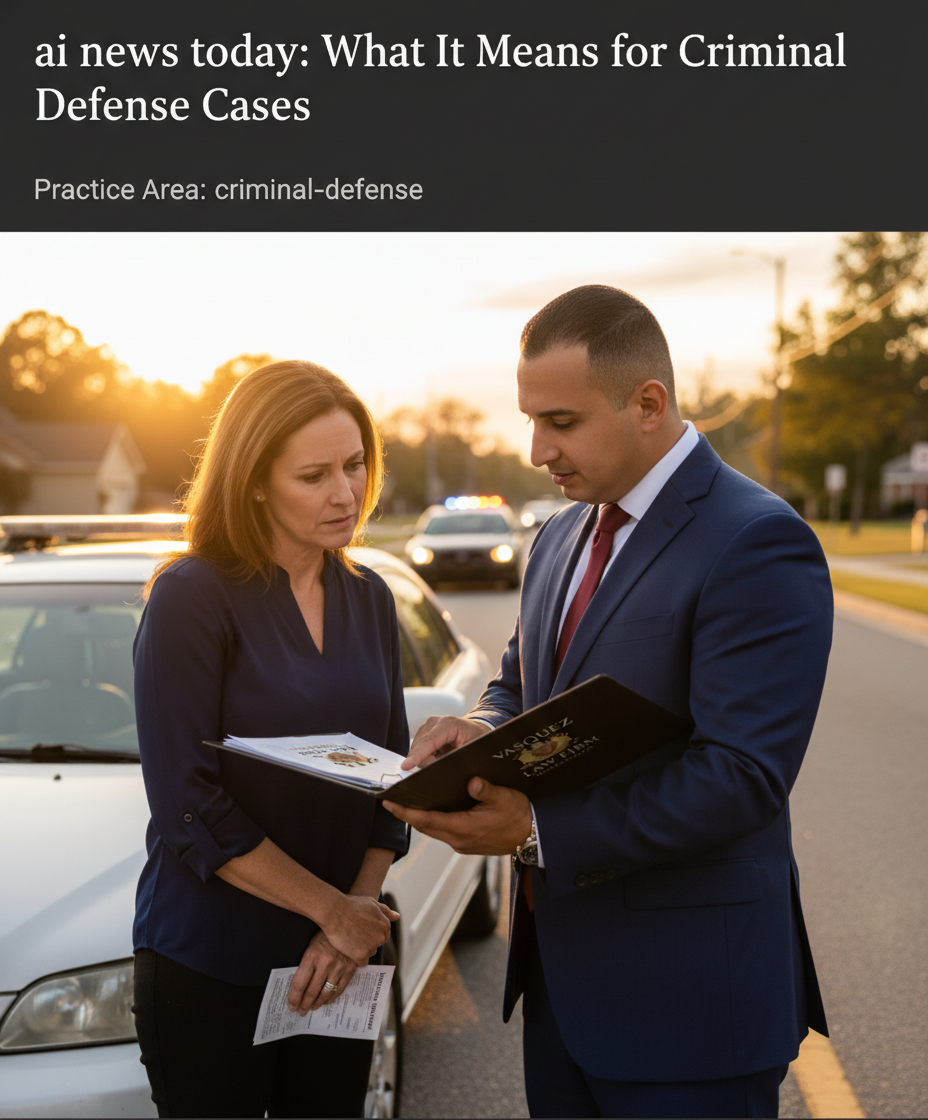
When you read ai news today, it can feel far away from real life. But AI is already shaping criminal investigations, “best lawyer” lists, and even the evidence used in court. If you or a loved one is facing charges, understanding how AI shows up in policing, prosecution, and online legal information can help you protect your rights—especially here in smithfield and across Johnston County.
Bottom line: AI tools can be helpful, but they can also be wrong, biased, or misunderstood. A strong defense focuses on the facts, the law, and whether the state can prove its case beyond a reasonable doubt.
Worried about how digital or AI-driven evidence could affect your case? Call 1-844-967-3536 to request a free consultation. Se Habla Español.
What This News Means for smithfield Residents
AI, “best lawyer” rankings, and what to trust
A recent story circulating online highlights a list-style feature about criminal defense attorneys (see this Times Union-related listing article). Even when a list is created by people, AI often influences what you see through search ranking, recommendations, and summaries.
For someone searching in a stressful moment, lists can feel like a shortcut. But they rarely explain what matters most in a criminal case: local court experience, motion practice, evidence review, and trial strategy.
AI is already in investigations (even if it’s not labeled “AI”)
In smithfield, many cases involve digital evidence: phone extractions, social media posts, surveillance video, license plate readers, and body-worn cameras. AI can be used to sort, tag, or “recognize” patterns in that data.
That creates new defense questions, such as:
- Was the tool validated and used correctly?
- Is the output reliable, or just a “lead” that needs proof?
- Can the defense review the method, settings, and error rate?
Why local courts matter more than online headlines
AI headlines move fast. Court cases move by rules, deadlines, and evidence standards. If your case is in Johnston County, what matters is what gets filed, what gets admitted, and what a judge allows at the Johnston County Courthouse—not what an algorithm highlights.
How AI Shows Up in Criminal Cases (Real-World Examples)
Video, audio, and “deepfake” concerns
One reason ai news today matters is that AI can create realistic-looking audio and video. If a recording is used against you, a defense attorney may need to examine:
- Where the file came from and who handled it (chain of custody)
- Whether it was edited or compressed in a way that changed meaning
- Metadata, timestamps, and device history
Even when a file is “real,” context can be missing. A short clip may not show what happened before or after the incident.
Facial recognition and “matching” errors
Facial recognition is often described as a match/no-match tool. But it’s not magic. Errors can happen because of lighting, angles, image quality, or biased training data.
In court, the key issues often include:
- Whether the technology was tested and validated
- Whether an officer relied on it as proof instead of as a lead
- Whether the defense can access documentation to challenge it
Predictive policing and “risk” scores
Some agencies use analytics to decide where to patrol or whom to prioritize. Even if a “risk” model is not introduced at trial, it can shape decisions early in a case—like stops, searches, and arrests.
That makes constitutional questions—like reasonable suspicion and probable cause—more important than ever.
Legal Rules That Control AI-Related Evidence
Your constitutional protections still apply
No matter how modern the tool is, the Constitution sets limits. Key protections often raised in criminal defense include:
- Fourth Amendment limits on unreasonable searches and seizures
- Fifth Amendment protection against compelled self-incrimination
- Sixth Amendment rights to counsel and to confront witnesses
These principles can matter when police obtain data from devices, accounts, or surveillance systems.
Discovery: getting access to the state’s evidence
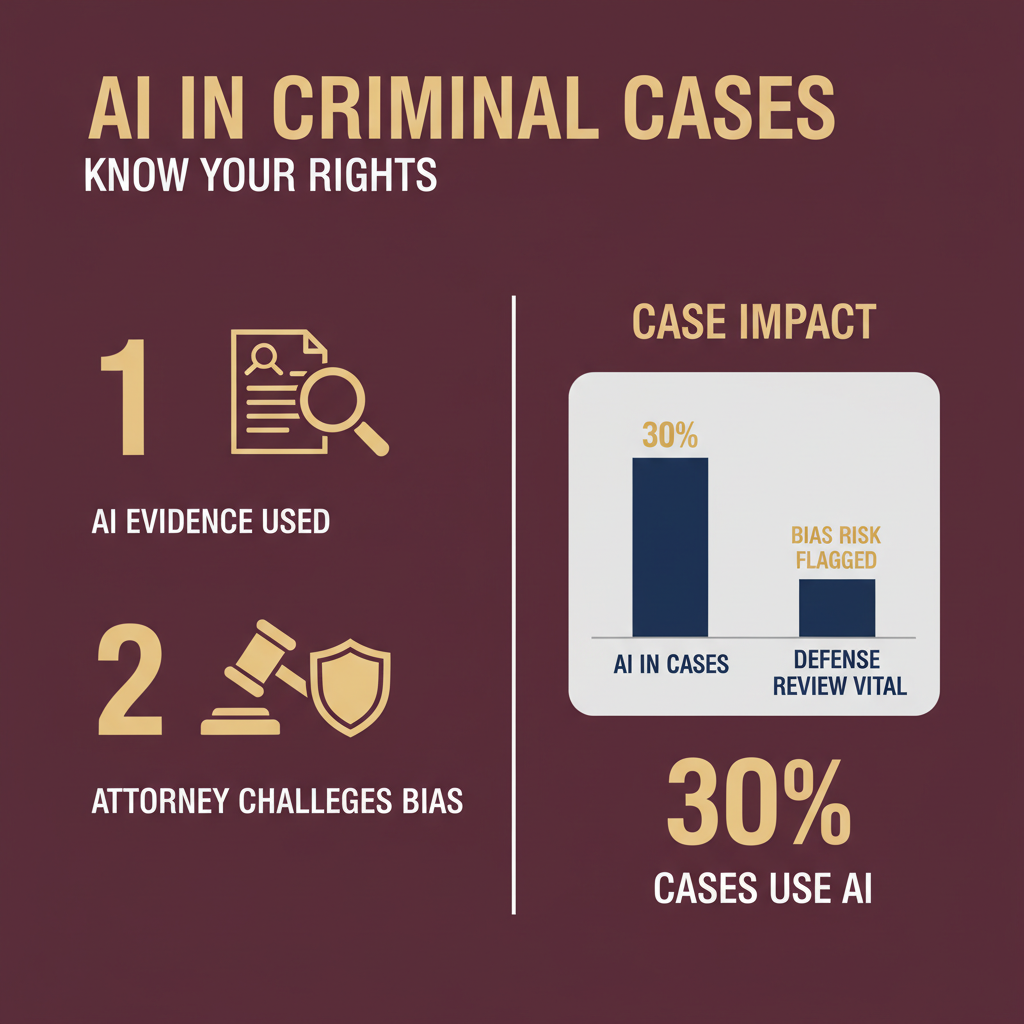
AI evidence is only challengeable if the defense can see it. In North Carolina, discovery rules can be a major battleground in cases involving digital forensics, lab reports, and recordings.
For many cases, North Carolina’s discovery statute, N.C. Gen. Stat. § 15A-903, helps govern what the state must disclose. In practice, your attorney may also pursue:
- Underlying data exports (not just screenshots)
- Audit logs and chain-of-custody records
- Information on the tool used, its settings, and known error rates
Expert testimony standards (why “science-sounding” isn’t enough)
Courts do not admit technical claims just because they sound advanced. North Carolina uses rules for expert testimony that align with reliability-focused standards. Under Rule 702 (North Carolina Rules of Evidence), the judge serves as a gatekeeper for expert opinions.
In State v. McGrady, 368 N.C. 880 (2016), the North Carolina Supreme Court explained that expert testimony must be reliable and relevant. This matters when the state tries to present software outputs as if they are unquestionable facts.
How to Protect Yourself When AI and Digital Evidence Are Involved
What to do immediately after an arrest or investigation
If you think your case may involve recordings, phone data, or AI-assisted analysis, take these steps:
- Do not discuss the case on social media, text, or recorded calls.
- Save potential evidence (messages, receipts, location data), but do not alter files.
- Ask for counsel and stop answering questions.
In smithfield, cases can move quickly once charges are filed. Early defense work can prevent mistakes that are hard to fix later.
Questions to ask your lawyer about AI-related evidence
Not every case needs a tech expert. But you should ask practical questions, such as:
- What digital evidence does the state claim it has?
- Can we challenge the search, seizure, or warrant?
- Do we need an independent forensic review?
- Are there chain-of-custody gaps or missing footage?
Common misunderstandings that hurt defendants
AI can create a false sense of certainty. Juries may assume “computer results” are always accurate. But tools can be misused, misinterpreted, or based on incomplete data.
That is why a defense strategy often focuses on:
- Showing alternative explanations
- Exposing assumptions in the state’s analysis
- Highlighting missing context or missing data
Reminder: If your case involves video, phone data, or AI-style “matching,” don’t wait. Call 1-844-967-3536 or reach out through our contact form. Se Habla Español.
Choosing the Right Criminal Defense Lawyer in an AI-Driven World
Look beyond lists and focus on defense fundamentals
Because ai news today often amplifies rankings and “top lawyer” content, it’s easy to think a badge equals results. But strong criminal defense usually comes down to fundamentals:
- Fast action to preserve and review evidence
- Motion practice (suppression motions, discovery motions)
- Negotiation strength and trial readiness
Local experience in smithfield and surrounding areas
Local practice matters because each courthouse has its own rhythms. Serving smithfield residents often means understanding how cases are scheduled, how evidence is typically presented, and what issues commonly arise in Johnston County.
We also regularly help clients from nearby communities like Clayton, Selma, Garner, and Raleigh who have cases that touch Johnston County.
What a good consultation should include
A real consultation should be more than general advice. It should include:
- A clear discussion of the charge and possible penalties
- Likely defenses and key weaknesses in the state’s case
- Next steps and deadlines
How Vasquez Law Firm, PLLC Can Help With AI-Related Criminal Defense
Experience, credentials, and a practical approach
Vasquez Law Firm, PLLC defends people facing serious charges with a focus on evidence, procedure, and protecting constitutional rights. Attorney Vasquez, JD, has 15 years of experience and is admitted to the North Carolina State Bar and the Florida Bar.
When modern evidence is involved, our approach is straightforward: identify what the state claims, test whether it is admissible and reliable, and build the best path forward—whether that is dismissal, reduction, or trial.
Common criminal defense situations we handle
AI and digital evidence can appear in many types of cases, including:
- DWI and impaired driving (dash cam/body cam footage)
- Drug charges (searches, phone data, informant communications)
- Assault allegations (social media, messages, video clips)
- Theft and fraud (surveillance, digital payment records)
Learn more about our Criminal Defense services and how we approach case strategy.
How to get started
Start by speaking with a lawyer before you “explain your side” to anyone else. You can also review our team on the Attorney Vasquez page to see the experience we bring to your case.
Frequently Asked Questions About AI and Criminal Defense
1) Can AI-generated evidence be used against me in court?
Sometimes, yes. But it must still meet evidence rules. Your attorney can challenge whether the evidence is authentic, reliable, and relevant. If it relies on expert opinions, it may be tested under Rule 702 standards and related case law like State v. McGrady.
2) What if the police say facial recognition “matched” me?
A “match” is not the same as proof beyond a reasonable doubt. A defense may examine image quality, error rates, the agency’s policies, and whether officers used the tool properly. Your lawyer may also argue that the identification process was unreliable or suggestive.
3) Does ai news today change my rights during a traffic stop or arrest?
Your rights do not change because police use advanced tools. Fourth Amendment limits on searches and seizures still apply. You still have the right to remain silent and to request an attorney.
4) Can I force the state to show how an AI tool worked?
In many cases, the defense can seek discovery of information needed to challenge the state’s evidence. North Carolina discovery law (including N.C. Gen. Stat. § 15A-903) can be important, and your lawyer may file motions to obtain underlying data, reports, and documentation.
5) What should I do if a video online makes me look guilty?
Do not respond publicly. Do not message witnesses. Save what you can (links, timestamps, screenshots), and talk to counsel immediately. A defense lawyer may investigate context, edits, metadata, and other evidence that changes the story.
6) How can a criminal defense lawyer in smithfield help with digital evidence?
A local defense attorney can act quickly to preserve evidence, demand discovery, and file motions to exclude unlawfully obtained or unreliable material. If needed, counsel can work with investigators or forensic experts. In smithfield, timing and local procedure can make a major difference.
Helpful resources: For court information and forms, you can visit the North Carolina Judicial Branch website. For federal constitutional background, see the U.S. Constitution Annotated (Congress.gov).
Charged with a crime or under investigation? Don’t let digital evidence or online hype decide your future. Contact Vasquez Law Firm, PLLC today at 1-844-967-3536 or request a free consultation. Se Habla Español.
Free Legal Consultation
Discuss your case with our experienced attorneys. We're available 24/7.
Vasquez Law Firm
Legal Team
Our experienced attorneys at Vasquez Law Firm have been serving clients in North Carolina and Florida for over 20 years. We specialize in immigration, personal injury, criminal defense, workers compensation, and family law.