What the Trump Administration Visa Freeze Means for Immigrants in 2026
Understand the Trump administration visa freeze in 2026 and how it impacts immigrants in NC and Florida. Contact Vasquez Law for a free consultation.
Published on February 9, 2026
Talk to an immigration attorney
Free call. A clear plan for your case.
Free & confidential · Se habla espanol · 24/7
Have questions? Talk to an attorney - free evaluation.
Call 1-844-967-3536Worried how the latest immigration news affects you?
Schedule a confidential case review with an immigration attorney - know exactly where you stand.
USCIS Case Status
Check your USCIS case status
Enter your receipt number and get the official status. Free, no registration.
What the Trump Administration Visa Freeze Means for Immigrants in 2026
The Trump administration visa freeze remains a significant issue for many immigrants in 2026, especially in North Carolina and Florida. This comprehensive guide explains the scope of the visa freeze, the affected countries, and what it means for Dreamers and immigrant families. Learn crucial steps to take, common mistakes to avoid, timelines, and how the freeze impacts visa processing nationwide. If you or your family are affected, Vasquez Law Firm is ready to help with compassionate and aggressive representation. Schedule a free case evaluation today or call 1-844-967-3536 for bilingual support and trusted immigration guidance.
Need help with your case? Our experienced attorneys are ready to fight for you. Se Habla Español.
Schedule Your Free Case Evaluation
Or call us now: 1-844-967-3536
Quick Answer
The Trump administration visa freeze in 2026 temporarily suspends visa processing for applicants from 75 countries. This freeze affects various visa types and causes delays for many immigrants in North Carolina, Florida, and nationwide. If you are impacted, acting quickly with an experienced immigration attorney can help safeguard your status and opportunities.
- Freeze covers 75 countries listed by the U.S. government.
- Affects both immigrant and nonimmigrant visas.
- Dreamers and DACA recipients face indirect challenges.
- Delays and restrictions are ongoing as of 2026.
- Legal advice is critical to avoid mistakes.
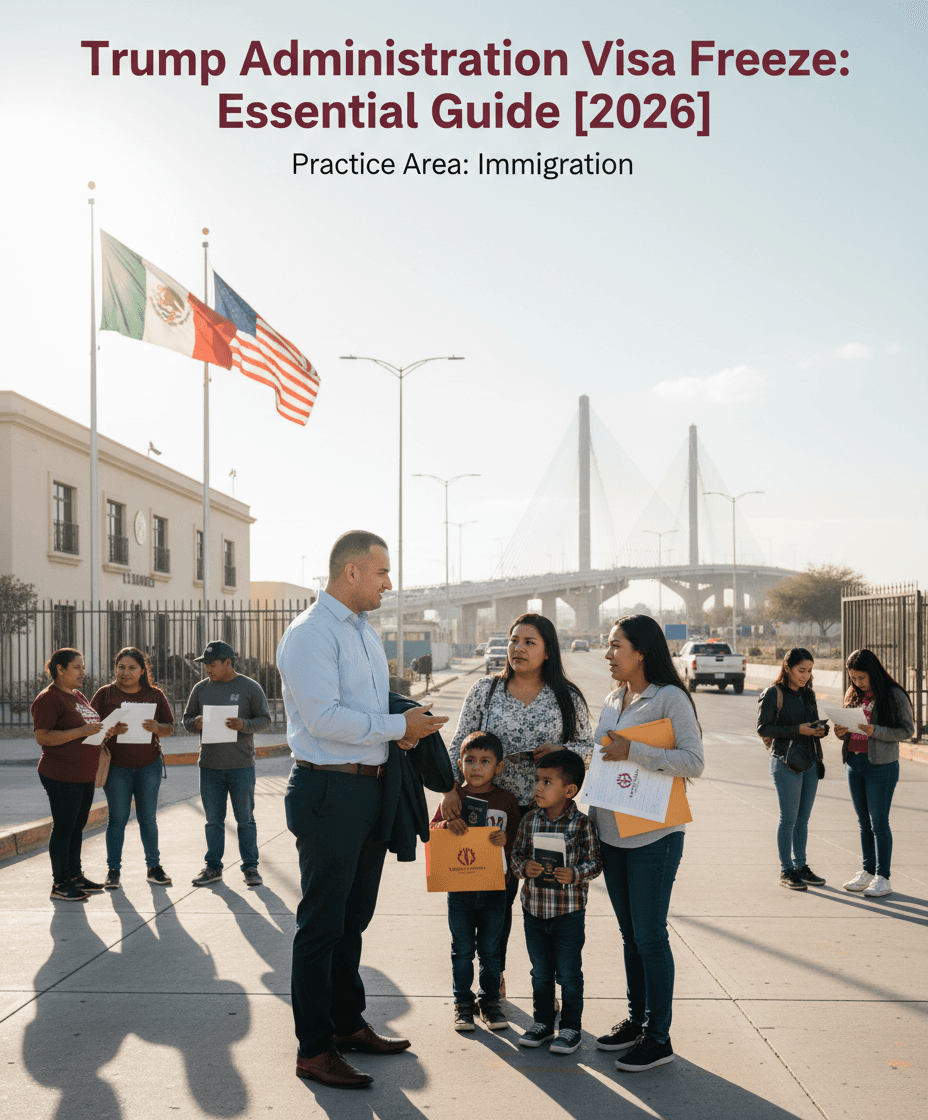
Understanding the Trump Administration Visa Freeze
In 2026, the Trump administration visa freeze continues to impact visa processing, particularly for applicants from a specific group of 75 countries. This freeze is part of broader immigration policy measures intended to increase national security and control immigration flows. The suspension affects new visa applications and certain renewals across various visa categories including family-based, employment-based, and diversity visas.
The affected countries primarily come from Africa, Asia, and the Middle East, reflecting policy concerns from previous years. The freeze means U.S. consulates and embassies in many global locations have halted or severely restricted visa issuance.
What Exactly is Frozen?
The freeze applies to immigrant visa petitions that have not yet been approved or are pending final administrative processing. Nonimmigrant visa categories like tourist (B-2), student (F-1), and certain work visas also experience longer processing delays. Notably, the visa freeze does not automatically remove protections for people currently residing legally with visas or pending applications within the U.S., but it may limit future adjustments of status or travel.
Who is Most Affected?
This policy most significantly impacts communities in North Carolina and Florida with ties to the affected countries. Dreamers and DACA recipients may face barriers to family reunification and changing their immigration status. Employers who rely on work visas may also face complications in hiring and visa sponsorship.
Legal Challenges
Several legal challenges have been mounted against the statutory and constitutional basis of these visa suspensions. Courts have reviewed the administration's authority to impose such freezes, with mixed rulings affecting enforcement and duration. The situation remains fluid, and applicants must stay updated.
Step-by-Step: What to Do If Affected
- Confirm Your Visa Category: Verify whether your visa type or your country's status is included in the freeze by checking official USCIS and Department of State updates.
- Gather All Documentation: Collect visa application receipts, approval notices, passports, and any correspondence related to your immigration case.
- Consult an Immigration Attorney: In Orlando, North Carolina, or Florida, consult with experts like Vasquez Law Firm to understand your rights and potential options for relief.
- Monitor Government Updates: Visa freeze policies may change. Stay informed by regularly visiting USCIS and Department of State websites.
- Consider Legal Remedies: Depending on your case, filing motions to reopen, appeals, or other legal actions can be taken to challenge delays or denials.
Documents and Evidence Checklist
- Passport and current visa documentation
- Copy of visa application forms and receipts (e.g., DS-260, DS-160)
- Approval notices or receipts from USCIS or consular posts
- Correspondence regarding administrative processing or freeze notifications
- Proof of family relationships if applying under family visas
- Employment offer letters for work visa applicants
- Updated supporting evidence (financial, educational, or legal documents)
Timeline: What to Expect
- Initial Freeze Notice: Dates vary by consulate but most freezes started between 2023 and early 2025 and continue into 2026.
- Application Processing: Pending cases face indefinite delays, sometimes lasting several months to years.
- Policy Review Periods: Expect periodic policy reviews and potential legal rulings affecting freeze scope.
- Possible Resumption: Some visa processing may resume on a case-by-case basis depending on legal outcomes and policy changes.
Costs and Fees: What Impacts the Price
- Attorney consultation and representation fees vary depending on case complexity.
- Filing fees for motions and appeals can add to costs beyond original visa application fees.
- Urgent processing requests or premium processing fees may be unavailable during freeze.
- Additional document preparation, translation, and certification incur expenses.
Common Mistakes and How to Avoid Them
- Missing deadlines for responses or appeals — Fix: Work closely with your attorney to track all dates.
- Submitting incomplete or outdated forms — Fix: Always confirm current forms with USCIS or consulates.
- Ignoring freeze policy updates — Fix: Stay informed from official sources and legal counsel.
- Failing to gather necessary evidence — Fix: Use a checklist and document every step.
- Assuming the freeze affects all visa categories equally — Fix: Understand specific impacts on your visa class.
- Delaying seeking legal advice — Fix: Early consultation can improve outcomes.
- Relying solely on online forums instead of professional legal guidance — Fix: Trust reputable firms specialized in immigration law.
If you only remember one thing: Acting proactively and with expert help is essential to navigating the visa freeze successfully.
NC, FL, and Nationwide Notes
North Carolina Notes
In North Carolina, local USCIS offices and immigration courts follow federal policies fully. Applicants should use local legal resources for advice, such as Vasquez Law Firm's NC office, providing bilingual support and specialized knowledge of state-specific concerns.
Florida Notes
Florida sees high immigrant populations affected by the visa freeze, especially in Orlando and Miami. Vasquez Law Firm's Florida services focus on helping clients understand the freeze’s impact as it relates to local consulates and community needs.
Nationwide Concepts (General Only)
Visa freezes are federal actions and apply across all states, regardless of local laws. However, access to legal aid and immigration courts may vary. Staying connected to national level updates and trusted counsel is key for applicants across the U.S.
When to Call a Lawyer Now
- If your visa application is delayed beyond published processing times without explanation.
- If you receive any notice of refusal or administrative processing due to the visa freeze.
- If you have family members impacted by deportation or detainment linked to freeze policies.
- If you are a Dreamer experiencing barriers to status renewal or adjustment.
- If you are uncertain about your eligibility under current visa suspension rules.
- If you need guidance on documenting your case to avoid common mistakes.
- If you face urgent travel or legal deadlines affected by the freeze.
About Vasquez Law Firm
At Vasquez Law Firm, we combine compassion with aggressive representation. Our motto "Yo Peleo" (I Fight) reflects our commitment to standing up for your rights.
- Bilingual Support: Se Habla Español - our team is fully bilingual
- Service Areas: North Carolina, Florida, and nationwide immigration services
- Experience: Over 15 years helping clients navigate complex legal matters
- Results: Thousands of successful cases across multiple practice areas
Attorney Trust and Experience
Attorney Vasquez holds a Juris Doctor degree and is admitted to practice in the North Carolina State Bar. With over 15 years of dedicated legal experience, he has built a reputation for providing personalized attention and achieving favorable outcomes for his clients.
Don't wait to get the help you deserve. Call us now for immediate assistance.
Se Habla Español
Frequently Asked Questions
Which countries are included in the Trump administration’s 75 countries visa pause list?
The visa pause list includes 75 countries mainly from Africa, Asia, and the Middle East. The official list is updated through U.S. government channels like the Department of State and USCIS. These countries face temporary visa processing freezes impacting new visa applications. To confirm if your country is on the list, consult official government websites or contact an immigration attorney.
Why is the U.S. pausing visa processing for certain countries under the Trump administration?
The visa freeze aims to review security protocols and reduce perceived risks from certain countries. It reflects policy priorities under the Trump administration focused on national security and immigration control. However, the freeze has significant impacts on families and applicants, often causing legal challenges and uncertainty. Policies may evolve, so staying current with government announcements is important.
Has the Trump administration removed the K1 fiancé visa category in 2026?
As of 2026, the Trump administration has not fully removed the K1 fiancé visa. However, processing delays and restrictions have increased, complicating applications under the visa freeze policies. Applicants should closely monitor instructions from USCIS and seek legal counsel to navigate changes effectively.
How many people has the Trump administration deported in 2025?
Exact deportation numbers vary by source, but in 2025 the administration increased enforcement efforts. Tens of thousands of individuals faced deportation due to visa violations or unauthorized presence. Detailed statistics are available from ICE and DHS reports for those who want accurate counts.
What steps should I take if my visa application is affected by the Trump administration visa freeze?
First, gather all documents related to your immigration status. Consult an experienced immigration attorney in North Carolina or Florida promptly. Stay informed through USCIS and Department of State updates. Filing motions or appeals may be necessary depending on your case. The Vasquez Law Firm can guide you through these steps.
How does the visa freeze impact Dreamers and DACA recipients in 2026?
The visa freeze complicates some immigration pathways for Dreamers, even though DACA protections remain in place. Delays or denials for certain visa categories affect family reunification and adjustment of status. It is crucial for Dreamers in North Carolina and Florida to stay connected with legal resources to navigate these challenges.
What are common mistakes applicants make during the visa freeze period?
Common errors include missing filing deadlines, submitting incomplete forms, relying on outdated procedures, and ignoring policy updates. Applicants may also fail to provide necessary evidence or avoid seeking legal advice. Avoiding these mistakes requires attention, timely action, and qualified legal help.
Where can I find official updates on the Trump administration visa freeze in 2026?
Official updates are available primarily from USCIS (uscis.gov), the U.S. Department of State (travel.state.gov), and the Executive Office for Immigration Review (justice.gov/eoir). Checking these sources regularly ensures you receive the latest and most accurate information.
Sources and References
Need immigration help? Our immigration attorneys can review your case.
Take the first step toward justice today. Our team is standing by to help.
Start Your Free Case Evaluation Now
Call us: 1-844-967-3536
Se Habla Español - Estamos aquí para ayudarle.


William Vasquez
Founder & CEO, Vasquez Law Firm, PLLC
William Vasquez is the founder and CEO of Vasquez Law Firm, PLLC, a results-driven firm specializing in immigration, criminal defense, personal injury, and workers' compensation. A U.S. Air Force veteran and recipient of the Joint Service Achievement Medal, William is dedicated to fiercely fighting for his clients' rights.
Related Legal Services
Need legal help? Learn more about learn about our immigration practice, or contact us for a free evaluation.
You can also visit immigration legal services throughout NC for more information.