How the Senate Funding Deal Left DHS Without a Full Budget
Senate advances funding deal, DHS left without full budget. Learn what a 2-week DHS extension means for ICE, Border Patrol, and families. Call 1-844-967-3536.
Published on January 31, 2026· Updated August 6, 2026
Talk to an immigration attorney
Free call. A clear plan for your case.
Free & confidential · Se habla espanol · 24/7

Have questions? Talk to an attorney - free evaluation.
Call 1-844-967-3536Worried how the latest immigration news affects you?
Schedule a confidential case review with an immigration attorney - know exactly where you stand.
USCIS Case Status
Check your USCIS case status
Enter your receipt number and get the official status. Free, no registration.
How the Senate Funding Deal Left DHS Without a Full Budget
The headline Senate advances funding deal, DHS left without full budget is not just a Washington budget story. It can change how immigration enforcement is funded, how quickly policies shift, and how much uncertainty immigrant families feel day to day. Below, we explain why Congress funded most of the government but did not lock in a full-year Department of Homeland Security (DHS) budget, what the short extension means for ICE and Border Patrol operations, and what legal negotiations could mean for future enforcement.
Worried About Immigration Policy Changes?
New policies can affect your case. Get current legal advice from an experienced immigration attorney.
If you are worried about enforcement activity or an upcoming court date, getting tailored legal advice matters. At Vasquez Law Firm, PLLC, we help families understand their options and build a plan before policy shifts cause surprises.
Need guidance now? Serving smithfield residents and families across North Carolina, call /contact or phone 1-844-967-3536. Se Habla Español.
What happened, and why DHS was left out of a full-year budget
The basic idea: general funding moved, DHS did not
Congress often passes large funding packages to keep federal agencies operating. In this news cycle, lawmakers advanced broader government funding, but DHS was not fully wrapped into a final, full-year budget agreement. This is why you are seeing the phrase Senate advances funding deal, DHS left without full budget tied to immigration enforcement concerns.
A key reason is that DHS spending is politically tied to border security, detention capacity, removal operations, and rules that impact asylum processing. Those topics tend to trigger high-stakes negotiations and last-minute brinkmanship.
Why DHS funding is different from other agencies
DHS includes components like U.S. Customs and Border Protection (CBP), U.S. Immigration and Customs Enforcement (ICE), and U.S. Citizenship and Immigration Services (USCIS). When funding negotiations stall, it does not always mean enforcement stops. It often means agencies operate under short-term funding rules that create uncertainty about staffing, contracts, detention bed space, and overtime.
For many immigrant families, uncertainty itself becomes the harm. It can affect travel decisions, whether to report a change of address, and how aggressively a family tries to resolve an old immigration issue.
News context and why it matters
This blog is based on the immigration news roundup referenced here: Boundless Immigration news roundup on Google News. Budget negotiations change quickly, but the legal framework underneath enforcement authority changes more slowly. That is where experienced counsel can help you separate noise from real risk.
Infographic: Why DHS often gets separated in budget talks
| Issue | Why it delays DHS funding | What families feel |
|---|---|---|
| Border and asylum policy | High political conflict, hard compromises | Rules can shift fast, confusion rises |
| ICE detention and removals | Debates on funding levels and limits | Fear of enforcement, missed opportunities for relief |
| Oversight of enforcement tactics | Conditions and reporting requirements get negotiated | Uncertainty about what officers will prioritize |
Tip for publishing: Convert this table into a visual graphic. Suggested alt text: "Chart explaining why DHS funding is separated: border policy, detention, oversight, and family impacts."
The two-week extension keeping ICE and Border Patrol operating
What a temporary extension means in plain English
When DHS does not receive a full-year budget, Congress can pass a short-term funding law, often called a continuing resolution. In this situation, a two-week temporary extension keeps DHS funded long enough to avoid an immediate shutdown of covered functions.
That means ICE and Border Patrol typically continue operating, including detention operations, transportation contracts, and day-to-day enforcement work. The short timeframe matters because priorities and resources can change quickly once the next negotiation deadline hits.
What continues for ICE and CBP during the extension
During a short extension, you can generally expect core functions to keep moving, such as:
- Border enforcement and inspections at ports of entry
- ICE custody operations and transfers
- Immigration court litigation by DHS attorneys
- Targeted enforcement operations based on agency priorities
Even if funding is temporary, the enforcement authority exists under immigration statutes and regulations. The budget fight is about scale, tactics, and oversight, not whether immigration laws exist.
Why short funding periods create real risk
Short-term funding can cause operational pressure. Agencies may surge certain activities to meet internal goals, or slow certain actions to conserve resources. Families in smithfield and nearby communities like Raleigh, Clayton, and Goldsboro can feel that instability through unpredictable check-ins, changing detention capacity, or sudden shifts in local priorities.
That is one reason the headline Senate advances funding deal, DHS left without full budget deserves attention even if you do not follow politics.
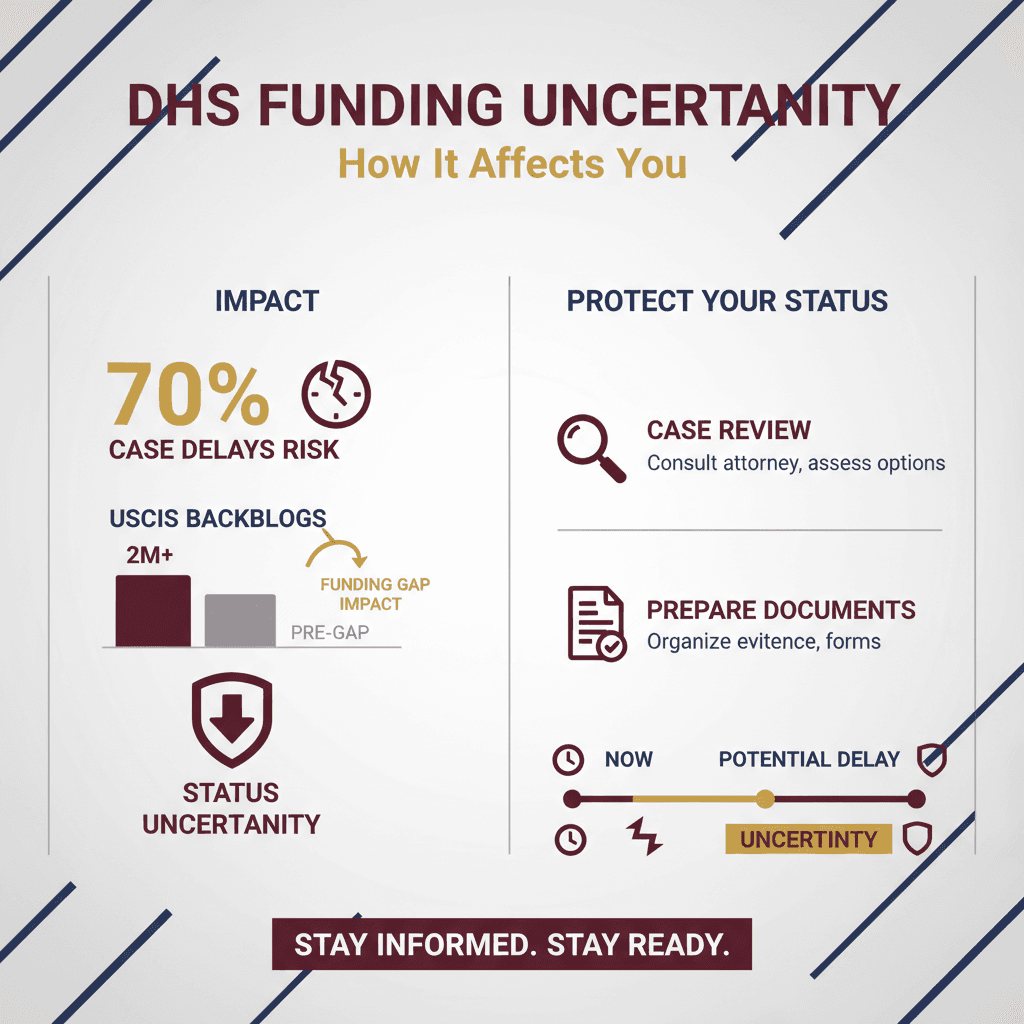
What conditions Democrats are demanding to limit ICE enforcement tactics
The common types of conditions lawmakers seek
When DHS funding is negotiated, lawmakers sometimes propose conditions that restrict how funds can be used. Public reporting uses different wording depending on the proposal, but immigration-related conditions often focus on enforcement safeguards.
Examples of conditions that may be demanded include limits related to:
- Worksite enforcement, including large raids that impact mixed-status families
- Courthouse or sensitive location arrests, which can chill attendance at hearings or school activities
- Collaboration with local law enforcement, including information sharing and detainers
- Detention standards and oversight, including reporting and inspections
Why these conditions are legally and politically complex
Congress controls funding, but DHS enforces laws passed by Congress and interpreted by the courts. Conditions have to be drafted carefully so they fit within appropriations rules. They also have to be administered inside agencies that have broad statutory authority in areas like arrests, detention, and removals.
For example, ICE arrest authority is grounded in federal law, including 8 U.S.C. section 1357, which covers powers of immigration officers. Detention authority and procedures also connect to statutes like 8 U.S.C. section 1226. Funding conditions might influence how aggressively those authorities are used, but they rarely remove the authority entirely.
What this could mean on the ground
Even before any final deal, negotiations can influence agency behavior. Sometimes agencies adjust guidance, priorities, or internal policies to address concerns raised in Congress. Sometimes nothing changes until a final bill passes.
In practical terms, the headline Senate advances funding deal, DHS left without full budget signals that enforcement intensity may be tied to ongoing negotiations. That can change quickly with a new vote, a new deadline, or new conditions.
Infographic: How funding conditions could affect ICE enforcement
Potential condition            Possible result for families
---------------------------  ---------------------------------------
Limits on certain arrests    Less risk in specific locations, but not zero
More reporting requirements  More transparency, slower shifts
Detention oversight rules    Changes in detention placements or transfers
Focus on priorities          More attention to certain categories of cases
Tip for publishing: Turn this into a simple bar or icon chart. Suggested alt text: "Infographic showing possible outcomes of ICE funding conditions: arrest limits, reporting, detention oversight, and priorities."
Why immigrant families should pay attention now
Future ICE operations may depend on negotiations, not rumors
One of the biggest dangers during a funding standoff is misinformation. Social media often fills the gaps with rumors about mass raids, shutdowns, or automatic benefits. The reality is more complicated.
Budget deadlines can influence resources and tactics, but they do not create new immigration status by themselves. Still, this is the key warning: when Senate advances funding deal, DHS left without full budget, future ICE operations can become tied to legal negotiations, political pressure, and temporary funding decisions that shift with little notice.
Mixed-status families face unique stress
In smithfield, we often speak with families that include U.S. citizen children, lawful permanent residents, and relatives who are undocumented or out of status. Short-term DHS funding uncertainty can increase fear around everyday activities like going to work, taking kids to school, or attending court.
That stress can lead to risky choices, like missing a required ICE check-in or ignoring a Notice to Appear. Those choices can have long-term consequences in removal proceedings.
Immigration court and agency processes still move
Even when DHS funding is in flux, many immigration processes continue through the courts and agencies. For reliable information about immigration filings and forms, use official sources like USCIS.gov. For visa and travel information, see the U.S. Department of State visa pages. For immigration court information, visit EOIR.gov.
These official tools can help you verify deadlines and procedures while Congress negotiates.
Practical steps to protect your family while funding is uncertain
1) Create a safe document plan
Keep key documents in a safe place that a trusted person can access. This is not about panic, it is about readiness. Consider:
What's Your Immigration Situation?
Answer 3 questions - we'll tell you your options
Question 1 / 3
What best describes your situation?
Keep Reading

- Copies of passports, IDs, and immigration papers
- Marriage and birth certificates
- Any prior immigration court paperwork
- Proof of residence and time in the United States
If you have an immigration court case, keep a calendar of hearing dates and filing deadlines. Missing a hearing can lead to an in-absentia order of removal.
2) Know your rights and your risks
It is smart to learn basic rights, but it is even smarter to learn how those rights apply to your situation. For example, the analysis differs if you have a prior removal order, a pending asylum claim, or a criminal conviction.
Federal immigration law is mainly under the Immigration and Nationality Act (INA), codified in Title 8 of the U.S. Code. Common topics we review with clients include:
- Adjustment of status under 8 U.S.C. section 1255
- Detention and bond under 8 U.S.C. section 1226
- Officer authority under 8 U.S.C. section 1357
3) Talk to a lawyer before a crisis
Funding deadlines can change the pace of enforcement, but your best protection is a solid legal strategy built around your eligibility for relief. That could include family petitions, cancellation of removal, asylum-related options, or waivers.
Vasquez Law Firm, PLLC is led by Attorney Vasquez, JD, who has 15 years of immigration law experience and is admitted to the North Carolina State Bar. We regularly help clients in smithfield and throughout the region understand what policy shifts mean for their specific case. Se Habla Español.
Reminder: If you are hearing rumors about raids, or you have a court date coming up, do not wait. Call 1-844-967-3536 to discuss next steps, or reach us through /contact. Se Habla Español.
Infographic: Family readiness checklist during DHS funding uncertainty
- Legal review: confirm your current status, deadlines, and risks.
- Document folder: IDs, notices, court papers, proof of time in the US.
- Emergency contacts: trusted family, caregiver plan for children.
- Scam filter: verify news through official sources and your attorney.
Tip for publishing: Use icons for each step. Suggested alt text: "Checklist infographic for immigrant family readiness: legal review, documents, emergency contacts, avoid scams."
What this means for smithfield residents, and how our firm can help
Local realities in Johnston County
National policy decisions often land locally. For families in smithfield, practical concerns include travel along major corridors, work commutes, and how quickly a detention situation can turn into a court case. If your case involves hearings, it is also important to stay organized and to keep proof of compliance with court and agency requirements.
If you have to appear in court or handle paperwork, plan ahead for transportation, childcare, and time off work. The Johnston County area is busy, and last-minute disruptions can snowball into missed deadlines.
How legal negotiations can change enforcement from week to week
When Senate advances funding deal, DHS left without full budget, it often means the next deadline becomes leverage. That leverage can produce conditions affecting enforcement tactics, detention contracts, or oversight. It can also produce no changes at all, which is why individualized legal advice is critical.
The right plan depends on your full history, including entries, exits, petitions, prior orders, and any criminal record. A one-size-fits-all answer is rarely safe.
Immigration Law services that match the moment
We help clients with a wide range of immigration needs, including removal defense and family-based options. Learn more about our Immigration Law services, and meet our team on the Attorney Vasquez page.
Even if you are not in proceedings, now is a good time to check eligibility and fix weak points in your case. Budget uncertainty can amplify risk, but preparation reduces it.
FAQ: DHS funding, ICE operations, and your options
1) Does a two-week extension mean ICE stops arrests?
No. A short funding extension generally keeps many DHS operations running, including ICE enforcement activities. What may change is scale, staffing, or priorities, depending on internal guidance and resources.
2) If DHS does not have a full-year budget, can my immigration case be delayed?
Some processes can slow during uncertainty, but many deadlines still apply. Immigration court schedules and USCIS filing rules typically remain in place. Always verify your case status using official sources and your attorney.
3) What conditions are Democrats trying to place on ICE enforcement tactics?
Public reporting often points to limits or guardrails tied to how funding can be used. These can include restrictions on certain arrest practices, stronger detention oversight, or reporting requirements. The exact terms depend on the final negotiated text.
4) What should I do if I am undocumented and worried about enforcement in smithfield?
Start with a confidential legal review to identify any path to relief and to assess risk factors like prior orders or criminal issues. Also organize documents, keep your address updated where required, and avoid relying on rumors.
5) Can Congress change immigration law through a budget deal?
Budget bills primarily control funding, but they can include policy riders or conditions. Even then, major legal changes usually require separate legislation and can be challenged in court. Funding decisions still matter because they can shape how enforcement is carried out.
6) How can a lawyer help if the news keeps changing?
A lawyer can focus on what is stable in your situation, your eligibility under the INA, your court posture, and your risk profile. We also help clients plan for contingencies, like detention, bond, or urgent filings, if enforcement priorities shift.
Talk to an immigration lawyer before the next deadline hits. If the headline Senate advances funding deal, DHS left without full budget has you worried about what comes next, we can help you plan with clarity. Call 1-844-967-3536 or request a consultation at /contact. Se Habla Español.

William Vasquez
Founder & CEO, Vasquez Law Firm, PLLC
William Vasquez is the founder and CEO of Vasquez Law Firm, PLLC, a results-driven firm specializing in immigration, criminal defense, personal injury, and workers' compensation. A U.S. Air Force veteran and recipient of the Joint Service Achievement Medal, William is dedicated to fiercely fighting for his clients' rights.
Related Legal Services
Need legal help? Learn more about our immigration legal services, or contact us for a free evaluation.
You can also visit our NC immigration team for more information.