What Happens When ICE Airport Security Checks You in 2026
Wondering what ICE airport security means for you in 2026? Learn your rights, what to expect, and how to protect yourself. Call Vasquez Law today.
Published on March 26, 2026
Have questions? Talk to an attorney - free evaluation.
Call 1-844-967-3536Worried how the latest immigration news affects you?
Get a free, confidential case review with an immigration attorney - know exactly where you stand.
What Happens When ICE Airport Security Checks You in 2026
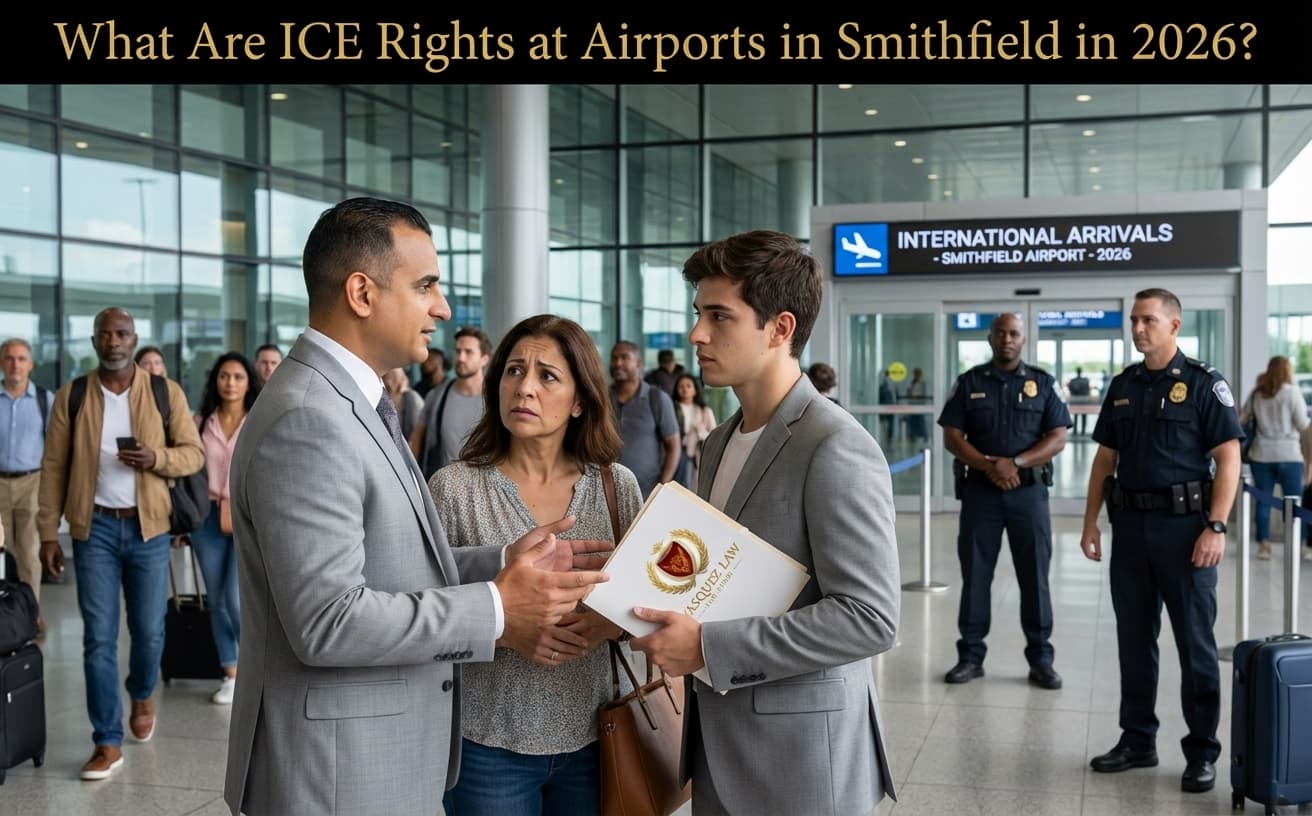
If you're traveling through airports in North Carolina or Florida in 2026, you may encounter ICE airport security agents. ICE presence at airports can affect travelers, especially immigrants and Dreamers. This article explains what ICE airport security means, where agents operate, what they can legally do, and how you can protect your rights. Understanding ICE’s role helps you safeguard your immigration status and travel safely through airports, including Smithfield area airports. Contact Vasquez Law Firm for trusted, bilingual legal assistance if you face ICE questions or actions at the airport.
Need help with your case? Our experienced attorneys are ready to fight for you. Se Habla Español.
Schedule Your Free Consultation
Or call us now: 1-844-967-3536
Quick Answer
ICE airport security agents operate in many US airports, including in North Carolina and Florida. They conduct immigration checks and can detain individuals suspected of unauthorized status. Knowing your rights and carrying necessary documents can protect you during these encounters.
- ICE has presence at major airports like Charlotte Douglas and Miami International.
- Agents conduct immigration status verifications but do not perform TSA security.
- You have rights including silence and legal counsel.
- Carrying valid immigration documents is advisable.
- If detained, contact an immigration attorney immediately.
Understanding ICE Airport Security in 2026
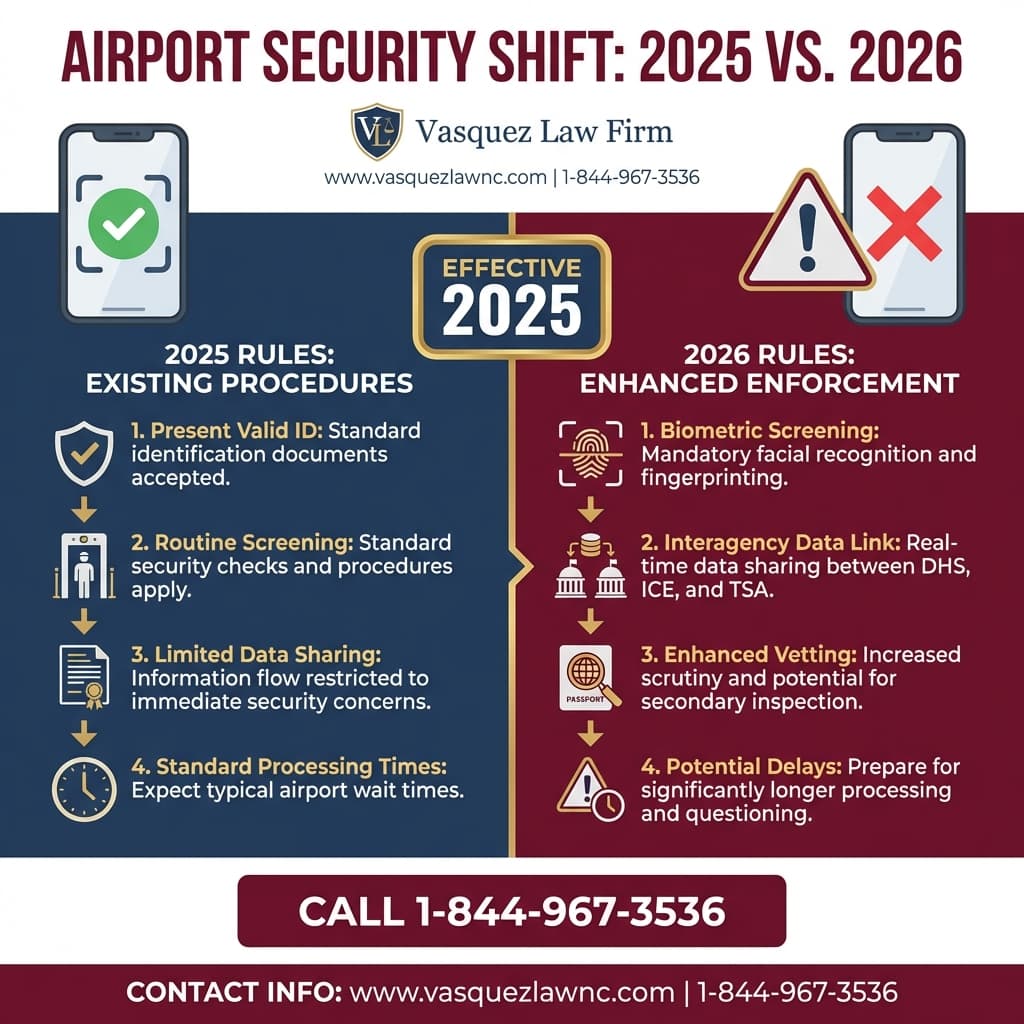
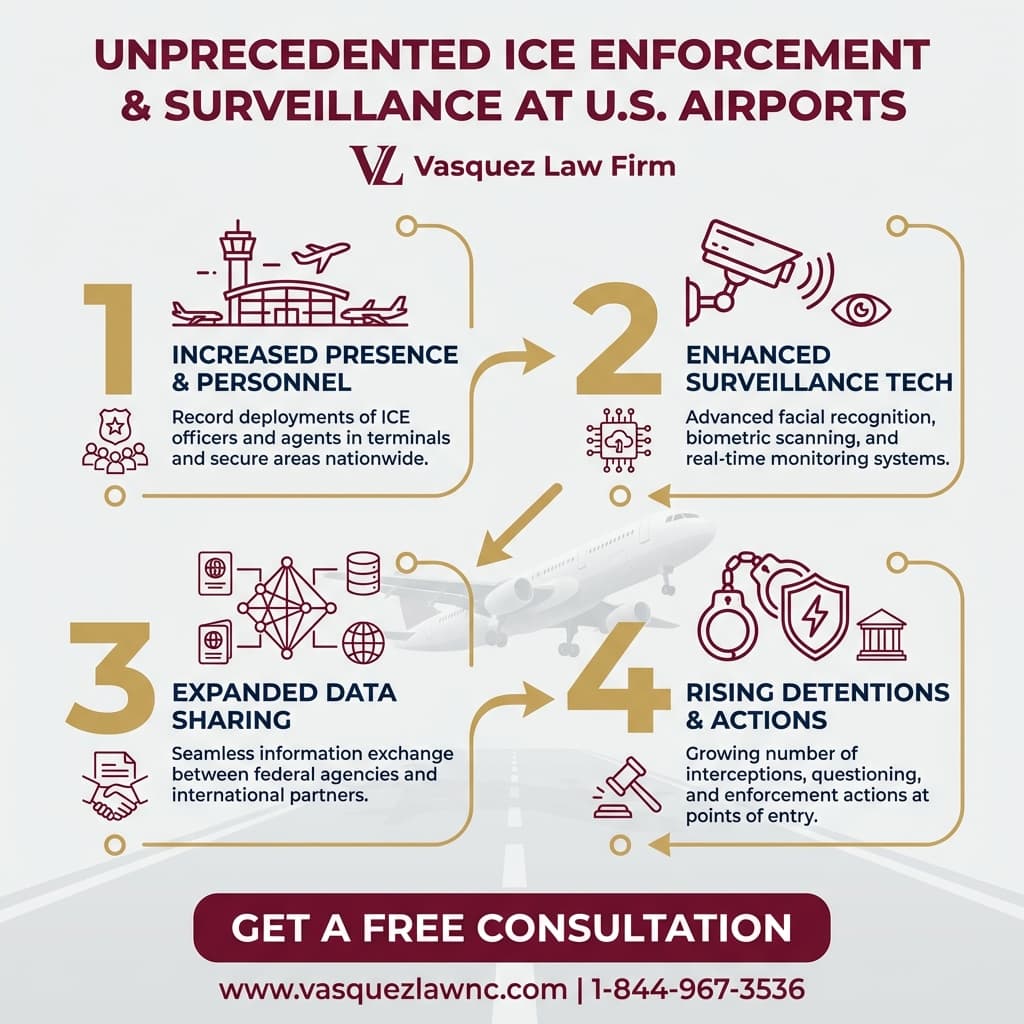
In 2026, Immigration and Customs Enforcement (ICE) continues to play a significant role in maintaining immigration enforcement within U.S. airports. ICE agents are authorized to question travelers, verify immigration status, and detain individuals believed to be in violation of immigration laws. For individuals traveling through airports in North Carolina, like Charlotte Douglas International Airport or Raleigh-Durham International Airport, and Florida airports such as Miami International Airport, ICE airport security presence is real and active.
ICE's role at airports is legal and regulated under federal immigration statutes and administrative regulations. Under 8 U.S.C. § 1226, ICE can arrest and detain individuals suspected of being removable aliens pending immigration proceedings. Regulations at 8 C.F.R. § 287.3 empower ICE officers to conduct inspections and arrests at transportation hubs, including airports. ICE agents coordinate often with Customs and Border Protection (CBP) but focus specifically on enforcement actions related to immigration violations.
Usually, ICE targets individuals with prior immigration violations, prior removal orders, or those flagged through various databases. Travelers who appear suspicious or lack proper documentation might be subject to secondary screening or interviews. ICE does not operate as a part of Transportation Security Administration (TSA) security screening but may be present in TSA checkpoints or designated inspection areas.
For Dreamers and other immigrants traveling through airports near Smithfield or statewide, awareness of ICE’s presence and authority is crucial to prevent misunderstandings or wrongful detention. Vasquez Law Firm can help you understand how to prepare and what to expect during travel encounters involving ICE.
Role of ICE Agents at Airports
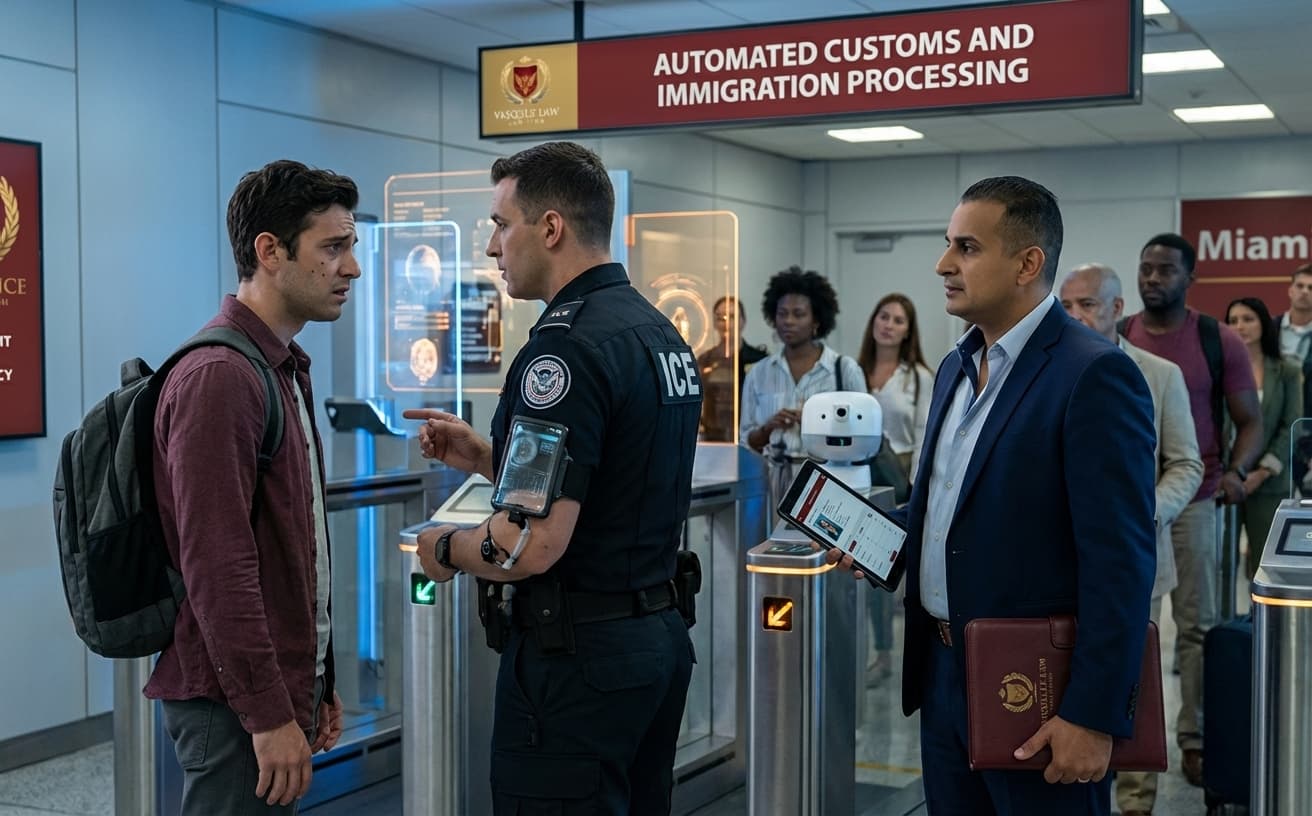
- Question travelers on immigration status
- Verify documents such as visas, green cards, or work permits
- Detain individuals suspected of unauthorized entry or overstays
- Coordinate with TSA and CBP but maintain separate functions
Airports with Active ICE Presence
ICE has agents stationed at multiple airports with high travel volume. In North Carolina, Columbus Douglas International Airport is a primary location, along with Raleigh-Durham International Airport. In Florida, Miami International Airport and Orlando International Airport frequently have ICE operations. This presence is evolving based on enforcement priorities in 2026.
How ICE Airport Security Differs from TSA
The Transportation Security Administration focuses on general security—screening for weapons and explosives. ICE’s airport security function focuses on immigration status enforcement and possible deportation. Knowing the difference helps travelers understand their rights and the nature of questions asked.
Step-by-Step: What to Do If ICE Approaches You
Imagine you’re at Charlotte Douglas Airport in Smithfield, and an ICE agent approaches to ask about your immigration status. Follow these steps to protect yourself legally and avoid mistakes that can harm your situation.
- Stay calm and polite. Do not panic or resist. Remaining calm helps the situation.
- Do not volunteer extra information. Answer only basic questions like your name, but avoid discussing immigration status without legal counsel.
- Carry your valid identification and immigration papers. If you have documents like a green card, work permit, or DACA approval, have them ready.
- Know your rights. You have the right to remain silent and to request an attorney; clearly state you want a lawyer if questioned.
- Avoid signing any documents. Do not sign anything until you have spoken with an immigration lawyer.
- Contact an immigration attorney promptly. If detained or questioned, call Vasquez Law Firm immediately for expert legal help.
Handling Interviews
If ICE requests an interview, be cautious. Listen carefully, do not admit to anything that could harm your case, and ask for an attorney before proceeding.
What Not to Do
- Do not lie or provide false documents.
- Avoid physical resistance or running away.
- Do not try to hide or destroy documents.
Documents and Evidence to Carry at the Airport
Carrying the right documents helps you avoid detention or delay. Always bring official immigration-related papers if you have them.
- Valid government-issued photo ID (passport, driver’s license)
- Permanent Resident Card (Green Card)
- DACA approval notice and related documents (if applicable)
- Work authorization card (EAD)
- Visa documents or I-94 Arrival/Departure form
- Any court orders or relief applications pending
- Attorney contact information for emergencies
Keeping photocopies of important documents in a safe place is also recommended.
Prepare Copies
Have both physical and electronic copies of your immigration paperwork. In an emergency, you can provide copies to your attorney quickly.
Proof of Residency and Employment
Additional documents like utility bills or pay stubs can help demonstrate lawful presence or good standing if questioned.
Timeline: What to Expect During an ICE Airport Encounter
ICE encounters at airports usually follow a general timeline, but times vary depending on the situation.
- Initial Contact: ICE may stop you during check-in or TSA screening to ask questions.
- Secondary Inspection: You may be taken aside for more detailed questioning and document review.
- Detention Decision: ICE decides whether to detain, release on bond, or allow travel to continue.
- Legal Proceedings: If detained, immigration court proceedings follow within weeks.
- Appeals and Bond Hearings: You may request bond or appeal removal orders through legal representation.
Timelines can be as short as a few hours or extend over several weeks for detained individuals. Early legal involvement can speed access to bond hearings.
Costs and Fees You Might Face
ICE airport security itself does not charge fees, but legal and court costs can add up if you face detention or deportation proceedings.
- Attorney fees for bond and removal defense
- Filing fees for immigration applications or appeals
- Costs related to travel delays or rebooking flights
- Possible bonds for temporary release during proceedings
Vasquez Law Firm offers free initial consultations to discuss your case and help estimate costs upfront. We strive to provide affordable options and clear fee structures.
Common Mistakes to Avoid with ICE at Airports
- Not knowing your rights: Always learn your rights before traveling.
- Providing false information: Lying to ICE can worsen consequences.
- Signing documents without legal advice: Protect yourself by consulting an attorney first.
- Not carrying proper identification: Carry valid documents to avoid delays.
- Panicking or resisting: Stay calm and cooperative without volunteering information.
- Ignoring legal notices: Respond promptly to any court or ICE communications.
- Failing to contact an attorney immediately: Early legal help improves case outcomes.
If you only remember one thing: knowing and asserting your rights is your best defense at airports.
NC and FL Specific Notes on ICE Airport Security
North Carolina Notes
North Carolina airports like Charlotte Douglas and Raleigh-Durham have ICE agent presence. State and local law enforcement sometimes cooperate with federal immigration enforcement, increasing ICE’s reach. Dreamers and immigrants should be extra cautious when traveling and keep up to date on local enforcement policies.
Florida Notes
Florida airports, particularly Miami and Orlando, are major international gateways with robust ICE enforcement actions. Local policies may vary but cooperating ICE and CBP presence is strong in 2026. Travelers in Florida should maintain documentation and be aware of potential checkpoints or interviews.
Nationwide Concepts (General Only)
Federal immigration enforcement governs ICE airport operations nationwide. Policies can change rapidly with administration directives. Airport ICE presence can differ by region, and detainees may be subject to immigration court hearings elsewhere in the country. Always consult a qualified immigration attorney familiar with your location.
When to Call a Lawyer Now
- When approached or questioned by ICE at an airport
- If detained or taken to a holding facility
- Before signing any ICE or court documents
- If asked to waive rights or accept voluntary departure
- If you receive a court hearing notice
- If you believe your rights were violated during airport encounter
- If you are a Dreamer or have special immigration status
- When planning out-of-country travel with immigration concerns
About Vasquez Law Firm
At Vasquez Law Firm, we combine compassion with aggressive representation. Our motto "Yo Peleo" (I Fight) reflects our commitment to standing up for your rights.
- Bilingual Support: Se Habla Español - our team is fully bilingual
- Service Areas: North Carolina, Florida, and nationwide immigration services
- Experience: Over 15 years helping clients navigate complex legal matters
- Results: Thousands of successful cases across multiple practice areas
Attorney Trust and Experience
Attorney Vasquez holds a Juris Doctor degree and is admitted to practice in both the North Carolina State Bar and Florida Bar. With over 15 years of dedicated legal experience, he has built a reputation for providing personalized attention and achieving favorable outcomes for his clients.
Don't wait to get the help you deserve. Call us now for immediate assistance. Se Habla Español.
Frequently Asked Questions
Is ICE checking people at airports in 2026?
Yes. ICE agents are present at many U.S. airports in 2026. They may conduct interviews or check immigration status of travelers, especially those who appear undocumented or have prior immigration issues. The scope depends on airport and local enforcement. Knowing your rights can help if approached by ICE.
Which airports have ICE agents in 2026?
ICE operates in numerous major airports nationwide, including those in North Carolina and Florida. Examples include Charlotte Douglas International Airport, Raleigh-Durham International Airport, and Miami International Airport. The exact list changes as ICE adjusts enforcement priorities.
Are ICE agents helping with TSA security checks?
ICE agents do not officially perform TSA security screening. However, in some airports, ICE presence overlaps with TSA activities for immigration enforcement. These tasks are distinct: TSA ensures travel safety; ICE enforces immigration laws. This distinction is key during airport screenings.
What should I do if ICE approaches me at the airport?
Stay calm and do not provide false information. You have the right to remain silent and request a lawyer. Carry your immigration documents if legal, but avoid signing papers without legal advice. Contact an immigration attorney immediately if detained.
Can ICE detain me at the airport without a warrant?
Under certain circumstances, ICE can detain individuals without a warrant at airports, especially if they have prior removal orders or certain immigration violations. However, ICE officers must have probable cause. Each case is unique, so legal guidance is critical.
Are Dreamers at risk from ICE airport enforcement?
Dreamers generally have protection under DACA, but ICE enforcement at airports can still pose risks due to shifting policies or errors. It is crucial for Dreamers to carry documentation proving DACA status and seek legal help if questioned by ICE.
What rights do I have when ICE questions me at an airport?
You have the right to remain silent except for providing your name. You can refuse searches without a warrant. You have the right to an attorney and to not sign documents without legal advice. Knowing and asserting these rights protects you.
How can Vasquez Law Firm help if ICE detains me at the airport?
Our experienced immigration attorneys can guide you through detention, file bond requests, and represent you in court. We provide bilingual support and personalized strategies to protect your rights and keep you with your family. Contact us for a free consultation.
Sources and References
- U.S. Citizenship and Immigration Services (USCIS)
- Executive Office for Immigration Review
- U.S. Customs and Border Protection (CBP)
Take the first step toward justice today. Our team is standing by to help. Se Habla Español.
Start Your Free Consultation Now
Call us: 1-844-967-3536
Se Habla Español - Estamos aquí para ayudarle.


William Vasquez
Founder & CEO, Vasquez Law Firm, PLLC
William Vasquez is the founder and CEO of Vasquez Law Firm, PLLC, a results-driven firm specializing in immigration, criminal defense, personal injury, and workers' compensation. A U.S. Air Force veteran and recipient of the Joint Service Achievement Medal, William is dedicated to fiercely fighting for his clients' rights.
Related Legal Services
Need legal help? Learn more about our immigration law practice, or contact us for a free evaluation.
You can also visit immigration lawyers serving all of North Carolina for more information.