What Does TPS Mean for Immigrants in Raleigh in 2026? (Español)
What does TPS mean for Haitian immigrants and others in 2026? Learn the latest TPS update and your rights. Contact Vasquez Law for a free evaluation.
Publicado el 27 de julio de 2026
Hable con un abogado de inmigración
Llamada gratis. Un plan claro para su caso.
Gratis y confidencial · Se habla español · 24/7
¿Tiene preguntas? Hable con un abogado - consulta gratuita.
Llame 1-844-967-3536¿Le preocupa cómo le afectan las últimas noticias de inmigración?
Agende una evaluación confidencial con un abogado de inmigración - sepa exactamente dónde está parado.
Estado de Caso USCIS
Consulte el estado de su caso USCIS
Ingrese su número de recibo y obtenga el estado oficial. Gratis, sin registro.
¿Qué significa el TPS para los inmigrantes en Raleigh en 2026?
El Estatus de Protección Temporal (TPS) afecta a miles de inmigrantes que viven en Raleigh, NC y Orlando, FL. A partir de 2026, muchos titulares haitianos de TPS enfrentan cambios importantes después de que terminaron las designaciones de TPS para algunos países. Este artículo explica qué significa el TPS, sus beneficios, las noticias recientes sobre el TPS, las actualizaciones sobre las extensiones del TPS en 2026 y lo que usted debe hacer ahora para proteger su estatus migratorio y sus derechos de trabajo bajo las políticas federales más recientes.
¿Necesita ayuda con su caso? Nuestros abogados con experiencia están listos para luchar por usted. Se Habla Español.
Programe su evaluación gratuita
O llámenos ahora: 1-844-967-3536
Respuesta rápida
TPS significa Estatus de Protección Temporal, un programa federal de inmigración que permite que los nacionales de ciertos países afectados por conflictos o desastres vivan y trabajen legalmente en los EE. UU. de manera temporal. En 2026, muchos titulares de TPS, especialmente los haitianos, enfrentan nuevos desafíos a medida que terminan ciertas protecciones del TPS. Es necesario actuar de inmediato para entender sus opciones.
- El TPS protege contra la deportación mientras esté vigente
- Otorga autorización de trabajo mediante formularios de USCIS
- Las designaciones de TPS se actualizan cada año, lo que afecta la elegibilidad
- El TPS para los haitianos terminó en 2026, afectando a más de 350,000 personas
- La ayuda legal puede orientarle sobre la renovación u otras opciones
Entendiendo el Estatus de Protección Temporal (TPS)
El Estatus de Protección Temporal es un programa de alivio humanitario establecido bajo la INA § 244 que brinda protección legal a los nacionales elegibles de países que atraviesan un conflicto armado en curso, un desastre ambiental o condiciones extraordinarias. El TPS permite que las personas permanezcan temporalmente en los Estados Unidos sin temor a la deportación y otorga permiso para trabajar legalmente durante los periodos de designación.
El Department of Homeland Security (DHS) designa los países con TPS con base en recomendaciones y en los acontecimientos en curso. A partir de 2026, los países con designaciones activas de TPS incluyen El Salvador, Honduras, Nepal, Somalia, Sudán del Sur, Siria y Yemen. Estas designaciones están sujetas a revisión periódica y pueden extenderse o terminarse según cambien las circunstancias.
Recientemente, el TPS para los haitianos terminó después de múltiples extensiones que comenzaron tras el terremoto de 2010 y otros disturbios políticos. Esta terminación afecta a más de 350,000 titulares haitianos de TPS, incluidas decenas de miles en Raleigh, NC y Orlando, FL. El fin del TPS significa que estas personas pierden la protección de la acción diferida y la autorización de trabajo, a menos que califiquen para otros beneficios migratorios.
Los abogados de inmigración de Vasquez Law Firm en Raleigh y Orlando ayudan a los clientes a entender la elegibilidad para el TPS, a solicitar o renovar el TPS y a identificar vías alternativas, como la residencia permanente por medio de un familiar o el asilo, cuando el TPS termina. El conocimiento especializado tanto de las directrices federales del TPS como del impacto en las comunidades inmigrantes locales es fundamental en 2026.
Antecedentes legales del TPS y marco federal
El Congreso autorizó el TPS bajo la INA § 244 para dar un respiro de la expulsión a los ciudadanos extranjeros que no pueden regresar a su país de manera segura. Las reglas del programa están codificadas en 8 C.F.R. Parte 244, que detalla la elegibilidad, los procedimientos de solicitud y las pautas de terminación. Los titulares de TPS deben registrarse durante la designación inicial o durante los periodos de nuevo registro para mantener el estatus.
El U.S. Citizenship and Immigration Services (USCIS) administra las solicitudes de TPS. Los titulares deben presentar el Formulario I-821 para solicitar o renovar el TPS y el Formulario I-765 para obtener la autorización de trabajo. Los tiempos actuales de procesamiento de USCIS para estos formularios normalmente van de 6 a 10 meses, aunque la disponibilidad puede variar.
Beneficios y protecciones del TPS
El TPS ofrece varias protecciones fundamentales. Impide la expulsión mediante la acción diferida, permite solicitar documentos de autorización de empleo y otorga presencia legal durante el periodo de designación del TPS. Es importante señalar que el TPS no es un camino a la residencia permanente; los titulares deben buscar opciones migratorias distintas para ajustar su estatus.
Las familias a menudo dependen del TPS para mantener su sustento y su seguridad en los EE. UU. mientras su país se recupera de desastres o conflictos. La autorización de trabajo les permite mantenerse por sí mismas sin temor a sanciones. Debido a que el TPS es temporal y está sujeto a cambios, es esencial una planificación legal cuidadosa.
Pasos clave que deben tomar los titulares de TPS
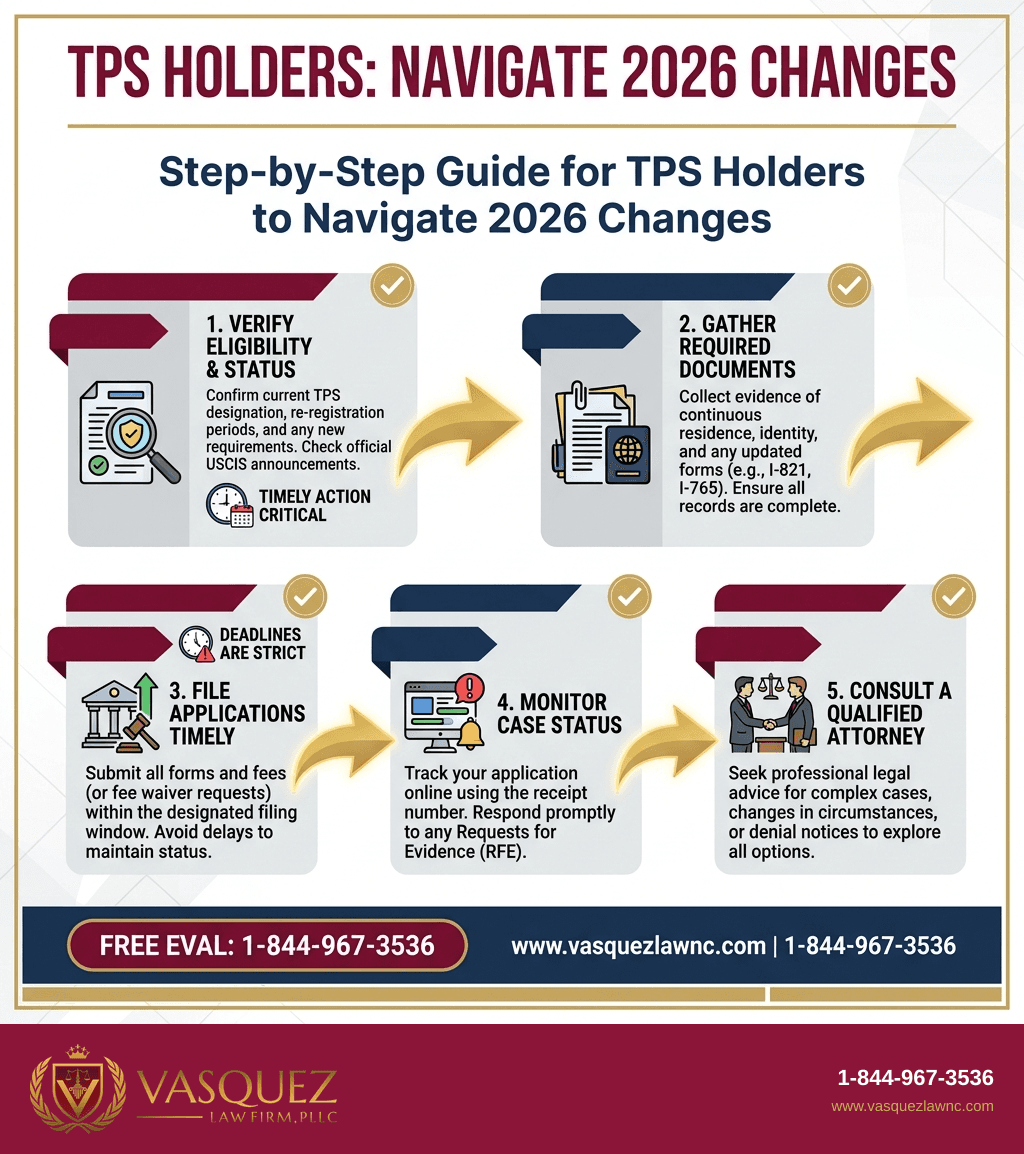
Cuando el TPS está por terminar o por cambiar, tomar pasos informados puede evitar la pérdida del estatus y preparar a los inmigrantes para otras opciones. A continuación encontrará una guía detallada, paso a paso, para los titulares de TPS o para quienes buscan el TPS en 2026.
Paso 1: Verifique la designación de TPS de su país y las fechas límite
Manténgase informado sobre si su país todavía tiene la designación de TPS. Los anuncios oficiales provienen del DHS y de USCIS. Aunque el TPS se haya extendido recientemente, siempre verifique las fechas de vencimiento. Por ejemplo, el TPS para los haitianos terminó en 2026; enterarse a tiempo es fundamental.
Paso 2: Presente o renueve su solicitud de TPS
Si es elegible, presente el Formulario I-821 y el Formulario I-765 antes de la fecha límite. Siga de cerca las indicaciones de USCIS para evitar demoras o negaciones. Guarde copias de todos los documentos que presente. La ayuda de un abogado puede asegurar que la solicitud esté completa y correcta.
Paso 3: Explore otras vías migratorias
Después de que el TPS termina, considere otras vías de estatus legal, como las peticiones familiares, el ajuste de estatus, el asilo o las visas. Un abogado de inmigración puede evaluar su elegibilidad. Para muchos haitianos y otras personas en Raleigh y Orlando, estas opciones suelen tener plazos muy limitados.
Paso 4: Cumpla con las leyes de inmigración
No permanezca más tiempo del permitido ni trabaje sin autorización una vez que el TPS termine. La presencia o el empleo no autorizados pueden activar impedimentos para beneficios futuros. Mantenga su documentación al día y asista a todas las citas de inmigración o audiencias en corte que se le requieran.
Errores comunes que debe evitar con el TPS
- No cumplir con las fechas límite de la solicitud inicial del TPS o de la renovación. Solución: Marque las fechas en el calendario y presente con anticipación.
- No actualizar su dirección con USCIS. Solución: Presente el Formulario AR-11 dentro de los 10 días posteriores a la mudanza.
- Ignorar los avisos de terminación del TPS. Solución: Busque asesoría legal de inmediato.
- Suponer que el TPS lleva automáticamente a la residencia permanente. Solución: Explore otras opciones migratorias de manera proactiva.
- Trabajar sin autorización después de que el TPS vence. Solución: Deje de trabajar y consulte a un abogado para no poner en riesgo beneficios futuros.
- Dar información incorrecta en las solicitudes. Solución: Revise todo con cuidado o pida ayuda a un abogado.
- No renovar el permiso de trabajo junto con el estatus de TPS. Solución: Presente el I-765 a tiempo junto con la renovación del I-821.
- No solicitar el permiso adelantado de viaje (advance parole) si necesita viajar. Solución: Consulte con un abogado sobre el permiso de viaje bajo el TPS.
Si solo recuerda una cosa: Presentar solicitudes correctas y a tiempo, junto con la asesoría legal, es esencial para proteger sus derechos migratorios a medida que el TPS cambia en 2026.
Cronología y qué esperar con las actualizaciones del TPS
- Fase de anuncio: El DHS anuncia la designación o la terminación del TPS, por lo general de 60 a 180 días antes del vencimiento.
- Periodo de solicitud: Los periodos de registro inicial o de nuevo registro duran de 60 a 90 días después de la fecha del anuncio.
- Procesamiento de USCIS: El procesamiento de los Formularios I-821 e I-765 normalmente toma de 6 a 10 meses; los tiempos de procesamiento varían según el centro de servicio. Consulte los tiempos de procesamiento de USCIS para conocer las actualizaciones.
- Vigencia de la autorización de trabajo: La autorización de empleo a menudo coincide con el periodo de vigencia del TPS, pero requiere solicitudes de renovación.
- Periodo posterior a la terminación: Después de que el TPS termina, las personas afectadas tienen un tiempo limitado para ajustar su estatus o salir del país antes de que puedan comenzar los procesos de expulsión.
Estos plazos exigen que los titulares de TPS actúen de manera proactiva para mantener las protecciones legales y evitar quedar fuera de estatus.
Costos y tarifas que afectan la solicitud de TPS
- Tarifas de presentación de USCIS: Solicitar el TPS requiere el pago del Formulario I-821 ($50) y del Formulario I-765 ($410), junto con una tarifa de datos biométricos ($85) en la mayoría de los casos. Las exenciones de tarifas están disponibles bajo condiciones estrictas para los solicitantes de bajos ingresos.
- Honorarios de representación legal: Contratar a un abogado puede costar entre $500 y $2,000, según la complejidad del caso y los servicios que se presten. Los honorarios de abogado varían, pero pueden valer la inversión para evitar errores.
- Preparación de documentos: Los costos para obtener documentos de apoyo, como actas de nacimiento, certificados de antecedentes policiales, traducciones y expedientes médicos, varían mucho.
- Renovación frente a solicitud inicial: Las solicitudes de renovación generalmente tienen las mismas tarifas que las solicitudes iniciales.
Lo más importante es entender los costos de la solicitud desde el principio para planificar su presupuesto. Vasquez Law Firm ofrece evaluaciones gratuitas para aclarar los gastos y las opciones.
Notas sobre jurisdicción
Marco federal
El TPS es un beneficio migratorio federal creado por el Congreso y administrado por USCIS dentro del DHS. Las decisiones sobre designaciones y terminaciones se anuncian mediante avisos federales y afectan a todas las jurisdicciones de los EE. UU. Las cortes federales de inmigración, bajo la Executive Office for Immigration Review, tienen autoridad para resolver los procesos de expulsión de los titulares de TPS cuyas protecciones terminan.
Notas sobre Carolina del Norte
Muchas comunidades inmigrantes en Raleigh y en todo Carolina del Norte dependen en gran medida del TPS para su seguridad y su empleo. Oficinas locales como la oficina de USCIS en Raleigh brindan procesamiento de casos y servicios al público. Las organizaciones de ayuda legal colaboran con firmas como Vasquez Law Firm para apoyar a los titulares de TPS que enfrentan cambios de estatus.
Notas sobre Florida
En Orlando, FL, una gran comunidad haitiana se ha visto profundamente afectada por la terminación del TPS. Las oficinas locales de USCIS, los grupos comunitarios y los servicios jesuitas para refugiados ofrecen asistencia. La oficina de Vasquez Law Firm en Orlando brinda representación personalizada a los titulares haitianos de TPS que buscan otros remedios migratorios.
Cuándo llamar a un abogado ahora
- La designación de TPS para su país terminó o está por vencer
- Usted no cumplió con la fecha límite para registrarse o renovar su TPS
- Usted recibió una Notificación de Comparecencia (NTA) para un proceso de expulsión
- Usted quiere entender sus opciones para obtener la residencia permanente
- Usted necesita ayuda para solicitar el TPS o renovar su permiso de trabajo
- Usted recibió una solicitud de evidencia adicional (RFE) de USCIS
- Usted tiene cargos criminales que pueden afectar su elegibilidad para el TPS
- Usted planea viajar al extranjero y necesita el permiso adelantado de viaje (advance parole)
- Usted quiere impugnar una negación o una terminación del TPS
- Usted quiere saber cómo las noticias recientes de inmigración sobre el TPS afectan su caso
Acerca de Vasquez Law Firm
En Vasquez Law Firm, combinamos la compasión con una representación enérgica. Nuestro lema "Yo Peleo®" refleja nuestro compromiso de defender sus derechos.
- Apoyo bilingüe: Se Habla Español — abogados y personal que hablan español están disponibles
- Áreas de servicio: Carolina del Norte, además de Florida y todo el país para casos de inmigración
- Experiencia: Más de 30 años ayudando a los clientes a manejar asuntos legales complejos
- Resultados: Miles de casos exitosos en múltiples áreas de práctica
Confianza y experiencia del abogado
William J. Vásquez está admitido al North Carolina State Bar (2011) y a las U.S. Courts of Appeals del 4.º, 5.º y 11.º Circuito. La firma ha brindado representación legal dedicada desde 2011, con atención personalizada al caso de cada cliente.
No espere para obtener la ayuda que merece. Llámenos ahora para recibir asistencia inmediata.
Se Habla Español
Preguntas frecuentes
¿Qué significan las siglas TPS y qué quieren decir?
TPS significa Estatus de Protección Temporal, un programa federal que protege a los nacionales de países designados que están afectados por condiciones inseguras. Los titulares de TPS están protegidos contra la deportación y pueden recibir autorización de trabajo mientras el estatus esté vigente.
¿Qué países tienen designación de TPS actualmente en 2026?
En 2026, el TPS está designado para países que incluyen El Salvador, Honduras, Nepal, Somalia, Sudán del Sur, Siria y Yemen. El TPS para los haitianos terminó recientemente, lo que afecta a muchas personas en Raleigh y Orlando.
¿Cuáles son los principales beneficios del Estatus de Protección Temporal?
Los beneficios incluyen la protección contra la expulsión, la autorización para trabajar legalmente y la presencia legal en los EE. UU. durante los periodos de designación del TPS. Brinda alivio humanitario, pero no otorga la residencia permanente.
¿Terminó el TPS para los haitianos y qué significa esto?
Sí, en 2026 terminó el TPS para los haitianos. Esta pérdida de estatus significa que las personas afectadas deben buscar otras vías o enfrentar la expulsión. La asistencia de un abogado de inmigración es fundamental en esta etapa.
¿Cómo afectan a los titulares las actualizaciones recientes del TPS bajo la administración Biden?
La administración Biden extendió el TPS para varios países, pero terminó la designación de Haití. Los titulares de TPS deben estar pendientes de los anuncios del DHS para conocer su elegibilidad y seguir de inmediato cualquier procedimiento nuevo.
¿Qué pasa si mi TPS vence y no ajusto mi estatus?
Sin una renovación o un ajuste, usted pierde las protecciones y el permiso de trabajo, y queda sujeto a la deportación. Consultar a un abogado a tiempo puede ayudar a identificar otro alivio migratorio o a prepararse para una defensa contra la expulsión.
¿Cómo puede Vasquez Law Firm ayudar a los titulares de TPS en Raleigh y Orlando?
Ayudamos con las solicitudes de TPS, las renovaciones y otras opciones migratorias. Nuestros abogados bilingües brindan orientación personalizada para proteger sus derechos y mantenerle en cumplimiento con las leyes de inmigración.
¿Qué formularios se necesitan para solicitar o renovar el estatus de TPS?
El Formulario I-821 es obligatorio para solicitar o renovar el TPS. El Formulario I-765 se usa para solicitar la autorización de empleo. Los tiempos de procesamiento varían; consulte USCIS con regularidad para conocer las actualizaciones.
Fuentes y referencias
- U.S. Citizenship and Immigration Services
- Executive Office for Immigration Review
- Legal Information Institute
Dé hoy el primer paso hacia la justicia. Nuestro equipo está listo para ayudarle. Se Habla Español.
Comience su evaluación gratuita ahora
Llámenos: 1-844-967-3536
Se Habla Español - Estamos aquí para ayudarle.
Si necesita asistencia legal, conozca más sobre nuestra práctica de derecho de inmigración, o llámenos al 1-844-967-3536 para una evaluación gratuita.

Hable Hoy con un Abogado de Inmigración
Un plan claro para su caso en una llamada, sin compromiso.

William Vásquez
Fundador y CEO, Vasquez Law Firm, PLLC
William Vasquez es el fundador y CEO de Vasquez Law Firm, PLLC, una firma orientada a resultados que se especializa en inmigración, defensa criminal, derecho de familia, lesiones personales y compensación laboral. Veterano de la Fuerza Aérea de los Estados Unidos y receptor de la Medalla por Logro Conjunto en el Servicio, William está dedicado a luchar ferozmente por los derechos de sus clientes.